5 centavos 1918
Market Prices
5 salesAbout This Note
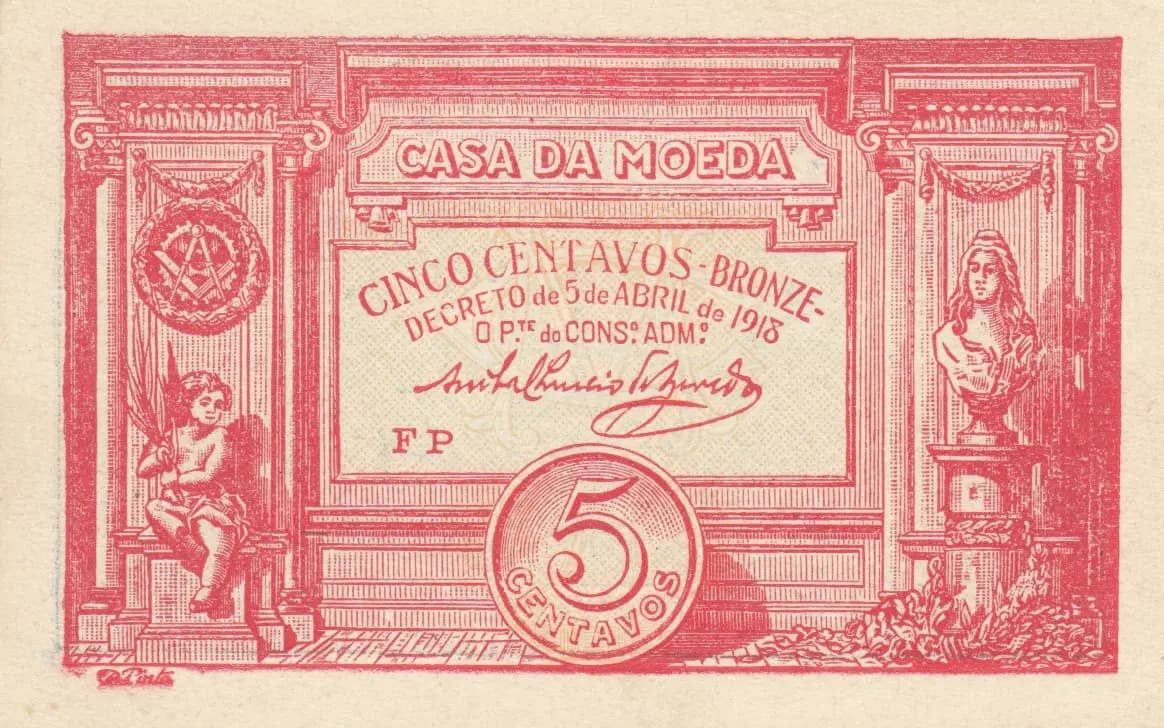
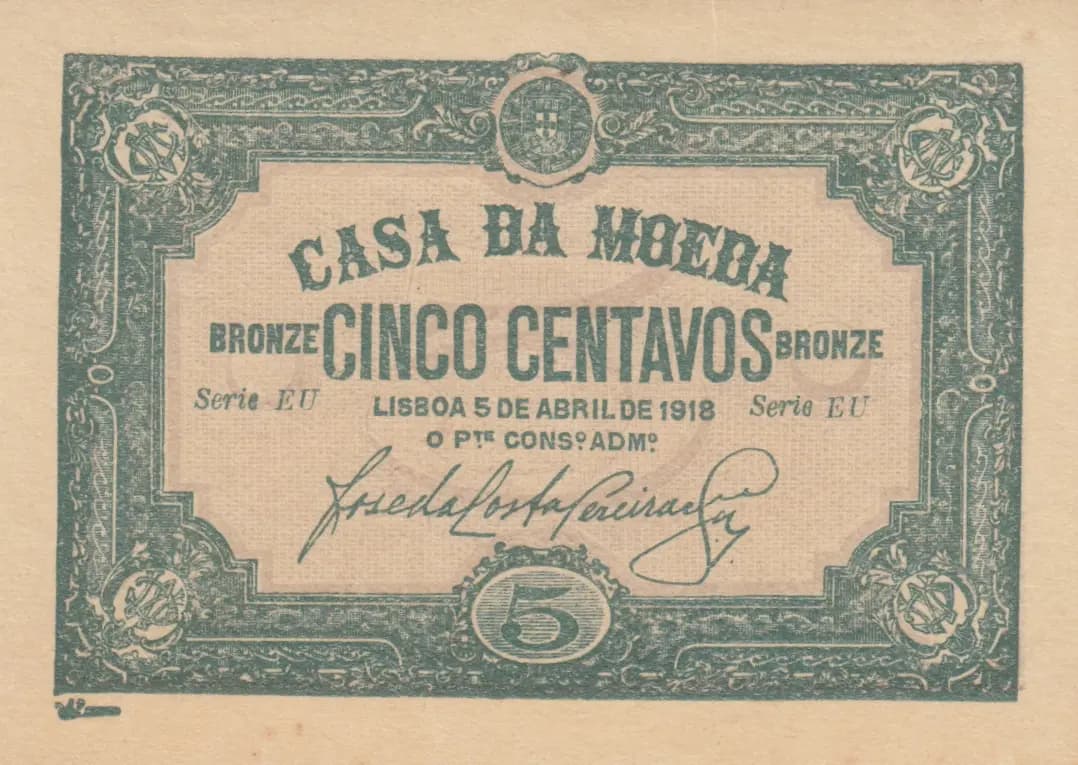
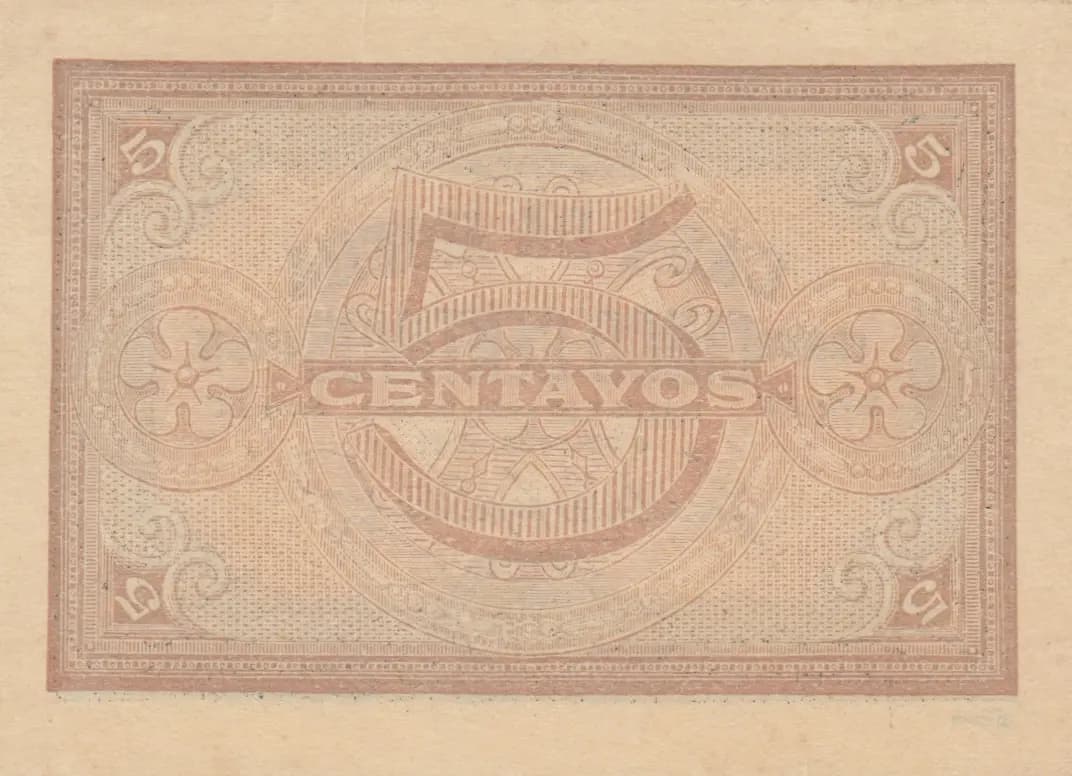
This is a pristine, uncirculated example of Portugal's 5 Centavos Bronze note from 1918, issued by Casa da Moeda (Royal Mint) on April 5th. The note displays the hallmark baroque ornamentation characteristic of early 20th-century Portuguese currency, with an elegant green-and-cream obverse featuring a central coat of arms and ornate corner emblems, paired with a monochromatic beige reverse of comparable artistic detail. In AU condition, this note represents a well-preserved specimen of Portuguese emergency currency from the First World War period.
Common. eBay market data shows AUNC specimens consistently selling for $6–$17 across multiple years (2014–2016), with even higher grades (PMG 65) reaching $104.50 but with modest bid counts. The catalog value for UNC grade is listed at $10, placing this note in the accessible range for most collectors. The 1918 issue date and standard regular-issue classification indicate a reasonable print run without supply constraints. This is a collectible but not scarce piece of Portuguese numismatics.
Issued during Portugal's participation in World War I, this 5 Centavos denomination represents the Portuguese state's monetary response to wartime economic pressures. The prominence of Casa da Moeda (Royal Mint) and the administrative authority signatures reflect the institutional stability the government sought to project during a turbulent period. The 1918 date places this note at the final year of the Great War, when Portugal was mobilizing resources and managing currency circulation challenges.
The obverse features a coat of arms of Portugal positioned prominently at the upper center within an oval cartouche, flanked by decorative baroque scrollwork and floral motifs. Ornamental shields or heraldic emblems appear in all four corners, with an elaborate green decorative border comprising intricate baroque-style patterns. The reverse presents a monochromatic design centered on a large shield or medallion framed by ornate baroque flourishes, geometric patterns, and scrollwork typical of engraved banknote design of the era. The symmetrical, highly formalized composition reflects Portuguese institutional heraldry and early 20th-century security printing aesthetics.
Front side: 'CASA DA MOEDA' (Royal Mint), 'CINCO CENTAVOS' (Five Centavos), 'BRONZE' (Bronze), 'Serie EU' (Series EU, appearing twice), 'LISBOA 5 DE ABRIL DE 1918' (Lisbon, 5 April 1918), 'O PT.º CONS.º ADM.º' (The President of the Administrative Council), followed by an illegible administrative signature. Back side: 'CENTAVOS' (Centavos).
Intaglio engraving (steel plate engraving), the standard security printing method for banknotes of this period. The elaborate baroque ornamentation, fine line work visible in the scrollwork and floral patterns, and the dimensional quality characteristic of engraved currency all confirm this technique. Casa da Moeda possessed the technical capability for high-quality intaglio production, and the dual-color printing (green on cream obverse; monochromatic reverse) represents sophisticated period printing technology.
Series EU is noted on the obverse (appearing twice in the design). The specific date of 5 April 1918 and the Lisboa issuing location are consistent with the Pick P-97 catalog entry. No overprints or significant varieties are apparent from the visual analysis. The illegible administrative signature is typical for notes of this era and does not constitute a distinct variety. Collectors should note the Series EU designation as part of the standard variety identification.