5 centavos 1918
Market Prices
27 salesAbout This Note
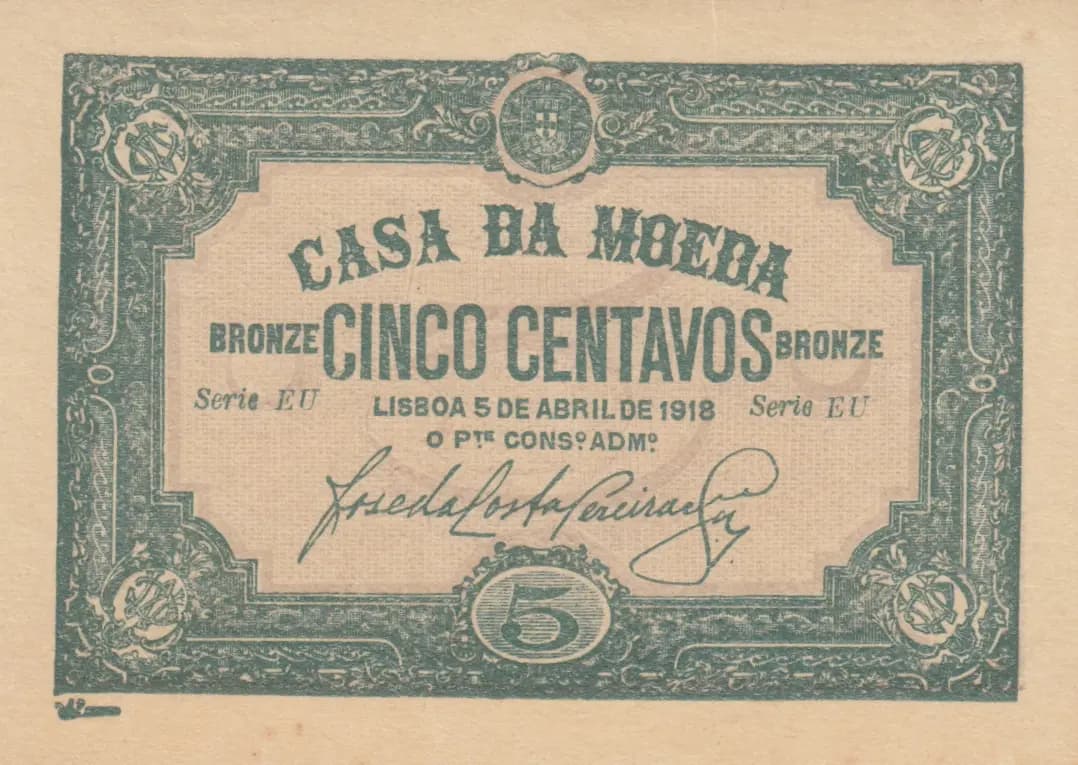
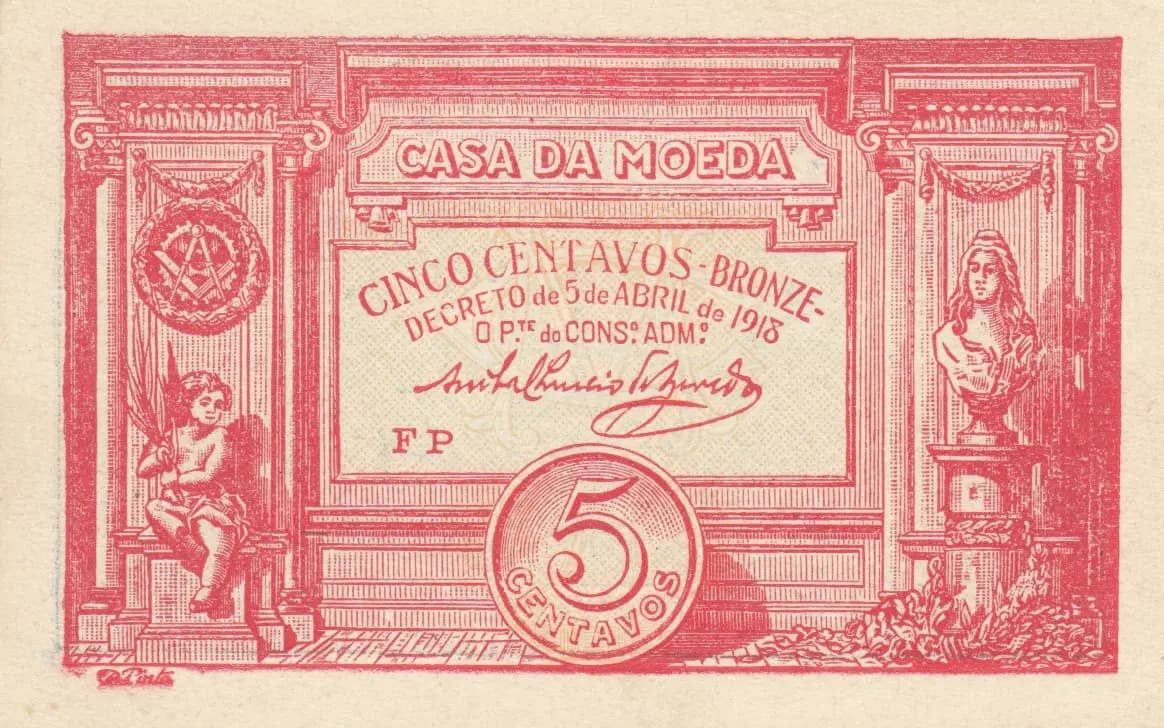
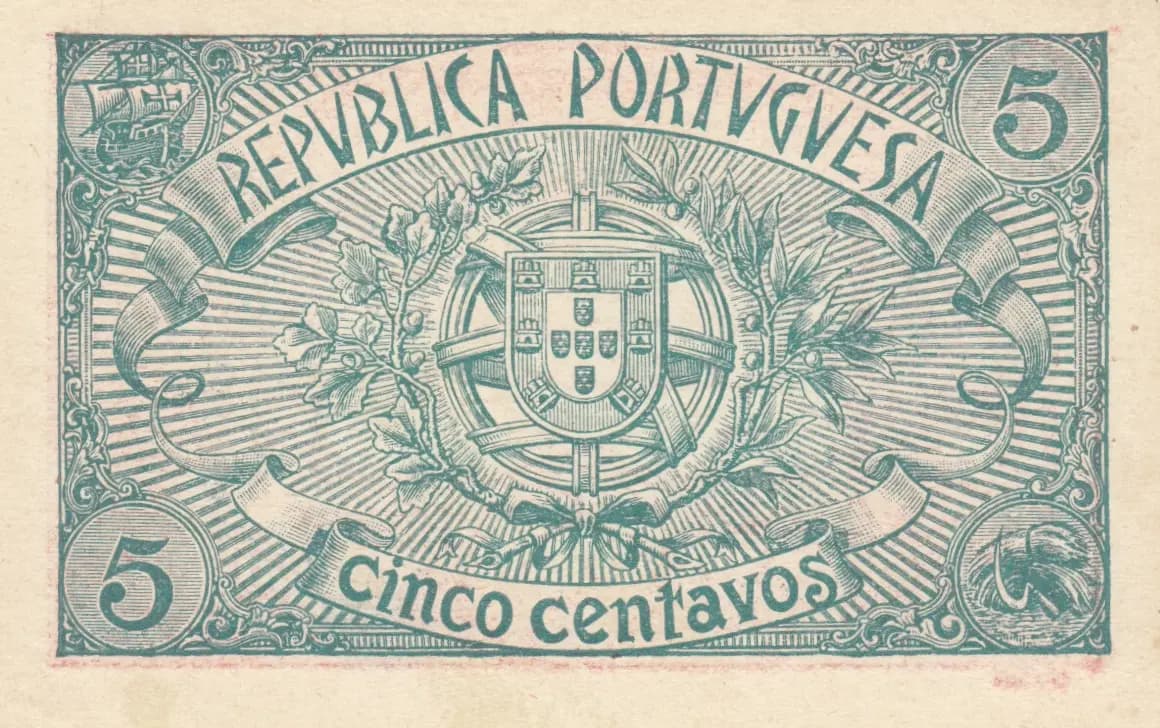
This is a stunning example of Portugal's 1918 Casa da Moeda 5 Centavos note (Pick P-98) in AU condition, featuring the classic early Portuguese Republic design with vibrant red and green printing. The obverse displays ornate classical architecture with cherub figures and a female bust, while the reverse showcases the Portuguese coat of arms with radiating lines and heraldic imagery. The note exhibits excellent preservation with no visible wear or creasing, maintaining its original aged patina consistent with early 20th-century currency production.
Common. This is a regular issue banknote with no indication of restricted print runs or recalls. The eBay sales data provided shows consistent market activity across a 10-year period (2010-2020), with most examples in similar condition grades (AUNC, EF, VF) selling in the $3-$10 range, with premium grades (PMG 65-67) reaching $20-$110. The frequency of sales and moderate pricing across multiple condition grades confirms this is a commonly encountered note among collectors of early Portuguese currency.
This note was issued during the tumultuous period of the First Portuguese Republic (1910-1926), specifically under the decree of April 5, 1915, as evidenced by the inscription on the front. The imagery reflects the Republic's nationalist symbolism, featuring the Portuguese coat of arms prominently on the reverse with heraldic elements including ships and lions representing Portugal's maritime heritage. The classical architectural design and allegorical cherub figures reflect early 20th-century European banknote aesthetic conventions emphasizing order, prosperity, and national pride.
The obverse features a symmetrical classical design with Corinthian columns framing a central rectangular panel containing denominational and issuing information. On either side stand putto (cherub) figures representing prosperity or virtue, with a classical female bust (likely representing the Portuguese Republic as an allegorical figure) positioned on the right. The denomination '5 CENTAVOS' appears in a circular cartouche at the bottom center. Ornamental wreaths, urns, and fine geometric patterns populate the background. The reverse displays the Portuguese national coat of arms—a quartered shield with the historical arms of Portugal—positioned centrally and surrounded by radiating lines suggesting divine authority or enlightenment. Flanking botanical elements (laurel or flowering plants) provide symmetrical ornamentation, with small heraldic emblems (a ship in the upper left and lion in the lower right) referencing Portugal's maritime and royal traditions. All elements are rendered in fine line engraving with remarkable detail.
FRONT: 'CASA DA MOEDA' (Mint House / Casa da Moeda), 'CINCO CENTAVOS-BRONZE' (Five Centavos-Bronze), 'DECRETO de 5 de ABRIL de 1915' (Decree of April 5, 1915), 'O Pte da CONSª ADM:' (The President of the Administrative Council), 'FP' (Initials of signatory), '5 CENTAVOS' (Five Centavos). BACK: 'REPUBLICA PORTUGUESA' (Portuguese Republic), 'Cinco centavos' (Five centavos), '5' (denomination numeral).
This note was produced using intaglio engraving (copperplate printing), the standard security printing method for banknotes of this era. The fine line engraving visible throughout both sides, the complex geometric patterns, ornamental details, and the precise rendering of heraldic imagery are characteristic of intaglio production. Casa da Moeda (the Portuguese Mint) handled both the design and production in-house, as was typical for national central banks of the period.
The observed variety corresponds to the standard issue dated April 5, 1918 (issued under the 1915 decree). The signature initials 'FP' are visible, representing the signatory authority. No overprints or significant varieties are apparent in the visual analysis. This appears to be from the standard printing run of this denomination; no known major varieties (such as color variations, signature varieties, or decimal overprints) affecting collectibility have been identified for this Pick number.