100 reis 1891
Market Prices
3 salesAbout This Note
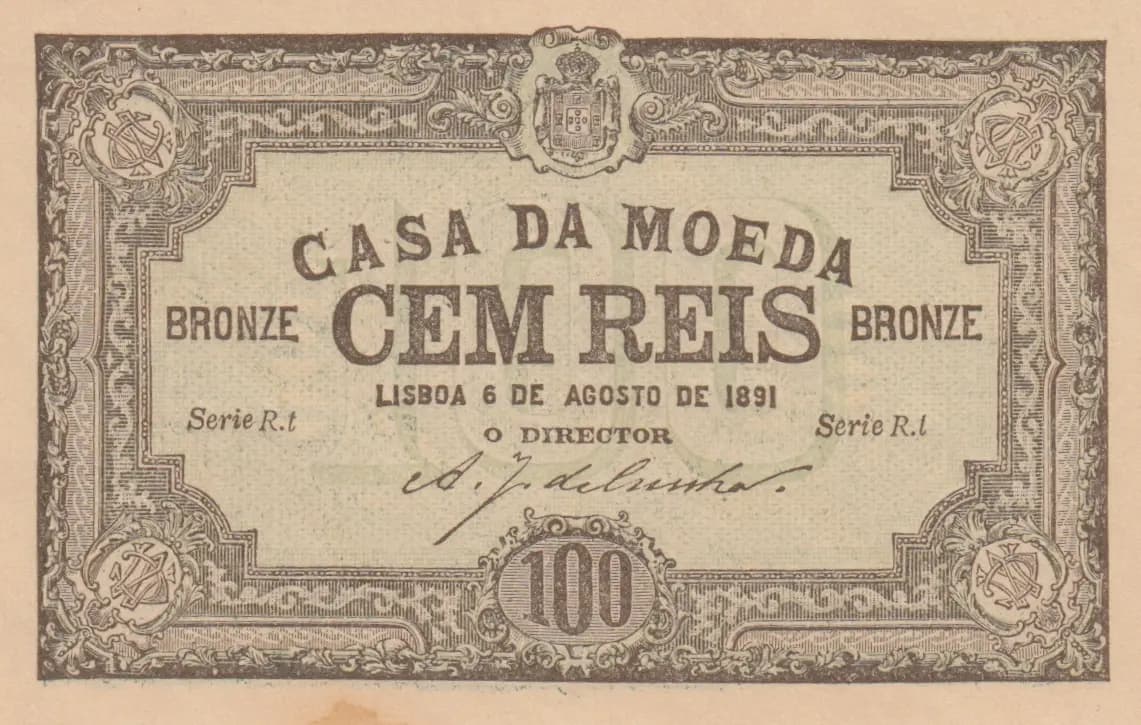
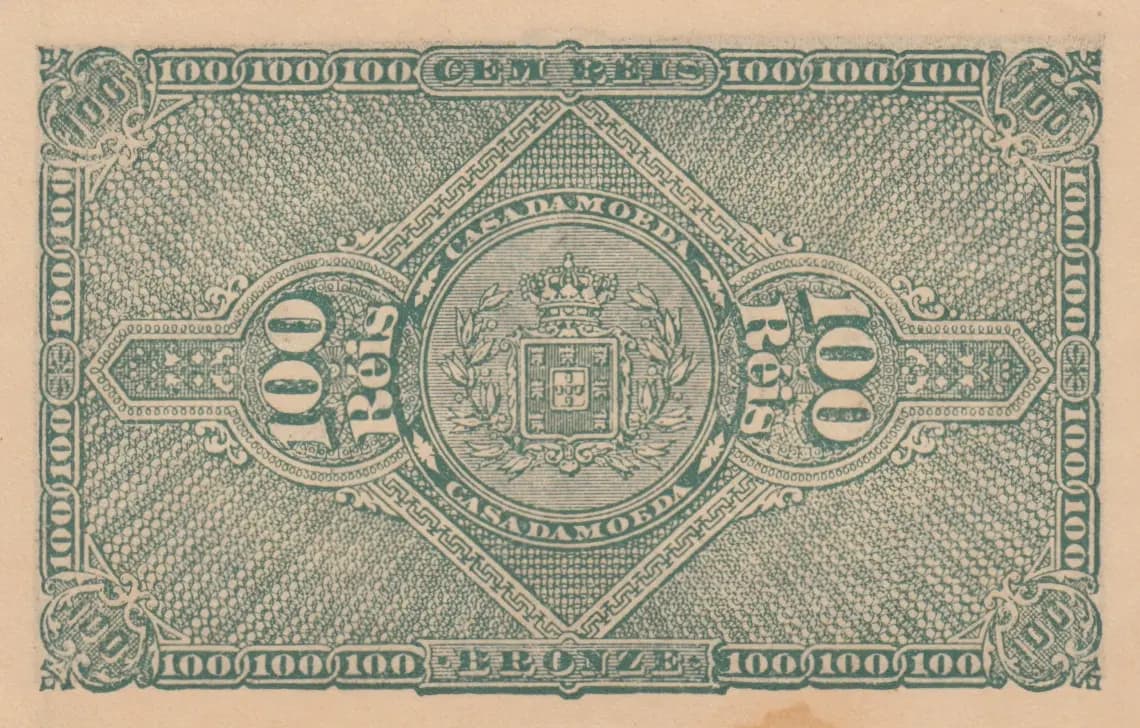
This is a Portugal 100 Reis note from 1891, issued by Casa da Moeda (the Portuguese Mint), graded AU (About Uncirculated). The note displays the characteristic cream/beige base with brown sepia ink on the front and green ink on the reverse, featuring ornate baroque-style decorative borders and the Portuguese coat of arms prominently displayed in a circular medallion on the back. Despite its 130+ year age, the note shows excellent preservation with only light foxing and toning consistent with aged paper currency, making it an attractive example for collectors of 19th-century Portuguese currency.
Common. The eBay price history provided shows consistent market activity with multiple sales ranging from $5.50 to $24 across various condition grades (VG to VF), and current catalog values listing the note at $60 in uncirculated condition. These modest prices and regular market appearances indicate this is a readily available note for collectors. The 1891 issue date does not correspond to a short-lived or recalled series, and Casa da Moeda maintained substantial production of this denomination throughout the 1890s. AU examples appear regularly in the market, supporting a common rarity classification.
This note was issued on August 6, 1891, during Portugal's constitutional monarchy period under King Carlos I, as evidenced by the official Casa da Moeda imprint and director's signature. The prominent display of the Portuguese coat of arms with crown and shield reflects the national pride and heraldic symbolism of the period, while the 'BRONZE' denomination indicates this was part of Portugal's bronze currency series issued during the late 19th century monetary system. The baroque-influenced design aesthetic typical of 1890s European banknotes demonstrates the artistic printing standards and security considerations of the era.
The 100 Reis note features a symmetrical, formally structured design typical of late 19th-century Portuguese currency. The obverse displays an ornate decorative border with baroque-style flourishes and corner medallions incorporating compass or nautical design elements, reflecting Portugal's maritime heritage. The Portuguese coat of arms (shield with heraldic design beneath a royal crown) is positioned prominently at the top center of the front. The reverse continues the symmetrical aesthetic with a large central circular medallion containing the coat of arms encircled by laurel wreaths, symbolizing achievement and national pride. The denomination '100' appears both in a central ornamental frame on the front and repeatedly around the border design on the back. The dotted/stippled background pattern on the reverse serves both aesthetic and anti-counterfeiting purposes. The series designation 'R.1' identifies this as part of the first series of this issue.
FRONT SIDE: 'CASA DA MOEDA' (House of the Mint) | 'BRONZE CEM REIS BRONZE' (Bronze One Hundred Reis Bronze) | 'LISBOA 6 DE AGOSTO DE 1891' (Lisbon, August 6, 1891) | 'O DIRECTOR' (The Director) | 'e.S. Delamotta' (signature of Director E.S. Delamotta) | 'Serie R.1' (Series R.1) | '100' (denomination). BACK SIDE: '100 100 100 CEMI REIS 100 100 100' (One Hundred Reis, repeated with denomination markers) | 'CASA DA MOEDA' (House of the Mint) | '100 REIS 100' (One Hundred Reis).
This note was produced using intaglio (engraved) printing, the standard security printing method for Portuguese banknotes of the period. The fine detail work visible in the baroque decorative elements, the precision of the border designs, and the crisp appearance of the coat of arms all indicate the classical engraving technique. The two-color printing (brown/sepia on front, green on reverse) was achieved through separate intaglio passes on cream-colored paper, a common and reliable method for 19th-century banknote production by Casa da Moeda.
This example is identified as Series R.1 (visible on both obverse and reverse), representing the first series of the 1891 100 Reis issue. The note is signed by E.S. Delamotta as Director ('O DIRECTOR'). The official issue date of August 6, 1891 (Lisboa 6 de Agosto de 1891) is clearly printed on the obverse. No overprints or significant varieties are apparent from the visual analysis; the note represents the standard regular issue design for this Pick number (P-89).