50 escudos 1964
About This Note
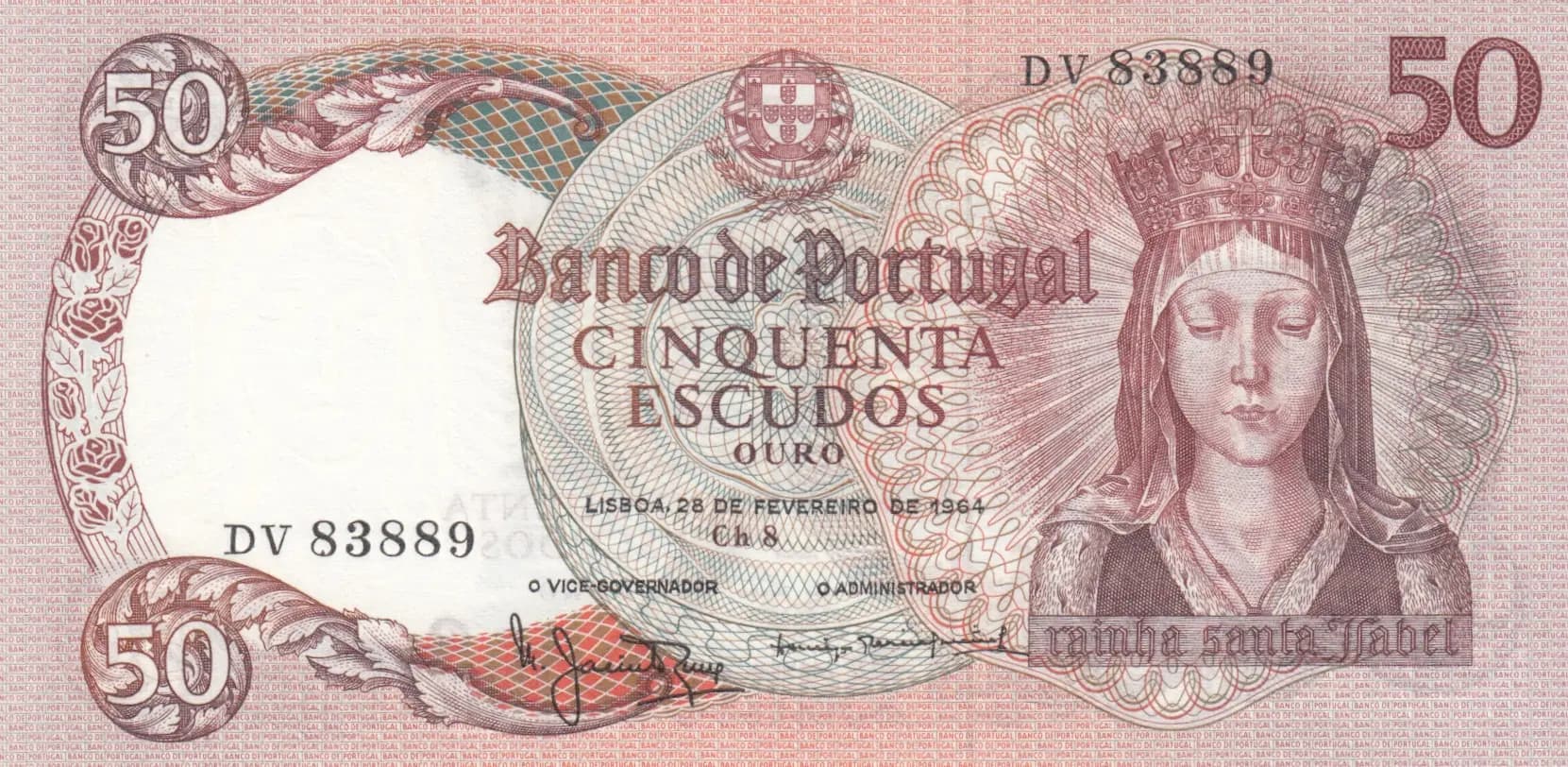
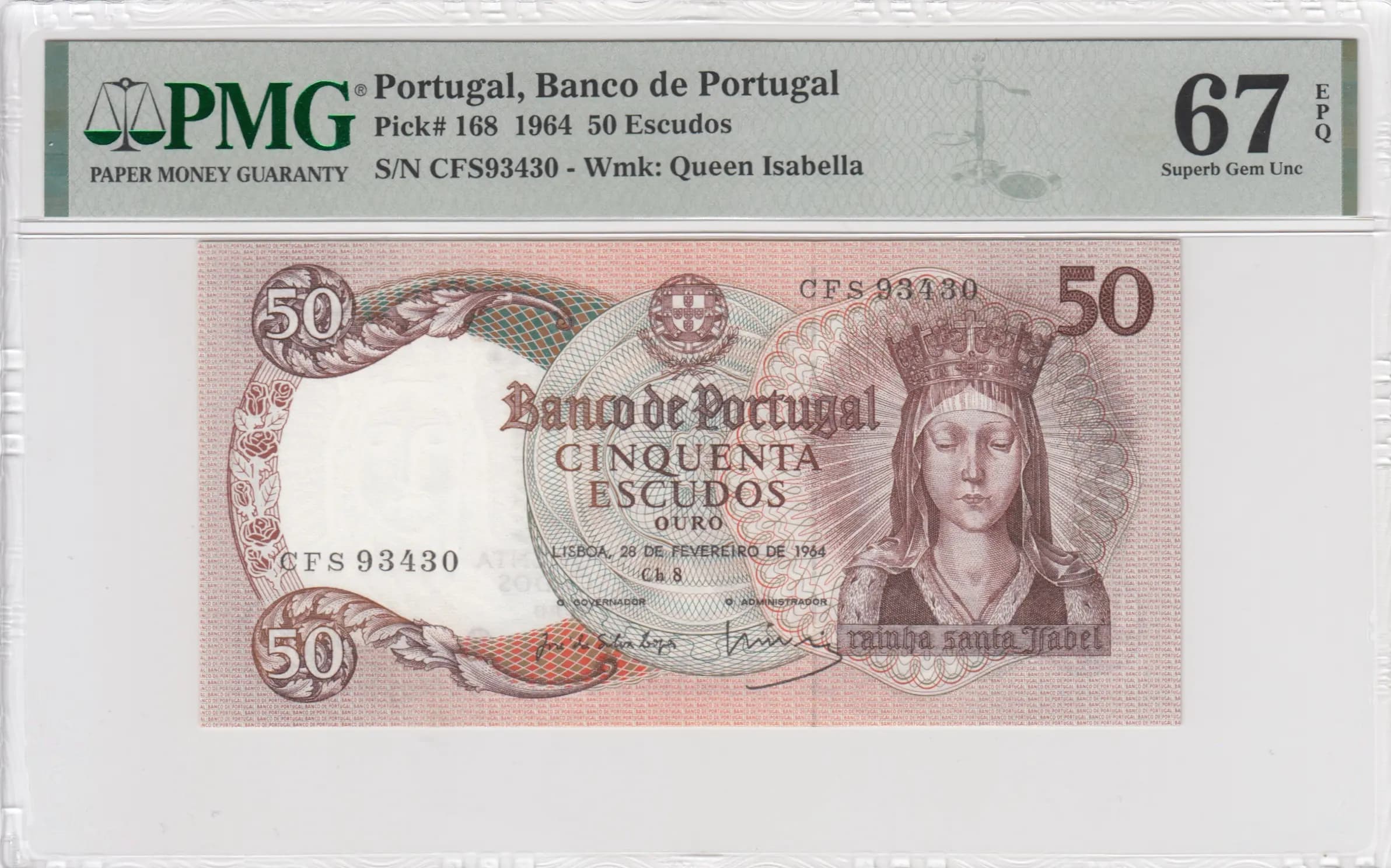
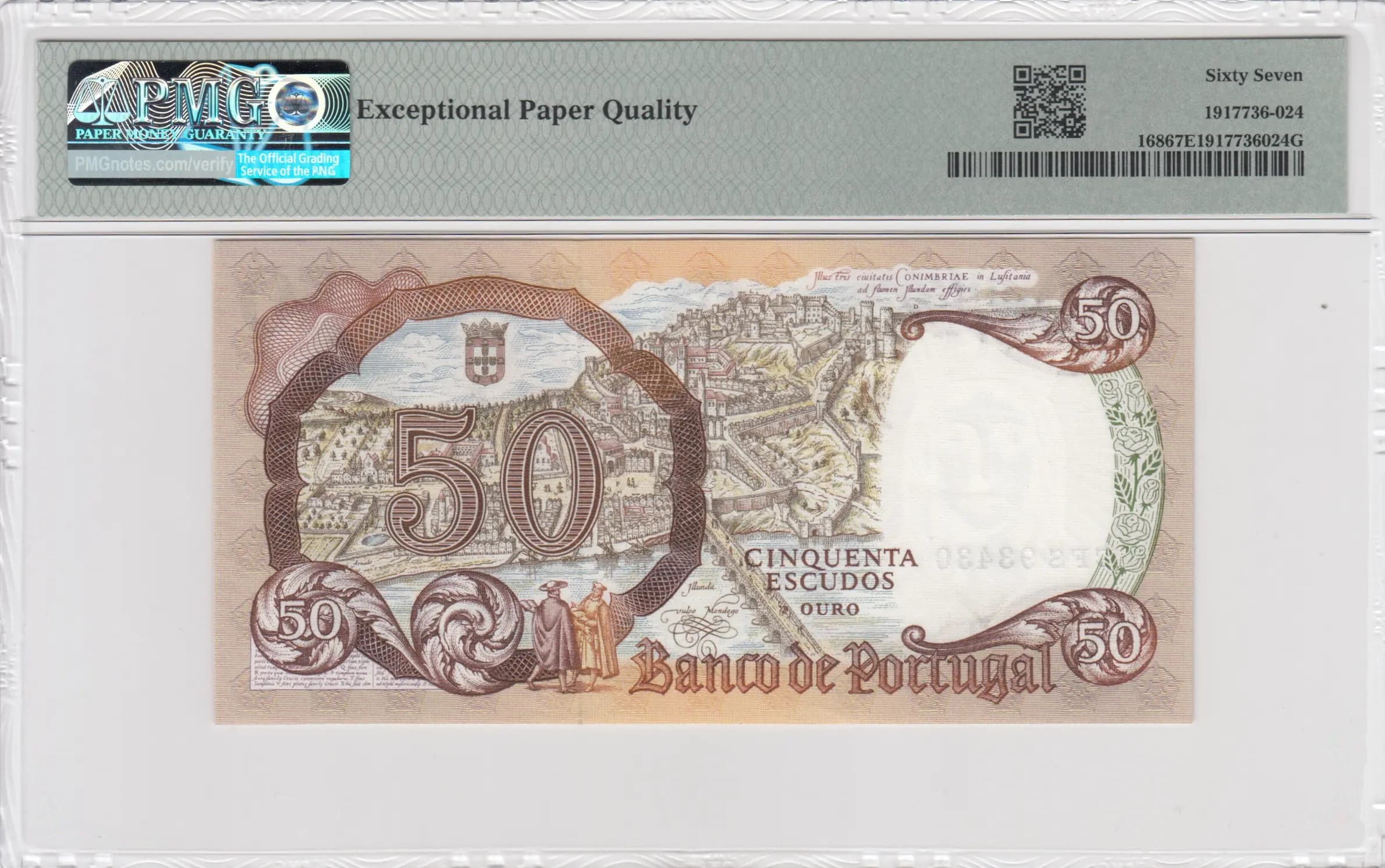
This is a PMG 67 EPQ graded 50 Escudos banknote from Portugal, issued by Banco de Portugal on 28 February 1964. The note is in exceptional uncirculated condition with sharp, clear printing and excellent color saturation throughout. The obverse features a portrait of Queen Santa Isabel in royal regalia, while the reverse displays an elaborate engraved scene of the fortified city of Coimbra, making this a significant example of Portuguese numismatic artistry from the Estado Novo period.
Common. The 50 Escudos denomination was a standard circulating note of the Portuguese currency system during the 1960s, with large print runs typical of mid-value denominations. While the 1964 date places it within the earlier period of this series, no evidence suggests limited production, recall, or scarcity in the market. The PMG 67 EPQ condition grade is notable for preservation quality rather than rarity of the banknote itself.
This 1964 banknote was issued during the Estado Novo regime under Prime Minister António de Oliveira Salazar, a period marked by Portugal's colonial empire and economic isolation. The choice to feature Queen Santa Isabel (1271-1336), a venerated medieval Portuguese queen canonized by the Catholic Church, reflects the regime's emphasis on national heritage and Catholic values. The reverse's detailed depiction of Coimbra, home to Portugal's oldest university and a center of intellectual and cultural significance, underscores the nation's pride in its historical institutions and territorial identity.
The obverse features a formal portrait of Queen Santa Isabel, identifiable by her crown and elaborate radiating fan-like headdress characteristic of medieval Portuguese royal iconography, positioned on the right side of the note. The design incorporates ornate decorative scrollwork and filigree patterns in the borders, with the denomination '50' positioned in the top and bottom left corners. A circular frame with the Portuguese coat of arms occupies the center area, while security features including watermark areas and guilloche patterns provide authentication elements. The reverse presents an intricate engraved historical scene of Coimbra, depicting the fortified city's walls, towers, and hillside fortress complex with architectural detail. Two period-dressed figures are rendered in the lower left of the landscape composition. The color palette throughout consists of pink/rose, brown/maroon, cream, teal accents, and ochre/gold tones, creating a warm, traditional aesthetic appropriate to the historical subject matter.
Front side: 'Banco de Portugal' (Bank of Portugal), 'CINQUENTA ESCUDOS' (Fifty Escudos), 'OURO' (Gold), Serial number 'CFS93430', 'LISBOA, 28 DE FEVEREIRO DE 1964' (Lisbon, 28 February 1964), 'CH 8' (check digit/reference). Back side: 'CINQUENTA ESCUDOS' (Fifty Escudos), 'Banco de Portugal' (Bank of Portugal), 'OURO' (Gold). Additional historical or geographical inscriptions on the reverse are present but not fully legible in the provided images.
Intaglio engraving (recess printing), executed with fine line engraving and guilloche pattern backgrounds. The complex historical scenes and portrait work exhibit the high-quality craftsmanship characteristic of Banco de Portugal's security printing standards of the 1960s. The sharp detail preservation, intricate scrollwork, and security features visible in both the watermark areas and engraved patterns indicate professional security printer production, likely executed by Banco de Portugal's in-house facilities or a contracted European security printer specializing in high-security currency production.
Pick P-168(14) designation indicates this is the 14th variety of the 50 Escudos type from the 1964 series. The specific variety observed includes serial number prefix 'CFS' and check digit 'CH 8'. Minor varieties within the 1964 series are known to exist, typically distinguished by signature combinations (the Banco de Portugal employed different signatories over the note's production period), serial number prefixes, and check digit variations. The February 28, 1964 date is consistent with the initial issue date of this denomination. Further research into other examples would be needed to confirm whether this particular serial prefix or signature combination represents a noted variety within numismatic literature.