50 escudos 1964
About This Note
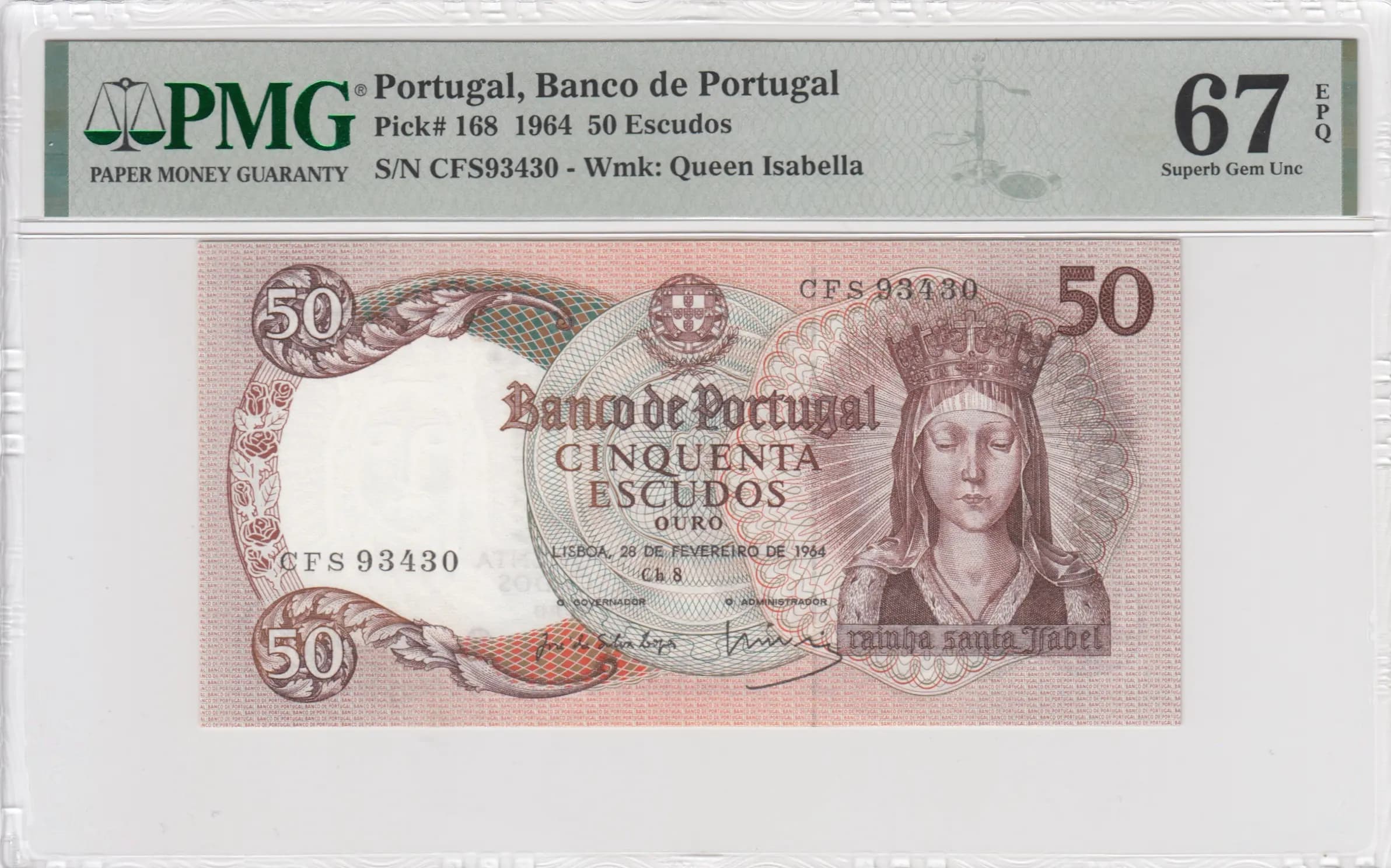
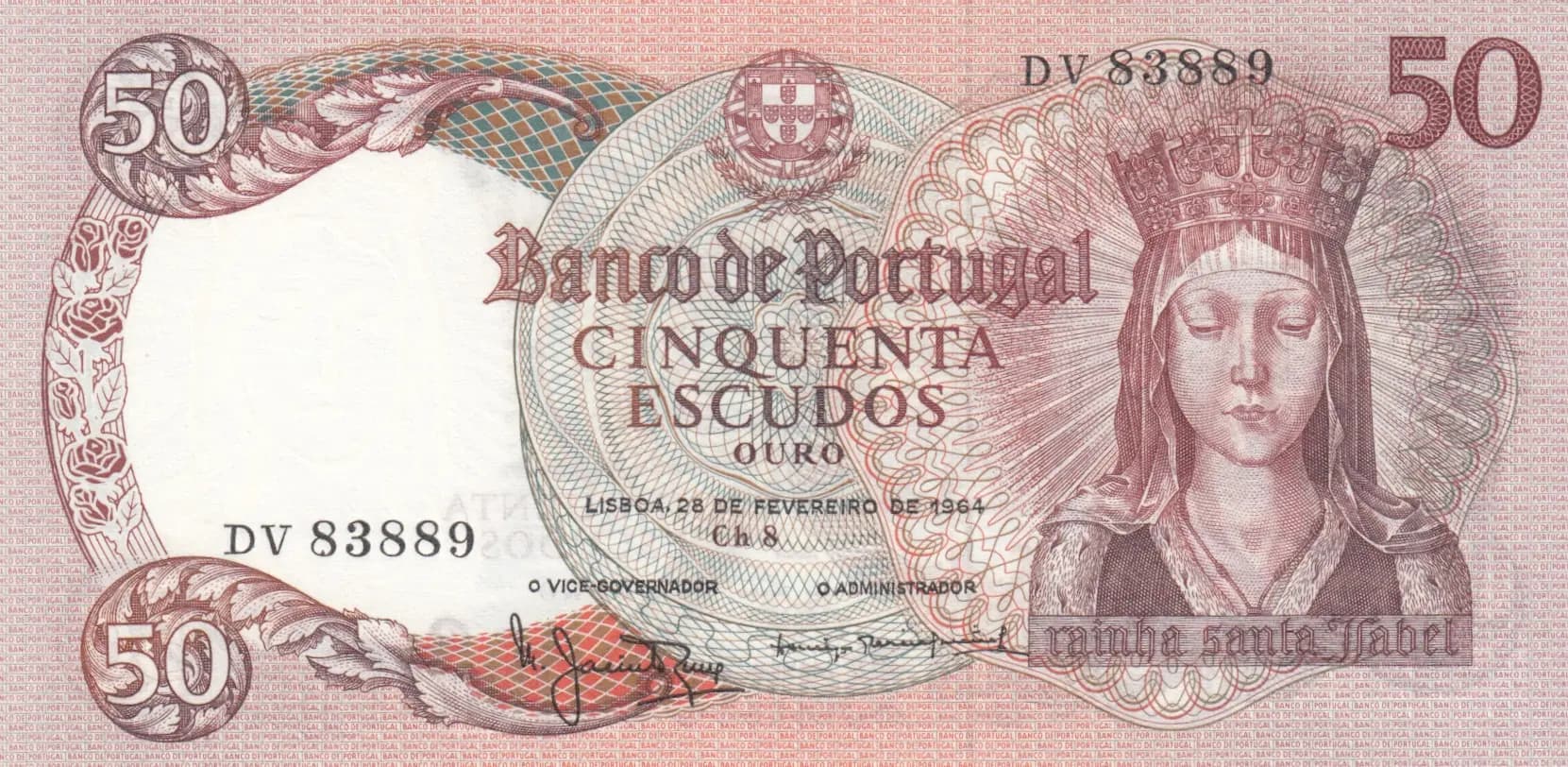
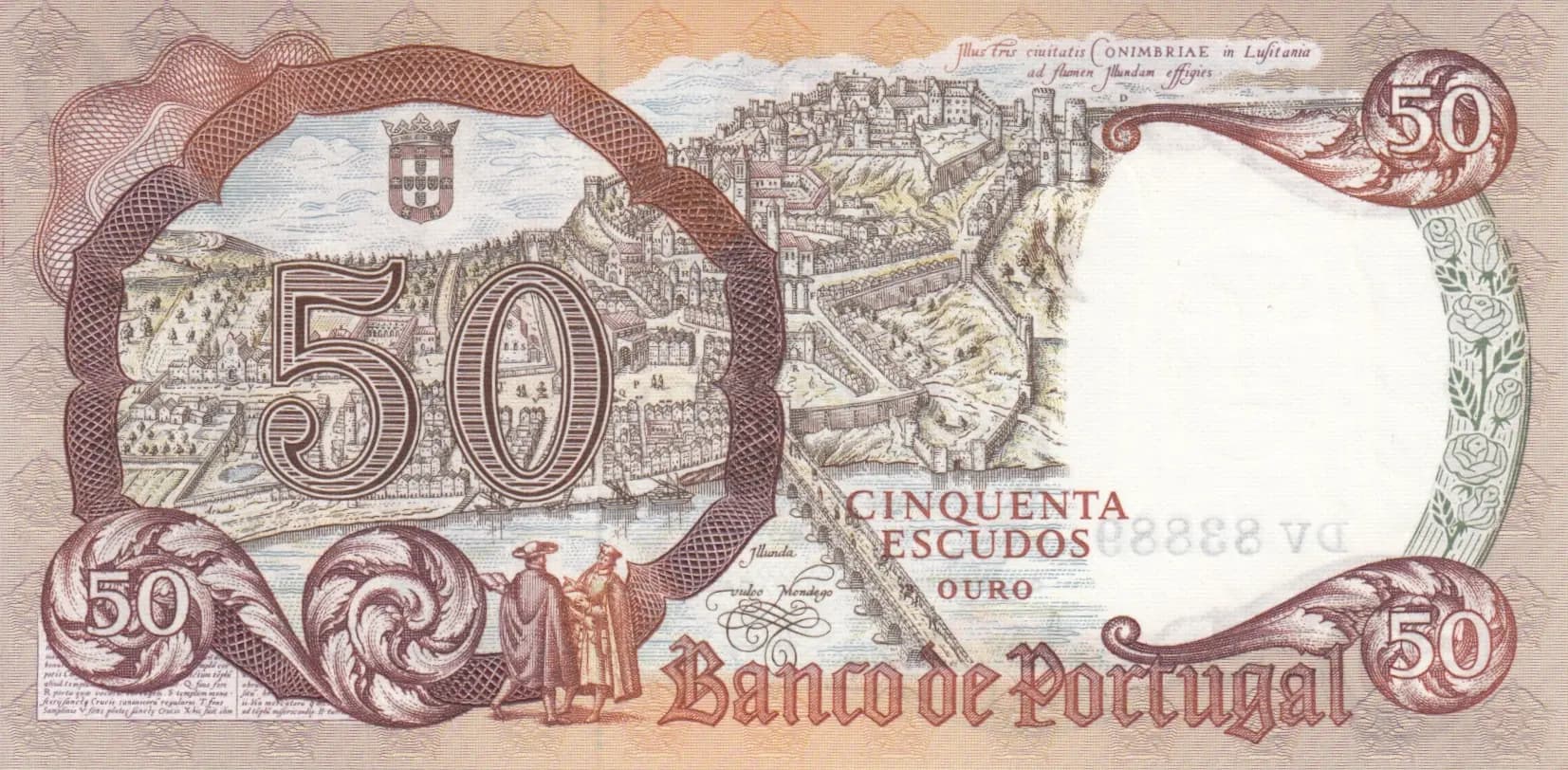
This is an exceptional example of a Portuguese 50 Escudos banknote from 1964, presented in uncirculated condition with sharp printing and vibrant, well-preserved colors throughout. The note features a striking portrait of Queen Santa Isabel in religious vestments on the obverse, paired with an elaborate engraved cityscape of medieval Coimbra on the reverse, showcasing the technical mastery of Portuguese banknote production during the Estado Novo period. As a relatively early post-war Portuguese note in pristine condition, this example represents the high standards of the Banco de Portugal's currency production.
Common. The 50 Escudos denomination from the 1964 issue series (Pick-168) was produced in substantial quantities as a standard circulation note for the Portuguese economy during the Estado Novo period. No evidence of restricted print runs, early recalls, or short-lived production suggests this note remained in circulation for an extended period. While uncirculated examples are always more desirable than circulated specimens, the denomination and issue date do not indicate scarcity. Notes from this series appear regularly in collector markets at modest valuations, consistent with common status.
Issued on 28 February 1964 during Portugal's Estado Novo regime, this banknote reflects the period's veneration of Catholic historical figures and national heritage. Queen Santa Isabel (Saint Elizabeth of Portugal, 1271-1336) was chosen as the obverse subject, reflecting the Estado Novo's emphasis on Portugal's medieval Christian kingdom and Catholic identity. The reverse's detailed depiction of Coimbra, with its fortified medieval architecture and Latin inscription referencing its status as an illustrious Portuguese city, exemplifies the regime's celebration of national historical monuments and cultural continuity during a period of significant political isolation.
The obverse features a formal portrait of Queen Santa Isabel positioned on the right side, depicted wearing a jeweled crown and religious habit consistent with her veneration as a saint. She is rendered in three-quarter profile with exceptional detail characteristic of fine banknote engraving. The composition is framed by the Portuguese coat of arms (shield with cross design) in the upper portion, with decorative floral and scroll patterns providing ornamental framing. The reverse presents an elaborate panoramic engraving of medieval Coimbra, showing the fortified city's distinctive towers, crenellated walls, and cathedral structures rising dramatically on a hillside. Two figures in period Renaissance dress are depicted in the lower left of the cityscape, adding narrative depth. The composition is bordered by ornamental floral elements on the right side, with large denomination numerals '50' prominently displayed. The color palette of mauve, rose, burgundy, cream, green, and brown tones creates a harmonious and sophisticated appearance characteristic of Portuguese currency design of this period.
FRONT SIDE: 'Banco de Portugal' (Bank of Portugal); 'CINQUENTA ESCUDOS' (Fifty Escudos); 'OURO' (Gold); 'LISBOA, 28 DE FEVEREIRO DE 1964' (Lisbon, 28 February 1964); 'O VICE-GOVERNADOR' (The Vice-Governor); 'O ADMINISTRADOR' (The Administrator); 'Rainha Santa Isabel' (Queen Saint Isabel); Serial number 'DV 83889'. REVERSE SIDE: 'CINQUENTA ESCUDOS' (Fifty Escudos); 'OURO' (Gold); 'Banco de Portugal' (Bank of Portugal); 'Illustria civitates CONIMBRIAE in Lusitania ut liberum videbis in Itinera officia' (The illustrious city of Coimbra in Lusitania, as you shall see in the journey of duties).
This note was produced using traditional intaglio (engraving) printing, the primary security printing method employed by the Banco de Portugal. The visual analysis reveals characteristic features of high-quality intaglio work: extremely fine line work and cross-hatching throughout both sides, intricate architectural detail on the reverse cityscape, and precision rendering of portraiture on the obverse. Security printing incorporated a repeating microtext background pattern reading 'BANCO DE PORTUGAL' on the obverse, a feature visible under magnification typical of 1960s Portuguese security printing standards. The Banco de Portugal employed leading security printers of the period, likely including Portuguese or contracted European engravers specializing in currency production.
This example is cataloged as Pick-168(1-1), indicating it represents the primary variety of the 1964 50 Escudos issue. The serial number format 'DV 83889' indicates standard serial number prefix designation typical of Banco de Portugal practice. The note is dated 28 February 1964 with signatures for both the Vice-Governor and Administrator, as is standard for this issue. No overprints, replacement designations, or other distinguishing variety markers are evident. This represents a standard-issue banknote without recorded varieties that would differentiate it from other examples of the same Pick number.