50 centavos 1920
Market Prices
14 salesAbout This Note
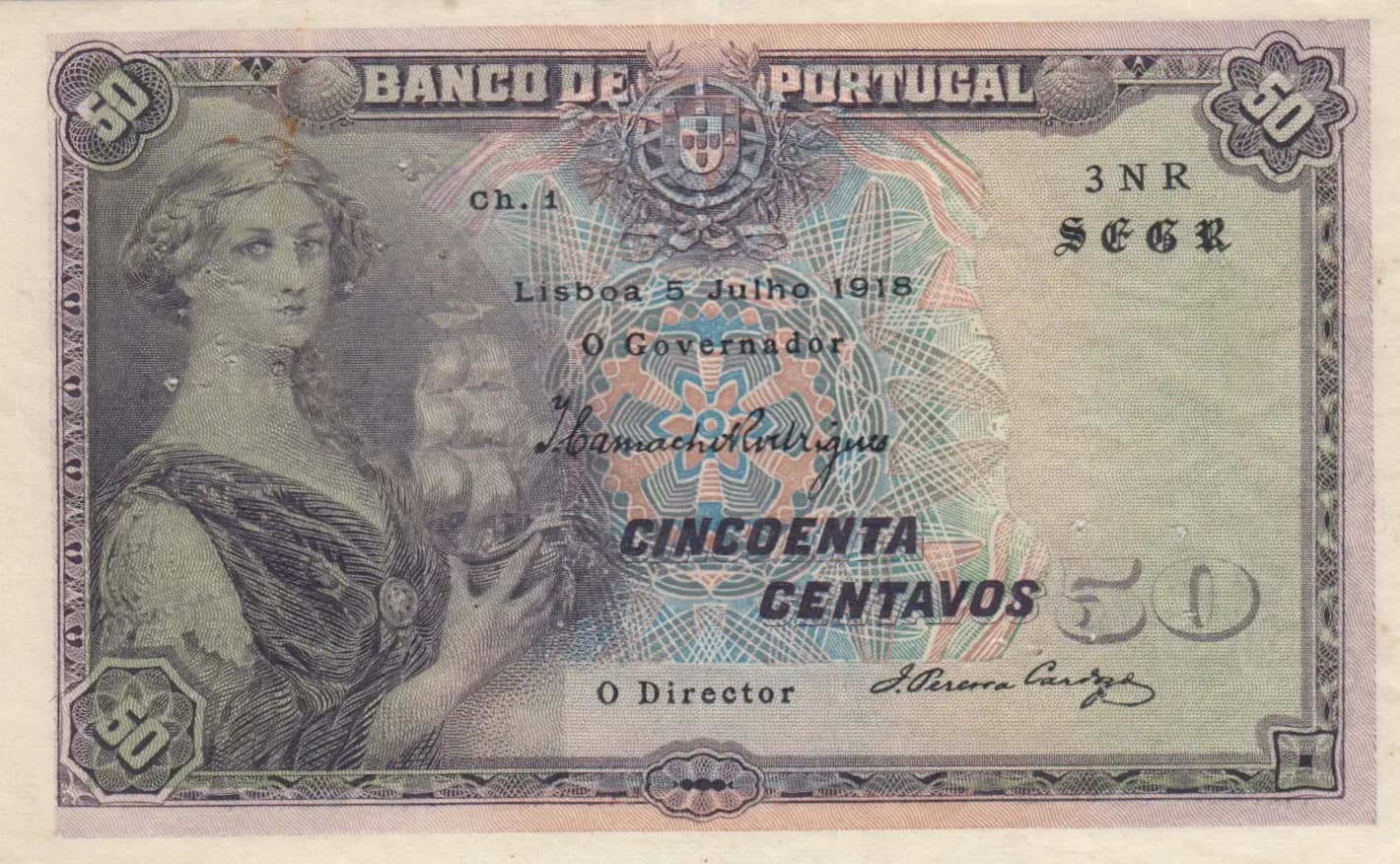
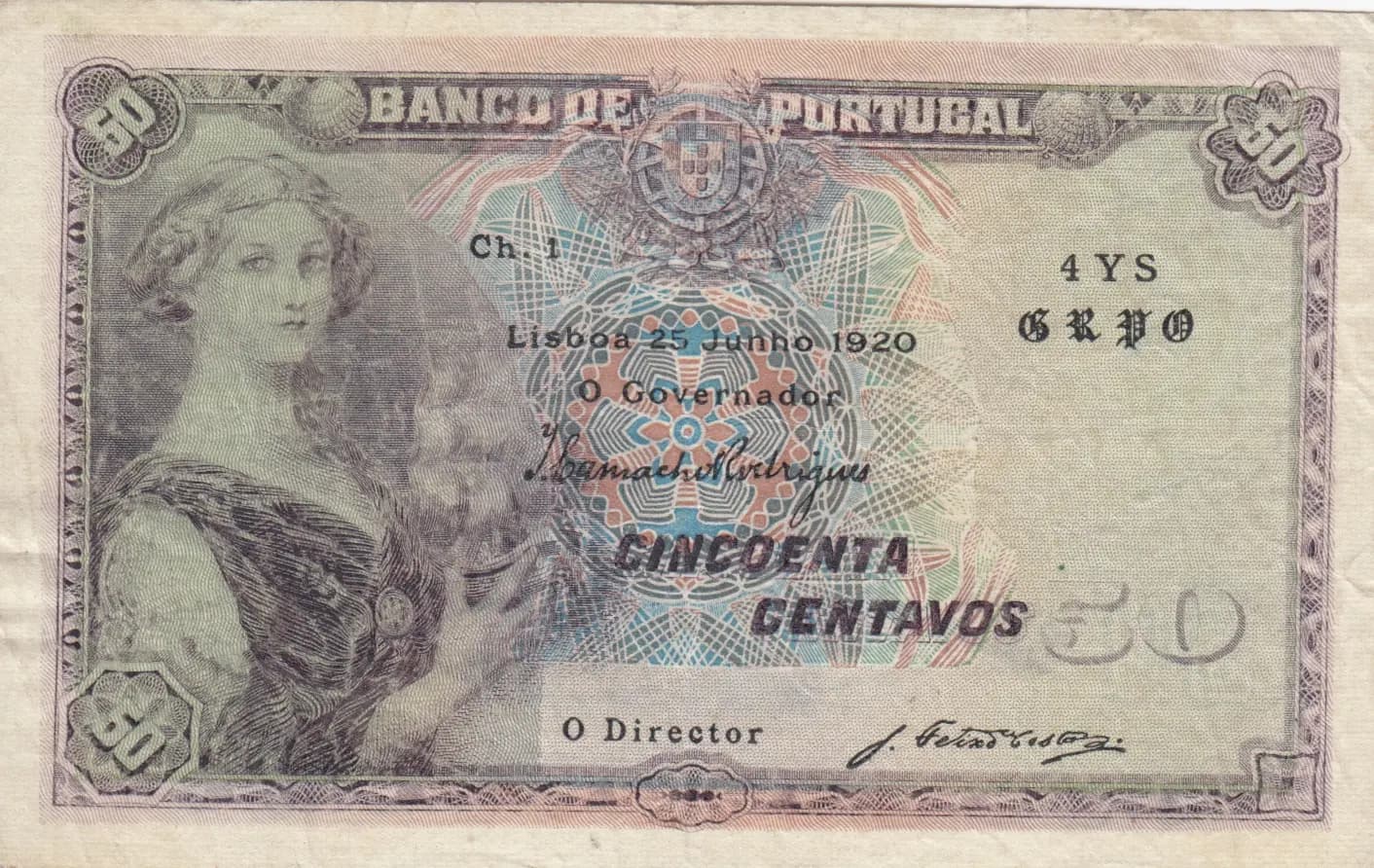
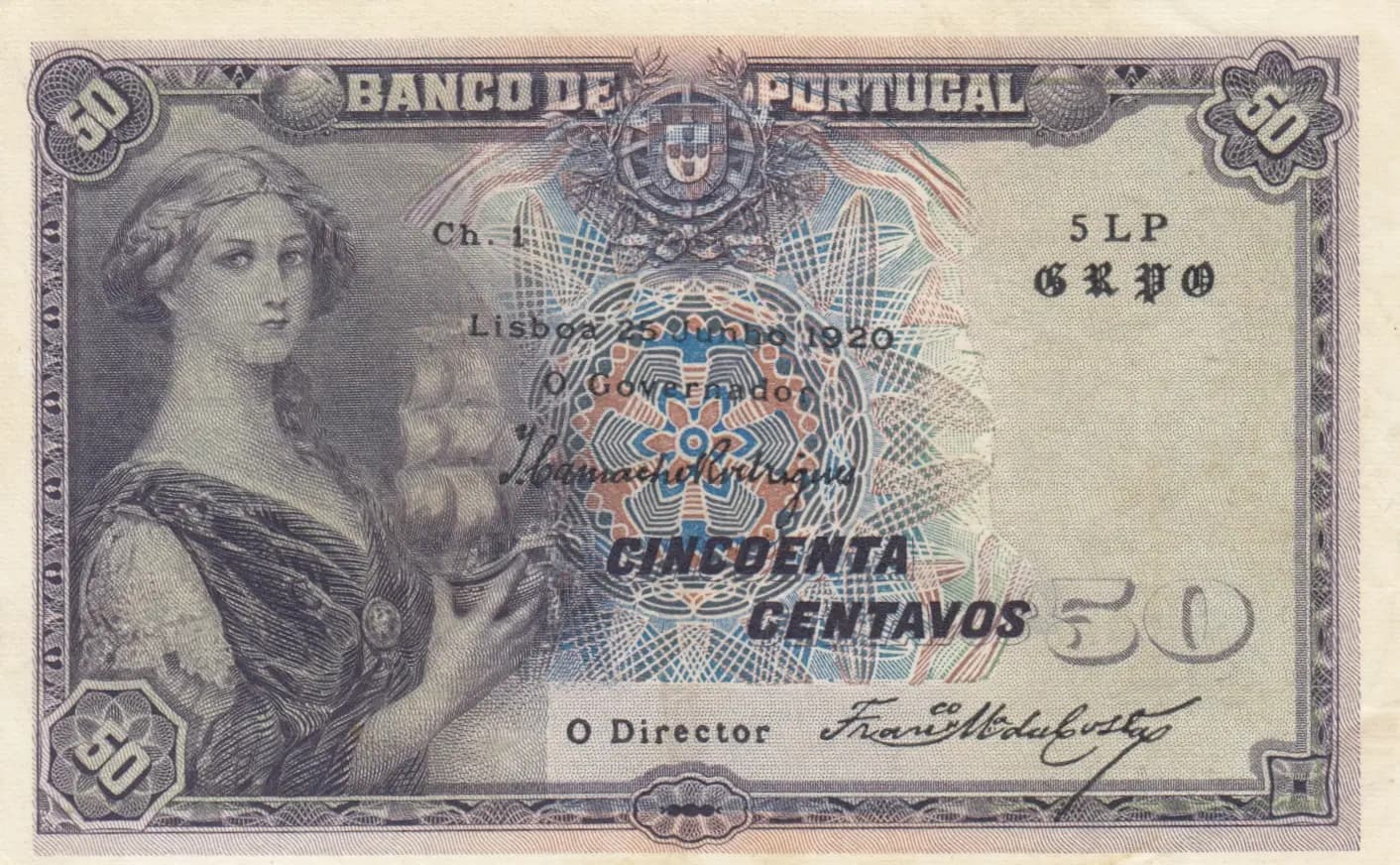
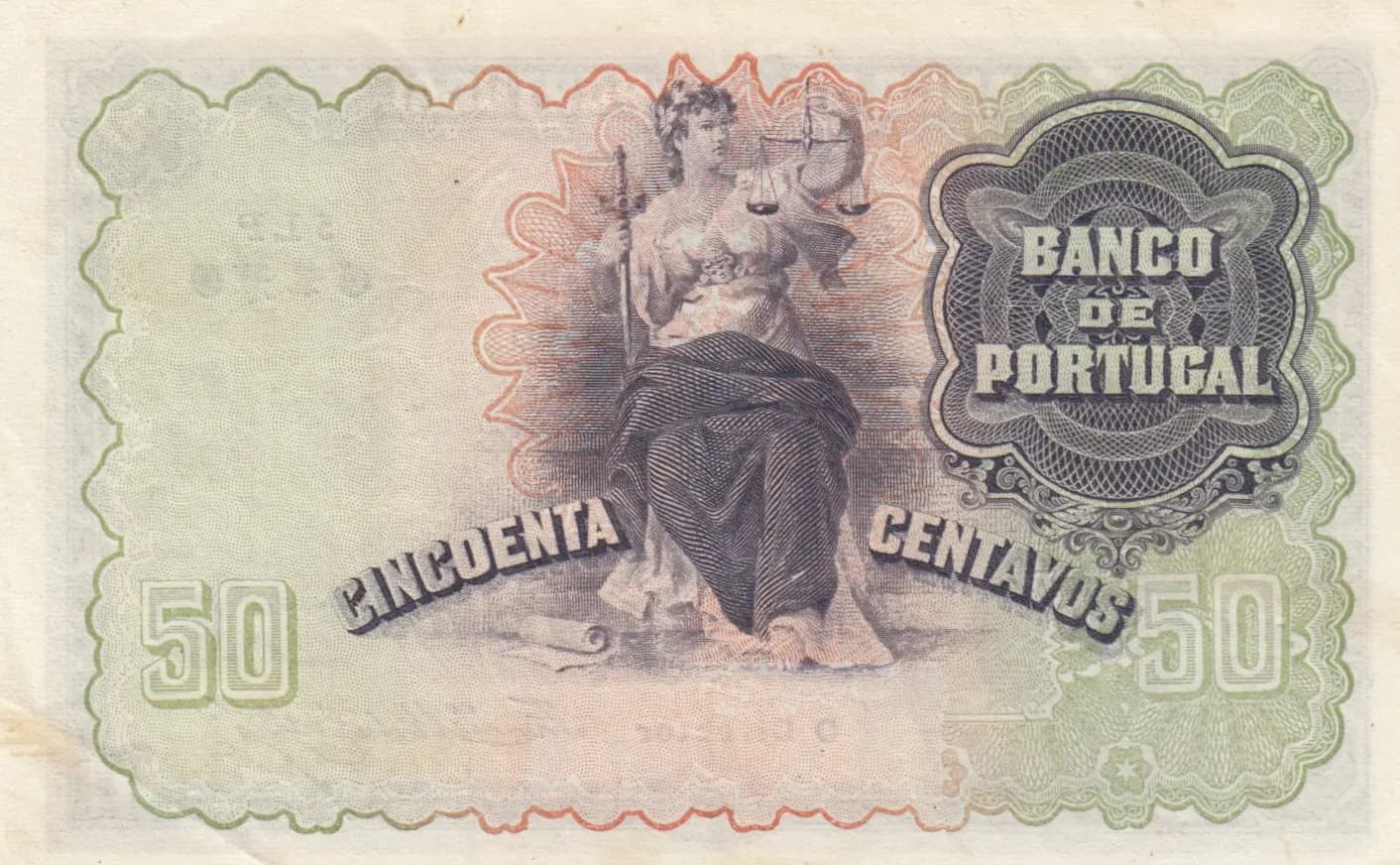
This is a well-preserved Portuguese 50 Centavos banknote from 1920, issued by Banco de Portugal and graded AU (About Uncirculated). The note features elegant classical allegorical female figures on both obverse and reverse, rendered in fine line engraving with purple, green, and multicolor toning. Despite its century-old age, the note exhibits minimal circulation wear with only light creasing and natural aging patina, making it an attractive example for collectors of early 20th-century Portuguese currency.
Common. This is a regular issue banknote from 1920 with substantial surviving examples in circulation. The eBay market data provided shows consistent sales at modest prices ($10-70 range for Fine to EF conditions), with even PMG-graded examples (PMG 65) selling at $308, indicating good availability. The 2016 catalogue values show EF examples at only $30, and lower grades at $5 or less. The denomination and date are standard, with no reported short print runs or recall issues. AU examples like this one typically command $100-200 in the collector market, reflecting their availability.
Issued in 1920 during Portugal's First Republic period, this 50 Centavos note reflects the artistic conventions of the era through its allegorical female figures—classical imagery commonly employed by central banks to represent national virtues and stability. The prominence of the Banco de Portugal imprint and Lisboa location stamp the note within the post-1910 republican monetary system, shortly after the establishment of the Portuguese Republic in 1910. The use of ornate security patterns and fine engraving techniques demonstrates the bank's commitment to producing currency that was both aesthetically sophisticated and resistant to counterfeiting.
The obverse features a classical allegorical female figure in profile on the left side, depicted in draped Greco-Roman style clothing and holding what appears to be a ship or naval emblem in her hand, symbolizing Portugal's maritime heritage. The center of the note is dominated by an ornate circular rosette medallion with intricate geometric and floral patterns in blue, red, and cream colors, functioning as a security device. The Portuguese coat of arms is positioned at the top center. The reverse displays a larger allegorical female figure (representing Justicia—Justice) in flowing classical robes, positioned center-right and holding both a shield/tablet and a staff or spear, the traditional symbols of judicial authority and law. An ornate scalloped border frame in green and orange/red encircles the reverse design. Both sides employ fine line engraving throughout with careful attention to detail in the allegorical figures' drapery and attributes.
Front Side: 'BANCO DE PORTUGAL' (Bank of Portugal) | 'CINQUENTA CENTAVOS' (Fifty Centavos) | 'Lisboa' (Lisbon) | '1920' (year of issue) | 'O Director' (The Director) | 'Francisco Modestus' (Director's signature). Back Side: 'BANCO DE PORTUGAL' (Bank of Portugal) | 'CINQUENTA CENTAVOS' (Fifty Centavos) | '50' (denomination numeral).
Intaglio (line engraving) printing, characteristic of high-security banknote production of the period. The printer is identified as BWC (Bradbury, Wilkinson & Company), a renowned British security printer, noted as printing without imprint mark. The fine line work, ornate geometric patterns, and detailed allegorical figures are typical of engraved intaglio production. The watermark features a Minerva head, a classical security feature integrated into the paper during manufacture.
This note is identified as Pick P-112b (the 'b' variant designation indicates a specific variety within the 50 Centavos 1920 issue). The visual analysis indicates this is Chapa 1 (Printing Plate 1), noted in the cataloging data. The block number and letters appear in 2 lines, a feature that may differentiate it from other varieties of this denomination. The signature of the Director (reading as 'Francisco Modestus' or similar) and the date '1920' identify it within the 1918-1920 issue range documented by Banco de Portugal. No significant overprints or special markings are evident that would indicate a scarce sub-variety.