50 centavos 1920
Market Prices
14 salesAbout This Note
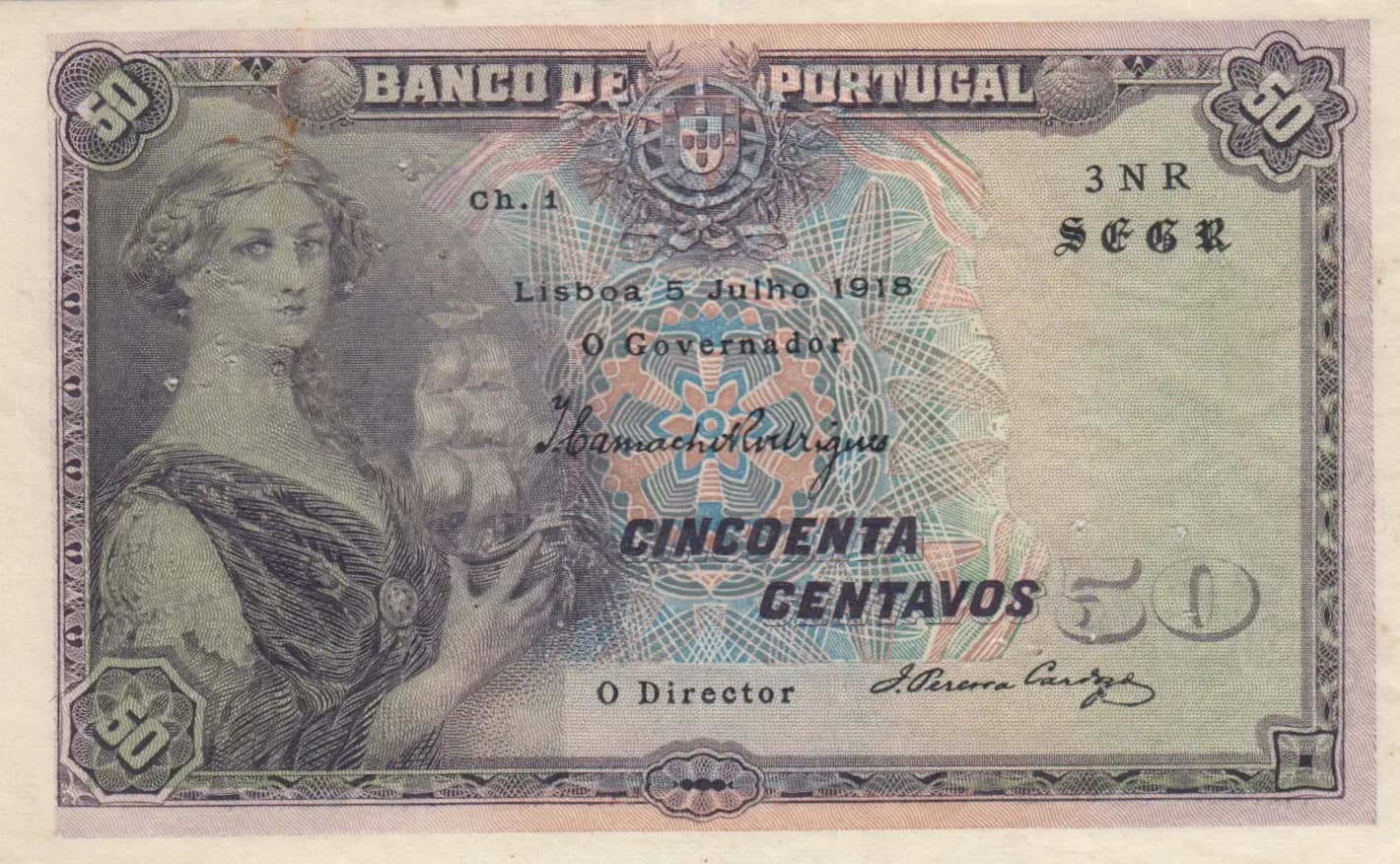
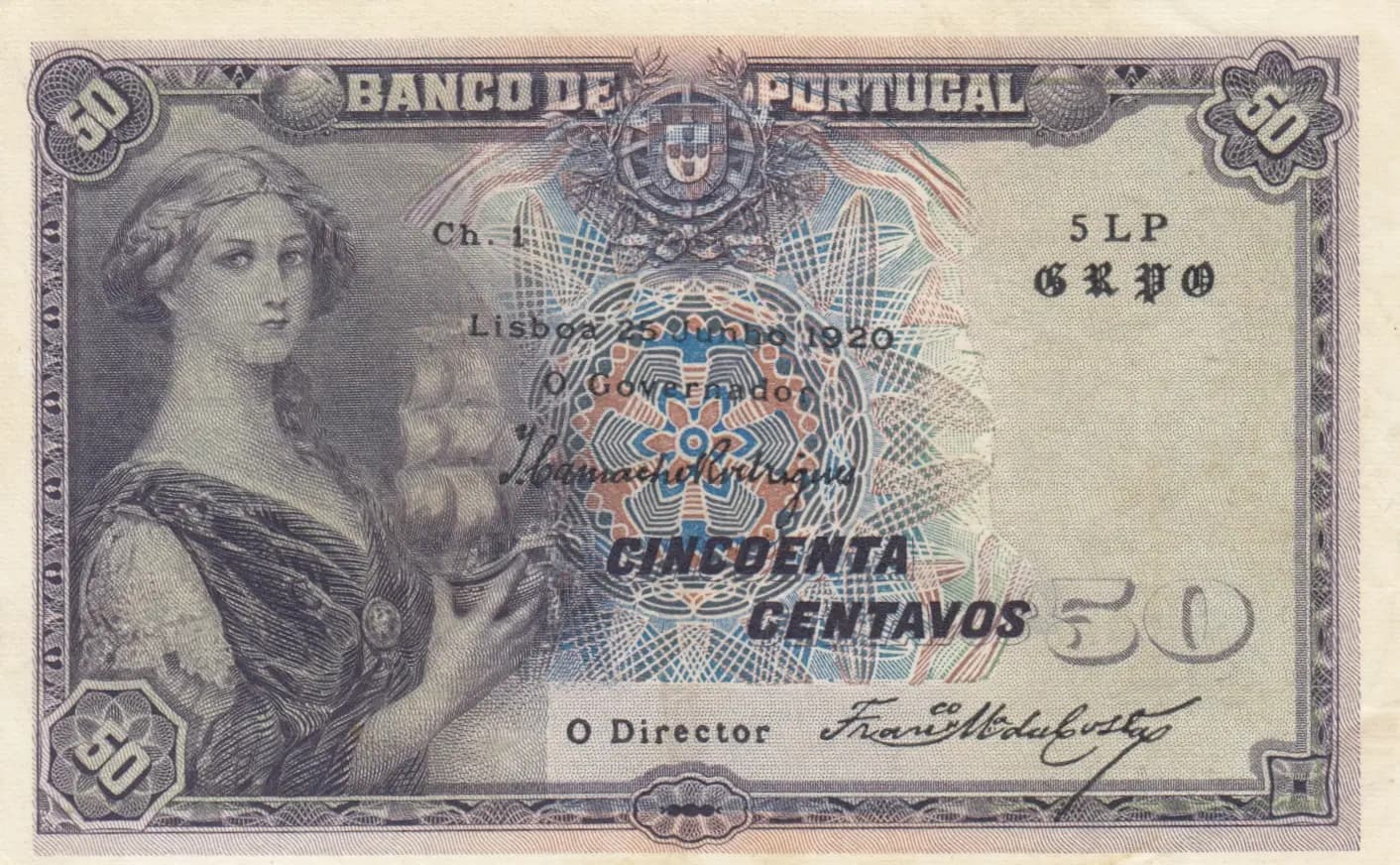
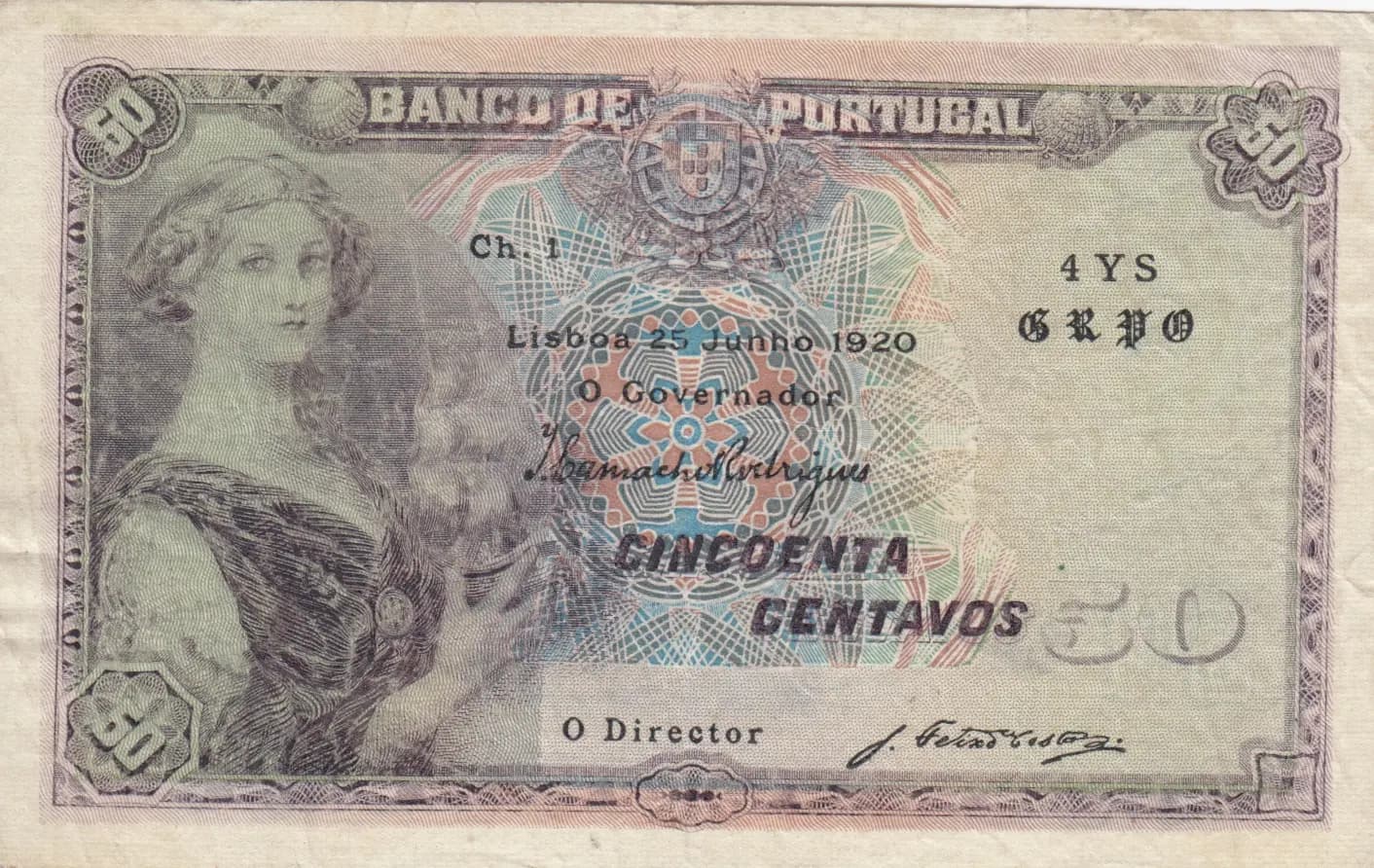
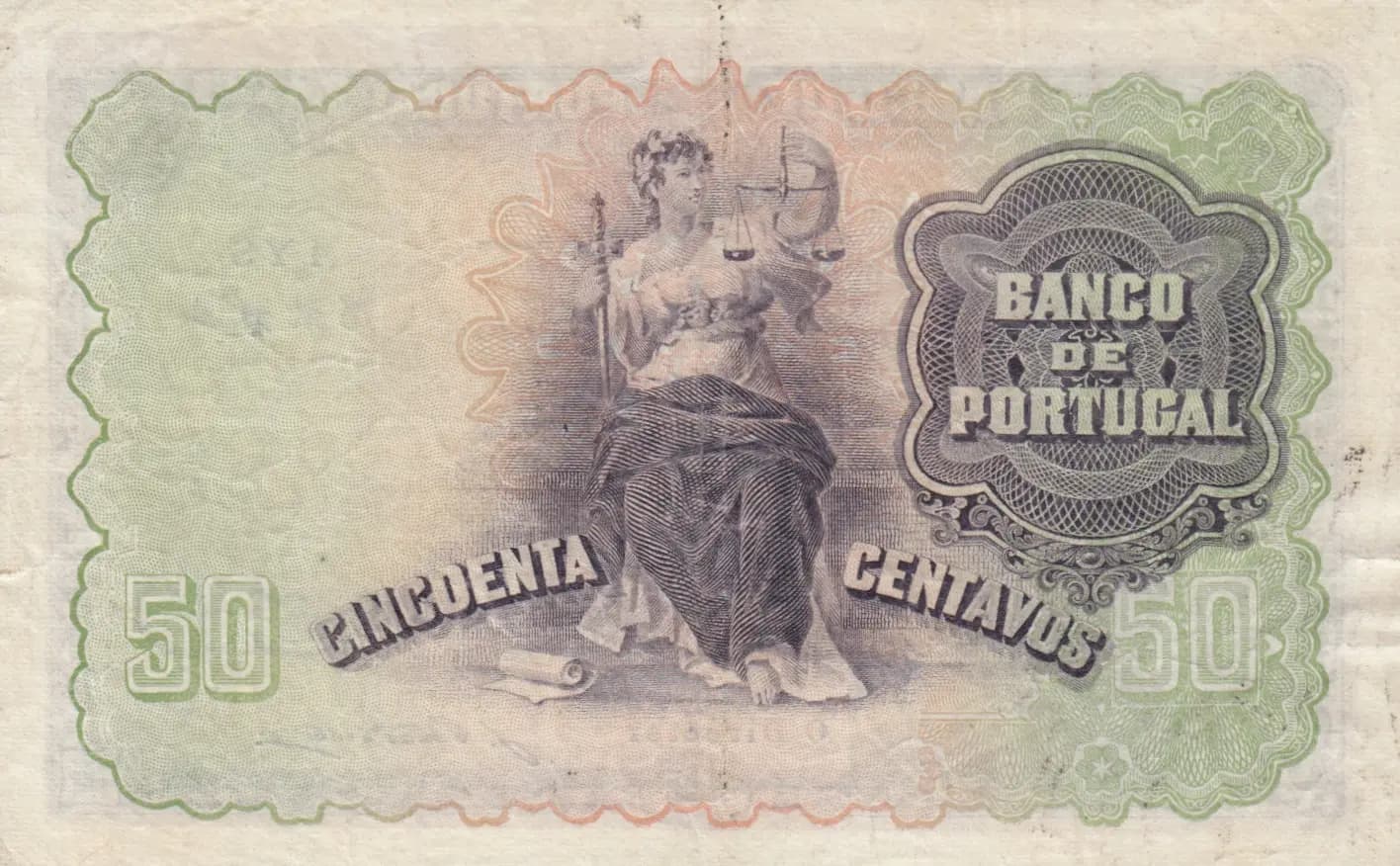
This is a Portuguese 50 Centavos banknote from 1920 (Pick P-112b), issued by the Banco de Portugal and graded in Fine condition. The note features classical allegorical imagery on both sides—a woman with a ship on the obverse and the figure of Justice with scales on the reverse—rendered in purple, green, and multicolor tones with fine engraving throughout. Despite visible circulation wear, creasing, and age-related discoloration consistent with its nearly century-old vintage, this note represents an attractive example of early 20th-century Portuguese currency design.
Common. eBay market data demonstrates consistent trading activity at modest prices ($5–$71 depending on condition grade), with multiple F-graded examples selling between $10.50 and $36.55 over a decade-long period. The 2016 catalog valuation of $5 for F-grade specimens, combined with the high frequency of sales and the absence of any record of restricted print runs or recall, indicates this is a readily available note in the secondary market. While historically interesting, it was clearly issued in substantial quantities and remains common in circulated grades.
Issued during a transformative period in Portuguese history following World War I, this 1920 banknote reflects the classical allegorical traditions favored by the Banco de Portugal in its interwar currency designs. The depicted allegorical figures—including the woman with a ship symbolizing commerce or maritime prosperity and Justice with her scales—embodied virtues the Portuguese state wished to project during the First Republic era (1910-1926). The note's date of June 23, 1920, places it within the early stabilization period following the tumultuous political changes of the 1910s.
The obverse features a classical female portrait in profile on the left, representing commerce or maritime prosperity, positioned beside an ornate Portuguese coat of arms or national emblem with radiating geometric lines in the center—a sophisticated security design element of the period. The reverse displays an allegorical representation of Justice (Justicia), depicted as a seated classical female figure holding the scales of justice and other symbolic attributes, framed by an elegant scalloped green border. Both sides employ fine line engraving with intricate cross-hatching and ornamental corner designs, typical of high-quality banknote production of this era. The multicolor printing—dominated by purple, green, blue, red, and cream tones—creates visual depth and complexity.
Front side: 'BANCO DE PORTUGAL' (Bank of Portugal), 'CINCOENTA CENTAVOS' (Fifty Centavos), 'Lisboa 23 Junho 1920' (Lisbon June 23, 1920), 'O Governador' (The Governor), 'Ch.' (Chapa/plate number), 'GRUPO' (Group), '4 YS' (block identifier). Back side: 'BANCO DE PORTUGAL' (Bank of Portugal), 'CINCOENTA CENTAVOS' (Fifty Centavos), '50' (numerical denomination).
This note was produced using intaglio engraving and letterpress printing techniques, characteristic of early 20th-century banknote production. The printer was identified as BWC (Bradbury Wilkinson & Company, a renowned London-based security printer) without imprint mark on the note itself. The fine line engraving visible throughout—particularly in the portrait work, coat of arms, and decorative borders—is hallmark of intaglio printing, while the multicolor application suggests multipass printing or advanced color separation techniques typical of premium banknote production.
This specimen is identified as Pick P-112b, the 1920 variety (as distinct from P-112a, the 1918 issue). The visual evidence confirms the June 23, 1920 date on the obverse. The note displays 'Chapa 1' designation and block number/letters in two lines, consistent with catalog records. The Minerva head watermark noted in reference materials, while not directly visible in the webp images, should be present when held to light. No significant varieties are apparent from the observed details; this appears to be a standard printing from the 1920 authorization.