50 centavos 1918
Market Prices
7 salesAbout This Note
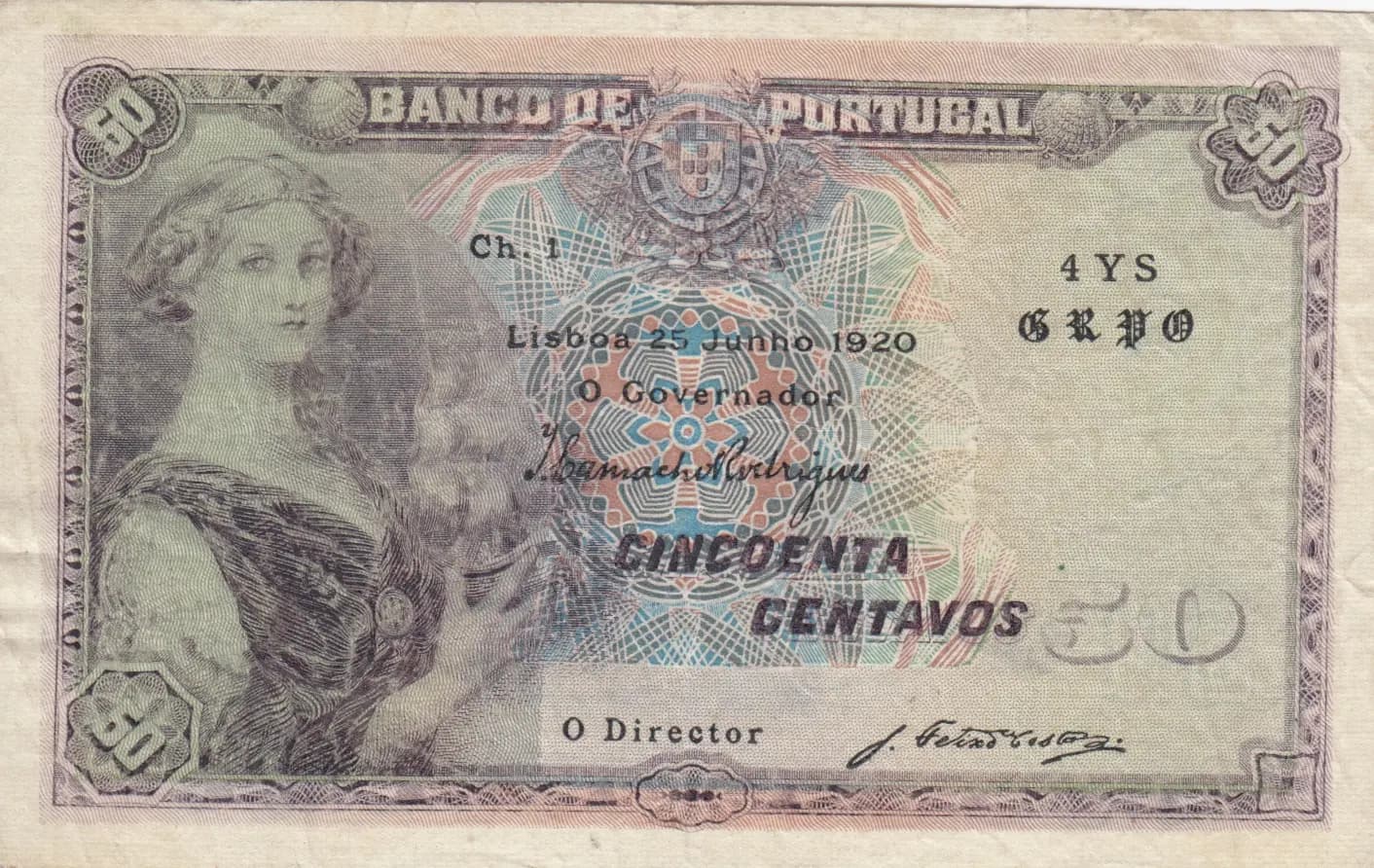
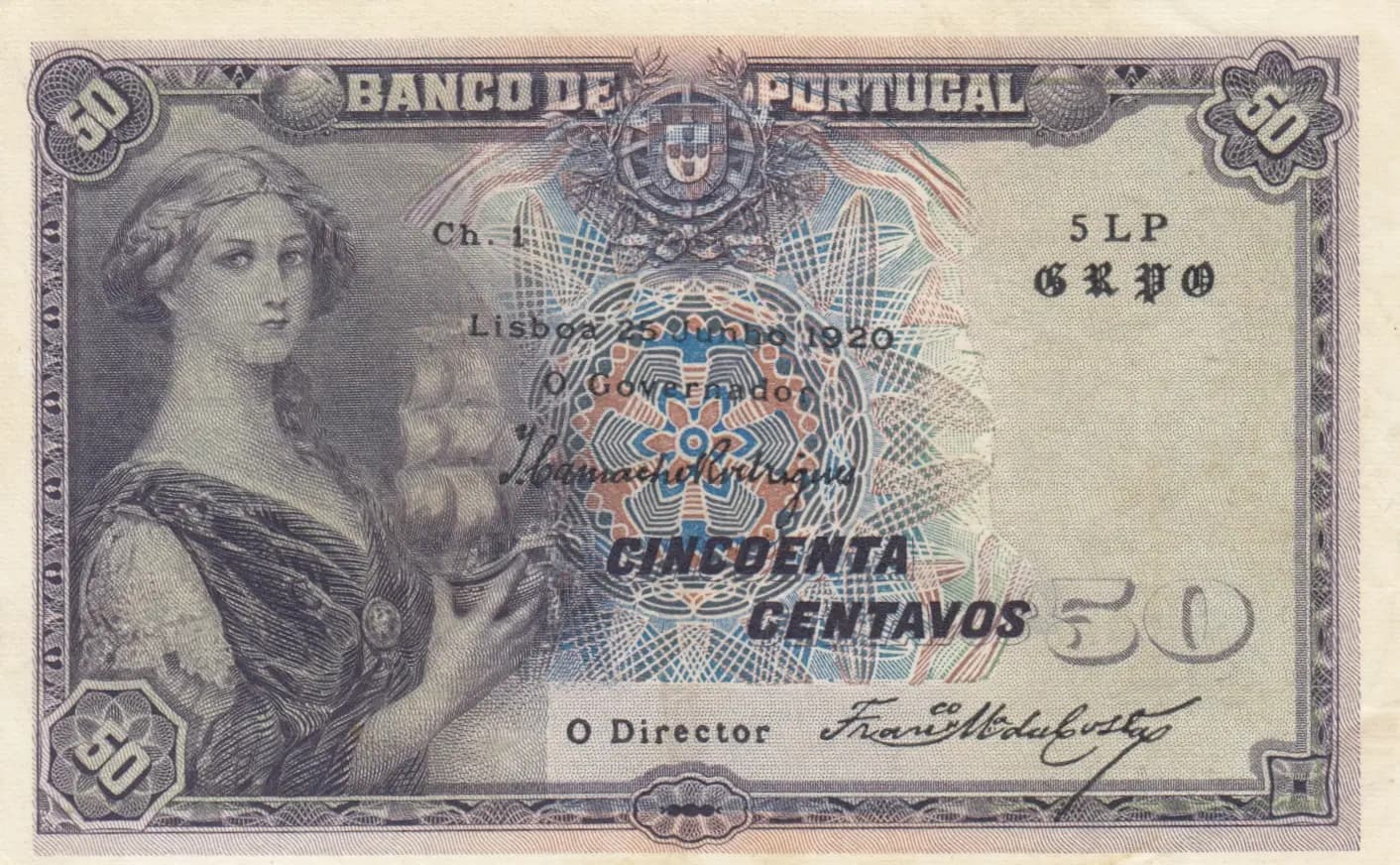
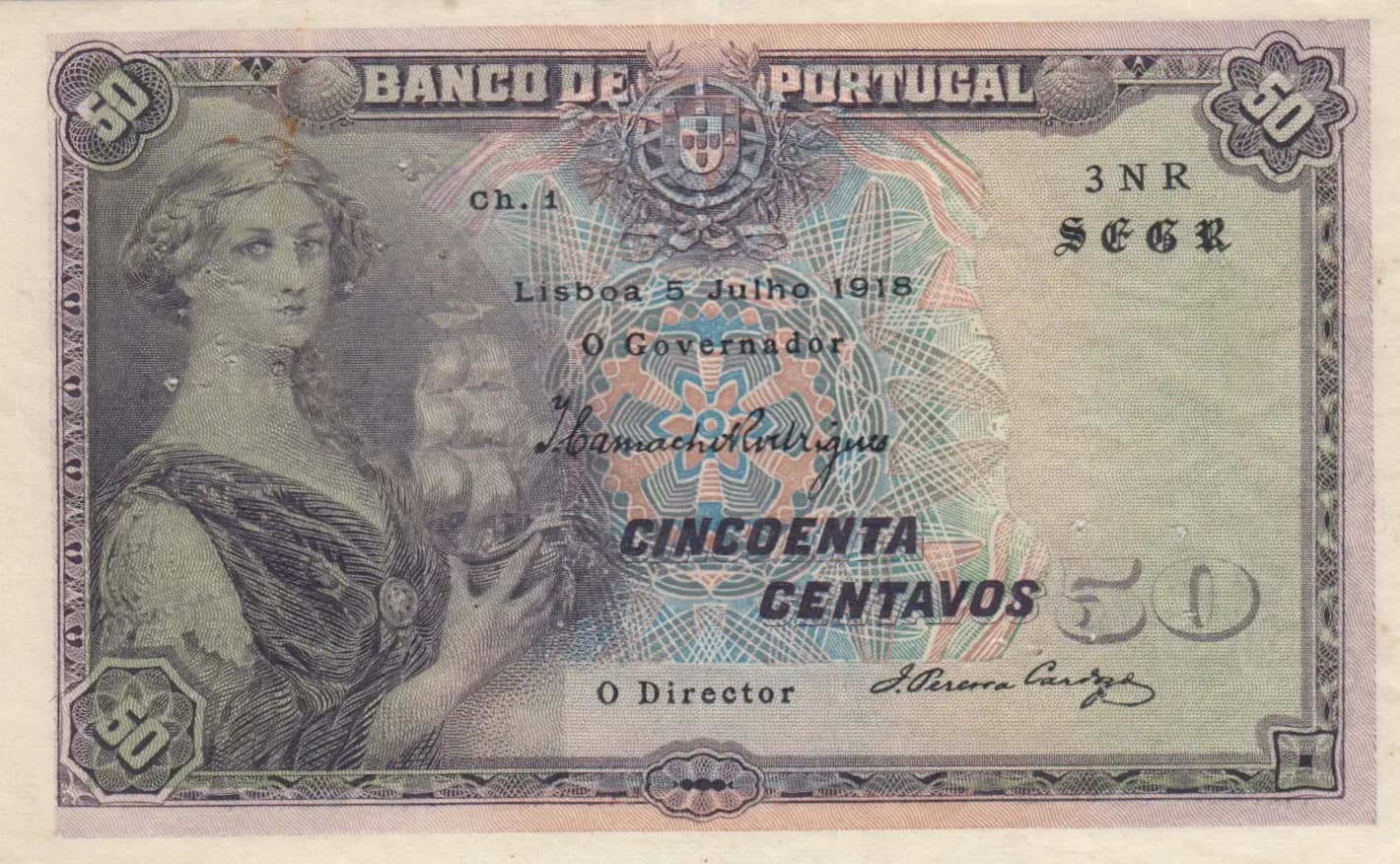
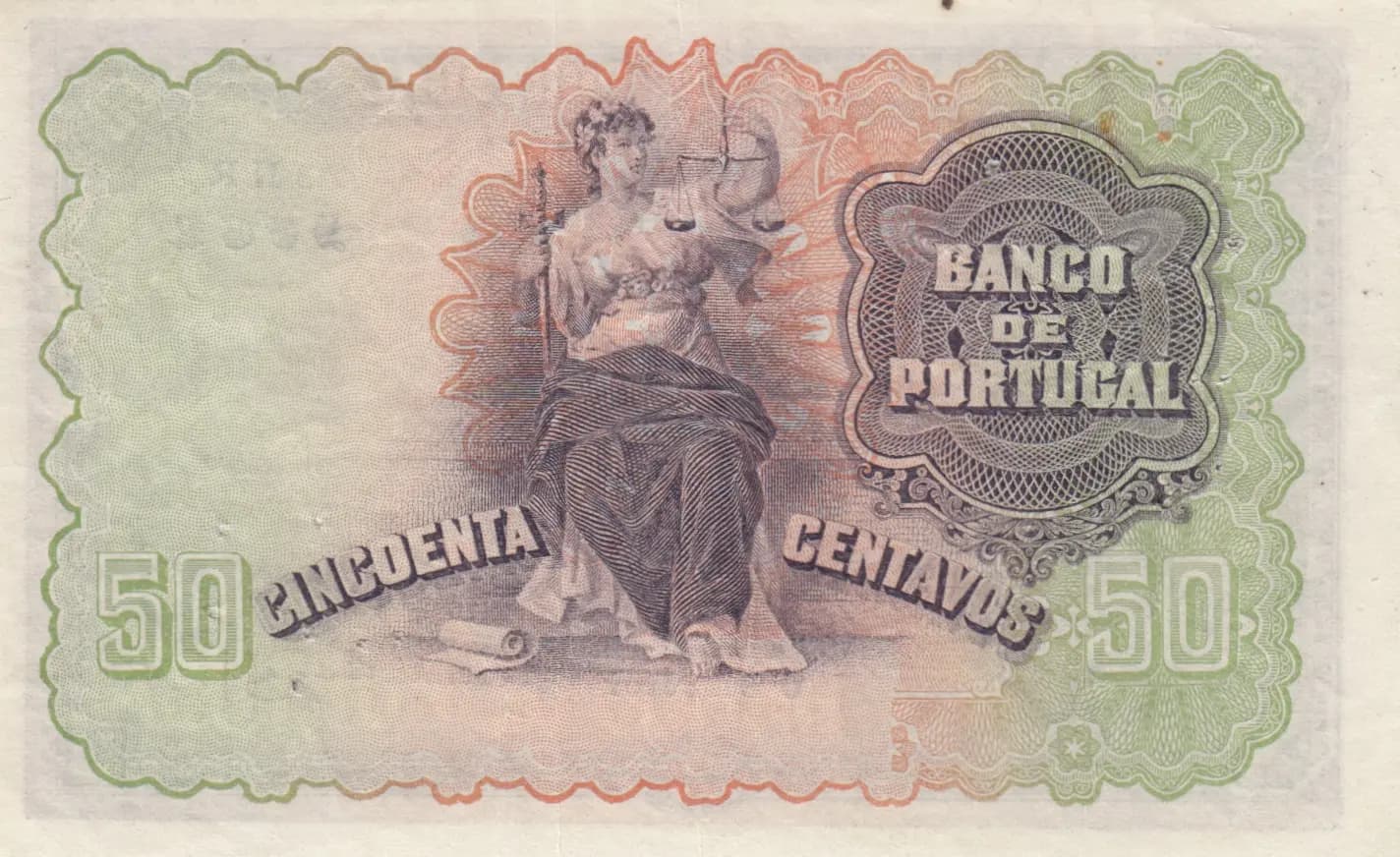
This Portuguese 50 Centavos note from 1918 (Pick P-112a) presents a well-executed example of early 20th-century Portuguese banknote design with classical allegorical imagery on both sides. The note displays the characteristic purple and multicolor printing typical of this issue, featuring a bearded classical male portrait on the obverse and an allegorical Justice figure with scales and staff on the reverse. In VF condition, this note shows moderate circulation wear with visible creasing, foxing, and some ink fading, yet retains good detail in the fine guilloche patterns and engraving work that typify Banco de Portugal's security printing standards.
Common. Secondary market data from realbanknotes.com shows consistent sales activity with VF specimens selling in the $46-75 range (2019-2023), well below the $100+ threshold typically associated with scarcer notes. The 2016 catalogue valuation of $35 for EF condition further supports a common classification. Regular issue status and apparent adequate print run suggest this denomination circulated widely during the 1918-1920 period. No evidence of recall, short-lived production, or restricted print runs exists.
Issued in 1918 during the First Portuguese Republic period, this banknote reflects Portugal's economic conditions during and immediately after World War I. The classical allegorical imagery—featuring Justice with her traditional attributes of scales and staff—emphasizes the note's role as a symbol of monetary authority and legal tender backing. The explicit dating of 'Lisboa 5 Julho 1918' anchors this note to a specific moment in Portuguese monetary history when centavo denominations remained important for daily commerce.
The obverse features a portrait of a bearded classical male figure in profile facing left, rendered in draped classical clothing, positioned at the left side of the note. This portrait is accompanied by the Portuguese coat of arms with shield and heraldic eagle with spread wings positioned centrally. The design incorporates ornamental corner pieces with four-pointed stars or rosette shapes and detailed border framing with geometric patterns. The reverse presents an allegorical female figure representing Justice (Justicia), seated in classical robes at the center, holding the traditional scales of justice in one hand and an axe or halberd in the other, symbolizing both the weighing of claims and the enforcement of law. Both sides employ intricate guilloche patterning and fine-line engraving throughout, with decorative cartouches and scalloped ornamental borders, particularly notable in green and tan tones on the reverse.
Front side: 'BANCO DE PORTUGAL' (Bank of Portugal), 'CINCOENTA CENTAVOS' (Fifty Centavos), '50' (denomination numeral), 'Lisboa 5 Julho 1918' (Lisbon July 5 1918), 'O Governador' (The Governor), 'O Director' (The Director), technical codes 'ch.4', '3NR', '$GGR'. Back side: 'BANCO DE PORTUGAL' (Bank of Portugal), 'CINCOENTA CENTAVOS' (Fifty Centavos), '50' (denomination numeral). All inscriptions appear in Portuguese with date explicitly stated in European format.
Intaglio engraving (line engraving/recess printing) combined with multicolor offset or letterpress printing. The note exhibits complex geometric guilloche patterns characteristic of high-security banknote production. The printer is identified as BWC (Bradbury Wilkinson & Company) without imprint, a premier security printer of the era. Multiple color passes (purple, green, blue, gray, tan, black) show precise color separation typical of banknote manufacturing standards. The fine-line detail work and intricate border designs indicate professional security printing intended to prevent counterfeiting.
This note is specifically identified as Pick P-112a (the 'a' designation indicating first type/variety). The visual analysis indicates 'Chapa 1' (Printing Plate 1), which may indicate a specific printing plate variety. The serial number format and reference codes ('ch.4', '3NR', '$GGR') visible in the images suggest this is a tracked variety by printing run. The 1918 issue date places this in the initial year of production before the 1920 re-issues also catalogued under this Pick number. Collectors should note that Pick P-112a, P-112b, and P-112c represent different printing variations of the 50 Centavos denomination from 1918-1920.