20 escudos 1960
Market Prices
21 salesAbout This Note
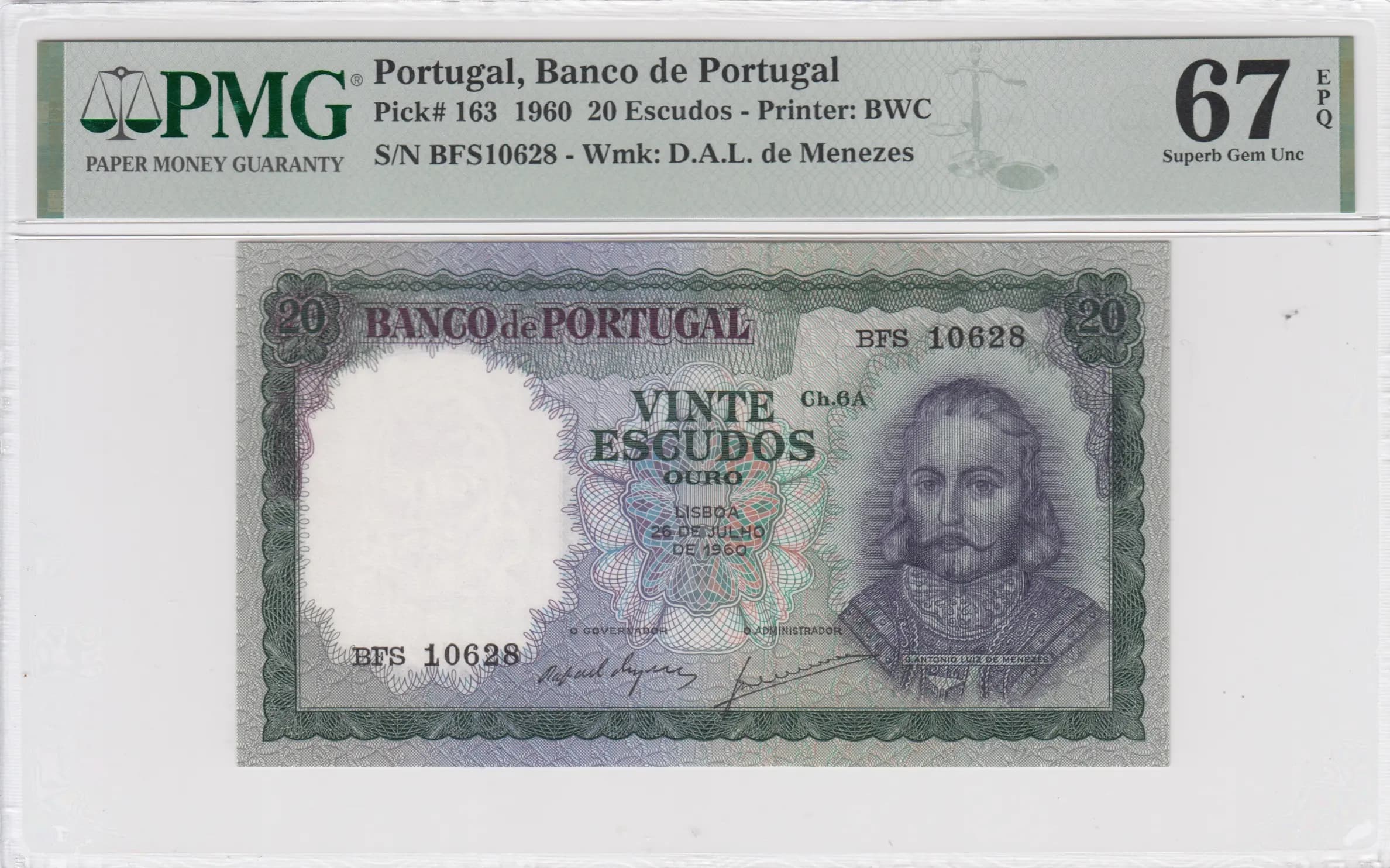
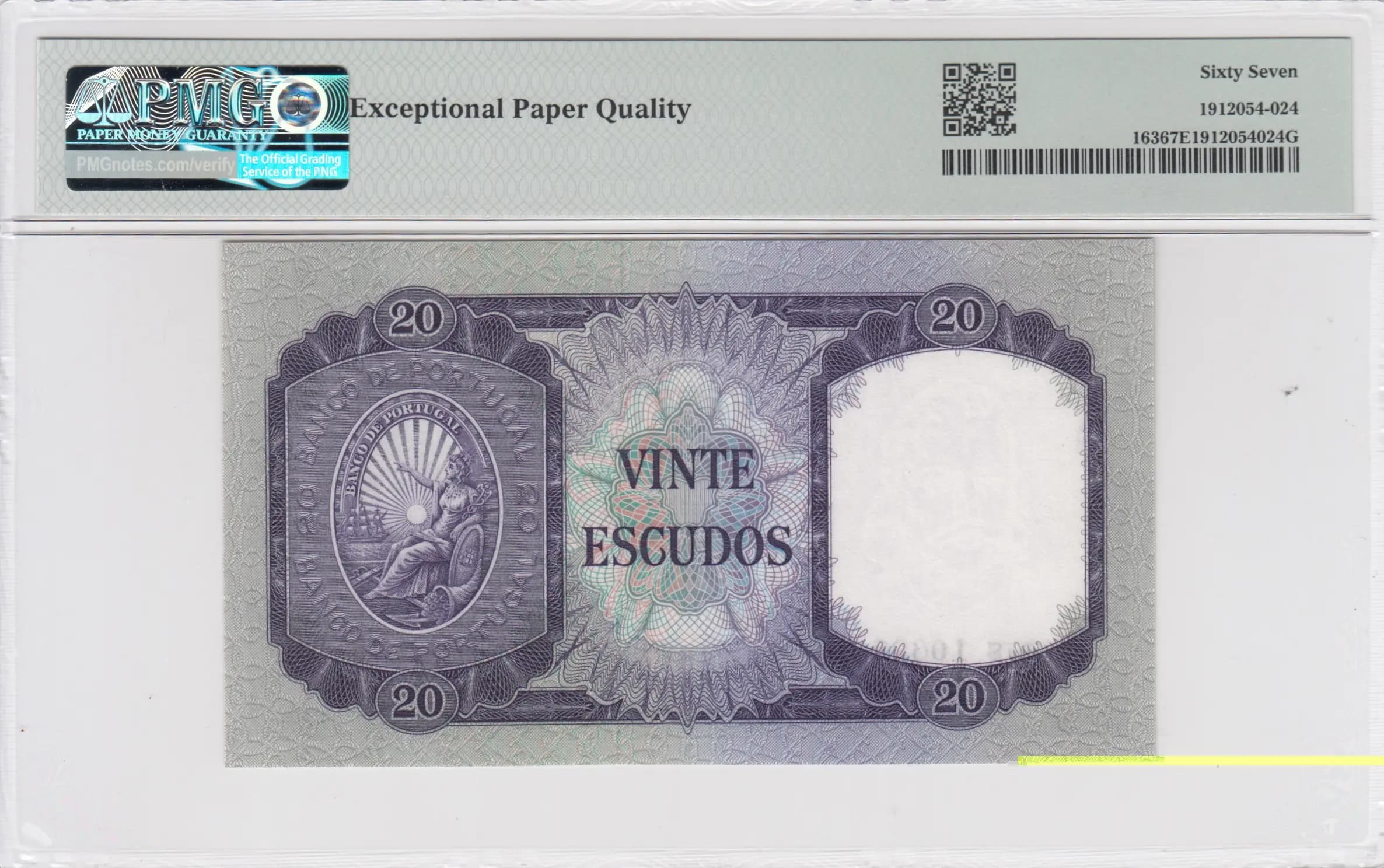
This is an exceptional example of the Portuguese 20 Escudos banknote from 1960, graded PMG 67 Superb Gem Uncirculated. The note features a striking portrait of Dom António Luís de Menezes on the obverse in dark green and purple on multicolor underprint, with an allegorical female figure within an ornamental oval medallion on the reverse. The crisp printing, complete absence of wear or creasing, and pristine paper quality make this a museum-quality specimen that represents the finest preservation state for this regular-issue currency.
Common. The eBay market data demonstrates consistent availability across multiple condition grades over the past decade, with VF examples regularly selling in the $5-$32 range and UNC examples in the $52-$86 range. The PMG population report indicates this is a standard catalogued variant with regular circulation in the collector market. Print runs for Portuguese 1960 20 Escudos notes were substantial, and the note was not subject to any known recall or short-lived issuance period. Current market pricing for PMG 67 specimens appears to align with approximately $60-$100 based on historical UNC sales data.
Issued on July 26, 1960, during the late Estado Novo period of Portuguese history under Prime Minister António de Oliveira Salazar, this banknote commemorates Dom António Luís de Menezes, an important historical Portuguese figure. The portrait dominates the obverse design, reflecting the Portuguese numismatic tradition of honoring national historical figures on currency. The allegorical imagery on the reverse, combined with the Banco de Portugal seal and the notation 'OURO' (Gold), emphasizes Portugal's monetary stability and the connection between the escudo and the nation's precious metal reserves during this period.
The obverse features a formal portrait of Dom António Luís de Menezes, a bearded historical figure positioned prominently on the right side of the note, rendered in fine intaglio detail. The left side displays an ornamental watermark area and decorative rosette patterns with intricate border designs. The reverse presents an allegorical representation of Portugal or national virtue as a seated female figure contained within an ornamental oval medallion positioned on the left, which serves as the bank seal emblem. Behind the central denomination text is a radiating sunburst pattern, creating visual depth. The color scheme of dark green and purple on multicolor underprint provides excellent visual contrast and security characteristics typical of 1960s Portuguese currency design.
OBVERSE: 'BANCO DE PORTUGAL' (Bank of Portugal), 'VINTE ESCUDOS' (Twenty Escudos), 'OURO' (Gold), 'LISBOA 20 DE JULHO DE 1960' (Lisbon, July 20th, 1960), 'D. ANTONIO LUIS DE MENEZES' (Dom Antonio Luis de Menezes - historical figure honored), 'O GOVERNADOR' (The Governor), 'ADMINISTRADOR' (Administrator), '20' (denomination), 'Ch.6A' (Chapa/Plate 6A designation). REVERSE: 'BANCO DE PORTUGAL' (Bank of Portugal), 'VINTE ESCUDOS' (Twenty Escudos), '20' (denomination markers in corners).
Intaglio (engraved) printing process, as evidenced by the fine line work visible throughout the border designs, the detailed portrait rendering, and the complex sunburst patterns on the reverse. The printer is identified as BWC (Banknote and World Currency, operating without imprint marking on the note itself), a major security printer of the mid-20th century. The intricate engraving patterns and fine-line security features confirm the use of traditional intaglio methodology combined with multicolor printing techniques.
This specimen is graded as PMG 67 EPQ (Exceptional Paper Quality) and represents Chapa (Plate) 6A. The catalog data indicates 8 signature varieties exist for this Pick number, though this specific note's signature variety cannot be definitively determined from the provided visual analysis. The serial number visible is BFS 10628, with the 'BFS' prefix potentially indicating a specific printing batch or series designation. The absence of any printer imprint on the note is consistent with BWC's known practices for Portuguese currency during this period. No significant overprints, color varieties, or other notable deviations from the standard 1960 issue are apparent.