1000 escudos 1965
About This Note
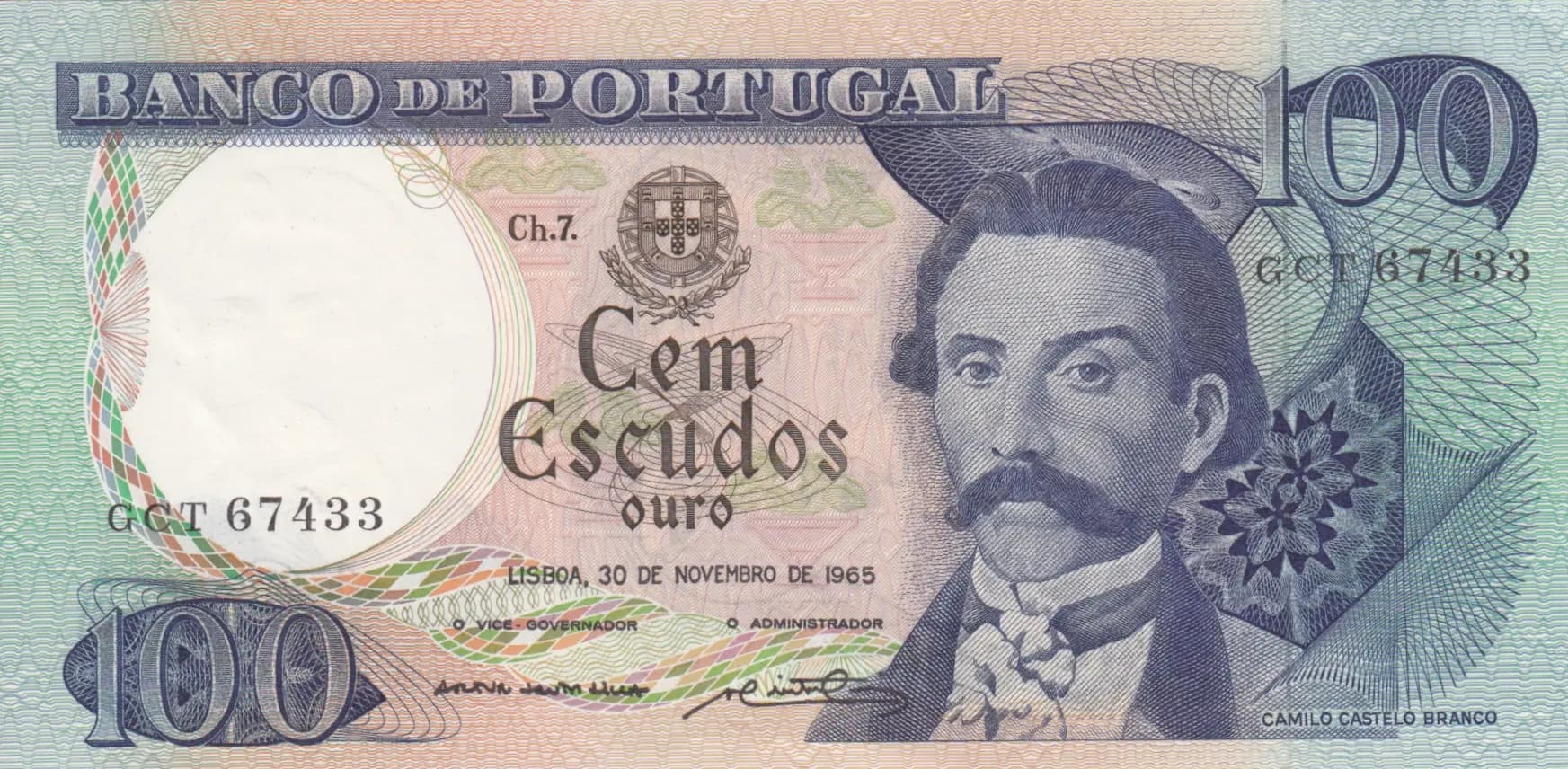
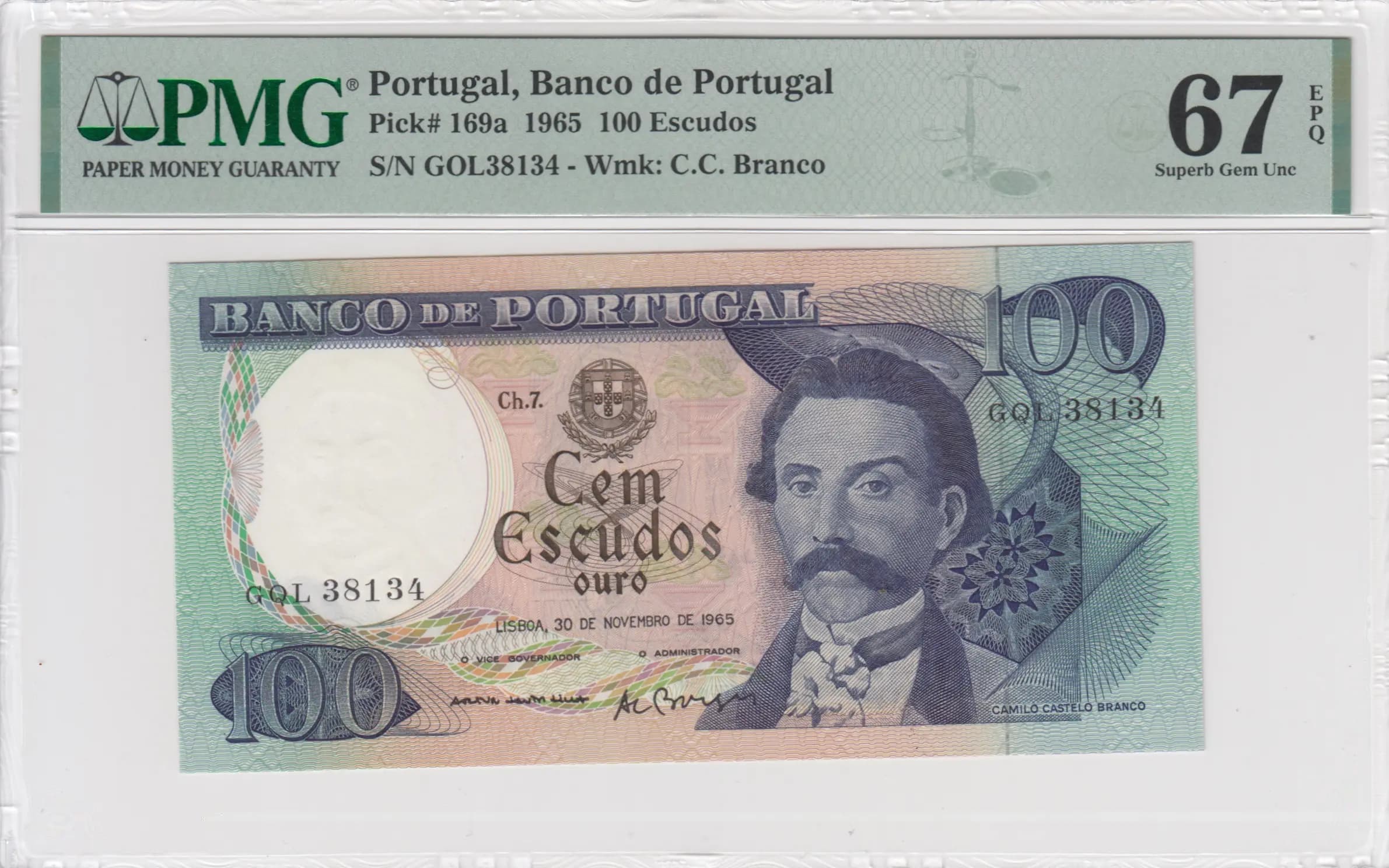
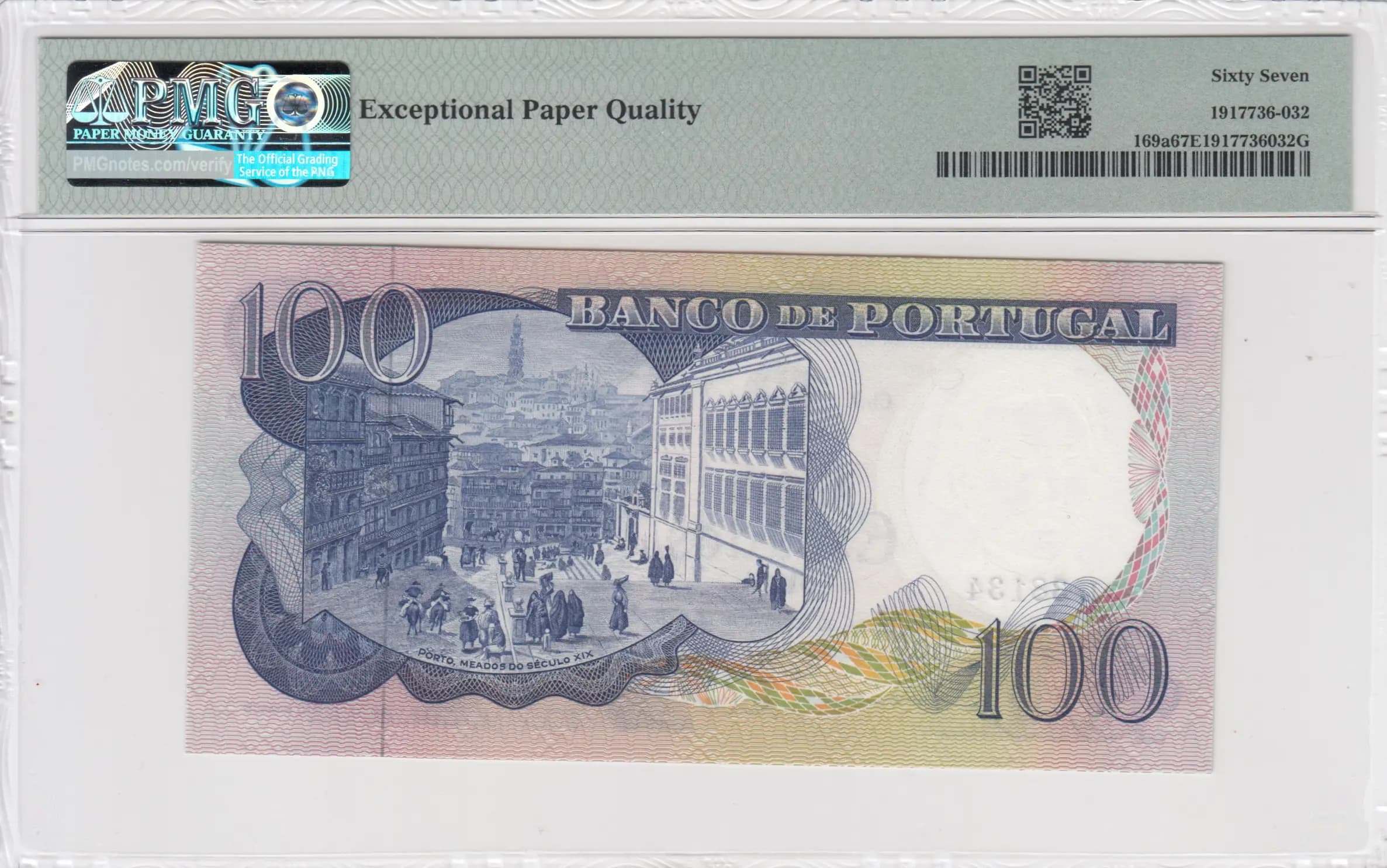
This is a PMG 67 EPQ example of Portugal's 100 Escudos banknote from 1965, featuring a portrait of renowned Portuguese writer Camilo Castelo Branco on the obverse and a detailed 19th-century cityscape of Porto on the reverse. The note exhibits pristine uncirculated condition with sharp engraving throughout, vibrant color printing in greens, blues, and accent tones, and excellent margin clarity characteristic of the finest specimens of this issue.
Common. The 100 Escudos denomination from 1965 was issued in substantial quantities for circulation by Banco de Portugal and remained in use for an extended period. While the PMG 67 EPQ grade represents an exceptionally well-preserved example (superior to the typical circulated state of surviving specimens), the underlying note itself is not scarce in the collector market. High-grade examples command modest premiums over lower grades, but the note is readily available to collectors at reasonable prices.
Issued by Banco de Portugal on November 30, 1965, this note commemorates Camilo Castelo Branco (1825-1890), one of Portugal's most celebrated 19th-century novelists, reflecting the nation's pride in its literary heritage during the Salazar era. The reverse depicts Porto's mid-19th century architecture, documenting the urban character of Portugal's second major city during a period of significant social and economic development. This denomination and design remained in circulation until superseded by later issues, serving as a medium of exchange during a pivotal period of Portuguese history.
The obverse features a three-quarter length portrait of Camilo Castelo Branco positioned on the right side, rendered with fine engraving detail showing his distinctive beard and formal 19th-century dress. A circular Portuguese coat of arms or commemorative medallion appears on the left with geometric ornamentation. The reverse showcases an elaborate oval-framed engraving of a Porto city plaza from approximately 1850, depicting classical architecture with multiple-story buildings, period-dressed figures in the public space, and a church or cathedral structure visible in the composition. Both sides employ ornate guilloche borders and decorative corner elements. The color palette—predominantly green and blue with pink and beige accents—creates visual hierarchy and security characteristics typical of high-denomination Portuguese escudos of this era.
FRONT: 'BANCO DE PORTUGAL' (Bank of Portugal); 'Cem Escudos ouro' (One Hundred Escudos gold); 'CAMILO CASTELO BRANCO' (the portrayed writer's name); 'LISBOA, 30 DE NOVEMBRO DE 1965' (Lisbon, November 30, 1965); 'O VICE-GOVERNADOR' (The Vice-Governor); 'O ADMINISTRADOR' (The Administrator); 'Ch.7.' (Chapter 7 reference); serial number component 'GOL 38134'. BACK: 'BANCO DE PORTUGAL' (Bank of Portugal); '100' (denomination); 'PORTO MEADOS DO SÉCULO XIX' (Porto Mid-19th Century).
Intaglio/engraving printing, the standard method for Portuguese banknotes of this period. The fine-line guilloche patterns, intricate architectural details on the reverse, and subtle color gradations observed throughout are characteristic of professional security banknote engraving. The security printer for Portuguese notes of this era was typically Casa da Moeda (Portuguese Mint) or contracted European printers such as Waterlow & Sons or similar specialized firms, though specific attribution for this Pick number would require manufacturing documentation.
This example is identified as Pick 169a (21) based on catalog notation, indicating it is the 1965 issue variant. The date 'LISBOA, 30 DE NOVEMBRO DE 1965' confirms the specific printing date. The serial number prefix 'GOL' and signature combination with Vice-Governor and Administrator designations should be noted for variety identification. Minor variations in signature choices and serial number prefixes may exist across the print run; detailed variety catalogs (such as extended Pick references or Portuguese numismatic society publications) would clarify all known variants for this denomination and year.