1000 escudos 1965
About This Note
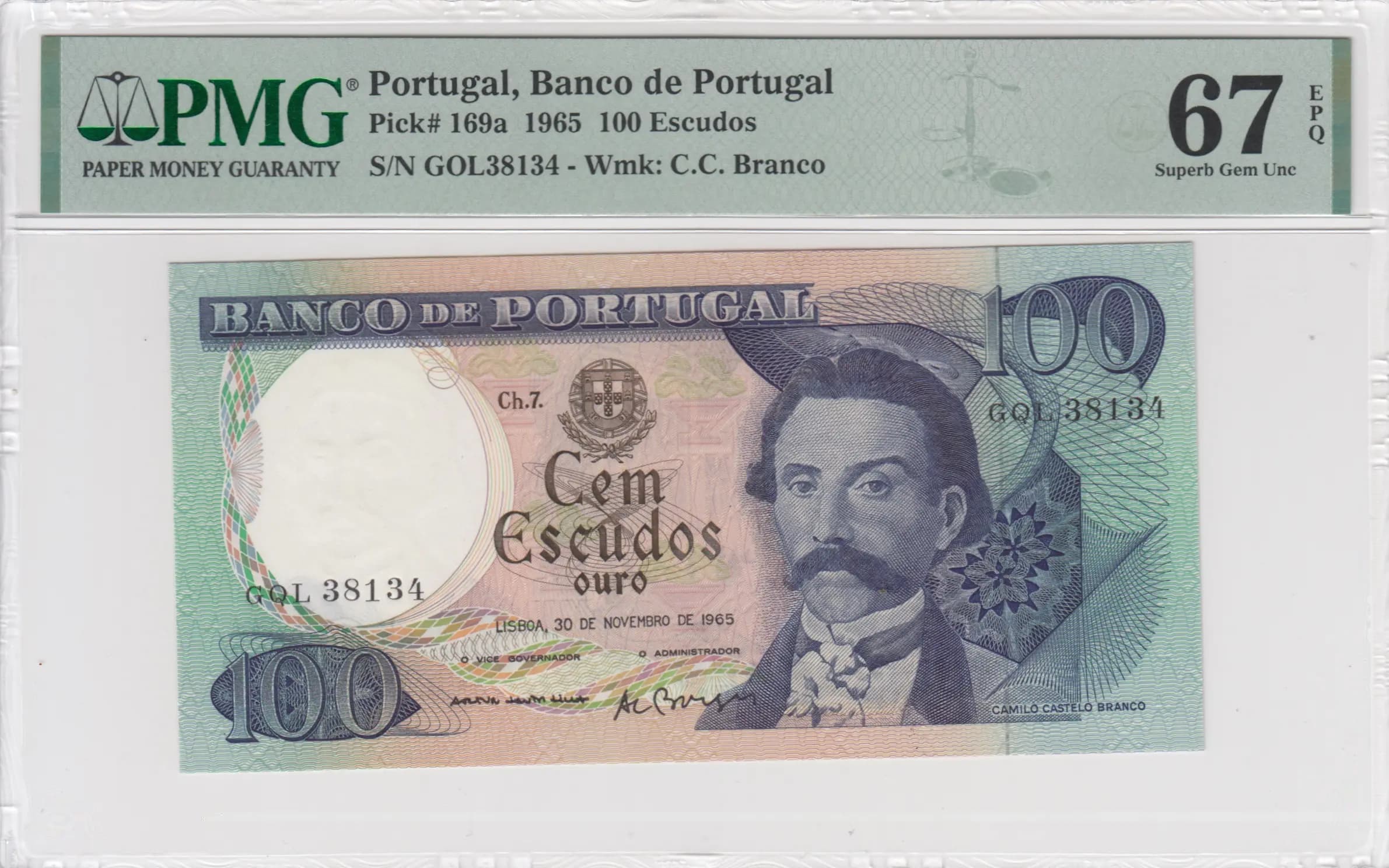
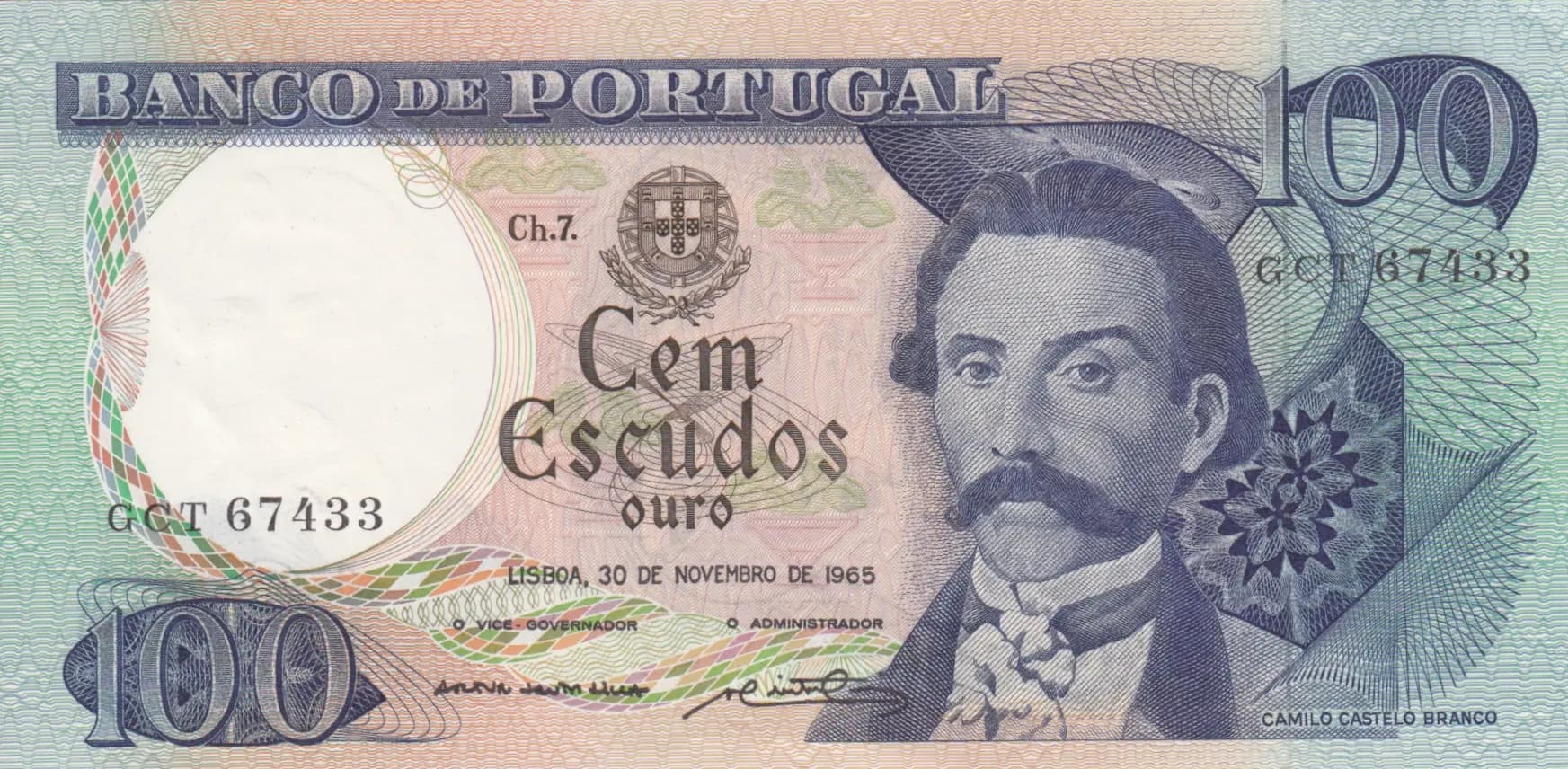
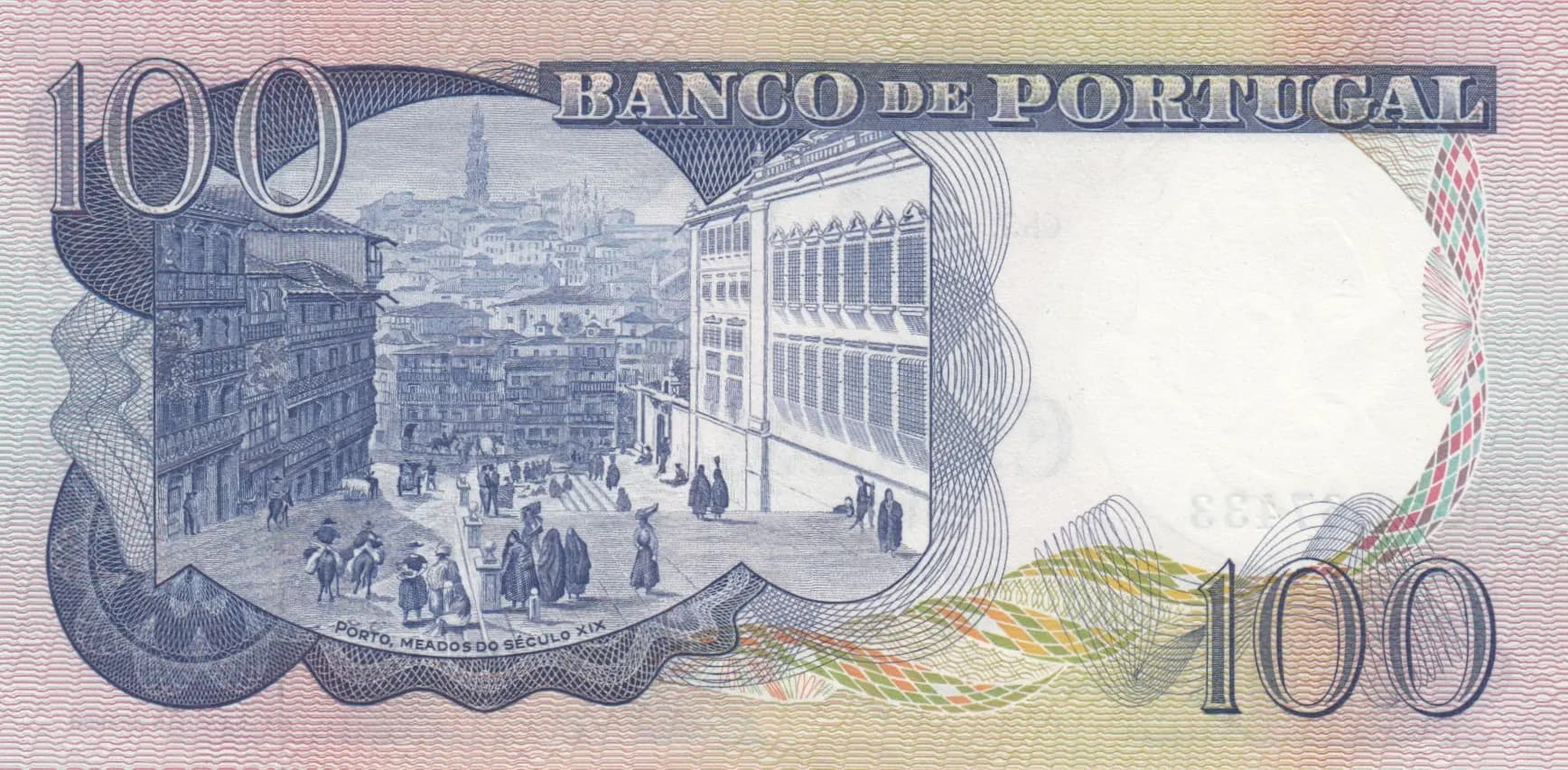
This is an exceptional UNC example of the Portuguese 100 Escudos banknote from 1965, featuring the distinguished portrait of Camilo Castelo Branco, the celebrated 19th-century Portuguese writer, on the obverse. The reverse showcases a beautifully engraved historical cityscape of Porto from the mid-19th century, rendered in fine detail with distinctive architectural elements. In pristine uncirculated condition, this note displays crisp printing, vibrant color work, and no signs of wear or handling, making it an attractive example for collectors of Portuguese currency or Iberian numismatics.
Common. The 1965 100 Escudos note (Pick 169a) was issued in substantial quantities as a standard circulation denomination during the Estado Novo period. While uncirculated examples in pristine condition are more desirable than circulated pieces, the note itself was not part of a limited or commemorative issue, and surviving UNC specimens are readily available in the collector market at modest valuations typical of Portuguese escudo notes from this era.
Issued on November 30, 1965, during Portugal's Estado Novo period, this banknote commemorates Camilo Castelo Branco (1825-1890), one of Portugal's most important literary figures and a symbol of Portuguese cultural identity. The reverse depicts Porto's mid-19th century architecture, reflecting Portugal's historical pride in its major cities and maritime heritage during an era when the nation was politically isolated but maintaining its distinctive cultural narrative through numismatic design.
The obverse features a three-quarter portrait of Camilo Castelo Branco, the renowned Portuguese Romantic writer, rendered in fine engraving on the right side of the note. He is depicted with a full beard, formal 19th-century dress, and a carnation in his buttonhole—a characteristic representation of the period. The left margin displays the Portuguese coat of arms with shield and wreath design, accompanied by the 'Ch.7' marking indicating this as Chapter 7 of the note series. The reverse presents an intricate engraved historical scene of Porto's mid-19th century urban landscape, featuring medieval and historic buildings, a cathedral spire, and architectural details of the period, with figures depicted in the historic square. Both sides are framed with ornamental guilloche patterns in green and multicolored security features.
FRONT: 'BANCO DE PORTUGAL' (Bank of Portugal) | 'Cem Escudos ouro' (One Hundred Escudos gold) | 'LISBOA, 30 DE NOVEMBRO DE 1965' (Lisbon, November 30, 1965) | 'VICE-GOVERNADOR' (Vice-Governor) | 'ADMINISTRADOR' (Administrator) | 'CAMILO CASTELO BRANCO' (Camilo Castelo Branco - name of portrait subject) | 'Ch.7' (Chapter 7 designation) | Serial number 'GCT 67433' | Denomination '100'. BACK: 'BANCO DE PORTUGAL' (Bank of Portugal) | 'PORTO, MEADOS DO SÉCULO XIX' (Porto, mid-19th century) | Denomination '100'.
Intaglio (engraving) printing, the standard technique for Portuguese banknotes of this period. The fine line work, intricate guilloche patterns, and detailed architectural engraving visible throughout both sides are characteristic of high-security intaglio production. The Banco de Portugal employed advanced engraving techniques from established European security printers for this series, resulting in the fine detail and crisp impression evident in this uncirculated example.
This specimen is identified as Pick 169a(20), with the serial number GCT 67433 visible on the obverse. The 'Ch.7' marking indicates Chapter 7 of the issue. Notable varieties of this denomination exist based on signature combinations (Vice-Governor and Administrator signatures vary by date of issue), and collectors should verify signature types for their specific specimens. The November 30, 1965 date inscribed on the note is consistent with the initial issue date of this design.