100 escudos 1985
Market Prices
13 salesAbout This Note
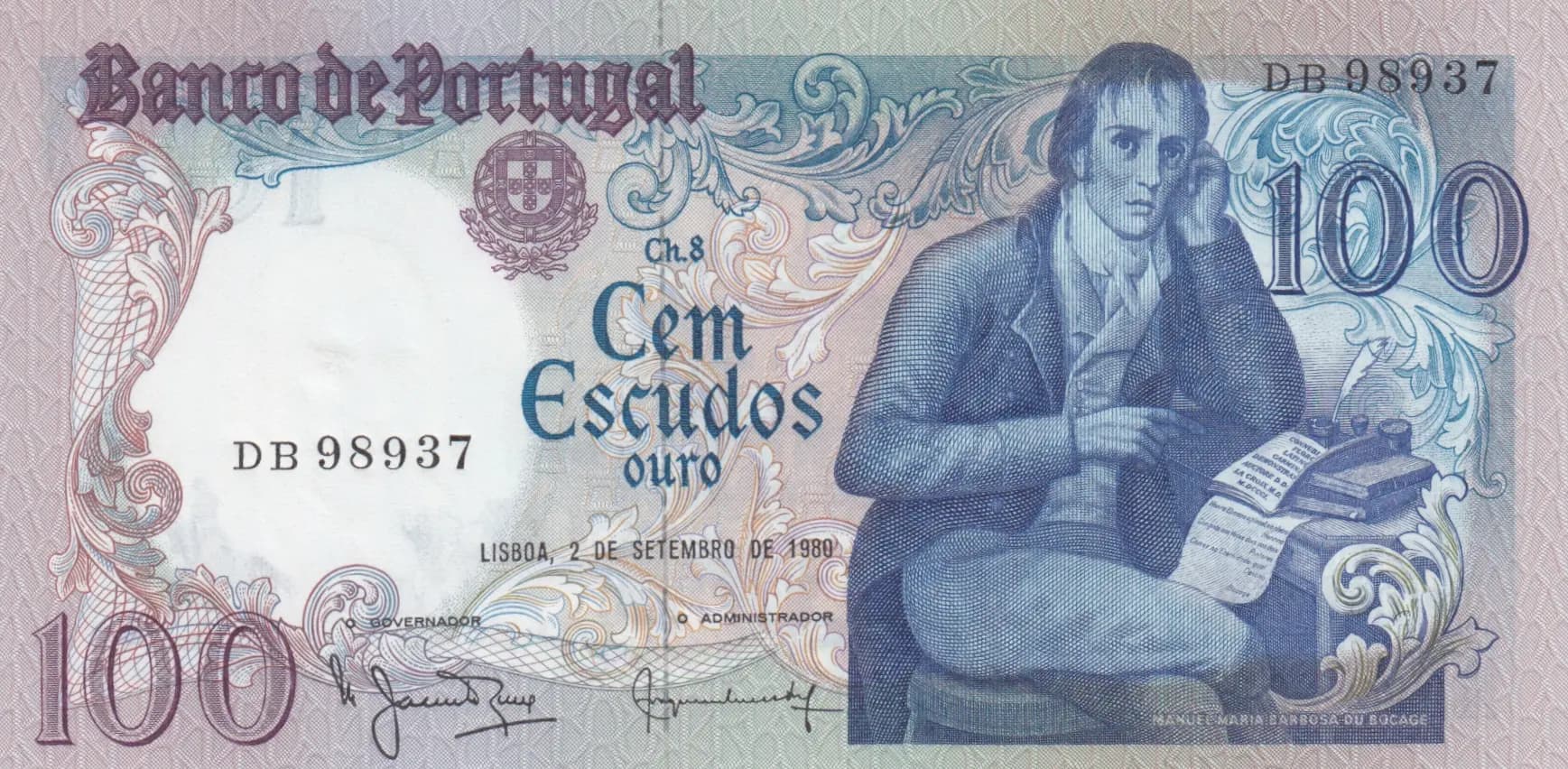
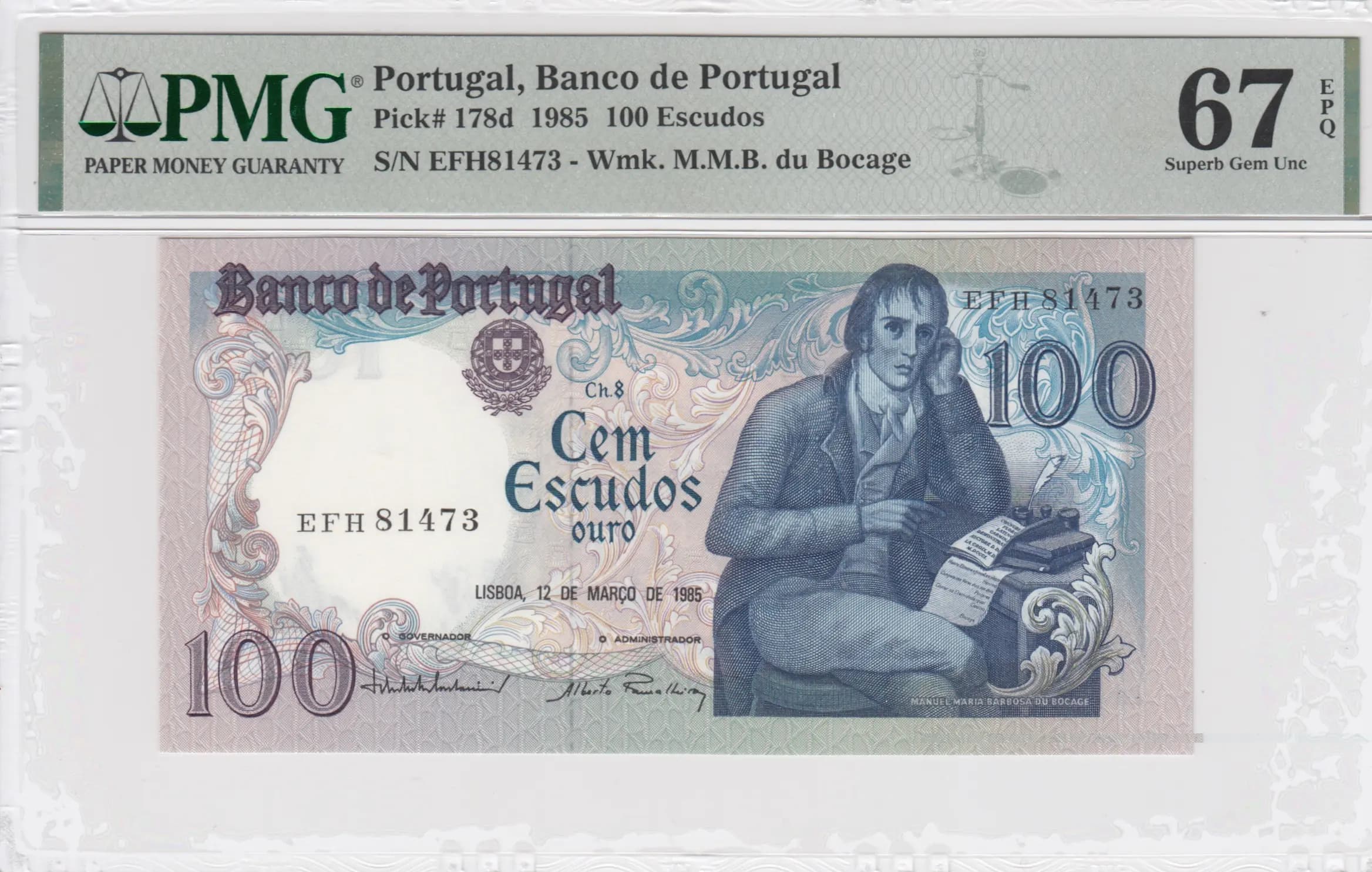
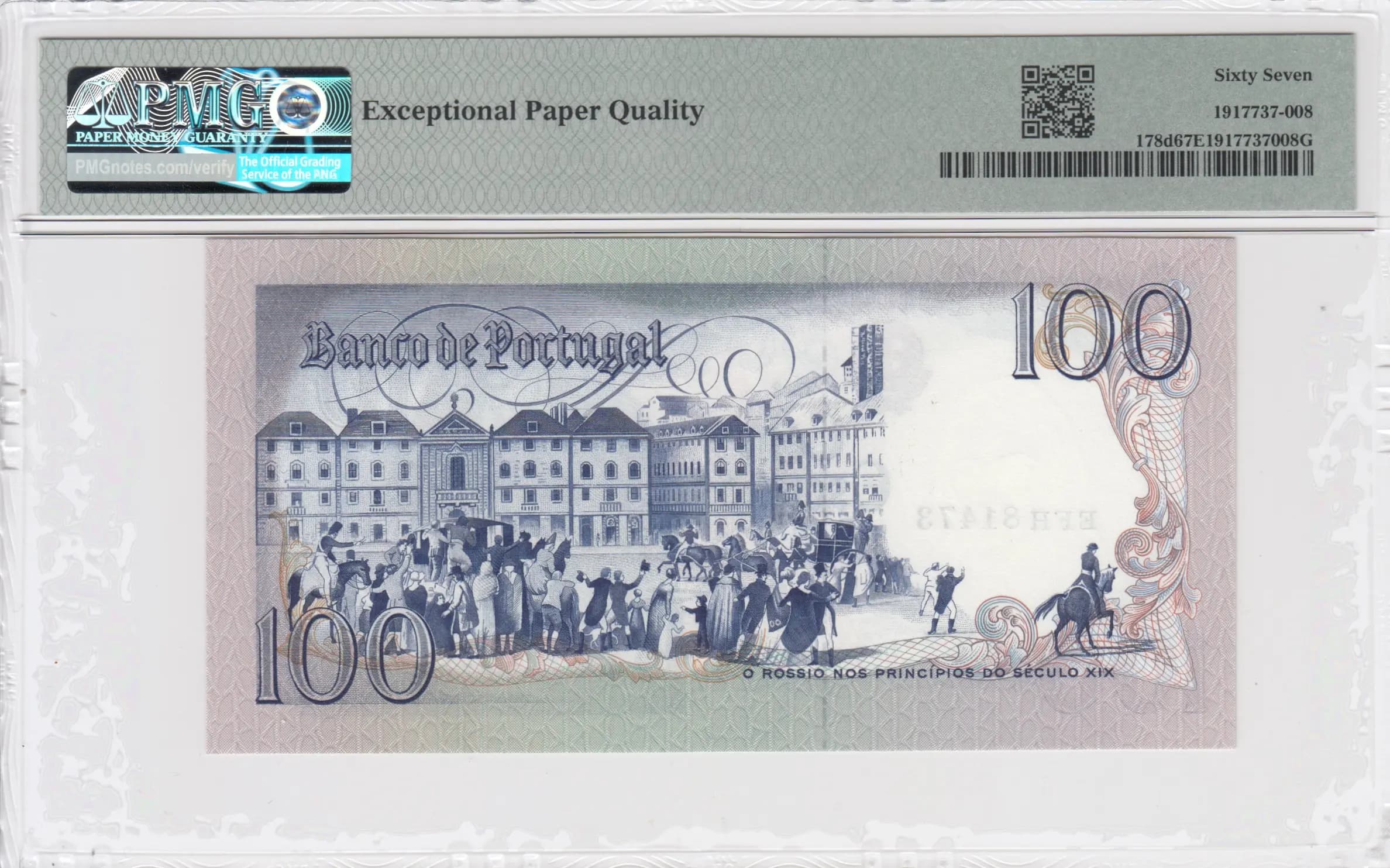
This is a PMG 67 EPQ example of Portugal's 100 Escudos note from 1985, featuring Manuel Maria Barbosa du Bocage, the noted Portuguese Romantic poet and writer. The note exhibits exceptional preservation with pristine paper quality, sharp engraving detail, and no visible circulation wear, making it a premium example of this regular-issue denomination. The dual-sided design — combining a portrait on the obverse with a historically significant scene of Rossio Square on the reverse — represents the Banco de Portugal's commitment to honoring cultural heritage during the final years of the escudo era.
Common. This is a regular-issue banknote with a standard circulation print run from 1985. Market data from eBay shows PMG 66 examples consistently selling in the $18-21 range, with VF examples trading at $1-3, indicating substantial availability in the market. The catalogue value for UNC condition was assessed at approximately $15 as of 2019. While the PMG 67 EPQ grade represents exceptional condition that commands a modest premium over lower grades, the note itself is not scarce or rare.
Issued in 1985, this banknote commemorates Manuel Maria Barbosa du Bocage (1765-1805), one of Portugal's most influential Romantic poets, reflecting the nation's cultural pride during the 1980s. The reverse design depicts the Rossio Square in early 19th-century Lisbon with its characteristic architecture and bustling public life, capturing a pivotal moment in Portuguese urban history. This note was issued during Portugal's final decade before the transition to the Euro, representing the mature design standard of the Banco de Portugal's modern escudo series.
The obverse features Manuel Maria Barbosa du Bocage seated at right, depicted as a bearded man in period clothing holding papers or documents, rendered in fine blue-grey engraving against a beige and cream background. The composition is framed by ornate decorative scrollwork in the corners with baroque-style flourishes, the Portuguese coat of arms with its characteristic cross design displayed prominently, and denomination numerals (100) positioned on both left and right sides. The reverse presents a detailed historical scene of Lisbon's Rossio Square during the early 19th century, depicting multi-story buildings with mansard roofs and regular window patterns, populated with period figures, people, and horsemen engaged in public gathering or market activity. Both sides feature complex guilloché patterns, fine-line engraving, and detailed crosshatching throughout, with pink/mauve accents complementing the predominant blue-grey and cream color scheme.
Front side: 'Banco de Portugal' (Bank of Portugal), 'Cem Escudos' (One Hundred Escudos), '100' (denomination), 'Ch.8' (Chapter 8 - signature variety designation), 'MANUEL MARIA BARBOSA DU BOCAGE' (the historical figure portrayed), 'GOVERNADOR' (Governor), 'ADMINISTRADOR' (Administrator), 'LISBOA, 12 DE MARÇO DE 1985' (Lisbon, March 12, 1985 - official issue date). Back side: 'Banco de Portugal' (Bank of Portugal), '100' (denomination), 'O ROSSIO NOS PRINCÍPIOS DO SÉCULO XIX' (The Rossio in the Early 19th Century).
Intaglio engraving (steel plate engraving) with fine-line crosshatching and guilloché background patterns. The Banco de Portugal's regular-issue notes from this period were typically produced by specialized security printers, most likely Casa da Moeda (Portuguese Mint) or contracted European security printing houses. The exceptional clarity of fine lines, consistent ink saturation, and precise registration visible in this PMG 67 EPQ example demonstrate the high-security printing standards employed for Portuguese currency during the 1980s.
This example is identified as Pick P-178d, the 1985 issue variant. The Pick catalog recognizes multiple variants of this base number (P-178a, P-178b, P-178cts, P-178s) with variations documented for signature combinations — specifically noted as 8 signature varieties and 6 signature varieties in different sources. The Ch.8 designation visible on this note's obverse indicates Chapter 8 signature variety. The serial number 'EFH 81473' and the official issue date of 'LISBOA, 12 DE MARÇO DE 1985' (March 12, 1985) are consistent with the 1985 issue dating. Collectors should note that signature variety, printer variations, and serial number prefixes may distinguish between the catalogued sub-varieties within the P-178 designation.