100 escudos 1980
Market Prices
36 salesAbout This Note
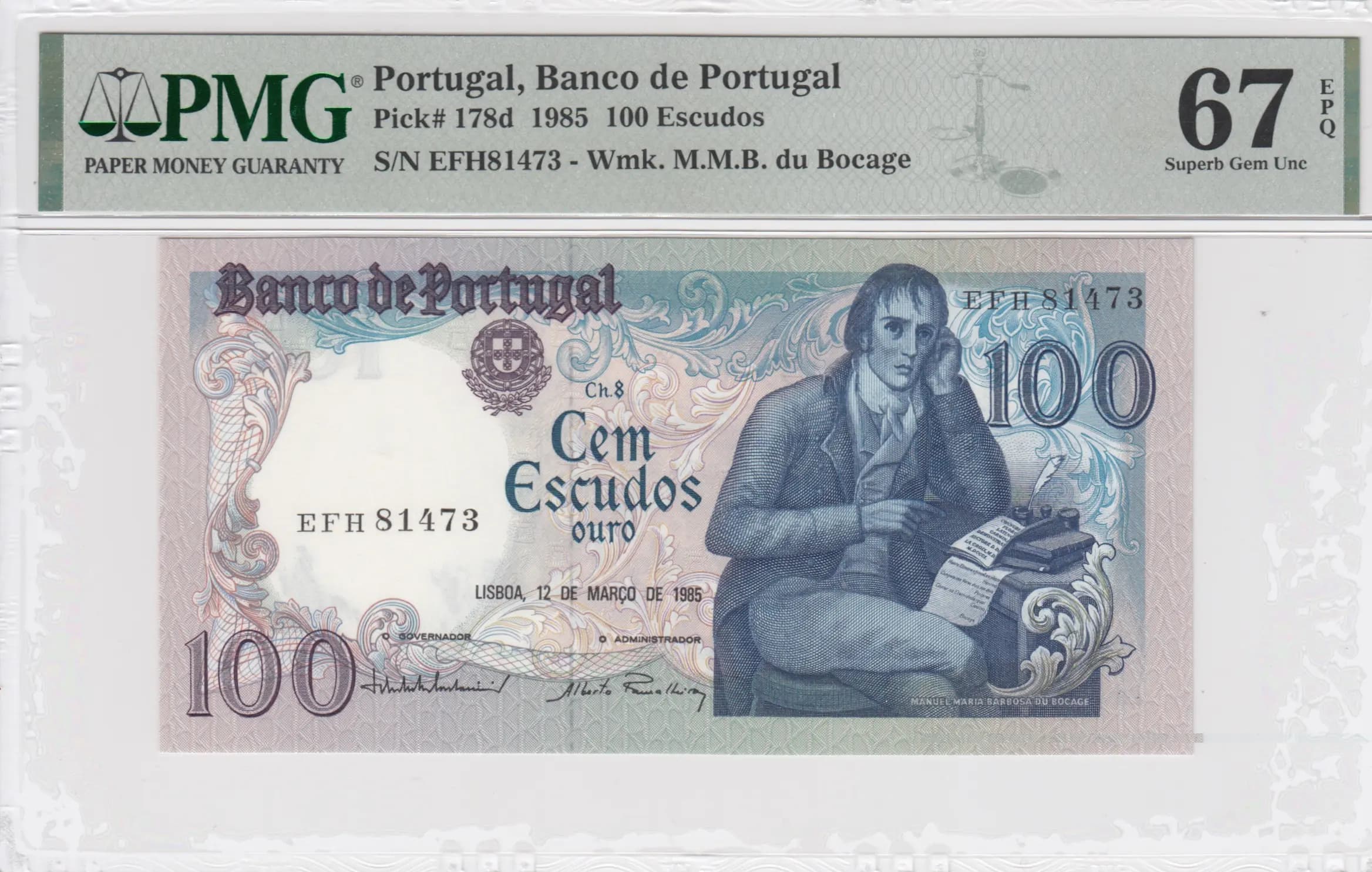
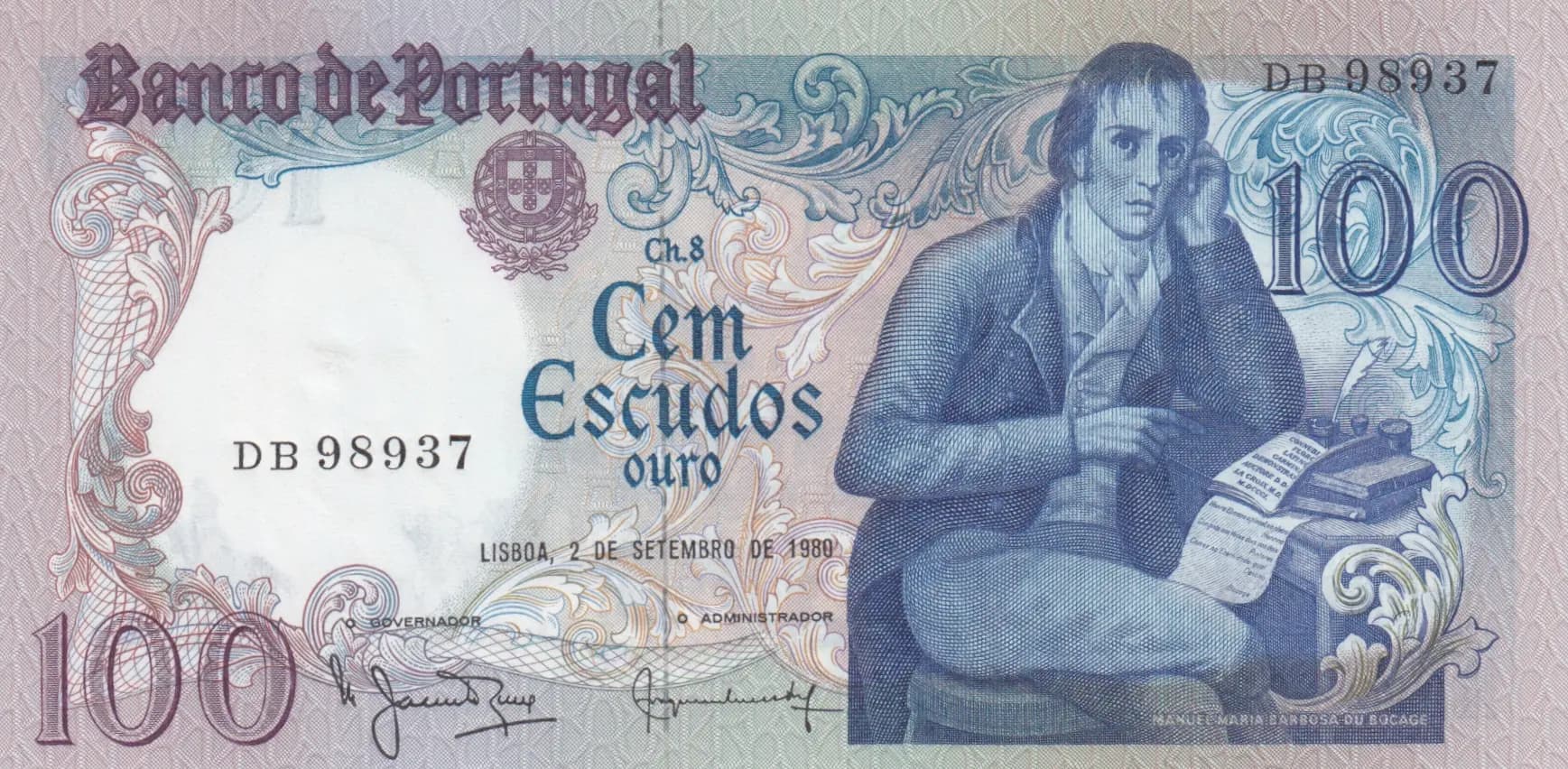
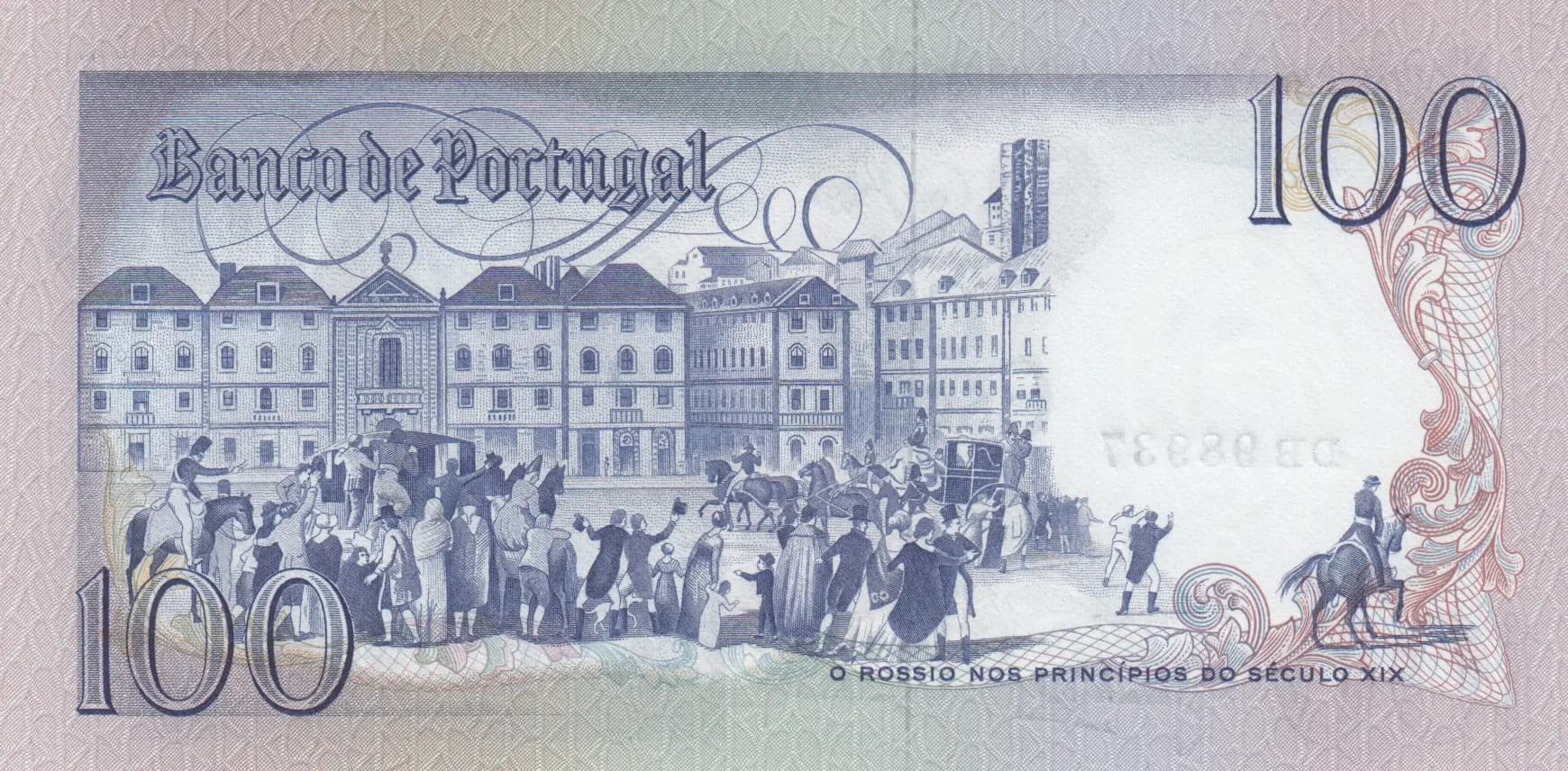
This is a Portuguese 100 Escudos note from 1980, issued by Banco de Portugal, presented in Uncirculated condition. The note features an ornate design with Manuel Maria Barbosa du Bocage portrayed on the obverse and a historically significant engraving of Rossio Square in Lisbon from the early 19th century on the reverse. The exceptional clarity of the fine line engraving, vibrant color palette of pink/mauve and blue/teal, and absence of circulation wear make this an excellent example of Portuguese banknote artistry from the pre-euro era.
Common. Market data from realbanknotes.com shows consistent eBay sales ranging from $0.76 to $137.50, with typical UNC and AUNC specimens selling in the $5-$12 range during 2013-2024. The 2019 catalogue value for UNC condition is listed as $30, but actual market realization typically falls well below this. Print run for the 1980-1985 series was substantial, and the denomination of 100 Escudos was a widely circulated mid-range denomination. The note remains commonly available in all grades on secondary markets, confirming common status.
Issued in 1980, this banknote represents Portugal during its transition period following the Carnation Revolution of 1974, celebrating the nation's cultural heritage through the portrait of Manuel Maria Barbosa du Bocage, a prominent 19th-century Portuguese poet and writer. The reverse design depicts Rossio Square (Praça Dom Pedro IV) in Lisbon during the early 19th century, one of Portugal's most iconic public spaces and a symbol of Lisbon's civic importance during the Romantic era. This note reflects Portugal's effort to honor its literary and architectural patrimony during a period of political and social reformation.
The obverse features Manuel Maria Barbosa du Bocage (1765-1805), a celebrated Portuguese Romantic poet and satirist, depicted as a bearded gentleman in 19th-century attire seated at right, holding books or papers symbolic of his literary output. The Portuguese coat of arms (escutcheon with quatrefoil and castle pattern) is prominently displayed in the upper center. Elaborate baroque-style filigree and scrollwork frame the composition in pink/mauve and blue/teal colors. The reverse displays a detailed historical engraving of Rossio Square (Praça Dom Pedro IV) in Lisbon as it appeared in the early 1800s, showing a crowded public gathering with period buildings, classical European architecture with mansard roofs, multiple figures in period dress, and horses—capturing the vibrancy of Lisbon's civic life during the Romantic era. Ornamental borders with baroque scrollwork frame both sides. The denomination '100' appears in large numerals at all four corners.
Front side: 'Banco de Portugal' (Bank of Portugal), '100' (denomination), 'Cem Escudos' (One Hundred Escudos), 'ouro' (gold), 'Ch.8' (Charter 8/Signature variety 8), 'DB98937' (serial number), 'LISBOA, 2 DE SETEMBRO DE 1980' (Lisbon, 2 September 1980), 'GOVERNADOR' (Governor), 'ADMINISTRADOR' (Administrator), 'MANUEL MARIA BARROS DA SULCAGE' (appears to be the engraver or official name). Back side: 'Banco de Portugal' (Bank of Portugal), '100' (denomination), 'O ROSSIO NOS PRINCÍPIOS DO SÉCULO XIX' (The Rossio in the early nineteenth century).
Intaglio engraving with multicolor printing. The note exhibits the characteristic fine line work, intricate detail rendering, and depth of field produced by steel plate engraving—particularly evident in the portrait detail, architectural rendering, and decorative filigree patterns. The multiple color application (dark blue, mauve/pink, white, cream, navy) was achieved through sequential color printing passes typical of high-security banknote production. Banco de Portugal employed Portugal's established security printers for this series; the technical quality and complexity suggest professional banknote production facilities of the era.
Pick number P-178a. The visual analysis shows signature variety 'Ch.8' (Charter 8), indicating this is one of eight signature varieties for this note type. The catalog data indicates four recognized variants exist: P-178a, P-178b, P-178cts, and P-178s, with P-178s distinguished by du Bocage watermark specification. Serial number DB98937 is visible on the observed specimen. The issue date is confirmed as 2 September 1980 per the inscription 'LISBOA, 2 DE SETEMBRO DE 1980.' The note belongs to the regular issue category spanning 1980-1985.