50 centavos 1917
Market Prices
1 saleAbout This Note
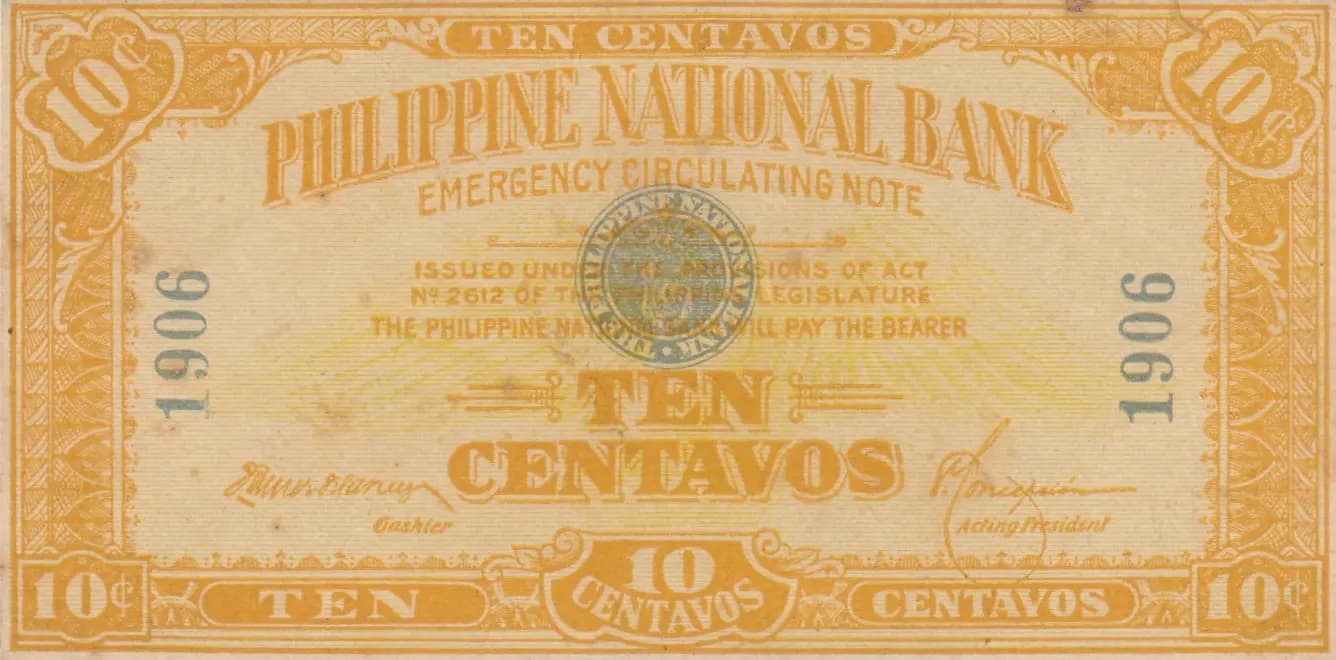
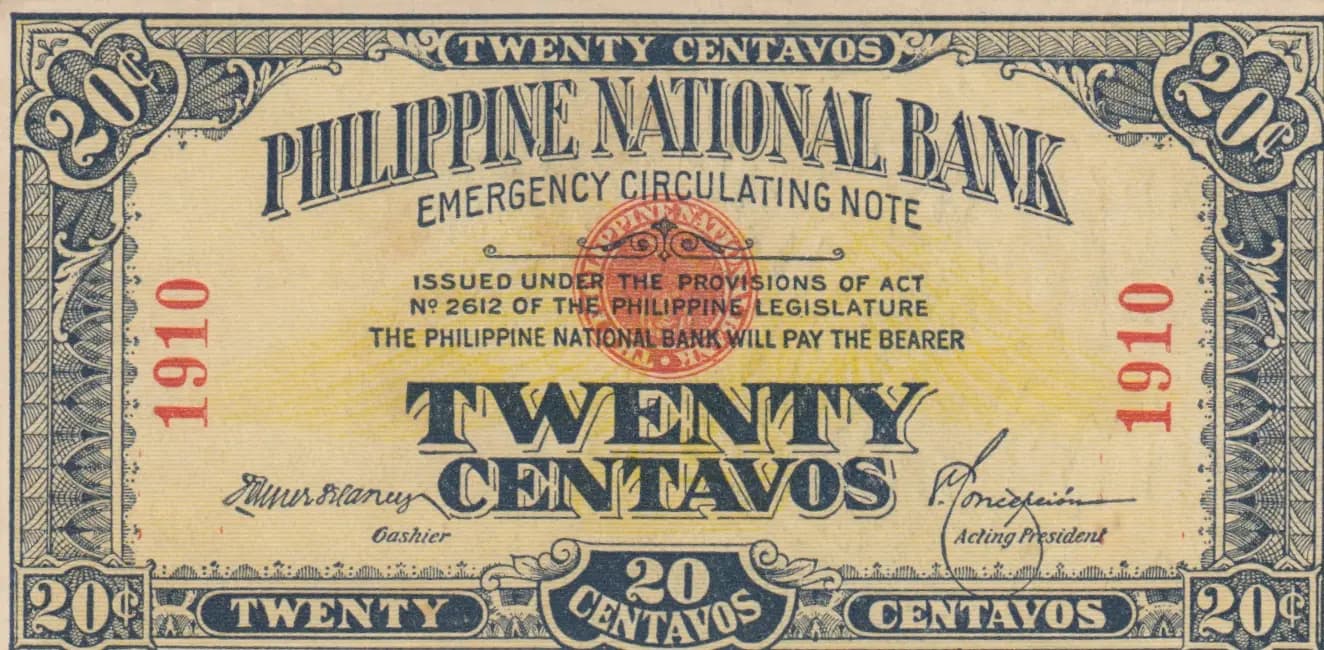
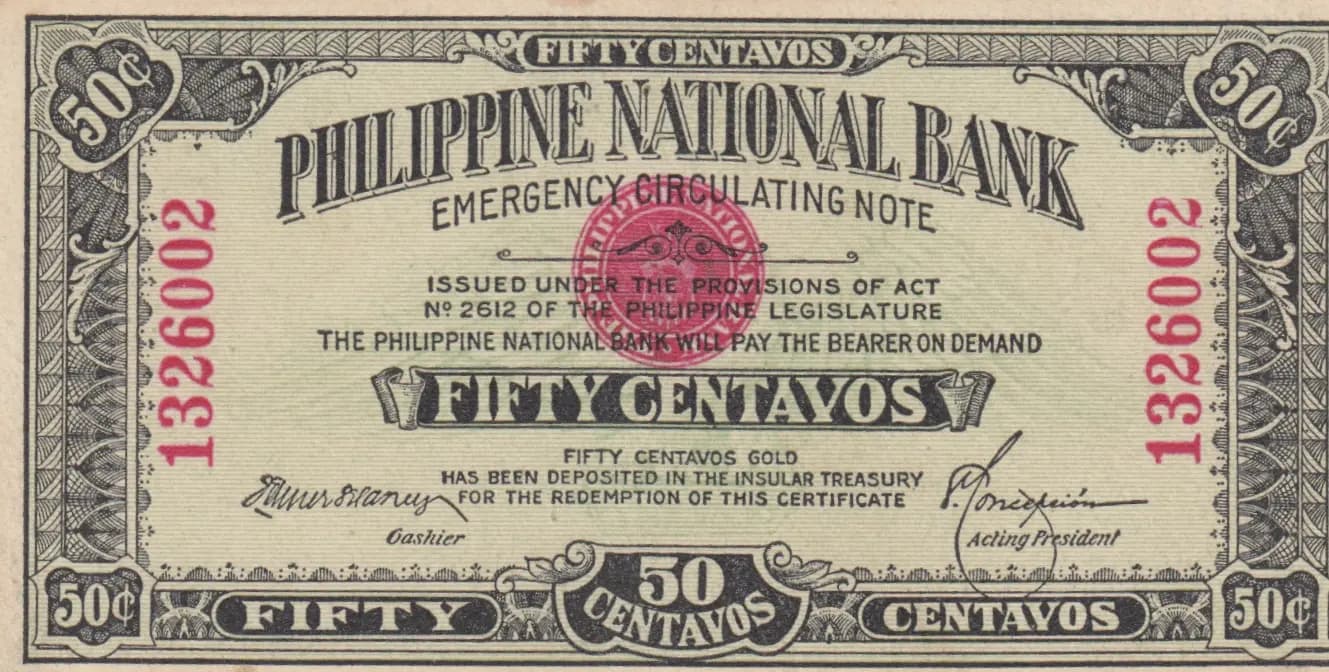
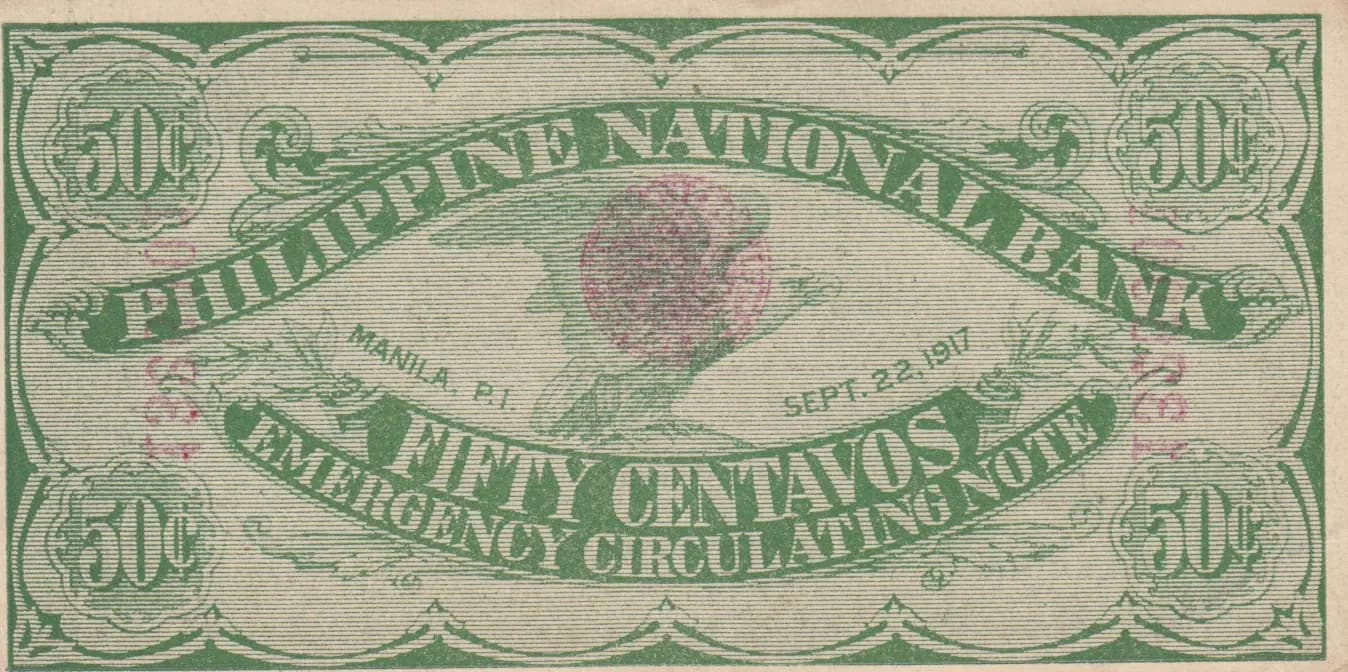
This Philippine National Bank 50 centavos emergency circulating note from September 22, 1917 exemplifies the emergency currency issued during the early American colonial period in the Philippines. The note features the characteristic black text on cream underprint (obverse) and green coloring (reverse) typical of PNB emergency issues, with an ornate design centered on a map of the Philippine Islands on the back. In AU condition, this note shows age-appropriate patina with minor yellowing and fading of the red ink seal and serial numbers, but retains excellent structural integrity with no major tears or damage—a desirable state for a piece of early 20th-century Philippine numismatic history.
Common. While this is a historically significant emergency issue from the colonial period, the eBay market data showing VF examples selling for approximately $56 and catalog values of $25 for VF/$65 for UNC indicate steady but modest collector demand. The note does not appear in specialized literature as a short-run or recalled issue, and emergency circulatings from this period, though no longer commonly encountered in circulation, were produced in sufficient quantities to remain accessible to collectors. The AU grade example observed here, valued at approximately $40-50 based on the VF comparison, is consistent with common pricing for well-preserved examples of this type.
This emergency circulating note was issued under Act No. 2612 of the Philippine Legislature during a period when the Philippine National Bank required additional circulating currency to facilitate commerce in the American-controlled Philippine Islands. The note's explicit guarantee that "fifty centavos gold has been deposited in the Insular Treasury for the redemption of this certificate" reflects the gold-standard backing typical of colonial-era monetary policy. The September 1917 date places this issue during World War I, when emergency currency needs were particularly acute in the Philippines, and the map of the Philippine archipelago featured on the reverse served as a nationalist symbol emphasizing the geographic scope of the PNB's authority.
The obverse features a formal, highly ornate design with intricate engraved decorative borders and corner ornaments typical of early 20th-century American bank note design. The central area contains legal text regarding the note's authorization and redemption terms, flanked by signature lines for the Cashier and Acting President. A prominent circular red ink seal stamp reading 'Circulating Note' authenticates the issue. The reverse displays a map of the Philippine Islands as the dominant central motif, rendered in fine engraved line work and surrounded by decorative frames. The map illustration is overlaid with the same red circular seal stamp. The color scheme—black and cream on the obverse, green on the reverse—follows the chromatic standards established for PNB emergency notes of this period. The overall design eschews portraiture in favor of institutional symbols and geographic imagery, emphasizing the note's function as emergency currency backed by governmental authority.
FRONT SIDE: 'Philippine National Bank Emergency Circulating Note' / 'Fifty Centavos' (prominent at top and bottom) / 'Issued Under the Provisions of Act No. 2612 of the Philippine Legislature' / 'The Philippine National Bank will pay the bearer on demand fifty centavos gold' / 'Fifty Centavos gold has been deposited in the Insular Treasury for the redemption of this certificate' / Serial number: 1326002 (in red, appearing on both left and right sides) / Signature lines marked 'Cashier' and 'Acting President' / Circular red stamp mark: 'Circulating Note'. BACK SIDE: 'Philippine National Bank' / 'Manila, P.I.' / 'Sept. 22, 1917' / 'Fifty Centavos Emergency Circulating Note' / Denomination marking: '50¢' in corners / Circular red seal stamp overlaid on central map illustration.
This note was produced using traditional engraved intaglio printing, evident from the fine line work, detailed decorative patterns, and precise borders visible throughout both sides. The red seal stamps and serial numbers were applied separately, likely via letterpress or stamp impression. The catalog reference indicates 'Local' printing, suggesting production by the Philippine National Bank's own printing facilities or contracted Philippine-based printers rather than American security printing houses. The two-color printing (black/cream obverse; green reverse) and the characteristic fine engraving are consistent with early 20th-century Philippine banknote production standards.
Serial number 1326002 is recorded on this example. Known varieties for PNB 50 centavos emergency notes (P-41) include variations in signature combinations (different Cashiers and Acting Presidents signed different batches) and serial number prefixes/ranges. The specific date inscription 'SEPT. 22, 1917' on the reverse is consistent across this issue type. Collectors should note signature varieties and serial number progression patterns, though no major cataloged sub-varieties with significantly different market values have been documented for this Pick number. The red circular 'Circulating Note' stamp appears consistent on documented examples.