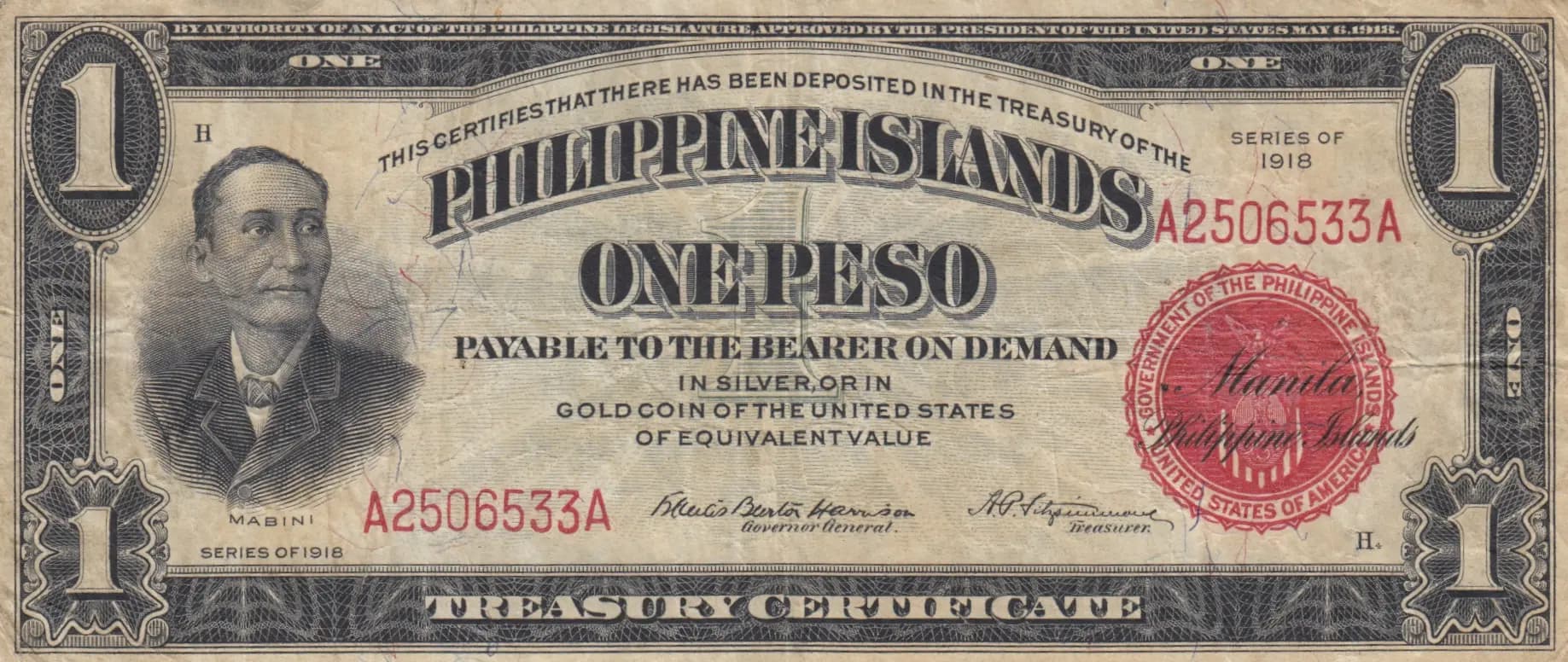
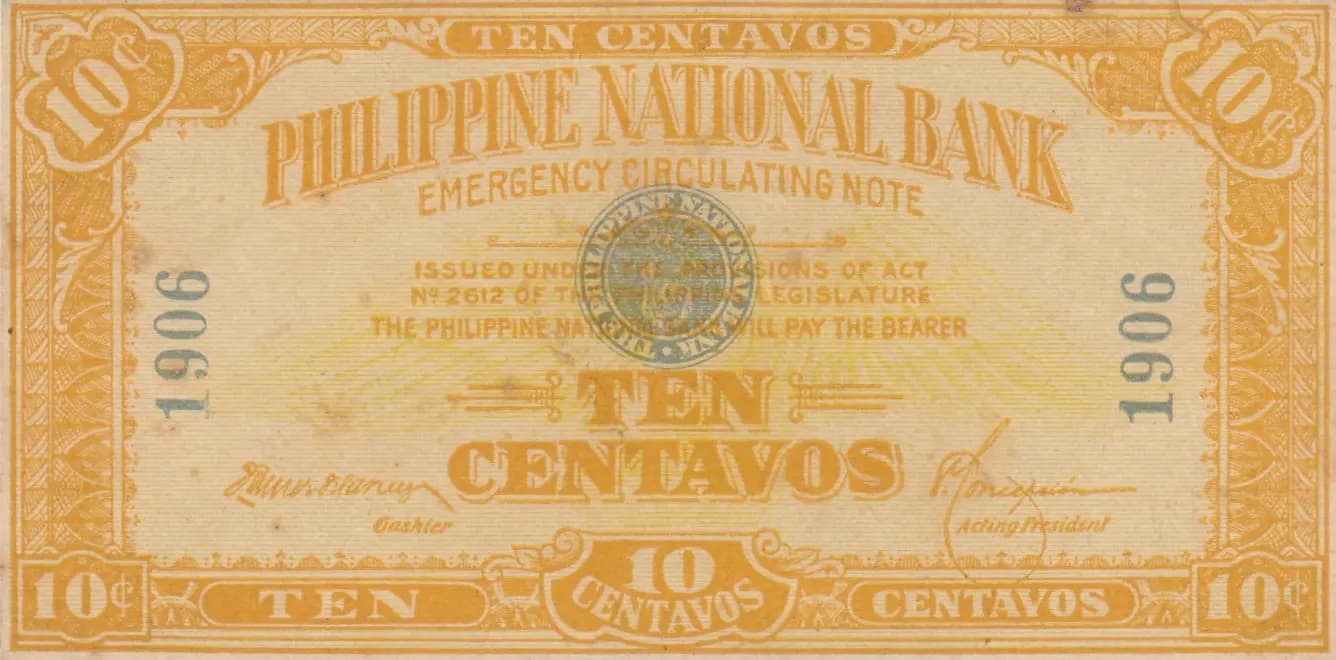
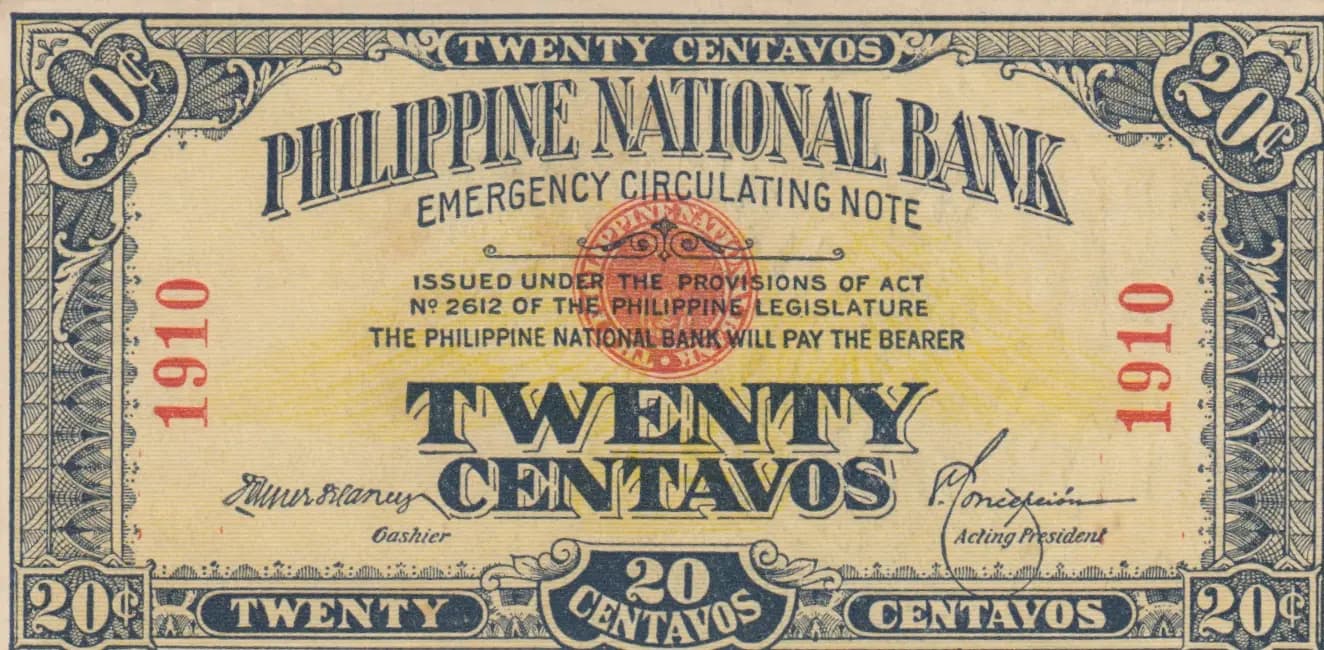
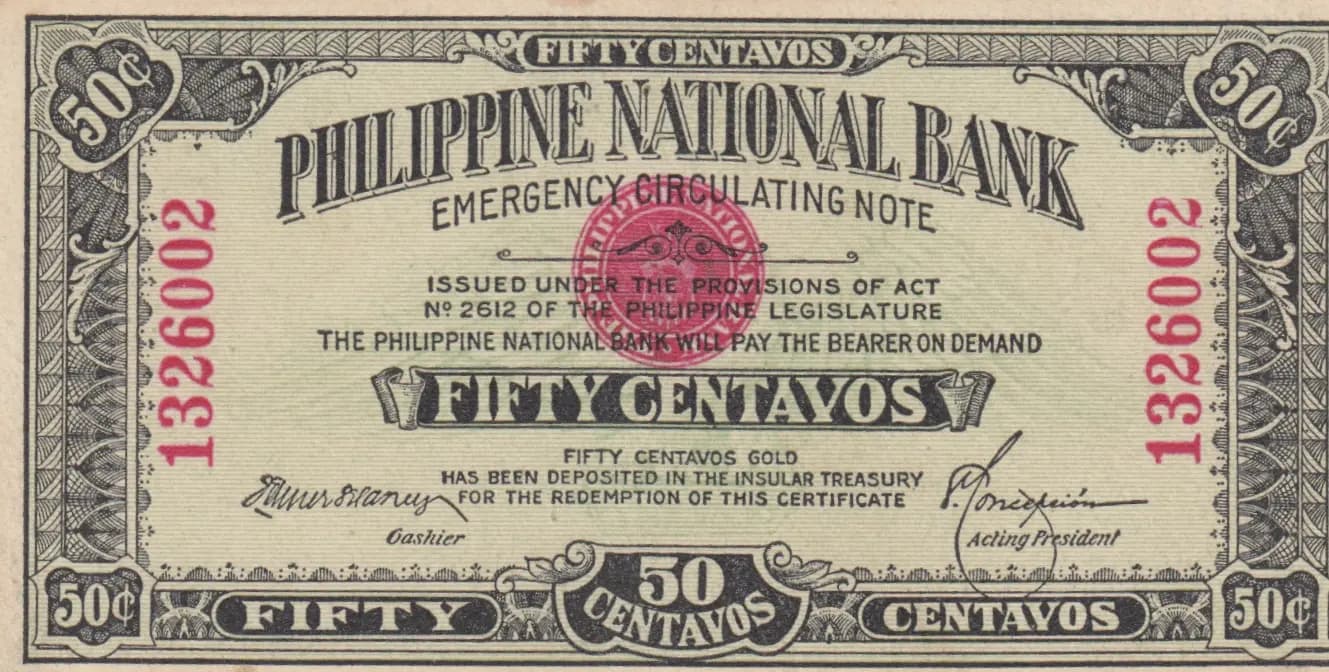
1 peso 1918
Market Prices
2 salesAbout This Note
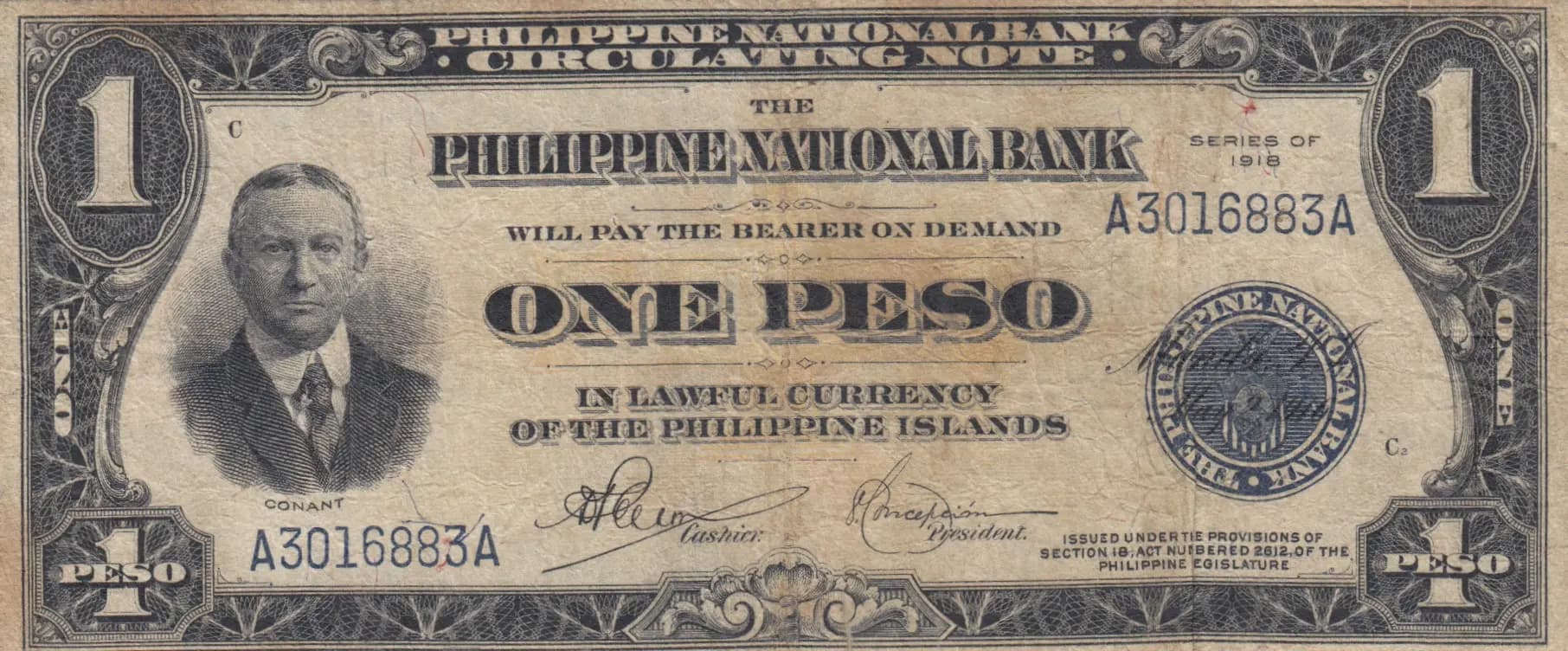
This Philippine National Bank 1 peso note from 1918 represents an early example of Philippine currency featuring a portrait of Charles A. Conant on the left side. The note displays typical wear consistent with its Fair condition grade, with visible foxing, creases, and tan/cream coloration from age and circulation. The elaborate ornamental design and multiple official seals reflect period-appropriate security features, making this a historically significant example of early 20th-century Philippine monetary instruments.
Common. While this is a 106-year-old banknote, the 1918 Philippine National Bank 1 peso is a standard circulating issue from a major central bank with significant print runs typical for denominations of this value during this period. The catalog value at F grade ($300 per the 2016 reference) and historical eBay sales data showing VF examples selling for approximately $100 indicate steady but not exceptional demand. The note's fair condition, visible circulation wear, and lack of any special characteristics (such as error notes, rare signatures, or limited issue variants) classify it as a common collectible within its series.
Issued in 1918 under Section 18, Act 1612 of the Philippine Legislature, this circulating note reflects the Philippines' developing financial independence during the American colonial period. The prominently featured Charles A. Conant, depicted in formal business attire, represents the early leadership of the Philippine National Bank, which was central to establishing a modern monetary system for the Philippine Islands. The note's redemption promise in 'Lawful Currency of the Philippine Islands' and its acceptance for government taxes underscore the growing economic autonomy of the Philippines during this transitional period.
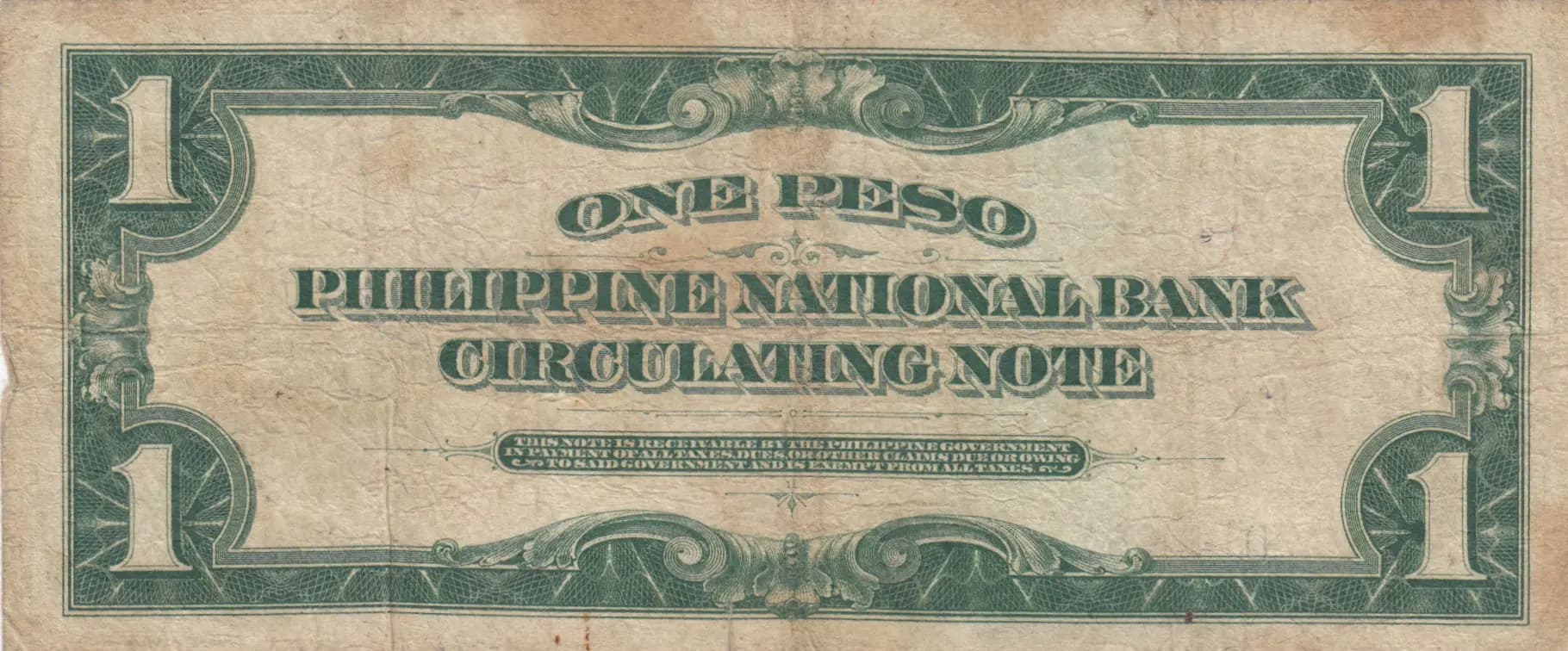
The obverse features a formal portrait of Charles A. Conant positioned at left, depicted as a distinguished gentleman in a dark suit and tie, reflecting the stature expected of early Philippine banking leadership. The note is printed in black on an orange/tan underprint with ornate decorative borders incorporating floral and scrollwork elements, corner numerals '1', and multiple official seals including the Philippine National Bank emblem. The reverse employs a predominantly green/teal color scheme with similar elaborate decorative scrollwork, corner ornaments, and denomination displays. The design throughout emphasizes security through intricate engraving patterns and fine line work typical of early 20th-century currency production, with the central legal text blocks providing redemption guarantees and tax exemption notices essential to the note's authority.
FRONT SIDE: 'Philippine National Bank' / 'Circulating Note' / 'The Philippine National Bank Will Pay the Bearer on Demand One Peso in Lawful Currency of the Philippine Islands' / 'Conant' (portrait label) / 'Cashier' and 'President' (signature lines) / 'Series of 1918' / Serial number 'A3016883A' / 'Issued under the provisions of Section 18, Act Numbered 1612 of the Philippine Legislature' / 'C' (bank designation). BACK SIDE: 'One Peso' / 'Philippine National Bank' / 'Circulating Note' / 'This note is redeemable at the Philippine National Bank and at the Treasury of the Philippines for payment of all taxes, dues, and other claims due to the government and is exempt from all taxes.'
This note was produced using intaglio engraving (also known as steel plate engraving), the standard security printing method for banknotes of this era. The printer was the United States Bureau of Engraving and Printing (USBEP), as indicated in catalog references, though the visual analysis notes the absence of an imprint on the note itself. The fine line work, ornamental patterns, and portrait rendering visible in both the front and back designs are characteristic of high-security intaglio production, providing anti-counterfeiting measures through the difficulty of reproducing the complex engraved plates.
The observed serial number 'A3016883A' with the 'C' designation letter indicates this is from a standard series production run. No special varieties, overprints, or signature variants are evident from the visual analysis. This represents a regular-issue 1918 Philippine National Bank 1 peso note without documented rarity variants. Collectors should note the series designation '1918' and printer attribution (USBEP without visible imprint) as standard identifying features for this Pick-44 listing.