20 centavos 1917
Market Prices
1 saleAbout This Note
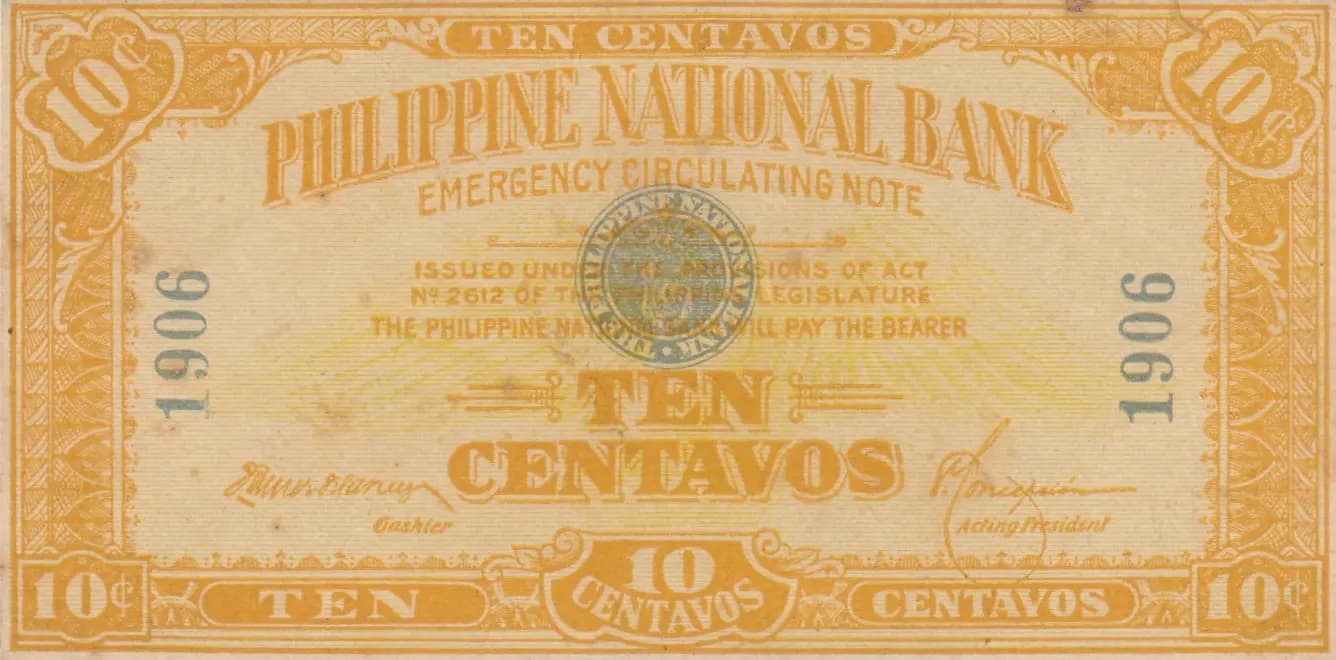
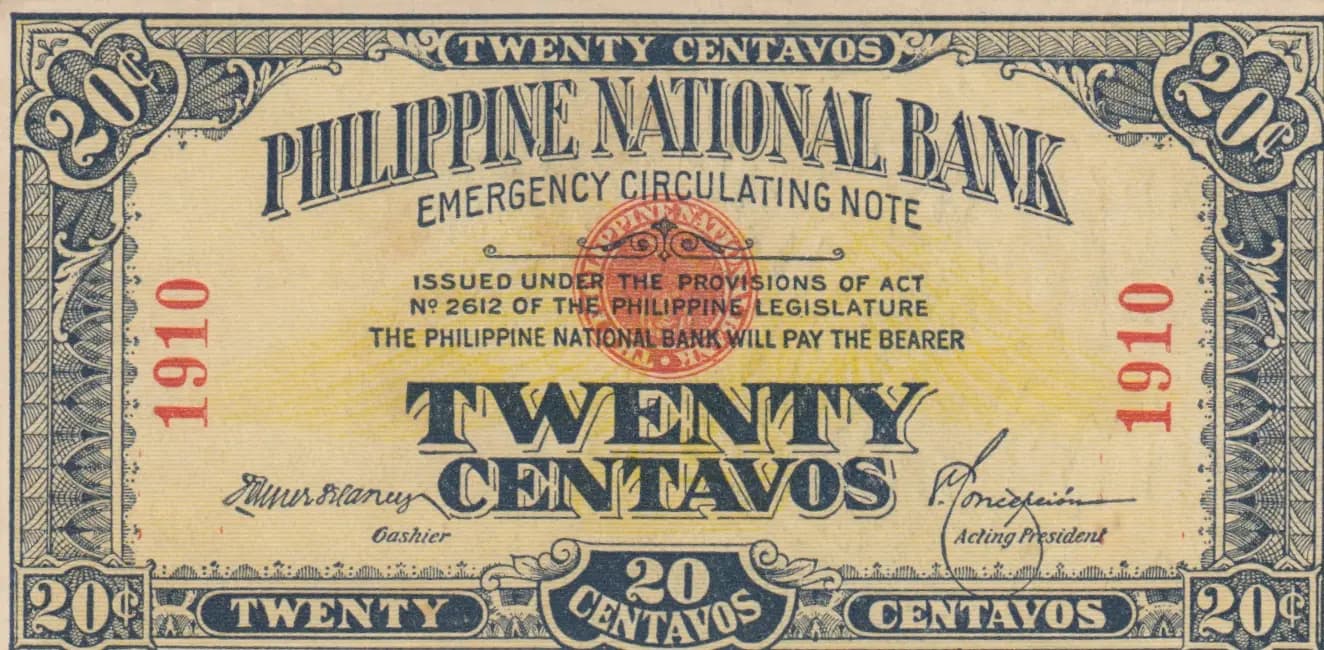
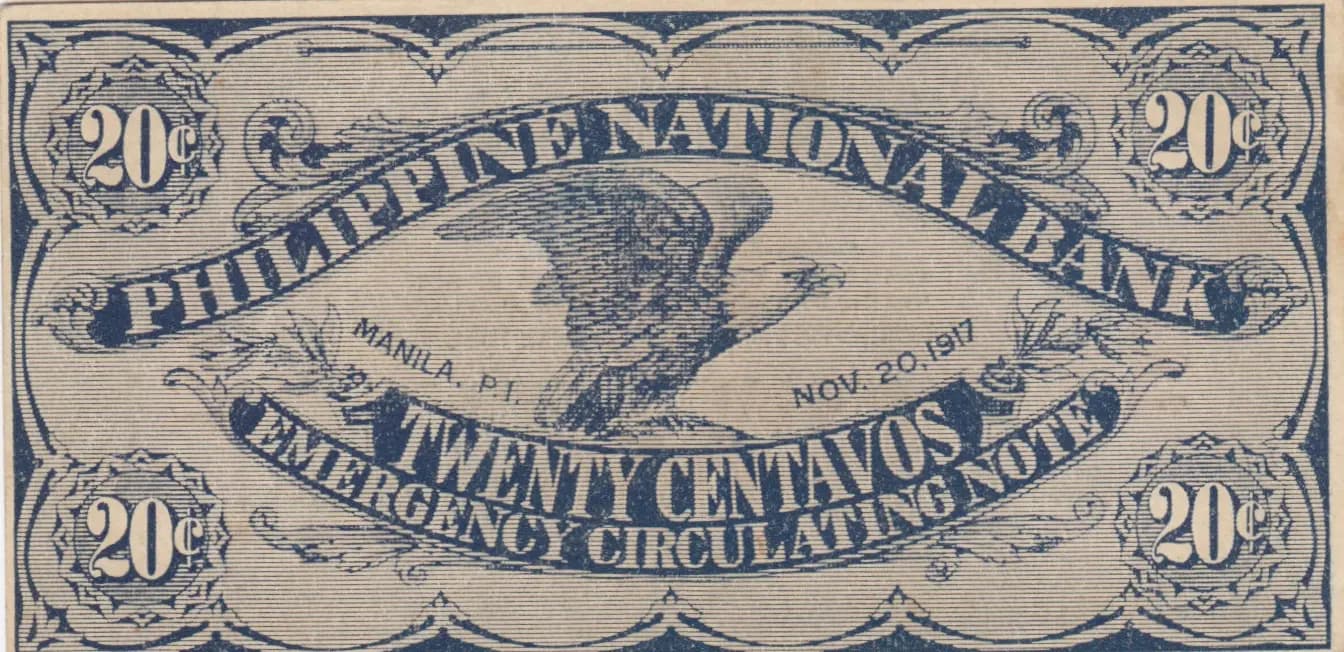
This Philippine National Bank 20 Centavos Emergency Circulating Note from November 20, 1917 (Pick P-40) is an exceptional example of early 20th-century Philippine monetary history. The note displays the characteristic blue and cream coloration typical of this series, with a prominent red circular seal on the front and an allegorical female figure representing the Philippines on the back rendered in fine line engraving. In AU condition, the note shows age-appropriate yellowing and minor discoloration consistent with a preserved historical specimen, with excellent detail retention in the ornate borders and fine engraving work.
Common. The catalog reference data from realbanknotes.com shows eBay transaction prices in the $10–$50 range depending on condition grade (F at $10.52 in 2010; VF catalog value $20; UNC $50). These modest price points, combined with the note's survival in multiple examples reaching market, indicate this was a regular issue of the Philippine National Bank with adequate print runs. Emergency Circulating Notes from this period, while historically significant, were produced in sufficient quantities to satisfy circulation demands and were not subject to recall restrictions that might have reduced survivor populations.
Issued under Act No. 2612 of the Philippine Legislature, this emergency circulating note reflects the Philippine National Bank's role during a period of monetary stabilization in the American colonial administration of the Philippine Islands. The allegorical female figure on the reverse symbolizes the Philippine nation during this transitional period, while the formal banker's promise on the front ('The Philippine National Bank will pay the bearer') emphasizes the note's role in establishing confidence in Philippine currency. The November 1917 date places this note during World War I, a period of significant economic activity and currency demands in the Far East.
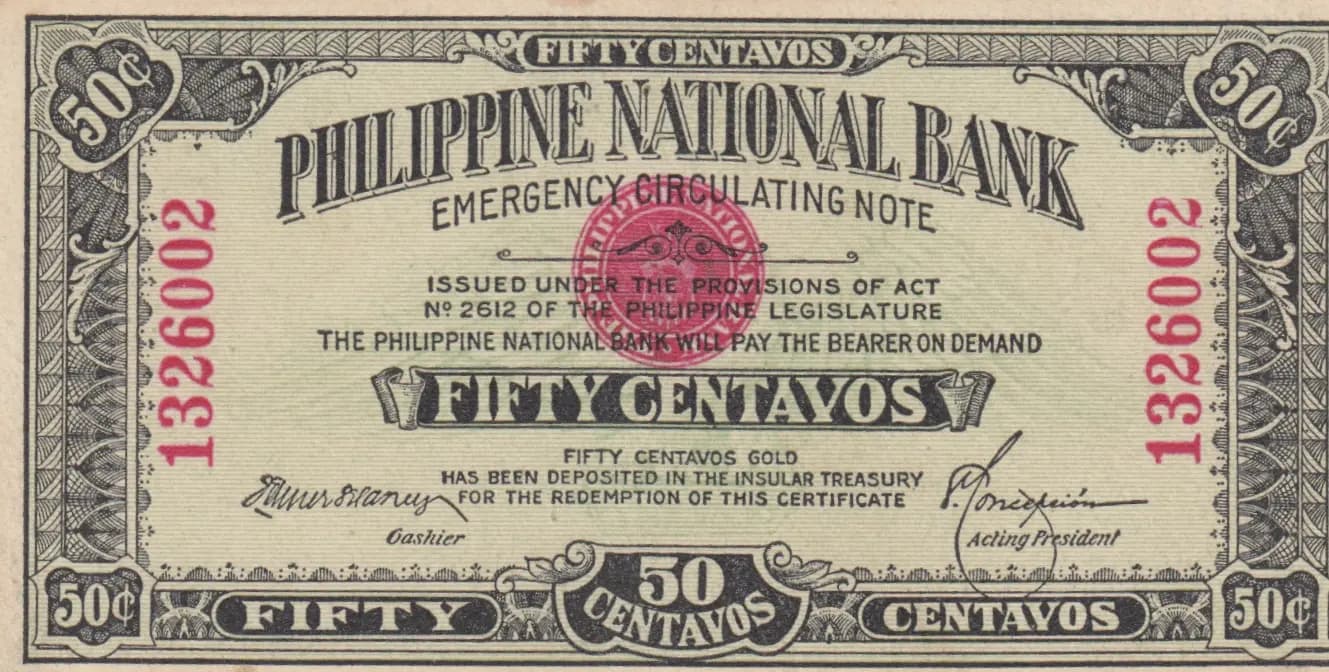
The obverse features a formal layout with the Philippine National Bank's title and emergency circulating note designation prominently displayed, with a commanding red circular seal or stamp occupying the center-upper portion of the note. Signature lines for the Cashier and Acting President appear at the bottom. The design is framed by ornate scrollwork and decorative borders in dark blue/navy ink typical of high-security banknote production. The reverse displays an allegorical female figure in classical Greco-Roman style, depicted in draped clothing and positioned centrally within an ornate rectangular frame. This figure represents the Philippine nation itself, a common motif in early Philippine currency design. The figure is rendered through fine line engraving technique, demonstrating the technical sophistication of the security printing. The denomination '20¢' appears in all four corners of the reverse, a standard security feature of the era. The overall design reflects late 19th/early 20th-century American banknote design principles, consistent with the influence of American security printing expertise in the Philippine colonial administration.
FRONT: 'TWENTY CENTAVOS' (denomination in English); 'PHILIPPINE NATIONAL BANK' (issuing institution); 'EMERGENCY CIRCULATING NOTE' (note classification); 'ISSUED UNDER THE PROVISIONS OF ACT NO 2612 OF THE PHILIPPINE LEGISLATURE' (legal authority); 'THE PHILIPPINE NATIONAL BANK WILL PAY THE BEARER' (banker's promise); '1910' (appears in red on left and right sides, though this conflicts with the 1917 catalog date); '20¢' (numerical denomination); 'Cashier' and 'Acting President' (signature designations). BACK: 'PHILIPPINE NATION' (national designation); 'TWENTY CENTAVOS' (denomination repeated); 'EMERGENCY CIRCULATING NOTE' (classification); 'MANILA, P.I.' (location, Philippine Islands); 'NOV 20 1917' (issue date); '20¢' (corner denominations in all four corners).
This note was produced using intaglio engraving (line engraving), evidenced by the fine, precise linework visible in both the allegorical figure and decorative borders. The technique creates the raised ink impression characteristic of security banknotes. The color scheme of blue and cream/beige is consistent with the catalog data indicating blue ink on yellow underprint. The printer is identified in reference sources as 'Local,' suggesting production by the Philippine National Bank's own printing facilities or a local contractor operating under Philippine authority, rather than an American security printer.
The visual analysis reveals a discrepancy between the year '1910' printed in red on the front obverse and the November 20, 1917 date printed on the reverse. This may represent a printing variety where dies from an earlier design (possibly from 1910) were repurposed or reused for the 1917 emergency issue, a known practice in cost-conscious government printing. The specific variety designation requires comparison with known reference specimens and detailed examination of serial number prefixes, signature titles, and overprint sequences. The 'Acting President' signature designation may also indicate specific production runs within the 1917 series, though individual signature identification would require expert attribution from Philippine numismatic specialists.