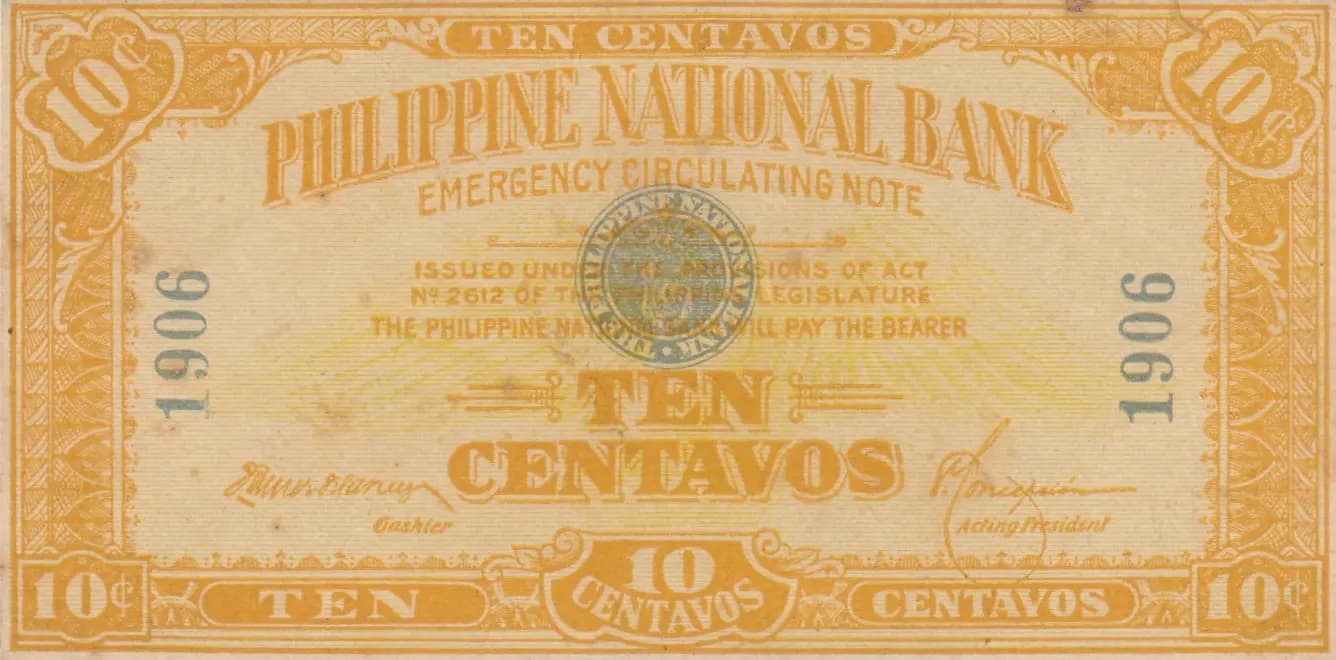
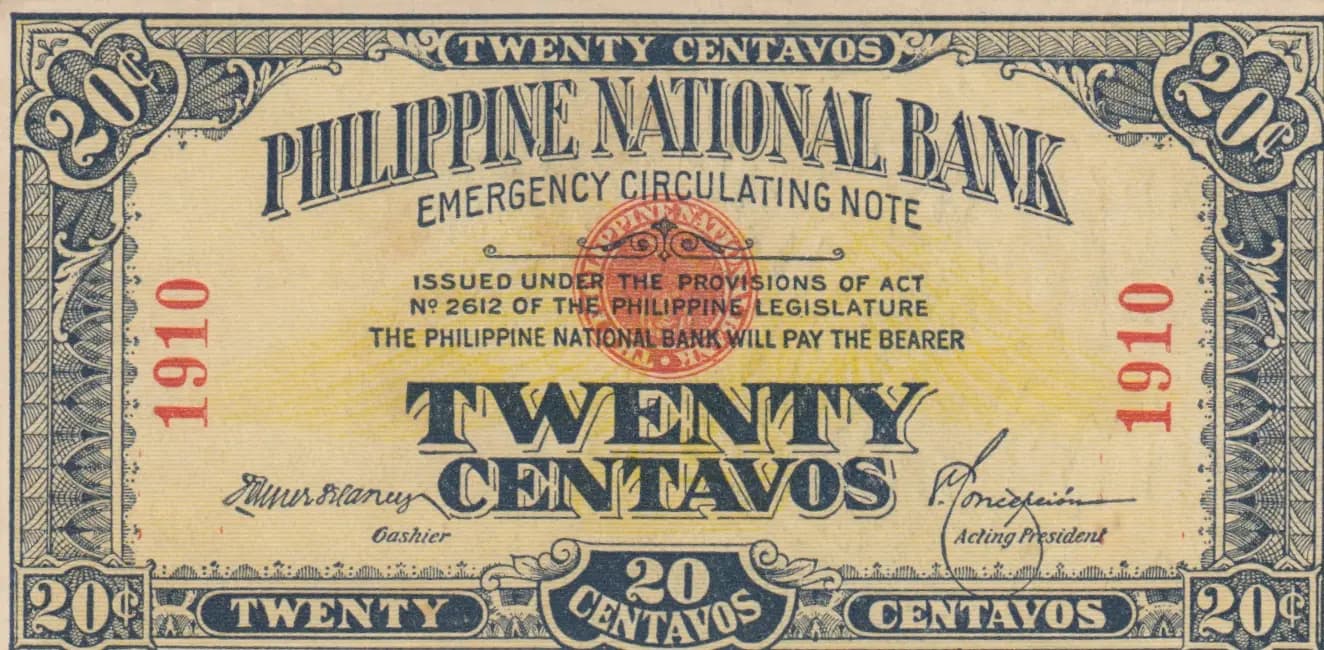
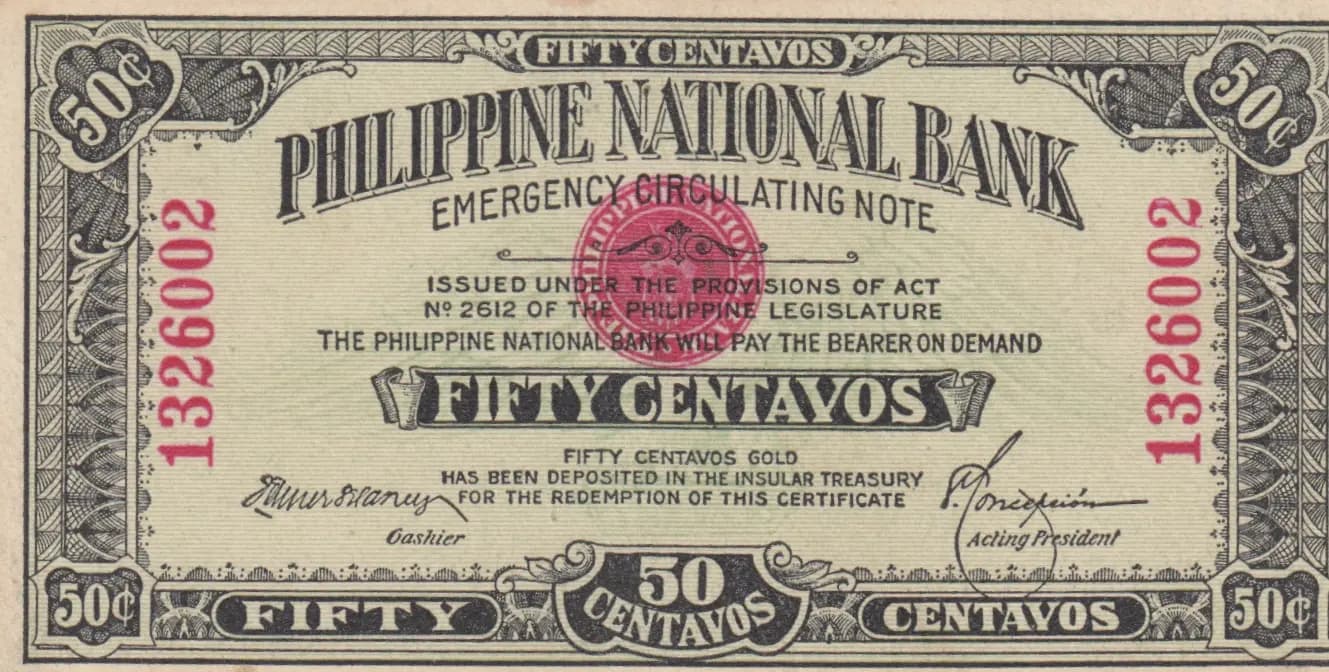
20 centavos 1949 replacement
About This Note
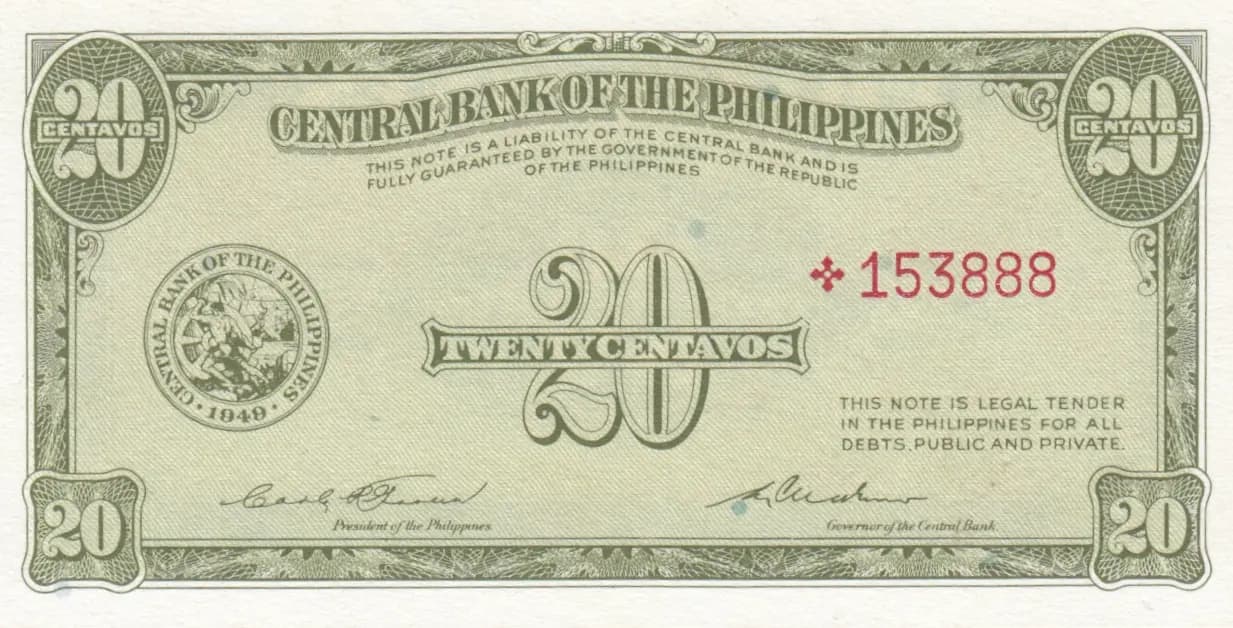
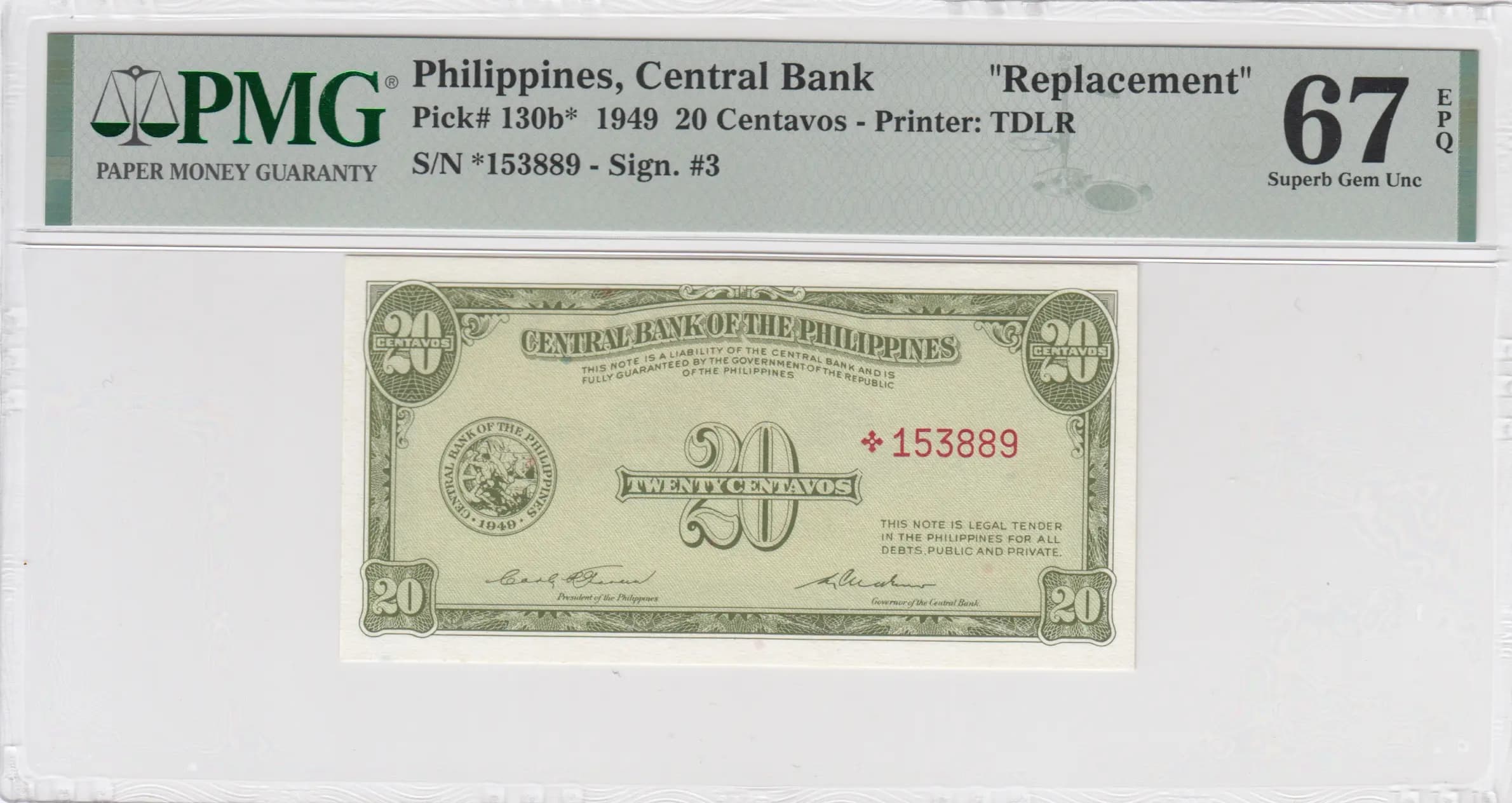
This is a PMG 67 Superb Gem Uncirculated example of the 1949 Philippine 20 Centavos replacement note (P-130b*), issued by the Central Bank of the Philippines. The note displays exceptional quality with crisp printing, vibrant olive-green coloring on a cream background, and no visible wear or circulation marks. The asterisk prefix in the serial number (*153889) indicates this is a replacement note, a feature that adds slight numismatic interest to an otherwise straightforward denomination from the early Central Bank era.
Common. The 1949 Philippine 20 Centavos notes in all varieties (including replacement notes marked P-130b*) were issued in substantial quantities as part of the Central Bank's initial currency circulation. While the PMG 67 grade represents an exceptional condition example (many notes from this era show circulation wear), the denomination and issue are not scarce in absolute terms. Replacement notes (indicated by the asterisk) represent a standard portion of any banknote printing run and are not materially rarer than regularly-numbered notes from the same issue.
This note was issued during the early years of the Central Bank of the Philippines, established in 1949 as the nation's central monetary authority following independence. The prominent display of the Central Bank seal and Philippine Republic emblem reflects the newness of Philippine monetary sovereignty in the post-war period. The guarantee statement emphasizing government backing demonstrates the Central Bank's efforts to establish confidence in the new currency system during a period of economic reconstruction.
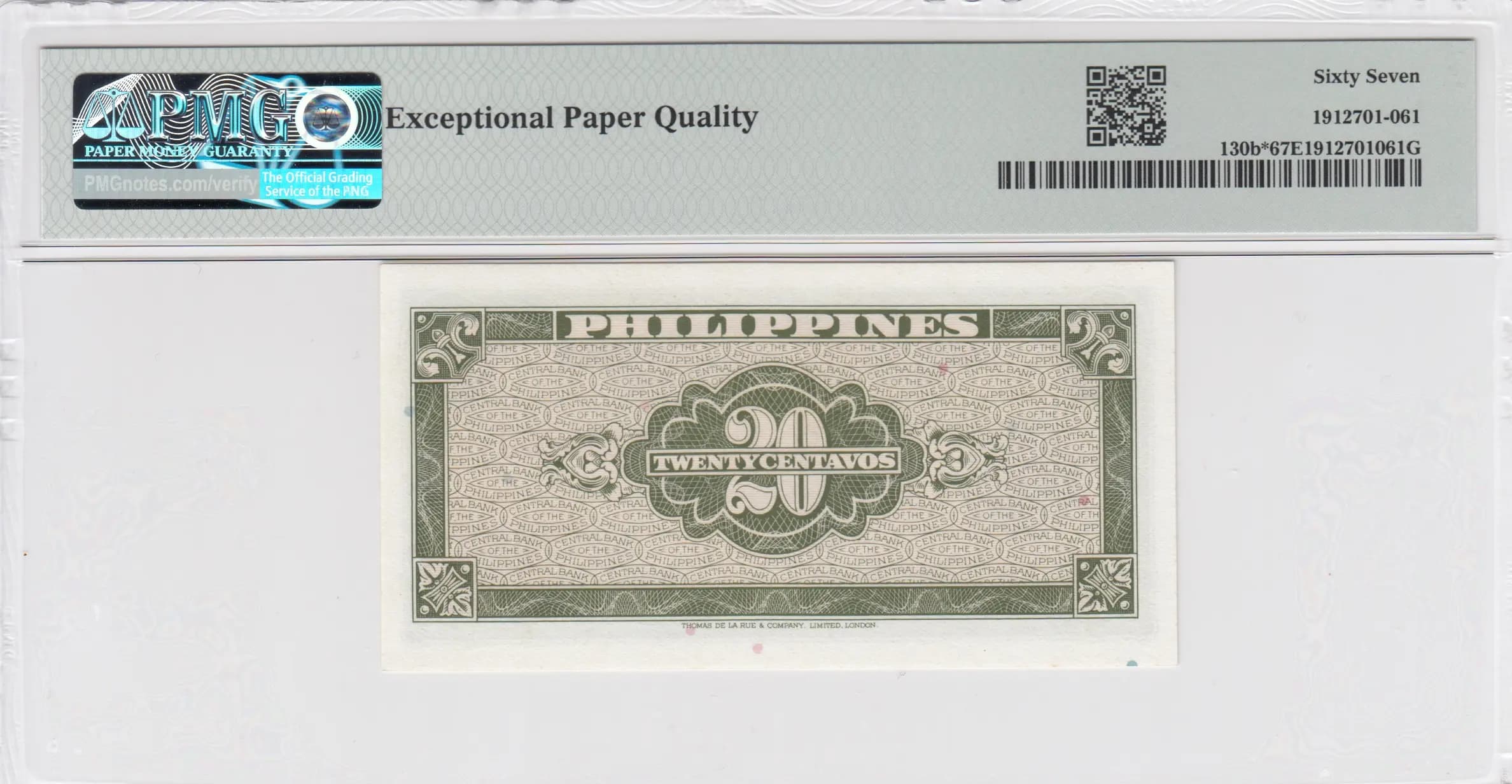
The 20 Centavos note features a classically elegant design typical of Thomas de la Rue's mid-20th century banknote work. Both sides employ a symmetrical layout with ornamental corner medallions displaying the denomination '20' in circular frames. The central design areas are dominated by elaborate geometric and floral vignettes rendered in fine-line engraving. The back displays the Central Bank of the Philippines seal (circular emblem on the left) and Philippine Republic seal, positioned prominently as institutional symbols of newly independent monetary authority. The obverse features repeating background patterns and fine line engraving characteristic of de la Rue's security printing techniques. No portraits appear on this denomination—instead, the design emphasizes institutional heraldry and ornamental security features typical of small-denomination notes of the era.
OBVERSE (Front): 'PHILIPPINES' — designation of country of issue; 'TWENTY CENTAVOS' — denomination in English; 'CENTRAL BANK' — issuing authority; 'THOMAS DE LA RUE & COMPANY, LIMITED, LONDON' — printer identification. REVERSE (Back): 'CENTRAL BANK OF THE PHILIPPINES' — issuing institution; 'THIS NOTE IS A LIABILITY OF THE CENTRAL BANK AND IS FULLY GUARANTEED BY THE GOVERNMENT OF THE PHILIPPINES' — legal guarantee statement; 'TWENTY CENTAVOS' — denomination confirmation; 'THIS NOTE IS LEGAL TENDER IN THE PHILIPPINES FOR ALL DEBTS, PUBLIC AND PRIVATE' — legal tender declaration; '*153889' — replacement serial number (asterisk denotes replacement); 'President of the Philippines' and 'Governor of the Central Bank' — signature line identifications.
This note was printed by Thomas de la Rue & Company, Limited, London, using intaglio (engraved) printing methods. The fine-line engraving visible throughout the design, particularly in the background repetitive patterns, ornamental borders, and corner vignettes, is characteristic of de la Rue's security printing standards. The sharp, crisp impression and microprint-quality details observed in both the visual analysis and the note's exceptional condition demonstrate the precision of this traditional intaglio security printing approach.
This note is identified as P-130b* (replacement note variety). The asterisk prefix in the serial number (*153889) is the defining characteristic distinguishing it from the standard P-130b variety. Philippine notes of this era typically show signature variations corresponding to different terms of the President and Central Bank Governor. The Thomas de la Rue printer imprint distinguishes this from later Security Banknote Company printings of related denominations. This particular specimen's exceptional PMG 67 grade and replacement designation make it a noteworthy example for condition-conscious collectors, though the issue itself remains common in the Philippine collecting market.