20 centavos 1949 replacement
About This Note
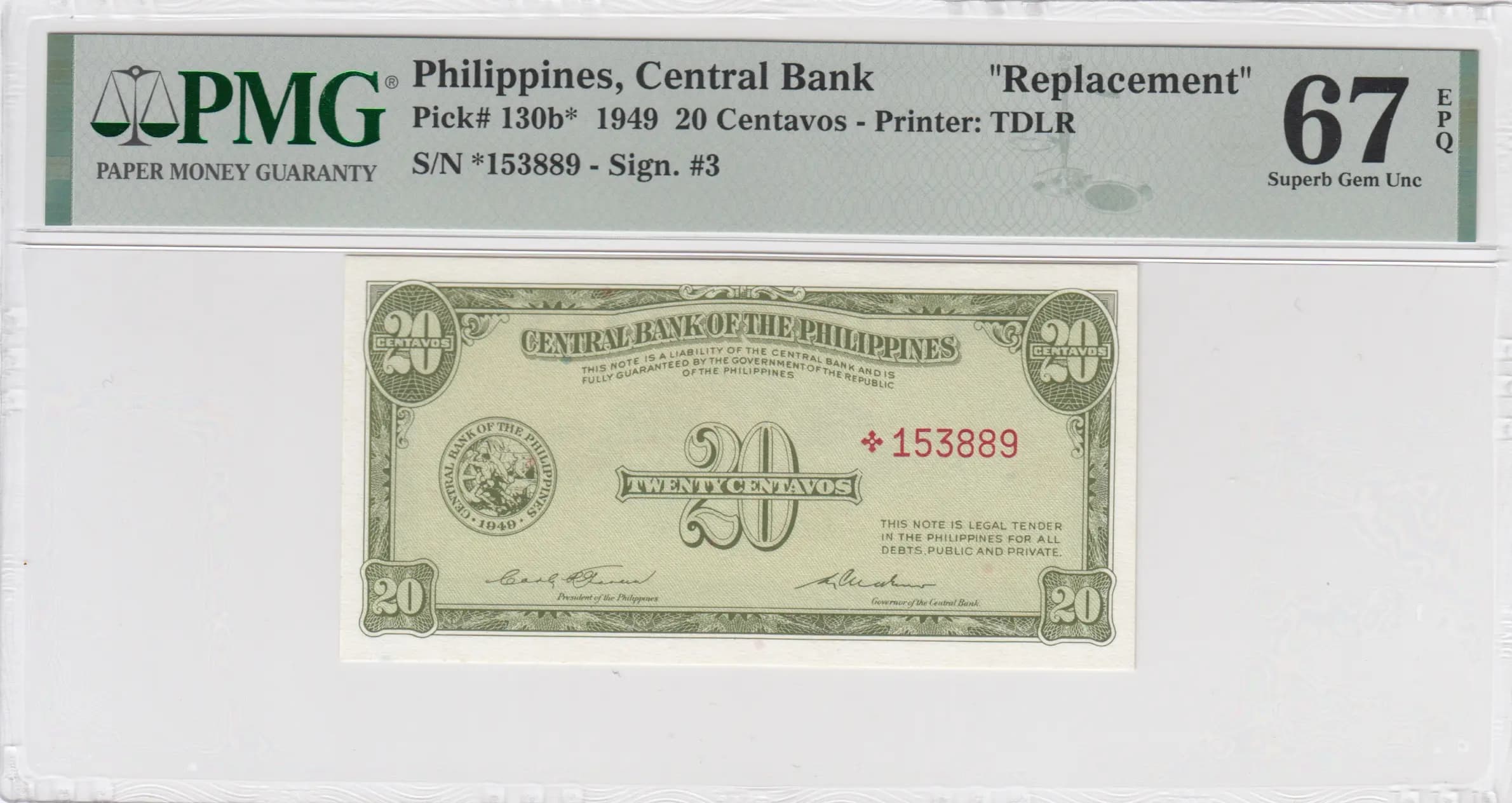
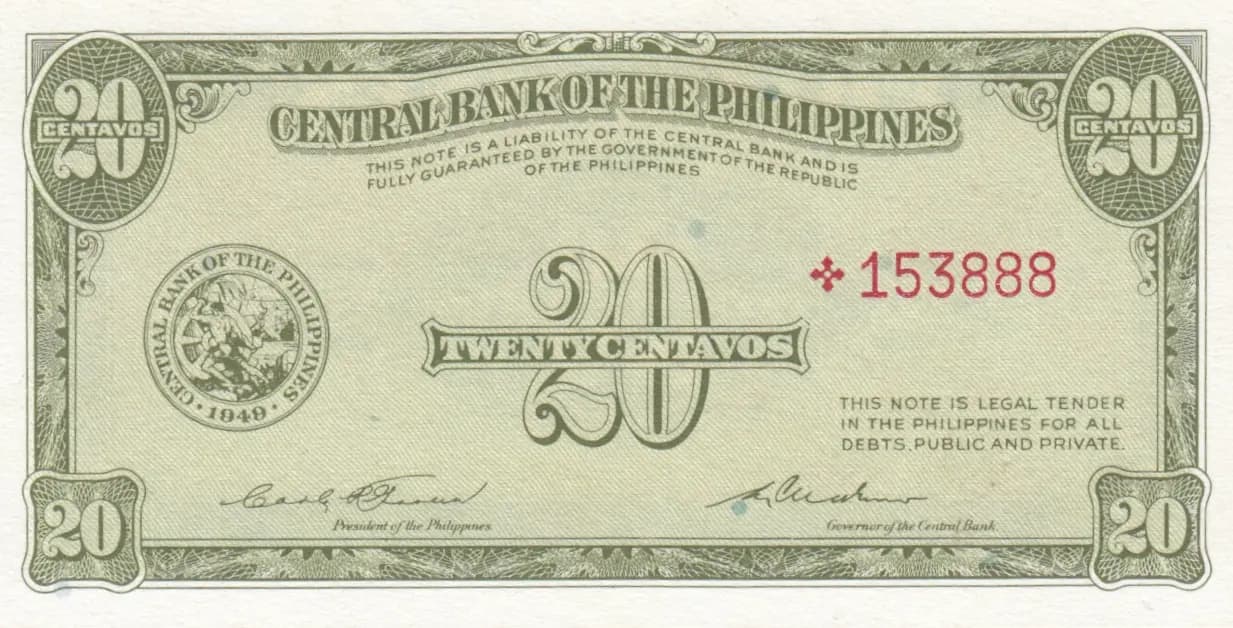
This is an exceptional example of the 1949 Philippine 20 centavos replacement note (Pick P-130b*), rendered in uncirculated condition with pristine printing clarity. The note features the distinctive greenish-gray color scheme and elaborate security engraving characteristic of Thomas de la Rue's work, including fine cross-hatching, intricate scrollwork borders, and a prominent Central Bank seal dated 1949. The asterisk prefix in the serial number (*153888) identifies this as a replacement note, making it a notable variant for collectors of early Philippine currency.
Common. The 20 centavos denomination from this 1949 issue saw substantial circulation during the early years of Philippine independence. While replacement notes (marked with asterisk prefixes) represent a smaller subset of the total printing, they were issued in sufficient quantities to remain readily available to collectors. The uncirculated condition is noteworthy and more desirable than circulated examples, but the note itself is not scarce. No significant premium attaches to this specific Pick number based on print run limitations or rarity of the issuing authority.
Issued during the early years of the Central Bank of the Philippines' operation (established 1949), this note represents the republic's consolidation of monetary control following independence. The coat of arms seal featuring an eagle and shield symbolizes Philippine national sovereignty, while the explicit guarantee by the government underscores the fledgling nation's commitment to stable currency. The Thomas de la Rue printing from London reflects the international standards and security practices adopted by the newly independent state.
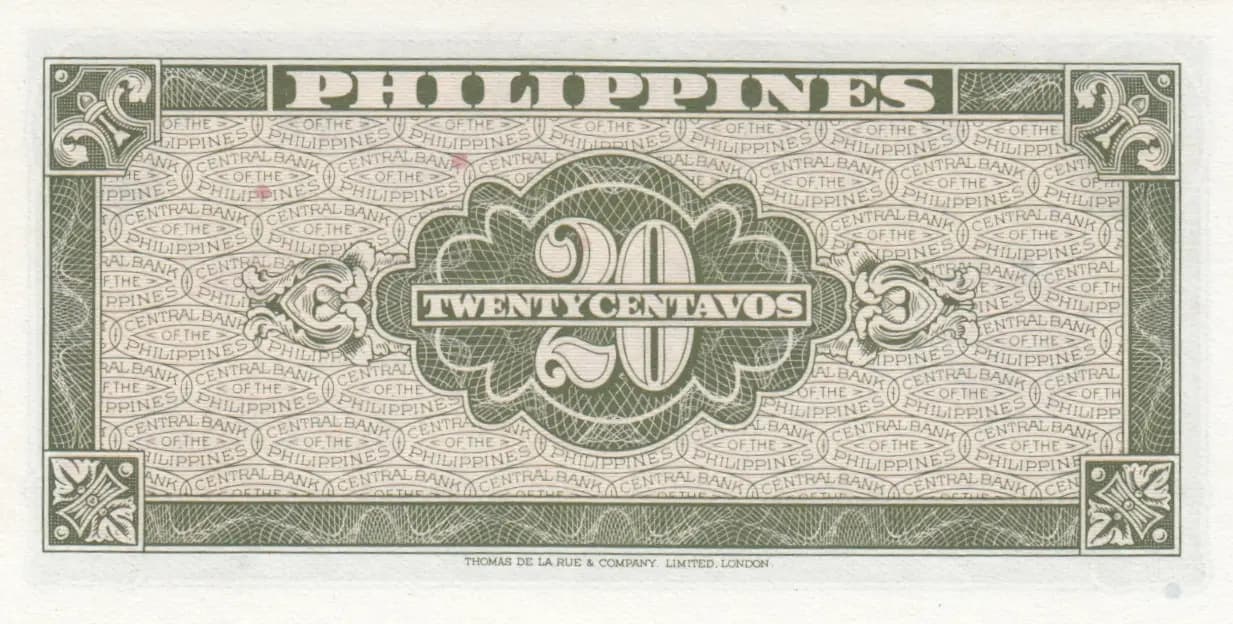
The note features a classical banknote design centered on ornate oval cartouches displaying the denomination on both sides. The front incorporates a circular seal on the left featuring the Philippine coat of arms (eagle and shield motif) dated 1949, symbolizing the newly established Central Bank's authority. Decorative corner ornaments with scrollwork appear at all four corners of both sides, providing aesthetic balance and security reinforcement. The back employs a sophisticated repeating background pattern of 'OF THE PHILIPPINES' and 'CENTRAL BANK' text as a security measure. The color palette of green, gray, and cream/beige creates visual hierarchy while maintaining the dignified appearance expected of a central bank issue. No portraits are depicted, consistent with the design philosophy for lower denominations of this era.
Front Side: 'CENTRAL BANK OF THE PHILIPPINES' (issuing authority); 'THIS NOTE IS A LIABILITY OF THE CENTRAL BANK AND IS FULLY GUARANTEED BY THE GOVERNMENT OF THE REPUBLIC OF THE PHILIPPINES' (legal guarantee); 'TWENTY CENTAVOS' and '20' (denomination); 'THIS NOTE IS LEGAL TENDER IN THE PHILIPPINES FOR ALL DEBTS, PUBLIC AND PRIVATE' (legal tender statement); '*153888' (serial number with replacement prefix); 'President of the Philippines' and 'Governor of the Central Bank' (signature lines). Back Side: 'PHILIPPINES' (country); 'TWENTY CENTAVOS' and '20' (denomination); 'OF THE PHILIPPINES' and 'CENTRAL BANK' (repeating security pattern text); 'THOMAS DE LA RUE & COMPANY LIMITED, LONDON' (printer attribution).
Intaglio engraving, executed by Thomas de la Rue & Company Limited of London, as indicated by the printer's attribution on the reverse. The visual evidence of fine line cross-hatching, intricate scrollwork details, multiple engraved layers, and the clarity of security patterns are characteristic of high-security intaglio production. The repeating background text pattern on the reverse is a sophisticated anti-counterfeiting measure typical of De la Rue's security printing standards of this period.
This note is identified as Pick P-130b* (replacement variety) based on the asterisk prefix preceding the serial number (*153888). The asterisk designation indicates this note was part of a replacement printing intended to supplement or replace notes from the original 1949 issue (Pick P-130). The specific serial number prefix series and the replacement marking distinguish this from the standard P-130b variety. The note displays typical characteristics of Central Bank of the Philippines 1949 issues, with no evidence of overprints, color variations, or signature varieties that would constitute additional sub-varieties.