2 pesos 1949 replacement
About This Note
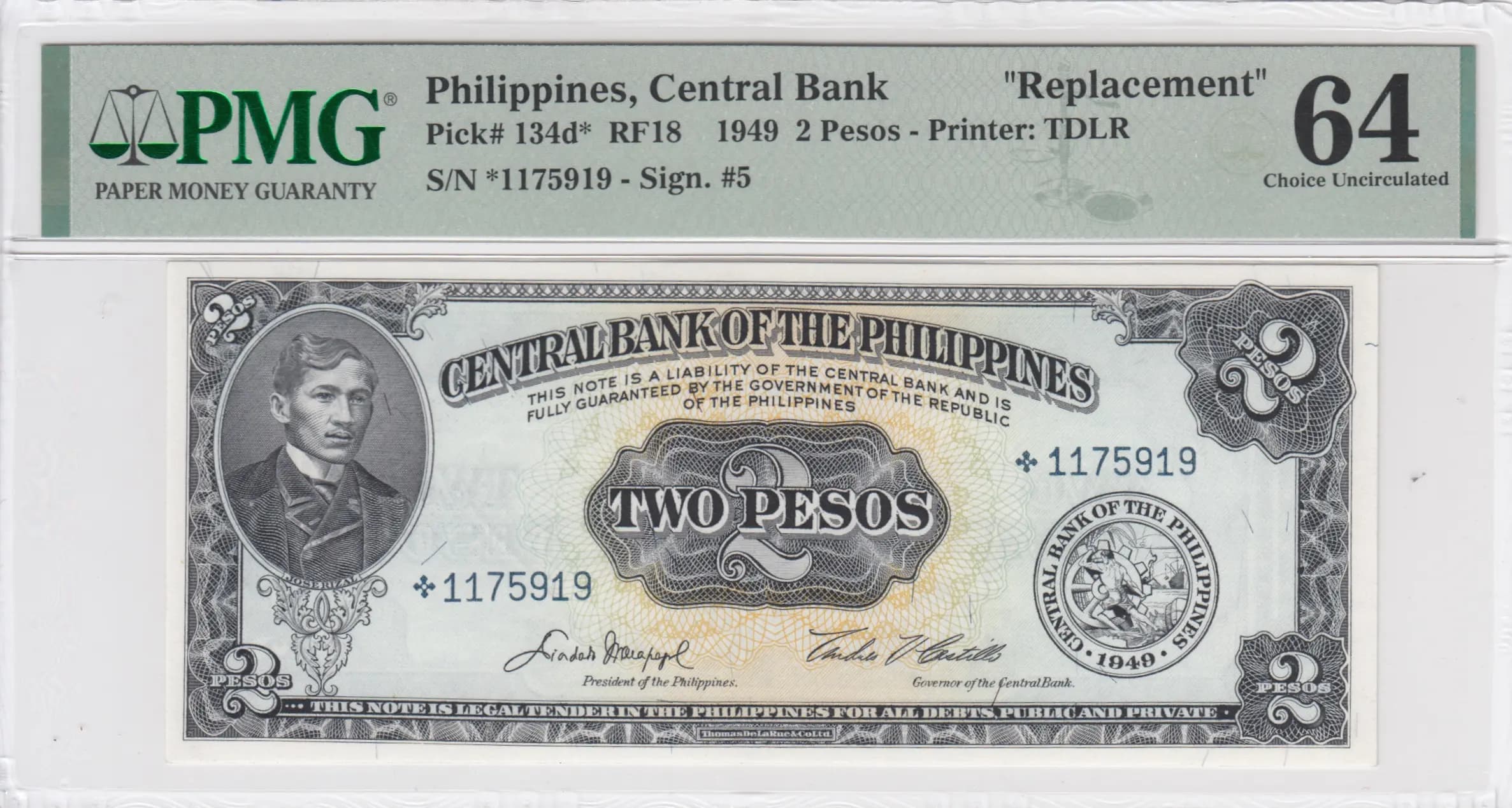
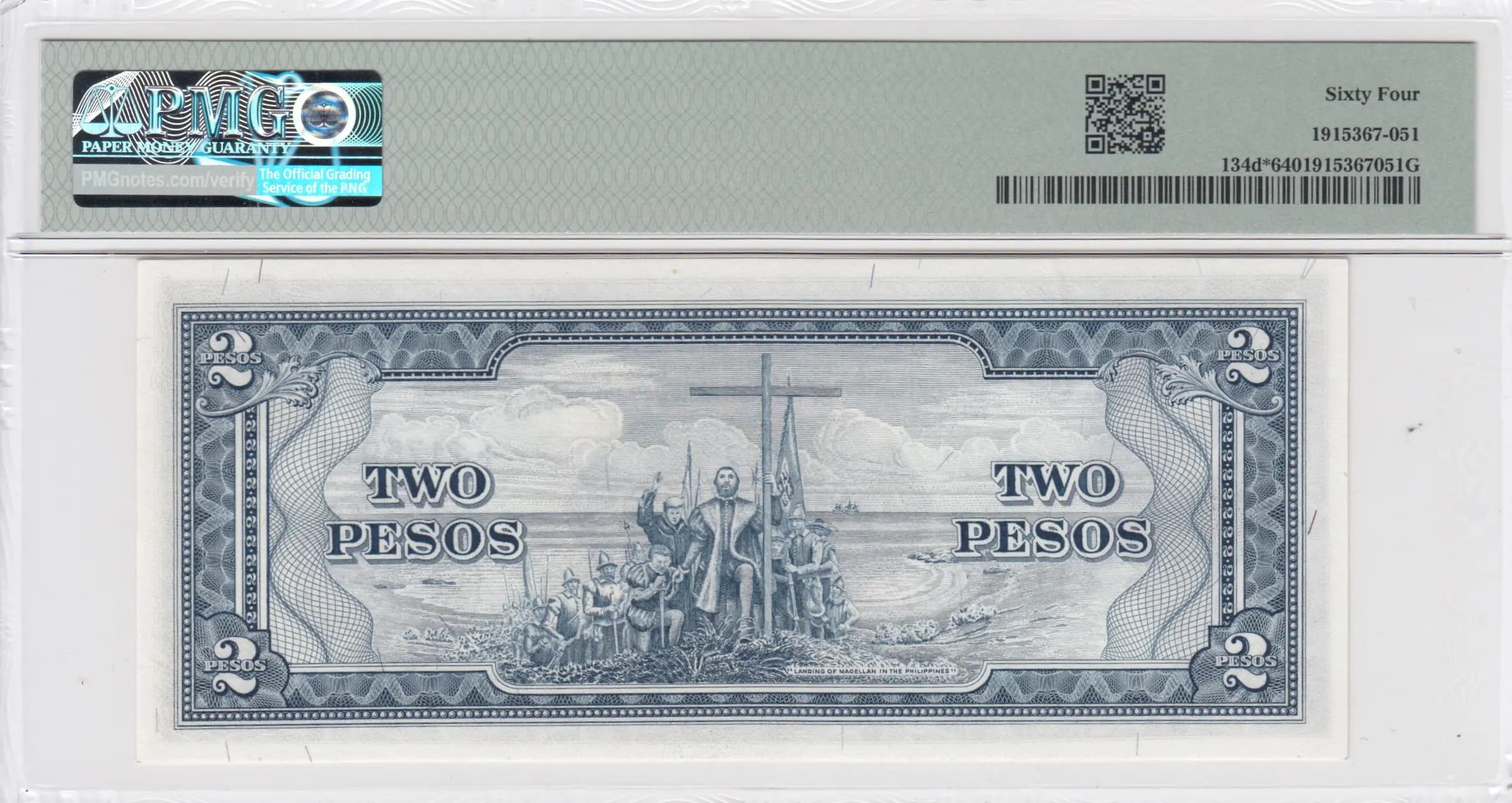
A PMG-graded Choice Uncirculated (64) Philippine 2 Pesos banknote from 1949, featuring a portrait of Jose Rizal on the obverse and the iconic Landing of Magellan scene with a central cross on the reverse. This replacement note (denoted by the asterisk in serial number *1175919) exhibits sharp, crisp intaglio printing with no signs of circulation, representing an excellent example of early Central Bank of the Philippines currency in outstanding preservation.
Common. The 1949 Philippine 2 Pesos (P-134d*) was issued in substantial quantities as part of the Central Bank's standard circulation currency. While the replacement note designation (asterisk prefix) represents a subset of the total printing, early Philippine banknotes from this period remain readily available in the market. The PMG 64 grade indicates uncirculated condition, which is desirable but not exceptionally rare for this denomination and period.
Issued during the early years of the Central Bank of the Philippines' operations, this 1949 note commemorates Philippine national and religious heritage through its imagery. The obverse features Jose Rizal, the national hero and martyr of Philippine independence, while the reverse depicts Ferdinand Magellan's landing in the Philippines in 1521, marked by the prominent cross that symbolizes the introduction of Christianity to the archipelago. This period represents the Philippines' consolidation of independence and establishment of modern monetary authority following World War II.
The obverse presents a three-quarter profile portrait of national hero Jose Rizal in formal Western business attire (suit and tie) within an oval frame on the left side of the note. The reverse features a historical scene depicting the Landing of Magellan, with multiple figures in period colonial dress gathered around a prominent ornate cross as the central focal point, set against a pastoral or coastal landscape with architectural structures visible in the background. Both sides feature elaborate ornamental scrollwork in all four corners and decorative frame elements typical of Thomas de la Rue's security printing. The Central Bank of the Philippines circular seal is positioned on the right side of the obverse. The design employs a restrained color palette of black, gray, and white with yellow/tan security features integrated throughout.
Front side: 'CENTRAL BANK OF THE PHILIPPINES' / 'THIS NOTE IS A LIABILITY OF THE CENTRAL BANK AND IS FULLY GUARANTEED BY THE GOVERNMENT OF THE REPUBLIC OF THE PHILIPPINES' / 'TWO PESOS' / Serial number '*1175919' / 'President of the Philippines' (signature line) / 'Governor of the Central Bank' (signature line) / 'THIS NOTE IS LEGAL TENDER IN THE PHILIPPINES FOR ALL DEBTS PUBLIC AND PRIVATE' / '1940' (design date). Back side: 'TWO PESOS' / 'PESOS' (in corner denominations). All inscriptions are in English, reflecting the post-colonial administrative language of the Philippines.
Intaglio (engraved) printing by Thomas de la Rue, London, as indicated in the Pick catalog. The visual analysis confirms the characteristic fine line work, cross-hatching, and detailed engraving typical of security intaglio printing. The intricate ornamental elements and the fine detail work visible in both the portrait and the historical scene demonstrate the high-security printing standards employed by TDLR for central bank currency during this period.
This specific note is cataloged as P-134d*, indicating it is a replacement note (star/asterisk prefix) from the 1949 emission printed by Thomas de la Rue. The Pick catalog identifies P-134d* and P-134s2 as the two primary variants for this base number. The serial number *1175919 confirms the replacement note designation. The design date of 1940 visible on the obverse indicates the earlier design adoption, though issuance dates to 1949 per the catalog designation.