1000 pesos 1945 with stamp
Market Prices
2 salesAbout This Note
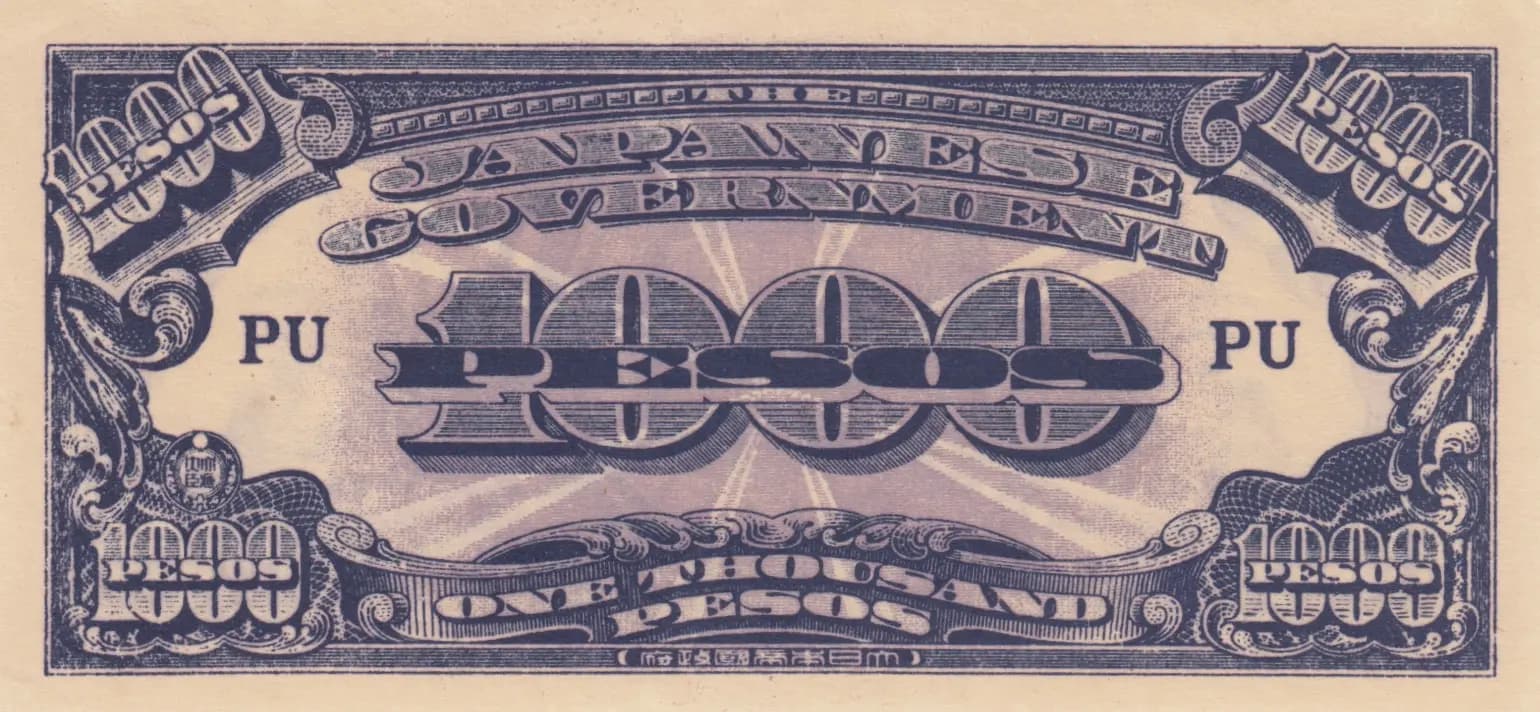
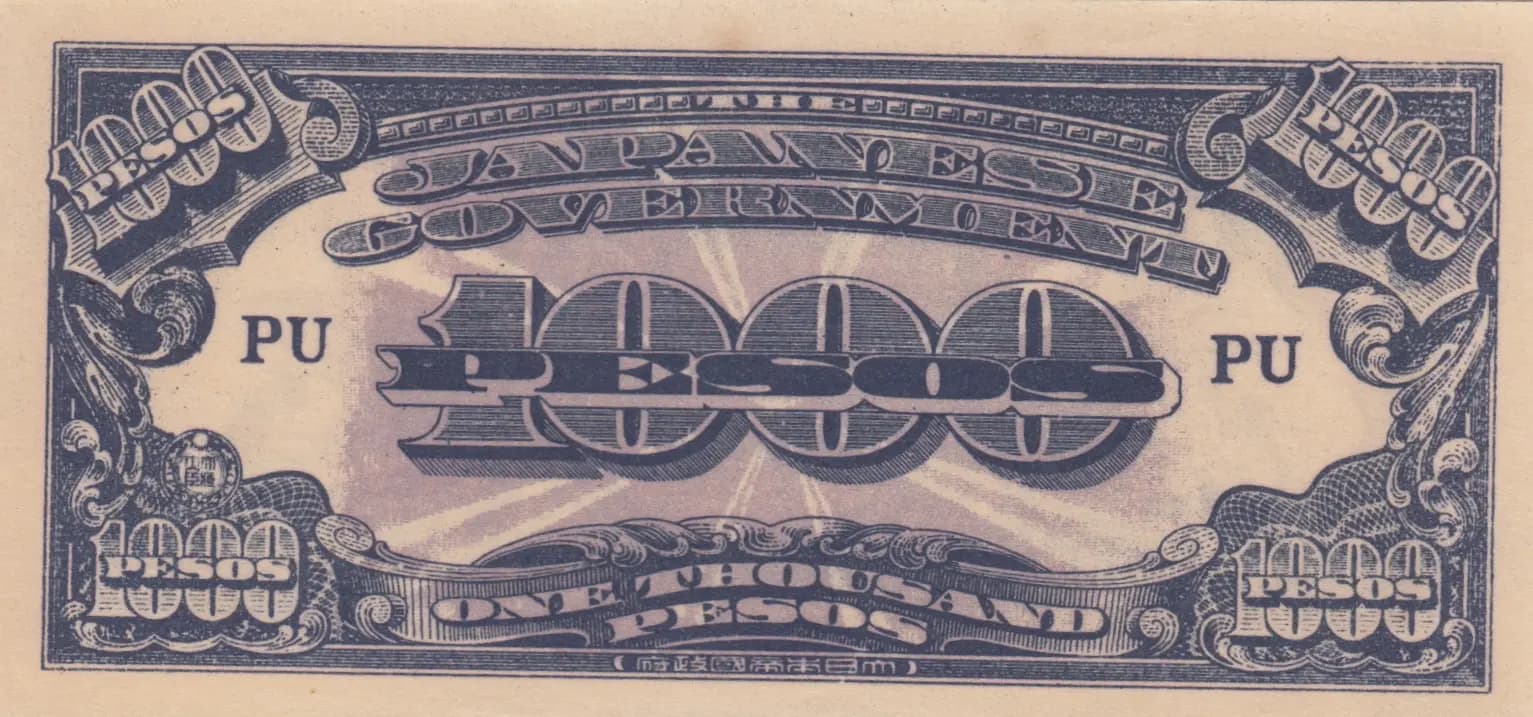
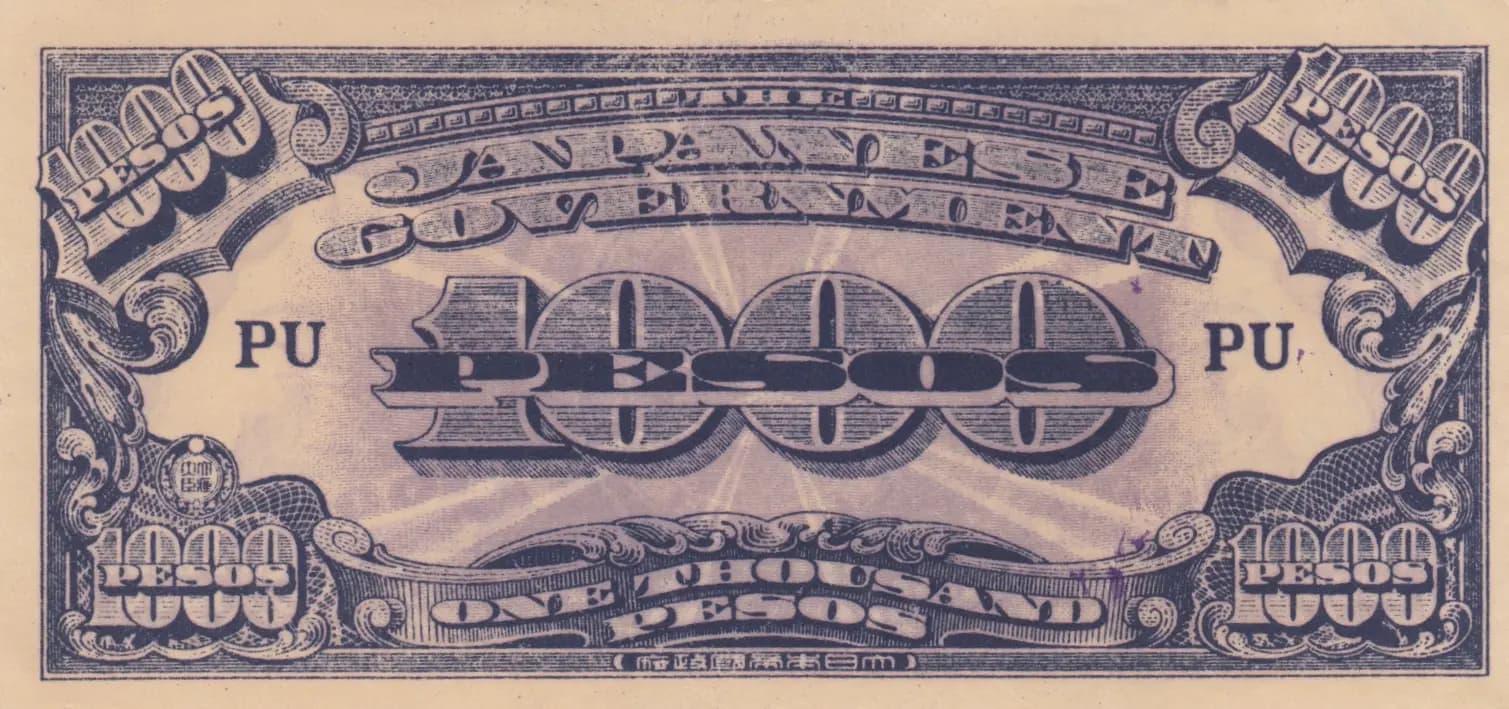
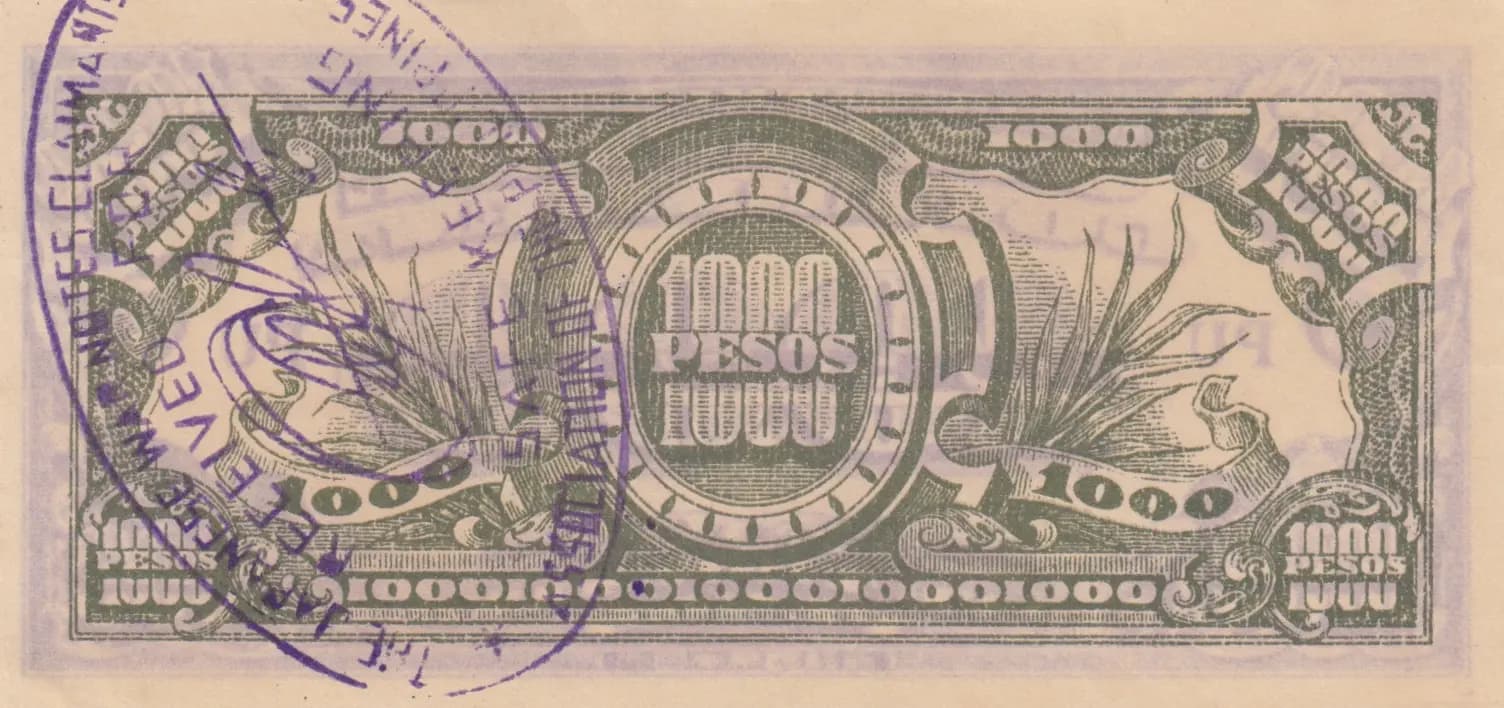
This 1000 Pesos note from 1945 (Pick P-115d) represents Japanese occupation currency issued during World War II in the Philippines. The note is presented in AU condition with distinctive purple/violet stamp markings visible on the reverse, indicating official processing or validation. The blue-purple obverse and light olive-green reverse display classic occupation-era design with ornate decorative borders, multiple denomination numerals, and intricate engraving work characteristic of Japanese military currency.
Common. Despite being occupation currency from 1945, this denomination and issue type had substantial print runs to facilitate commerce during the occupation period. eBay market data shows recent sales in the $3-4 range for similar condition grades (EF and VF), well below the threshold for rarity designations. Catalogue values from 2016 list UNC at only $4, confirming this as a readily available note in the collector market. Japanese occupation peso notes of this series were produced in significant quantities and remain common today.
Issued by the Japanese Government during the occupation of the Philippines in 1945, this banknote reflects the final year of Japanese control before the territory's liberation. The elaborate decorative design with classical scrollwork and floral motifs represents the sophisticated printing standards maintained by Japanese authorities even during wartime. The presence of official purple stamps on the reverse indicates post-issue validation or authentication, common practice during the occupation period when currency circulation required government oversight.
The reverse displays a sophisticated ornamental design centered on a large oval medallion containing 'PESOS' and the denomination '1000'. Botanical elements flanking the central medallion appear to represent wheat stalks or similar agricultural motifs, symbolizing prosperity and economic stability. The design features elaborate corner ornaments with scrollwork and floral designs in all four corners, connected by an ornate decorative border frame. Circular ornamental frames in the corners serve both aesthetic and security purposes. The color scheme transitions between green and cream/beige tones with dark green detailing, creating depth in the engraving. No portraits or specific landmarks are depicted; instead, the design emphasizes geometric and botanical ornamentation typical of occupation-era currency.
Back side inscriptions: 'PESOS' (Spanish, denomination name), '1000' (Arabic numerals, denomination value), 'PU' (block letter designation, likely printer or issue block identifier). Characters in curved banner at top appear to be Japanese or Chinese script but are not clearly legible in the visual analysis. All corner denominations reiterate '1000 PESOS'.
Intaglio engraving, evidenced by the intricate line work, detailed scrollwork patterns, and fine botanical detailing visible throughout the note. The security printing incorporates multiple color layers (blue-purple on obverse, olive-green on reverse with purple underprint) suggesting careful multicolor intaglio production. The fine detail in decorative borders and the sharpness of denomination numerals indicate high-quality engraving plates. Japanese government printing facilities, likely the Imperial Printing Bureau or contracted security printers, produced this note with the precision standards characteristic of Japanese occupation currency.
Pick P-115d designation indicates this is variety 'd' of the 1000 Pesos denomination, distinguished by the block letter designation 'PU' visible in the upper area of the note. The visual analysis confirms the characteristic light olive-green back without imprint and the purple-on-lilac underprint noted in the catalog reference. The presence of purple stamp markings on the reverse appears to be a post-issue authentication feature rather than a printing variety, consistent with official processing during the occupation period. No significant printing varieties are evident from the visual analysis, though the specific block letter 'PU' may indicate a particular printing session or security printer batch.