1000 pesos 1945
Market Prices
About This Note
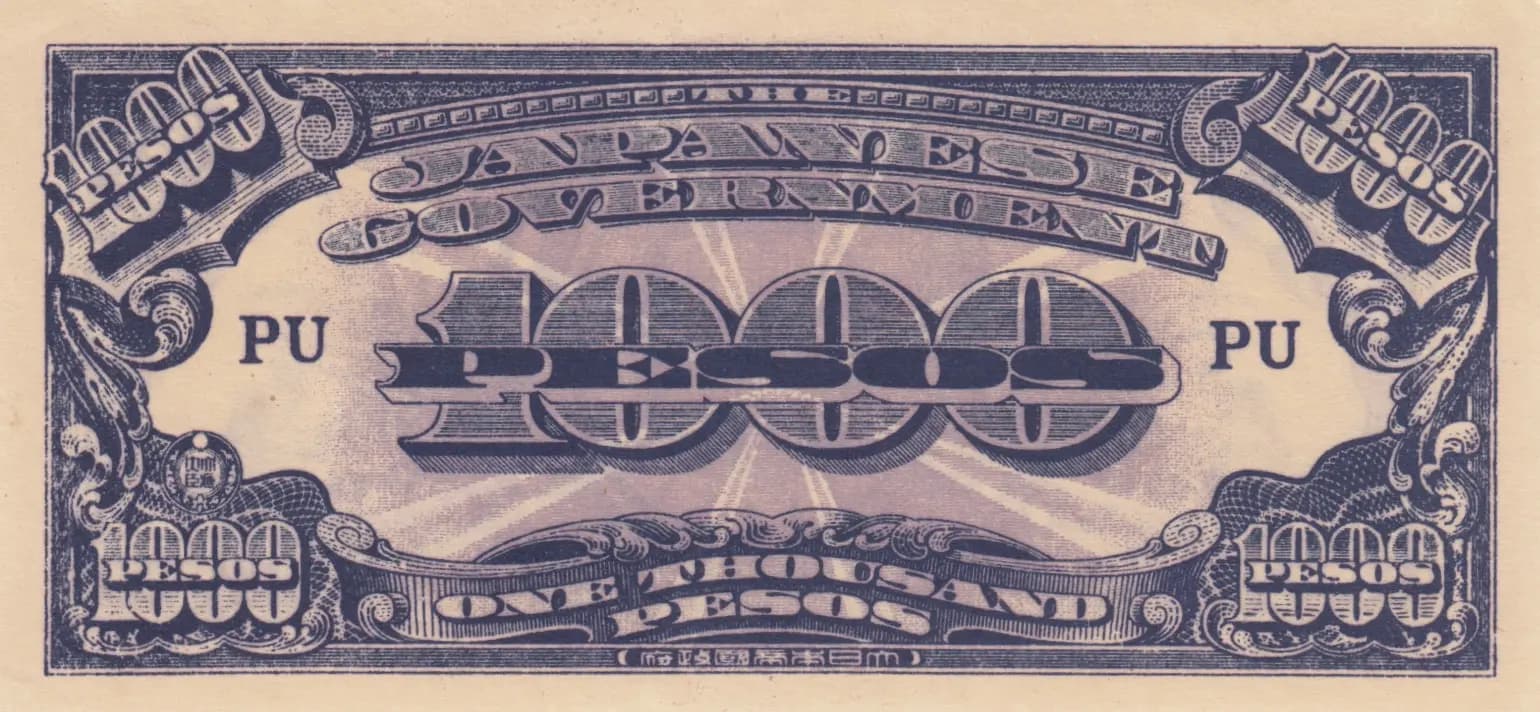
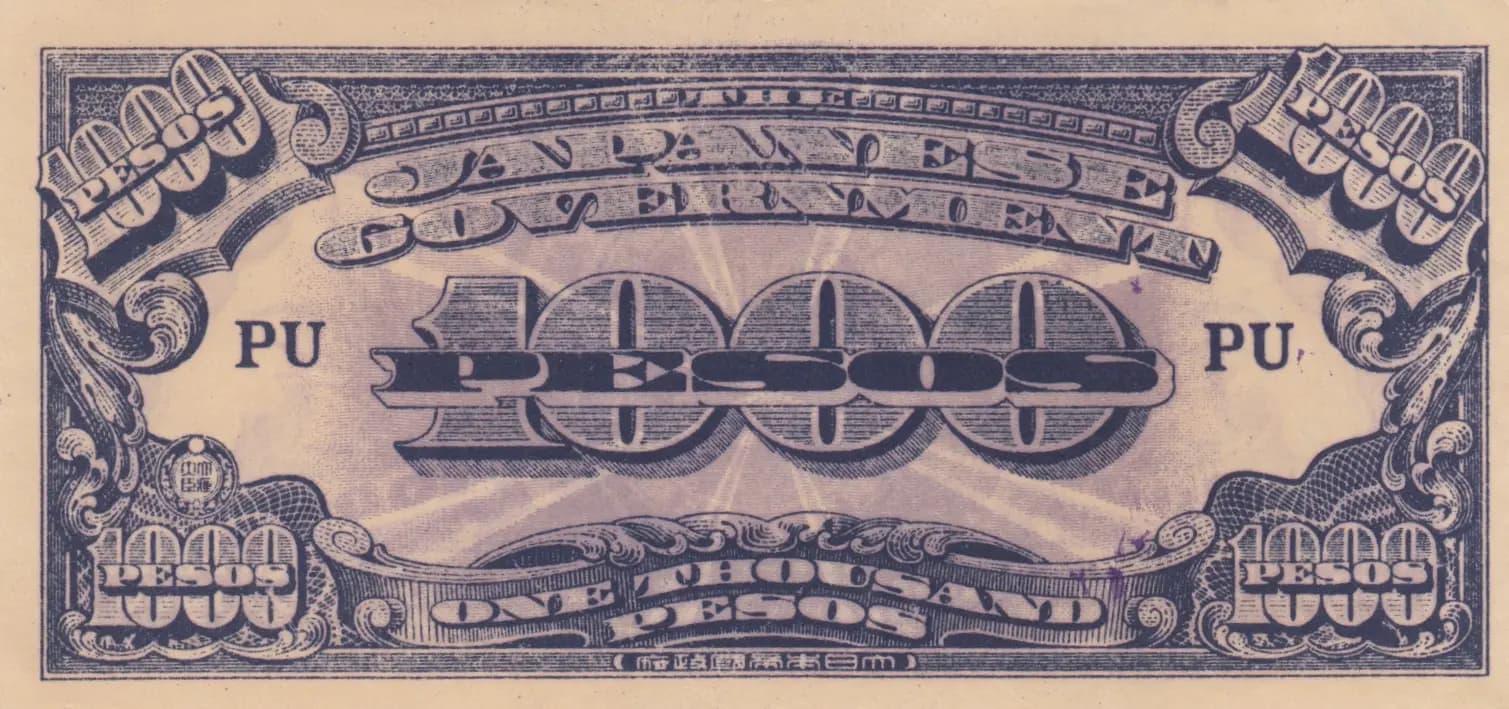
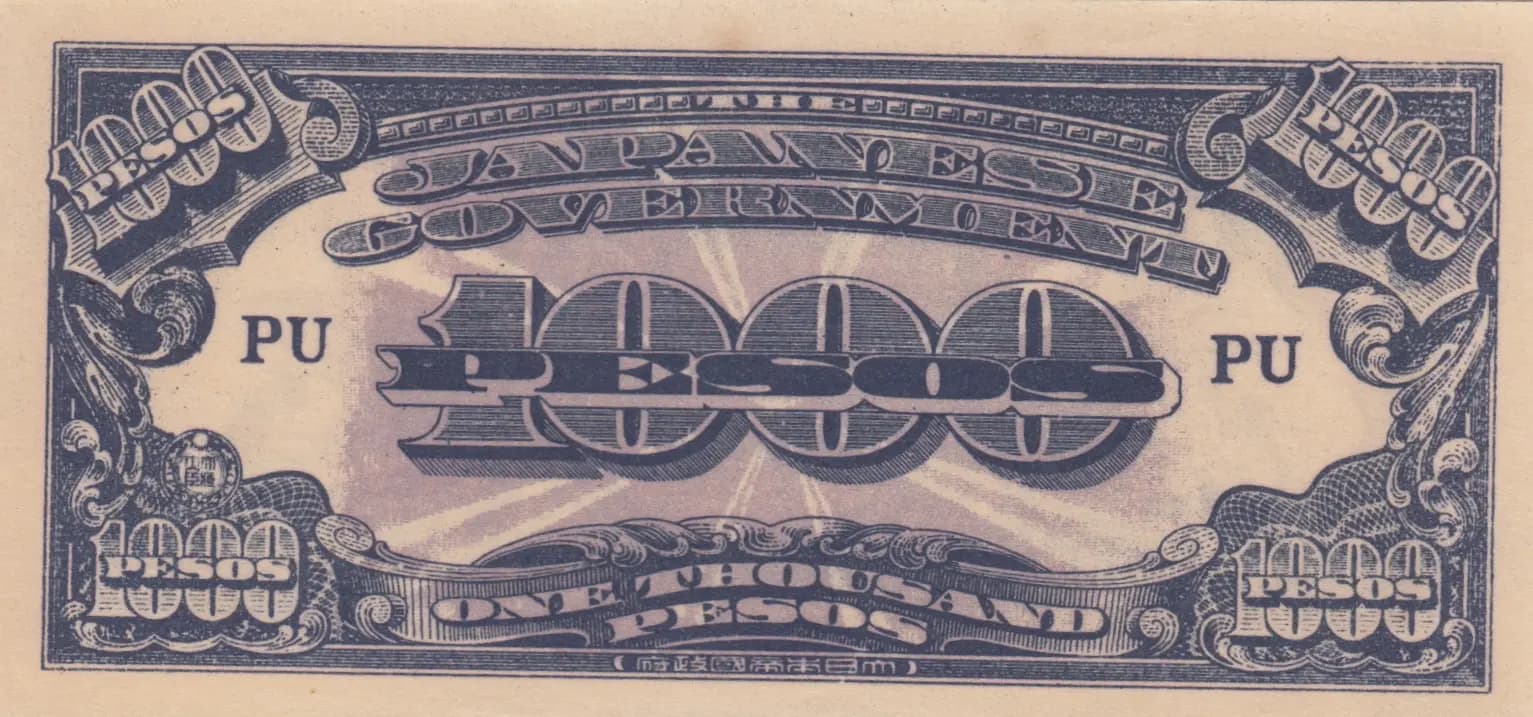
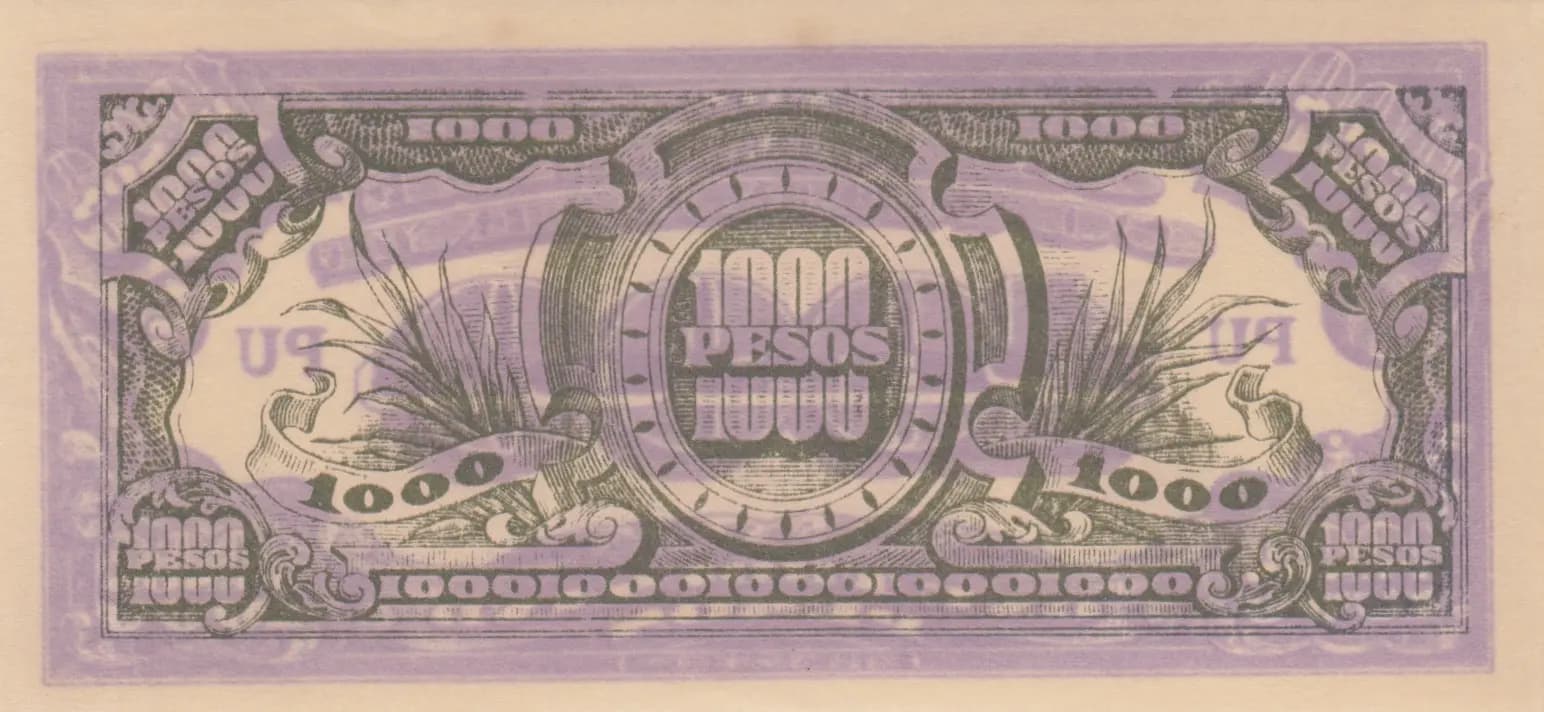
This 1000 Pesos note from the Japanese occupation of the Philippines (1945) presents in AU condition with exceptional clarity and minimal wear. The note features a striking streamlined locomotive on the obverse in dark blue tones and an elegant circular medallion design on the reverse with olive-green and purple coloration. The sharp printing quality, intact decorative borders, and well-preserved color palette make this an attractive example of Japanese occupation currency for collectors of WWII-era Philippine numismatics.
Common. While these are historical occupation notes with inherent collector interest, eBay market data shows consistent availability with prices ranging from approximately $7-$35 USD depending on condition. The catalogue values (2016) list UNC examples at only $4, indicating these notes were produced in substantial quantities. AU condition examples like this are not difficult to locate in the collector market, and the denomination (1000 Pesos) was a standard regular issue. The combination of historical significance and relative availability places this firmly in the 'common' category.
Issued during Japan's occupation of the Philippines in 1945, this banknote reflects the Japanese military administration's monetary system imposed during the final year of WWII. The locomotive imagery on the obverse symbolized industrial modernization and infrastructure development—themes the Japanese occupation authorities sought to promote through their monetary design. These occupation notes represent a unique and historically significant chapter in Philippine monetary history, bridging the colonial period with post-war independence.
The obverse features a streamlined passenger locomotive or train engine depicted in profile—a symbol of modern transportation and industrial progress under Japanese administration. The design is bordered by elaborate ornamental scrollwork and shell motifs in the corners, with cartouche ornaments containing the denomination in each corner. The color scheme employs dark navy blue with cream and light gray tones. The reverse presents a large central circular medallion or seal design, likely representing an imperial or administrative emblem, surrounded by decorative leaf and scroll motifs. The color palette shifts to olive-green printing on a purple/lavender tinted background. Both sides employ intricate fine-line engraving work throughout, reflecting high-quality intaglio printing standards.
Front: 'PU' (block letter designation, likely indicating a specific series or printing block); '1000' and 'PESOS' (denomination marking in English/Spanish). The curved banners contain Japanese text (not fully legible in visual analysis but consistent with Japanese occupation issues). Back: '1000' and 'PESOS' repeated in the central medallion and corner ornaments. All denominations are clearly marked in both English and Spanish, reflecting the bilingual nature of Philippine currency during this period.
Intaglio (recess) printing, evidenced by the sharp, crisp line work, fine detail reproduction in borders and decorative elements, and the characteristic depth visible in the ornamental designs. The complex locomotive illustration and circular medallion design show the precision typical of currency-grade intaglio work. These occupation-era Philippine notes were produced by Japanese government printing facilities; the specific printer was likely the Japanese Imperial Printing Bureau or a designated contractor overseeing Philippine currency production during the occupation.
This example matches Pick P-115c designation with block letters 'PU' clearly visible on the obverse. The color characteristics—blue-purple obverse with olive-green and purple-tinted reverse—align with catalog descriptions for P-115c. No overprints, countermarks, or unusual serial number prefixes are evident from the visual analysis. The note appears to be a standard printing of the 1945 regular issue without known varieties such as printing errors, signature variations, or emergency overprints that would distinguish it from the typical issue.