100 pesos 1942
“Iloilo”
Market Prices
About This Note
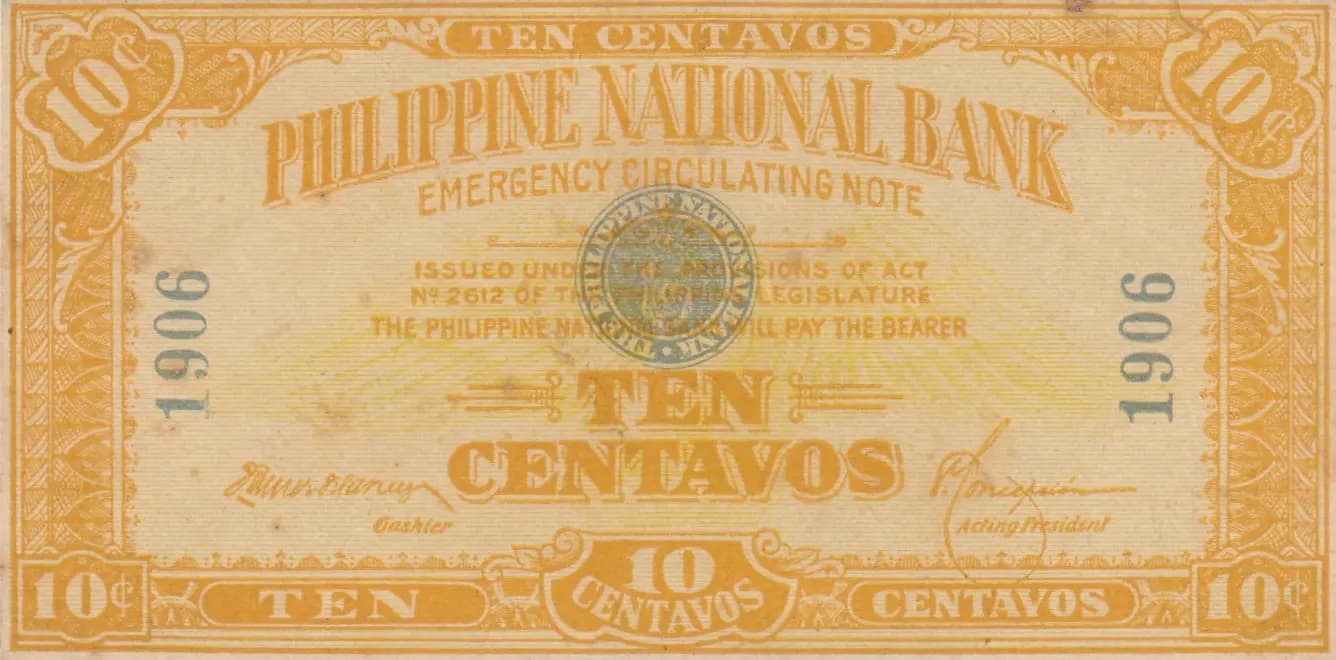
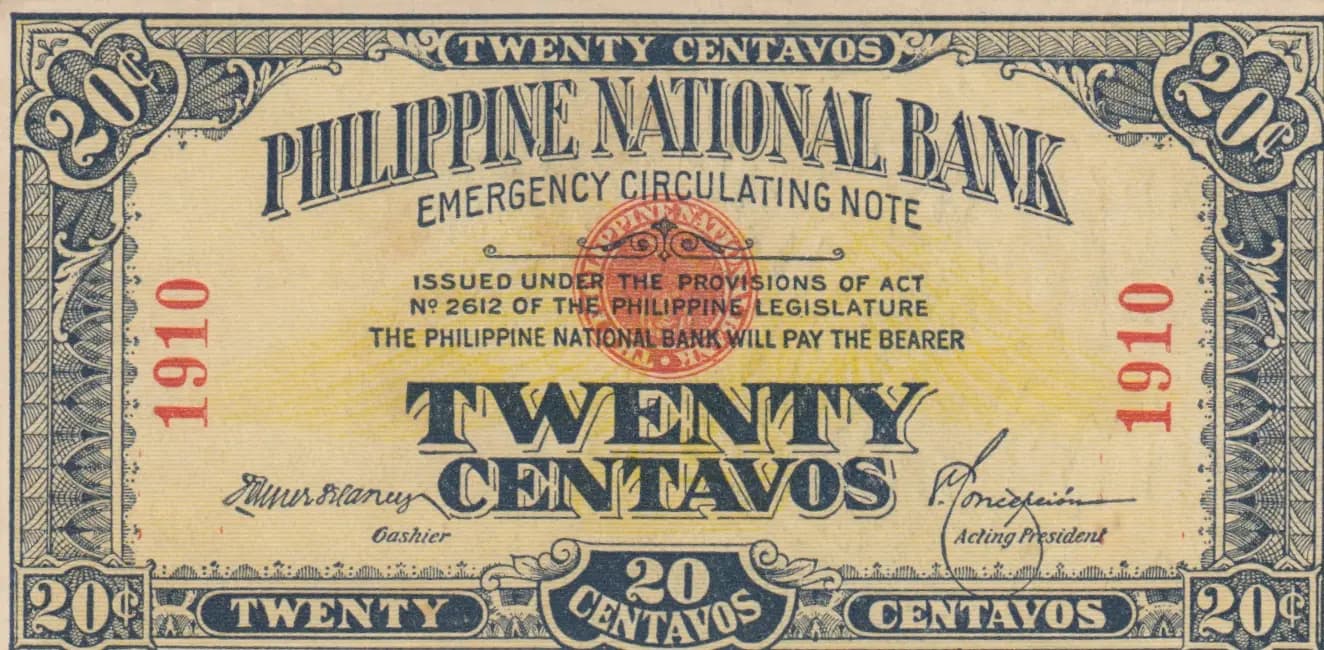
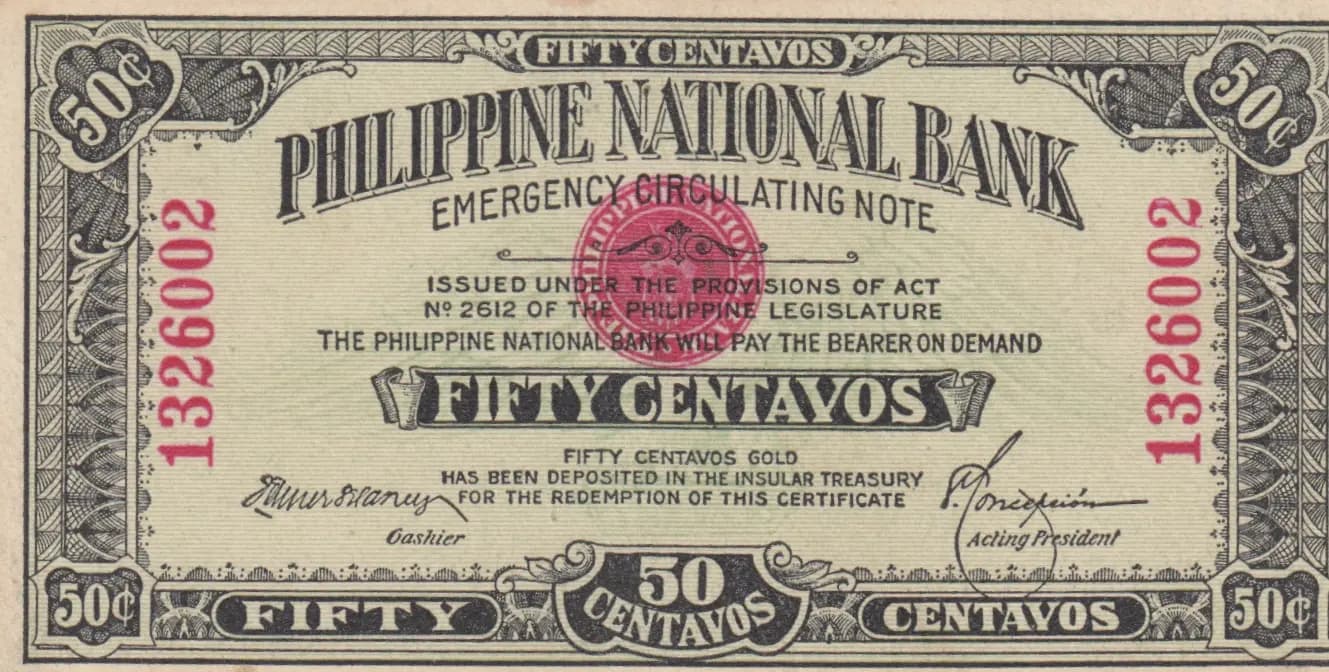
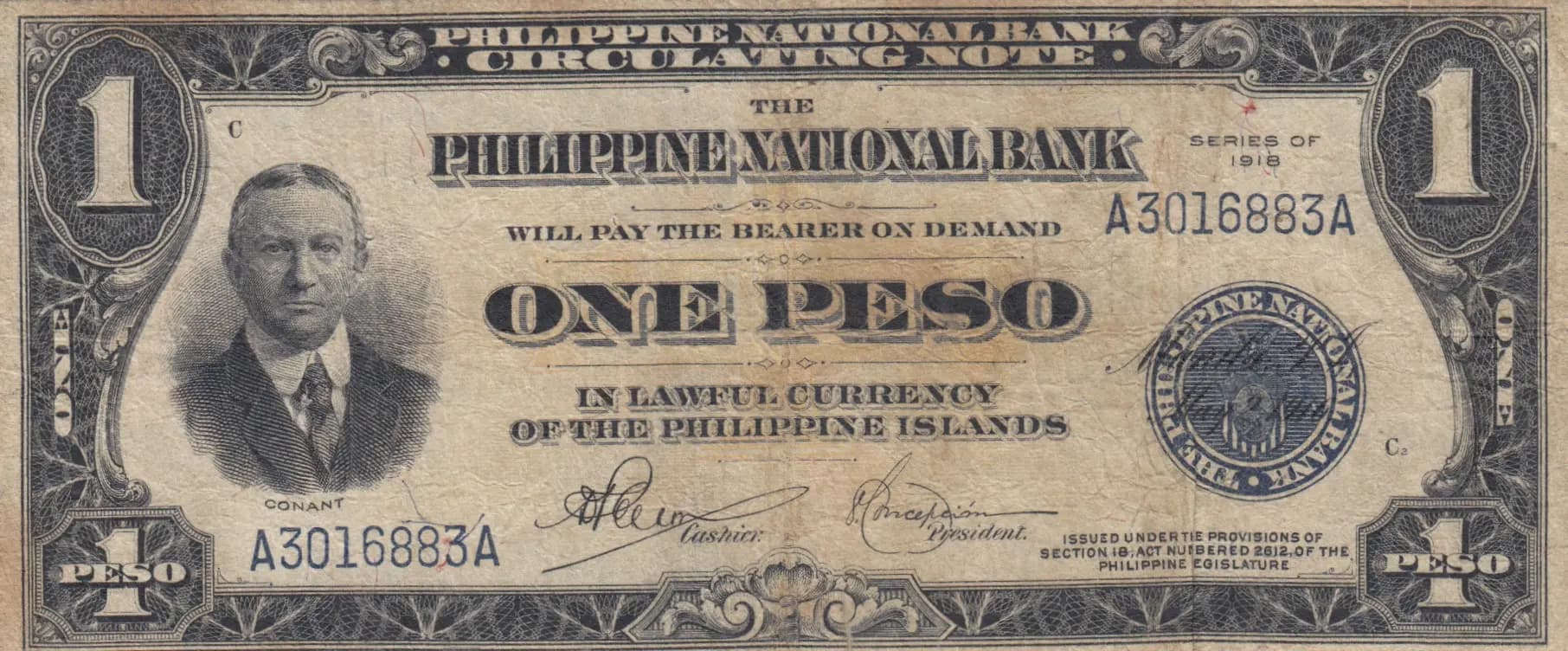
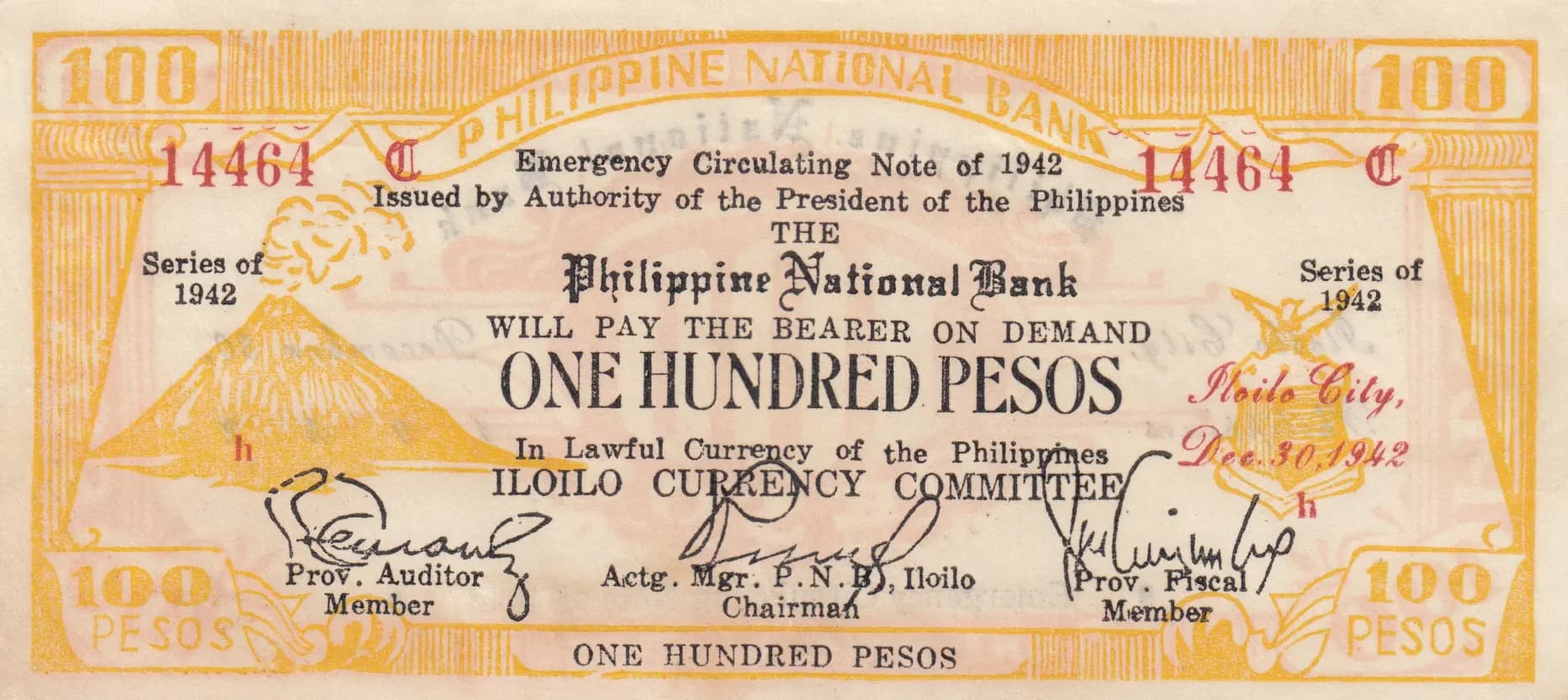
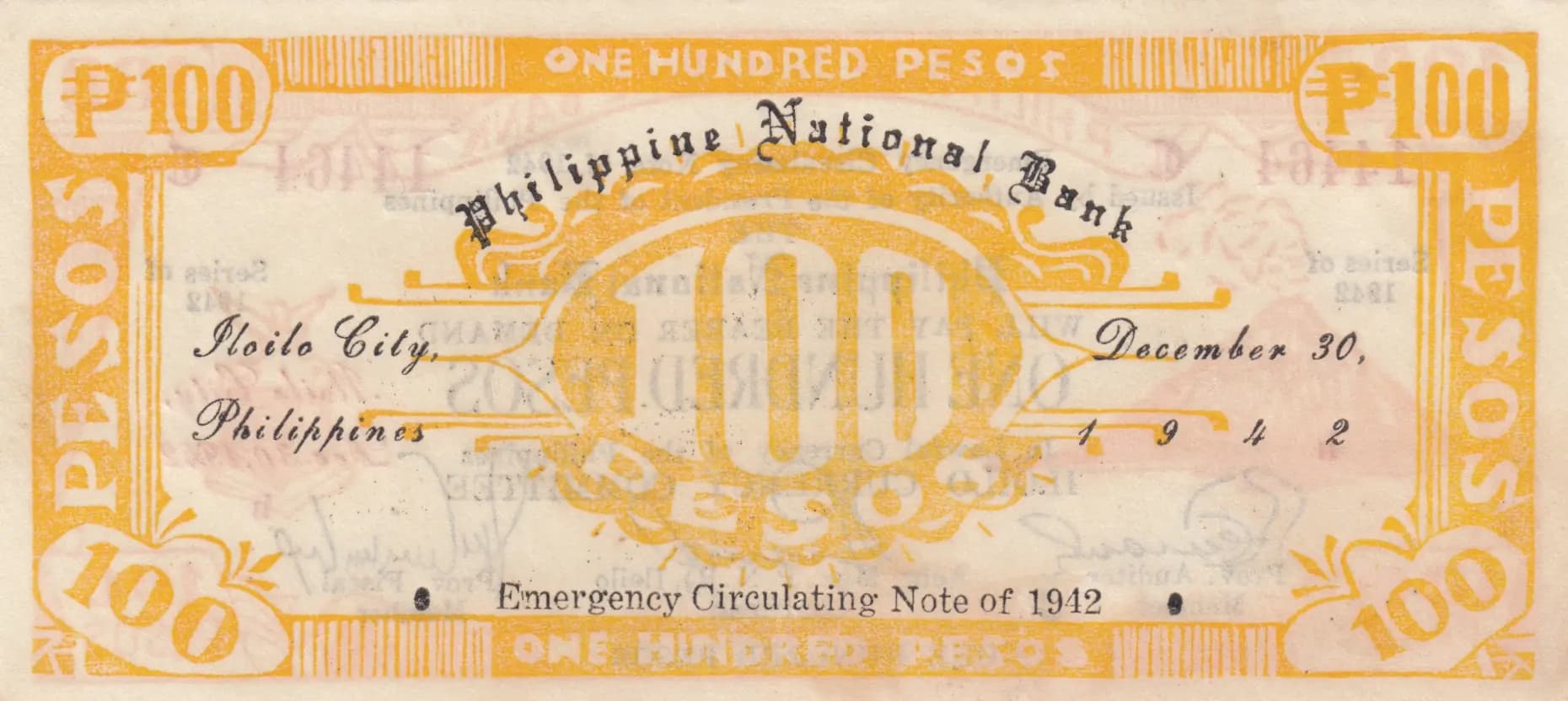
A striking 1942 Philippine National Bank Emergency Circulating Note for 100 pesos, issued specifically by the Iloilo Currency Committee on December 30, 1942. The note displays the characteristic yellow-gold coloring of emergency wartime currency, featuring an ornate volcano illustration on the obverse and a prominent circular ornamental design containing '100' on the reverse. In AU condition, this note shows expected signs of age and careful handling with some foxing and staining, typical for an 80+ year old emergency issue that represents a fascinating piece of Philippine monetary history during Japanese occupation.
Common. This is an emergency circulating note from a local currency committee with likely substantial print run for regional circulation in Iloilo during wartime. The eBay price tracking data shows prices ranging from $2.25 to $35.00, with most circulated examples selling in the $2.95-$5.99 range and uncirculated examples around $4.50. These price points and the availability of multiple examples in various conditions indicate this is a commonly available note in the collector market. AU condition examples are not particularly scarce and do not command premium pricing.
Issued during the Japanese occupation of the Philippines in World War II, this emergency circulating note represents the Philippine National Bank's response to severe currency shortages and economic disruption. The specific attribution to the Iloilo Currency Committee and the formal authorization 'by Authority of the President of the Philippines' reflects the complex governance structures that persisted during this period. The volcano imagery and ornate design reflect pre-war Philippine identity while the emergency designation and local committee issuance underscore the decentralized monetary measures required during wartime occupation.
The obverse features an ornate rectangular border design with decorative corner ornaments displaying the denomination. The primary visual element is a volcano illustration positioned on the left side of the note, symbolizing Philippine geography and natural identity. The center contains formal banking text in a serif typeface, with three signature lines at the bottom for committee members (Provincial Auditor, P.N.B. Manager/Chairman, and Provincial Fiscal). The denomination '100' appears in multiple locations within ornamental corner designs. The reverse displays a large circular ornamental medallion or seal in the center containing the numeral '100', surrounded by ornate repeating vertical line patterns forming the border. Both sides employ a predominant yellow-gold color scheme with orange and cream accents, characteristic of emergency wartime currency printing.
FRONT SIDE: 'Philippine National Bank' (issuer name); 'Emergency Circulating Note of 1942' (note classification); 'The Philippine National Bank will pay the bearer on demand one hundred pesos in lawful currency of the Philippines' (legal promise); 'Issued by Authority of the President of the Philippines' (authorization); 'Series of 1942' (series designation); 'Iloilo Currency Committee' (issuing authority); 'Iloilo City, Dec. 30, 1942' (issue location and date); 'Prov. Auditor Member', 'Acting Manager, P.N.B., Iloilo Chairman', 'Prov. Fiscal Member' (signatory titles); Serial number '14464'; Denomination '100' and 'ONE HUNDRED PESOS'. BACK SIDE: 'P 100' and 'PESOS' (denomination indicators in corners); 'ONE HUNDRED PESOS' (written value); 'Philippine National Bank' (issuer); 'Iloilo City, December 30, Philippines 1942' (issue details); 'Emergency Circulating Note of 1942' (classification).
Relief/letterpress printing, typical of Philippine banknote production in the 1940s. The ornate border patterns, clear denomination indicators, and signature lines are consistent with letterpress technology. The consistent coloring and registration visible in the images suggest single-color or limited multicolor printing, common for emergency issue notes where rapid production took precedence over complex security features. No evidence of the sophisticated intaglio printing used for regular currency is apparent; the note employs simpler, faster production methods befitting emergency wartime currency.
Pick catalog number P-S322 denotes this as a specific variety of the 1942 emergency issue. This particular specimen features serial number 14464 and is signed as issued by the Iloilo Currency Committee on December 30, 1942. Varieties of this note likely exist based on different committee compositions (different signatories), serial number ranges, and possibly different printing dates, though all fall under the 1942 Series designation. The specific Iloilo City committee attribution distinguishes this from notes issued by other regional currency committees during the same emergency period.