100 pesos 1969
Market Prices
18 salesAbout This Note
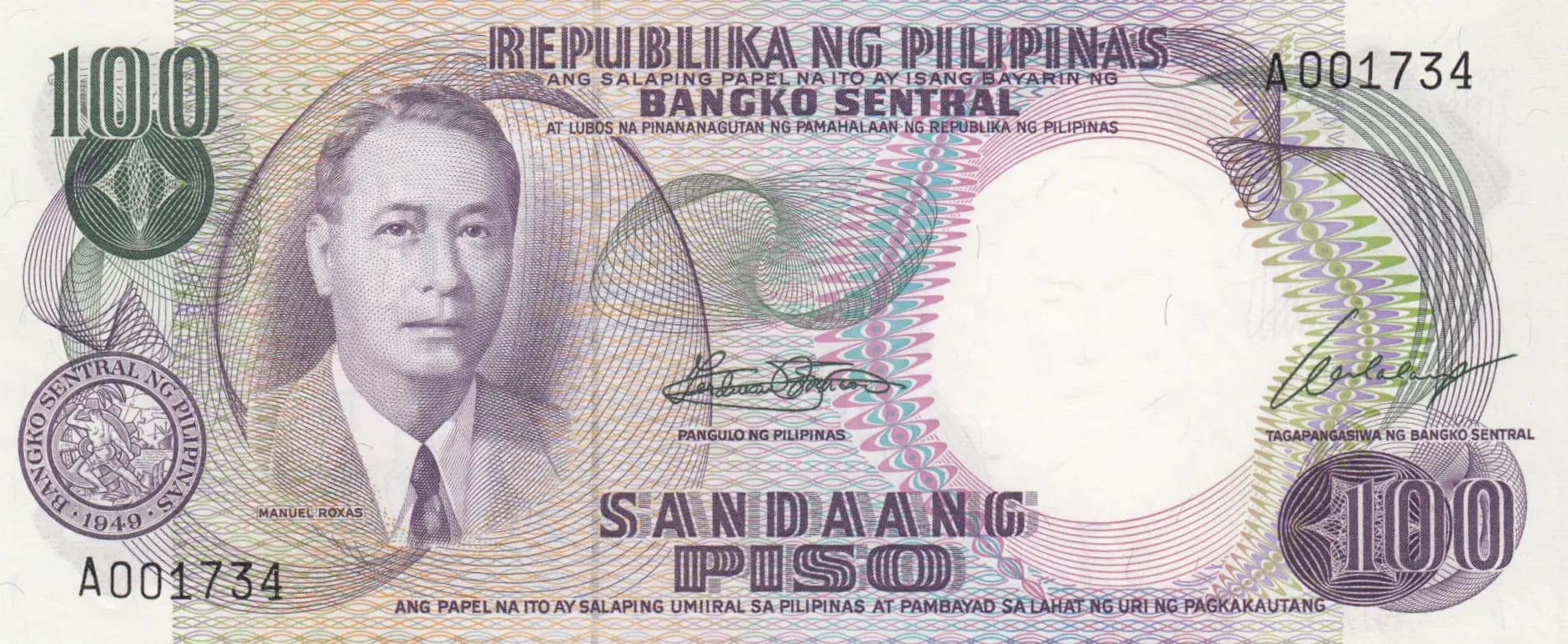
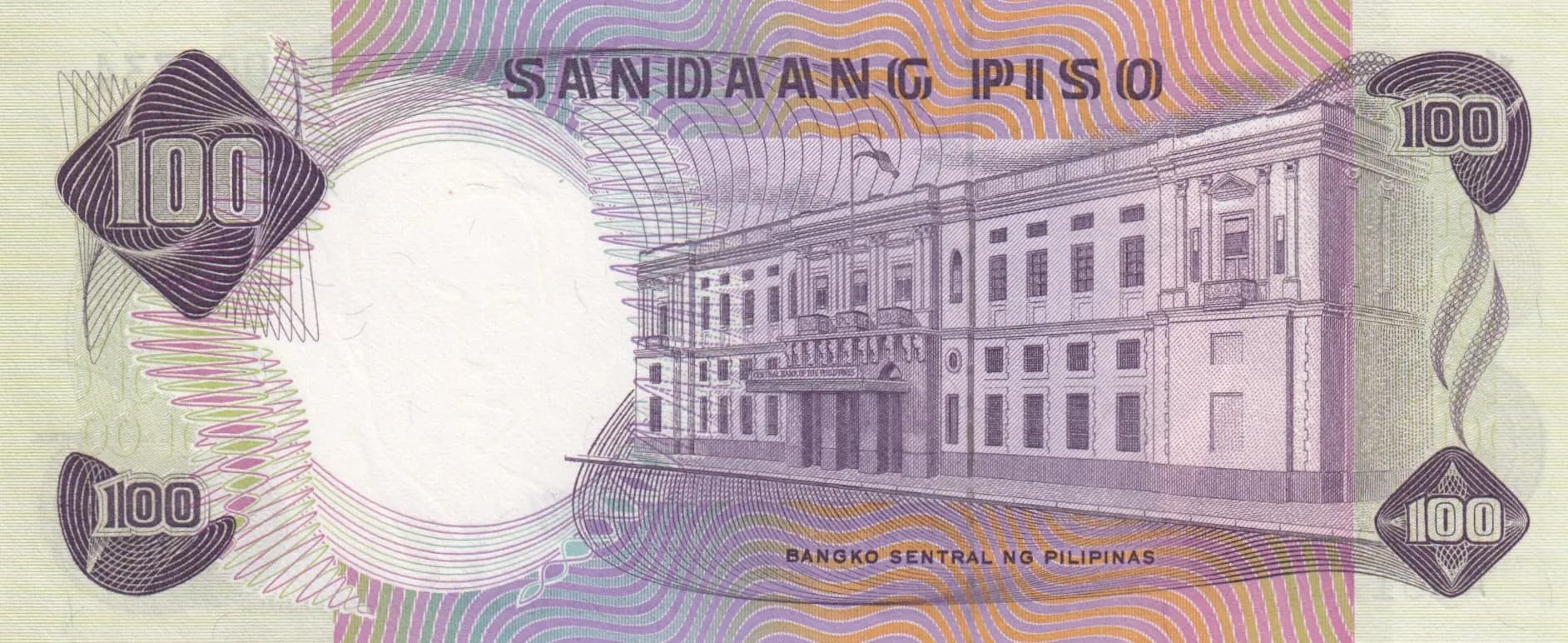
This 1969 Philippine 100 pesos banknote (P-147a) presents in pristine uncirculated condition with exceptional eye appeal. The note features Manuel Roxas on the obverse and the historic Central Bank building on the reverse, both rendered in vibrant purple, green, orange, and cream tones with intricate guilloche security patterns throughout. The exceptional clarity of fine line work, sharp printing, and complete absence of wear makes this an attractive example of mid-20th century Philippine currency design.
Common. This note is a standard regular issue from 1969 with no documented print run restrictions or recalls. The eBay market data provided shows consistent sales of UNC examples ranging from $2.58 to $15 (catalogue value), with most uncirculated specimens selling between $3 and $12. Higher grades (PMG 66-67) command $14-127, but this reflects grading premiums rather than inherent rarity. The denomination and year are neither scarce nor part of any withdrawn series, and multiple examples appear regularly in the secondary market.
Issued in 1969 by the Central Bank of the Philippines, this note commemorates Manuel Roxas, the first President of the independent Philippine Republic (1946-1948), reflecting the nation's pride in its post-colonial leadership during a formative period. The reverse depicts the Central Bank building (established 1949), symbolizing the Philippines' monetary sovereignty and institutional development during the early decades of independence. The bilingual inscriptions in Filipino and English reflect the country's linguistic diversity and the influence of its colonial legacy.
The obverse features a dignified portrait of Manuel Roxas, the first President of independent Philippines (1946-1948), positioned left-center in formal business attire. The Central Bank Seal (Type 2) dated 1949 appears prominently on the left side. The note employs extensive decorative guilloche patterns, geometric line work, and wave patterns as security measures. The reverse showcases the neoclassical Central Bank of the Philippines building, a symbol of the nation's monetary authority, with its symmetrical facade featuring multiple windows and columns rendered in architectural detail. Both sides incorporate diamond-shaped frames containing the denomination '100' at all four corners with decorative rosette medallions. The color scheme of cream/beige base with purple, green, orange, and yellow overlays creates visual depth and complexity characteristic of high-security banknote design.
FRONT: 'REPUBLIKA NG PILIPINAS' (Republic of the Philippines); 'BANGKO SENTRAL' (Central Bank); 'SANDAANG PISO' (One Hundred Pesos); 'MANUEL ROXAS' (Manuel Roxas); 'PANGULONG PILIPINAS' (President of the Philippines); 'AT LUBOS NA PINANANAGTUTUN NG PAMAHALAAN NG REPUBLIKA NG PILIPINAS' (And strongly managed by the Government of the Republic of the Philippines); 'TAGAPANGASIWA NG BANGKO SENTRAL' (Governor of the Central Bank); 'ANG PAPEL NA ITO AY SALAPING UMIIRAL SA PILIPINAS AT PAMBAYAD SA LAHAT NG URI NG PAGKAKAUTANG' (This paper is money circulating in the Philippines and payment for all types of debts). BACK: 'SANDAANG PISO' (One Hundred Pesos); 'BANGKO SENTRAL NG PILIPINAS' (Central Bank of the Philippines); '100' (Denomination - appears in all four corners).
This note employs intaglio (recess) printing combined with multicolor lithography, evident from the crisp, detailed guilloche patterns and fine line engraving observed throughout. The complex security features including the intricate geometric patterns, decorative waves, and sharp denomination details indicate work by a specialized security printer. For this Philippine issue from the Central Bank series of this era, the printing was likely executed by the Philippine-Japan joint venture security printer or De La Rue, standard security printers for Central Bank of the Philippines notes during this period.
Pick number P-147a designation suggests this is the standard variety of the 1969 100 pesos note. According to catalog references, replacement notes (those replacing damaged currency in circulation) carry a '+' serial number prefix; the observed serial 'A001734' does not display this prefix, confirming this as a regular first-issue example. No overprints, signatures variants of significant numismatic importance, or other documented varieties specific to this particular note are evident from the visual analysis.