10 pesos 1943
Market Prices
17 salesAbout This Note
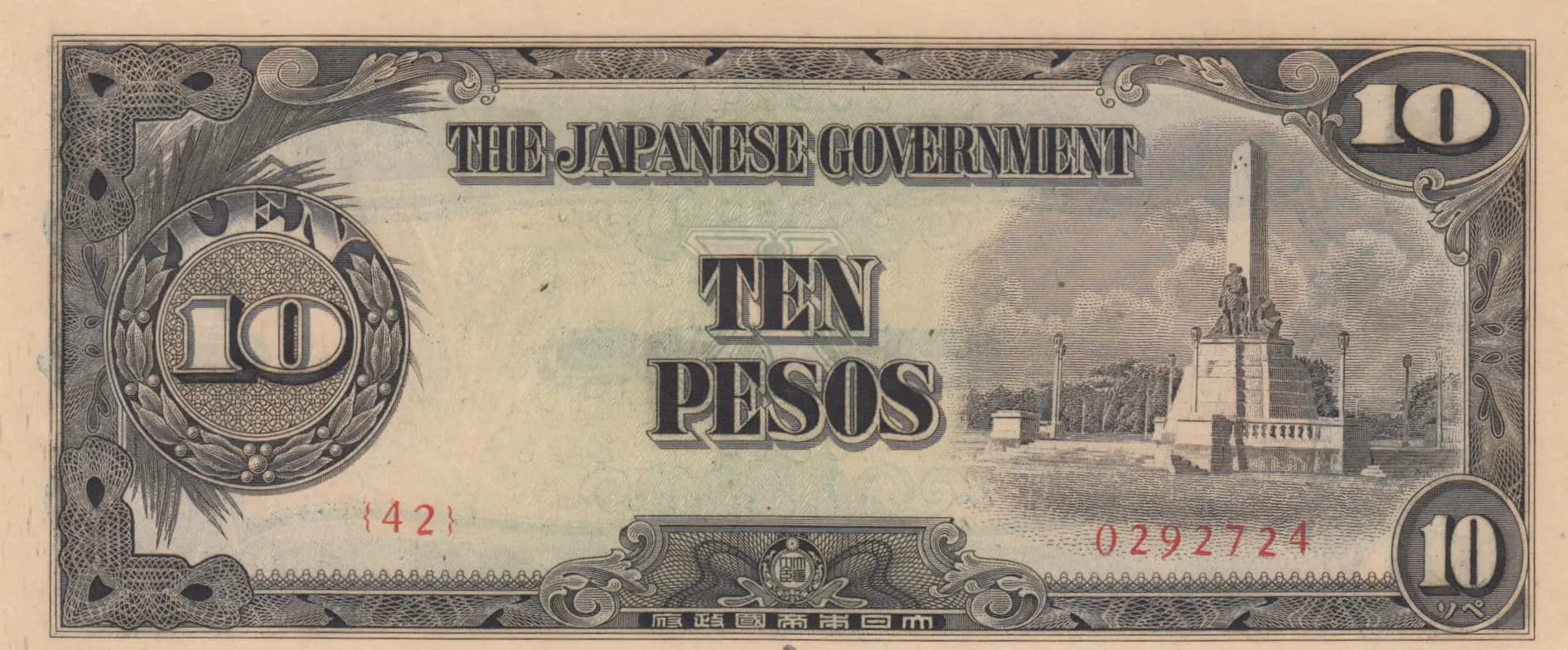
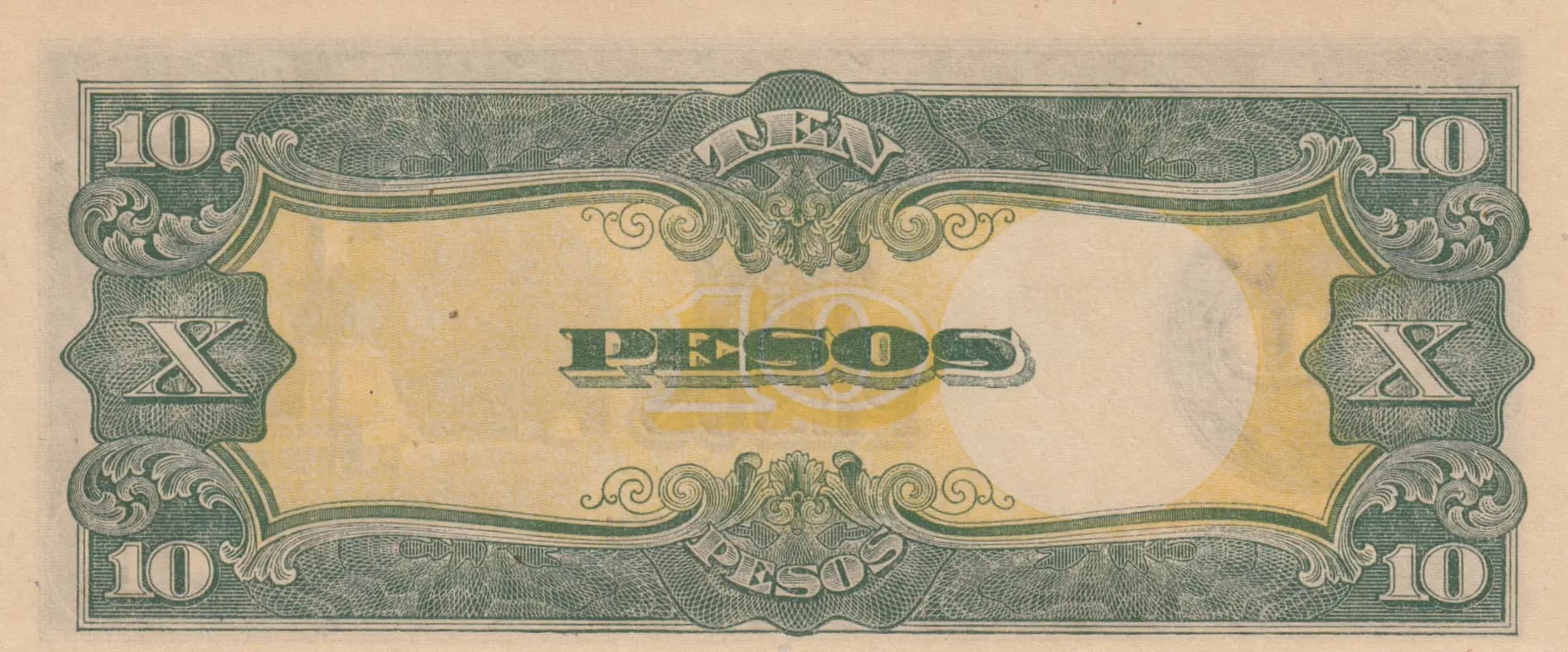
This is a Japanese Government occupation currency 10 pesos note from 1943 (Pick-111), offered in uncirculated condition. The note features the iconic Jose Rizal Monument on the obverse with ornate baroque-style borders, black printing on a green underprint on the front and green on yellow on the reverse. This particular example shows minimal wear consistent with UNC grading, though expected age-related foxing and discoloration from an 80+ year old note are present.
Common. The eBay transaction history shows consistent sales ranging from $0.61 to $4.80 for circulated examples, with UNC examples selling for $0.99 to $1.30 historically, and the 2016 catalog valuation of $2.50 for UNC confirms this as a relatively common issue. Japanese occupation Philippine currency was produced in substantial quantities, and this denomination and series remain widely available to collectors. The consistent low market pricing across multiple sales over more than a decade further confirms common status.
Issued by the Japanese Government during its occupation of the Philippines (1942-1945), this banknote represents the military currency used to facilitate economic control during World War II. The inclusion of the Jose Rizal Monument—a symbol of Filipino national identity and resistance to colonialism—alongside Japanese authority text exemplifies the complex cultural tension of the occupation period, where Japanese governance appropriated Filipino national symbols while maintaining control over the monetary system.
The obverse features a left-positioned circular medallion containing the numeral '10' within an ornamental wreath, with 'TEN PESOS' prominently displayed in the center. The Jose Rizal Monument—depicting a standing figure on a public memorial base—is positioned on the right side, serving as the primary design element and focal point. The note is framed by intricate baroque scrollwork with a decorative oval cartouche in the upper right corner. The reverse displays a predominantly green and yellow color scheme with '10' denomination numerals in all four corners within ornamental cartouche frames, and a central oval frame containing the word 'PESOS' in large green text on a yellow/gold background. Fine line engraving creates detailed patterns throughout both sides.
Front side: 'THE JAPANESE GOVERNMENT' (English, top center); 'TEN PESOS' (English, center); Serial number '0292724' (bottom); '42' (likely series or plate designation); '南方共和国日本' (Japanese: 'Southern Republic Japan' or 'Greater East Asia Co-Prosperity Sphere'). Back side: 'PESOS' (English, center oval and top); '10' (Arabic numerals, all four corners in decorative frames).
Intaglio/engraved printing, characteristic of high-security currency production. The fine line engraving visible throughout the design, intricate border patterns, and sharp detail reproduction are consistent with traditional banknote engraving methods. The color differentiation between obverse (black on green underprint) and reverse (green on yellow underprint) suggests multi-plate printing typical of Japanese occupation currency production during WWII.
Serial number observed: 0292724. Series designation '42' noted on obverse. No overprints or signatures are mentioned in the visual analysis. Without additional documentation on known varieties for Pick-111, this appears to be a standard example of the regular 1943 issue. Further research into Japanese occupation Philippine currency serial numbering conventions and series designations would be needed to establish specific variety classification for this particular serial range.