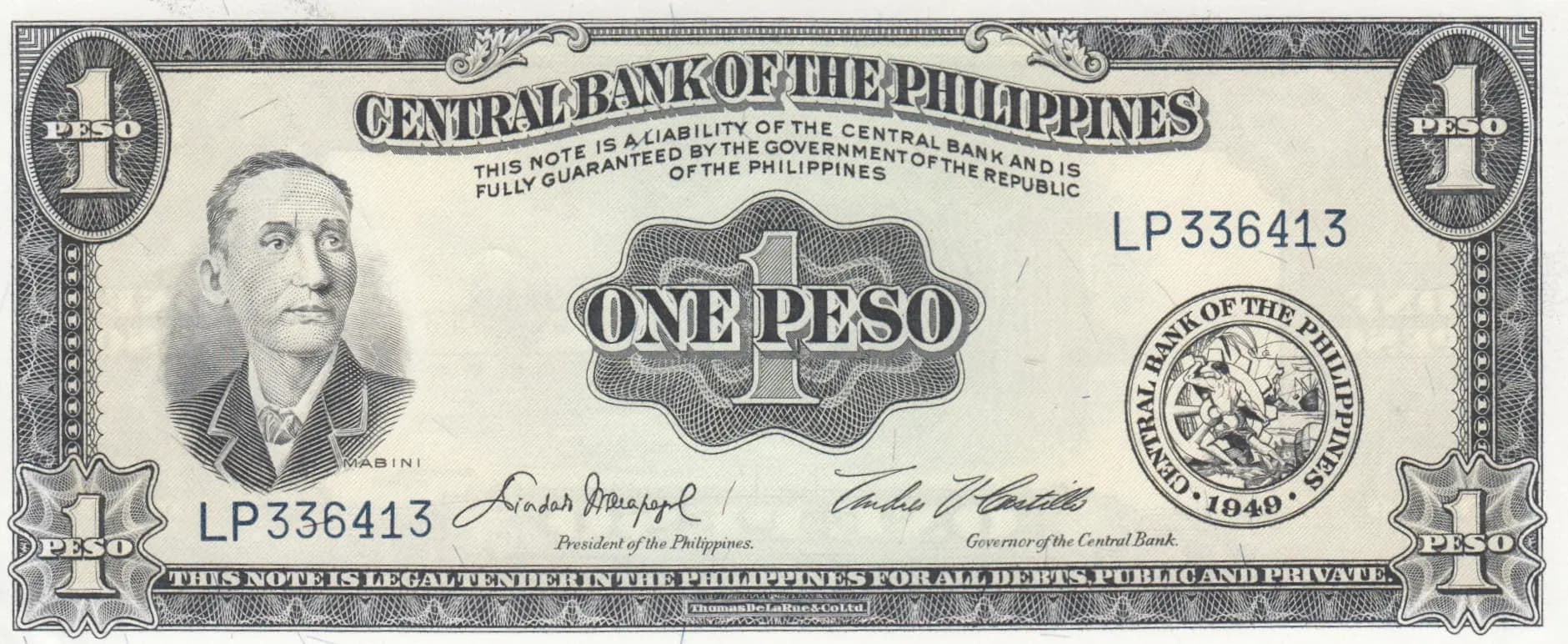
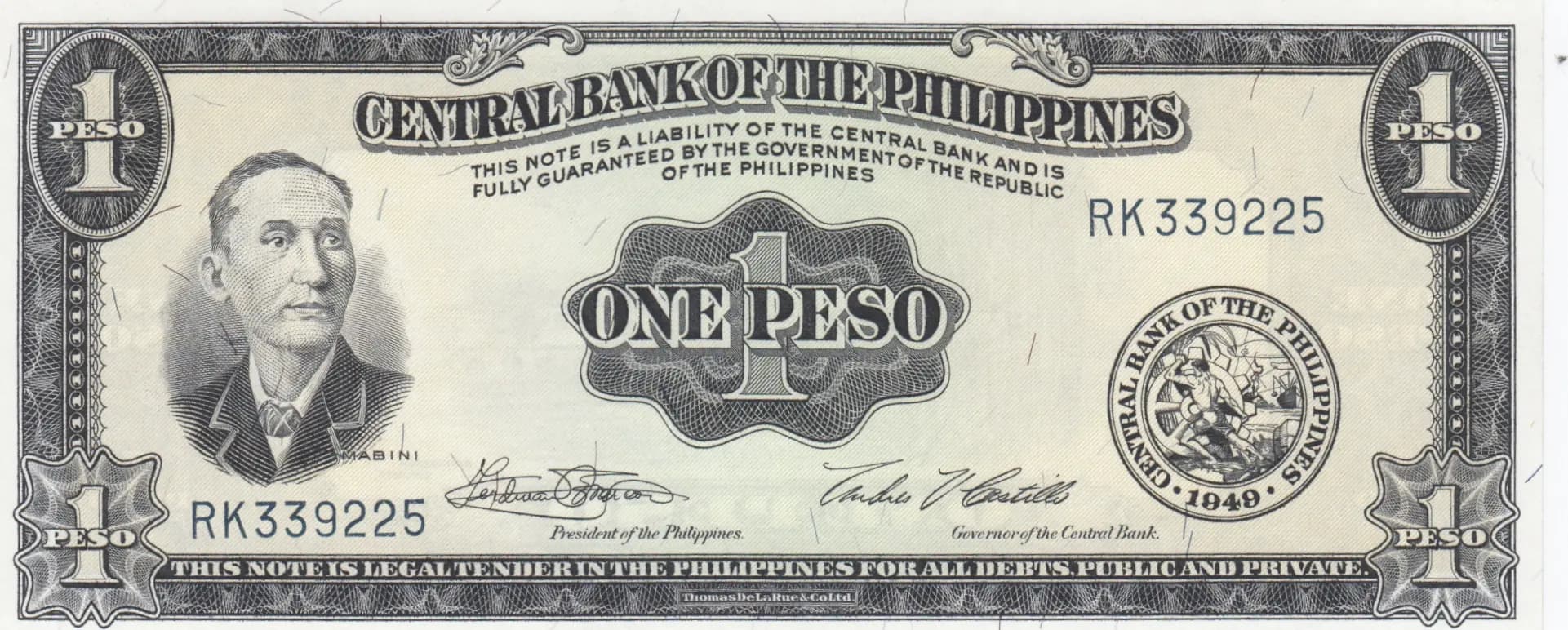
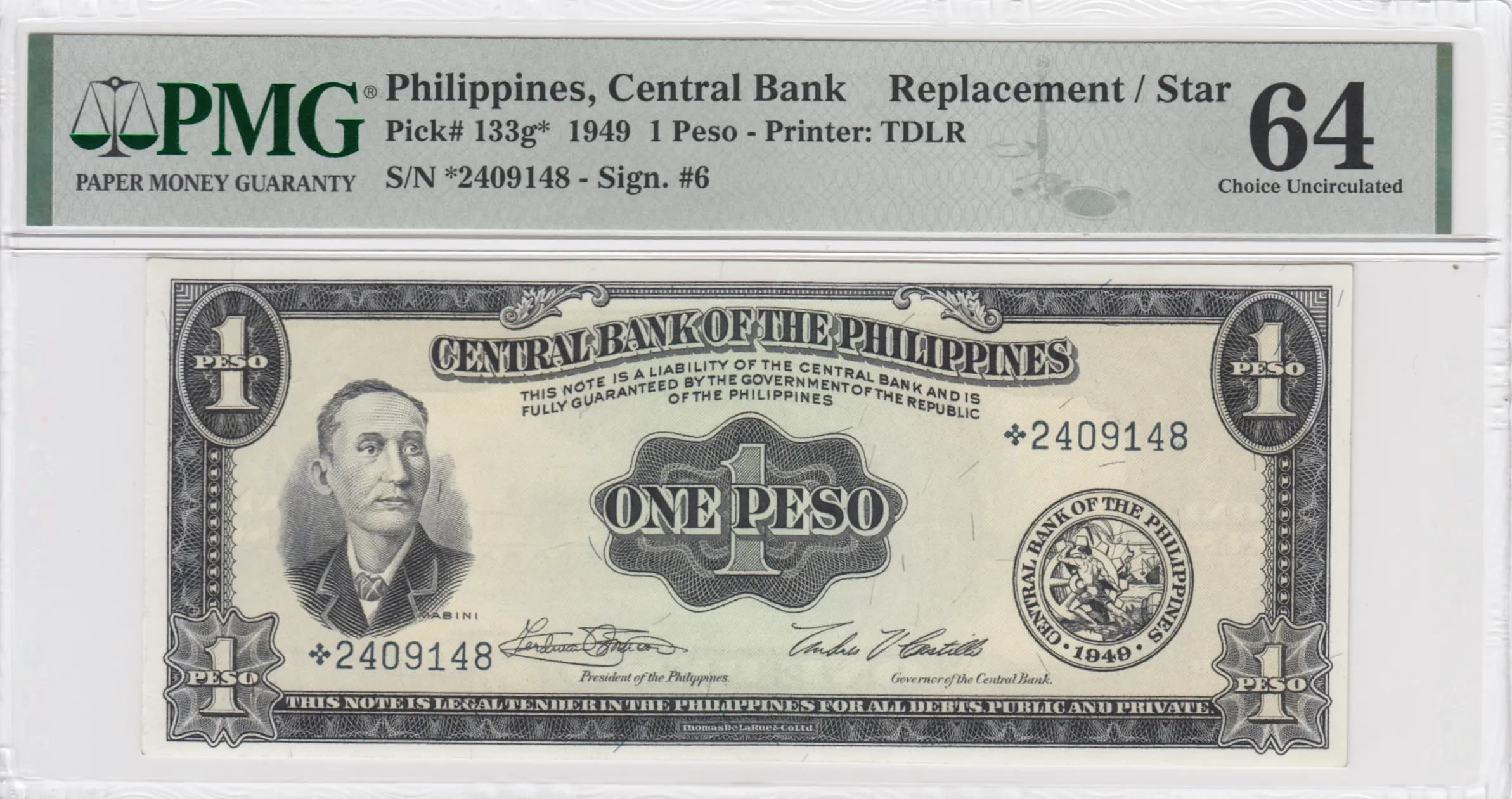
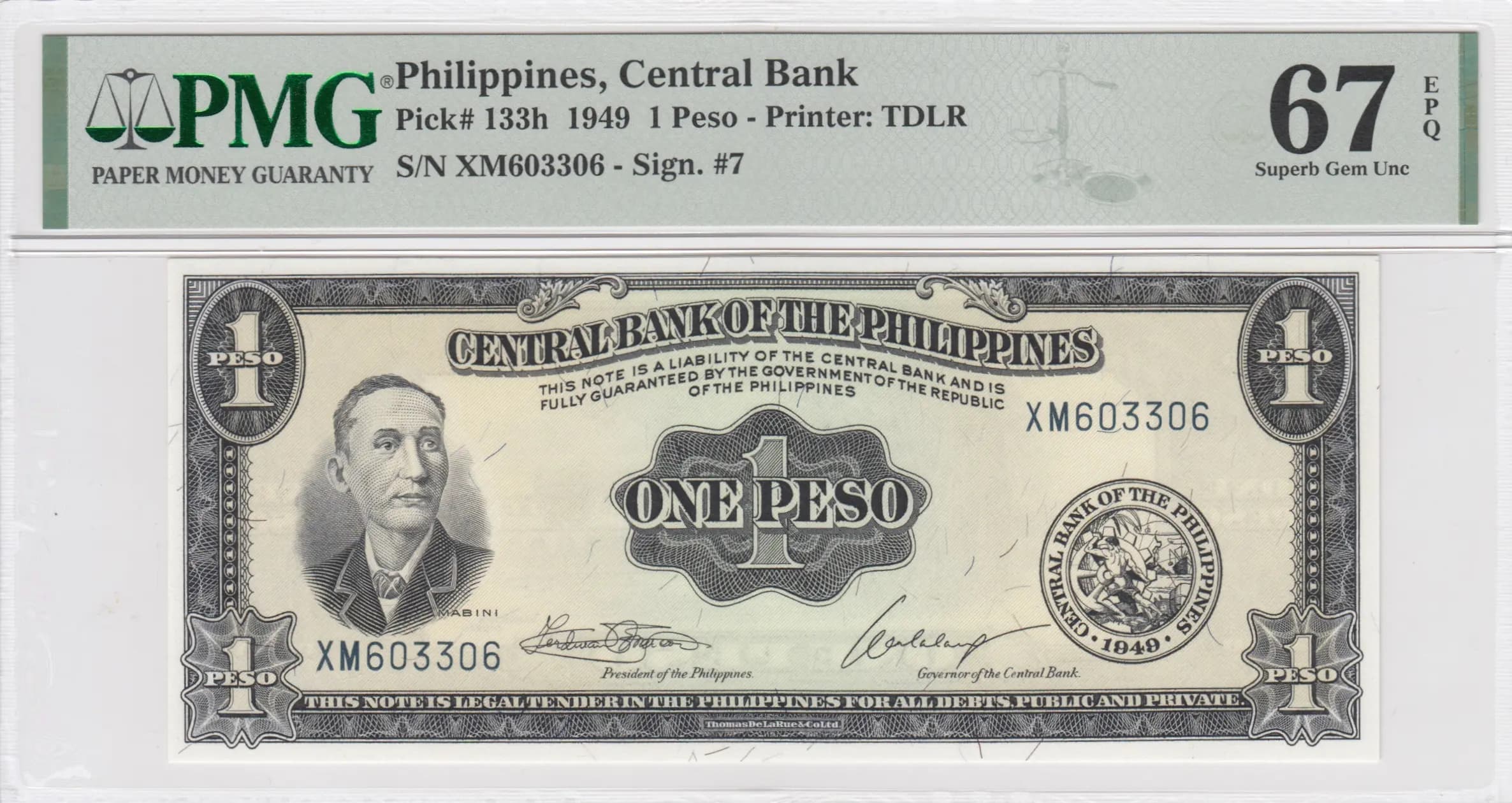
1 peso 1949
Market Prices
25 salesAbout This Note
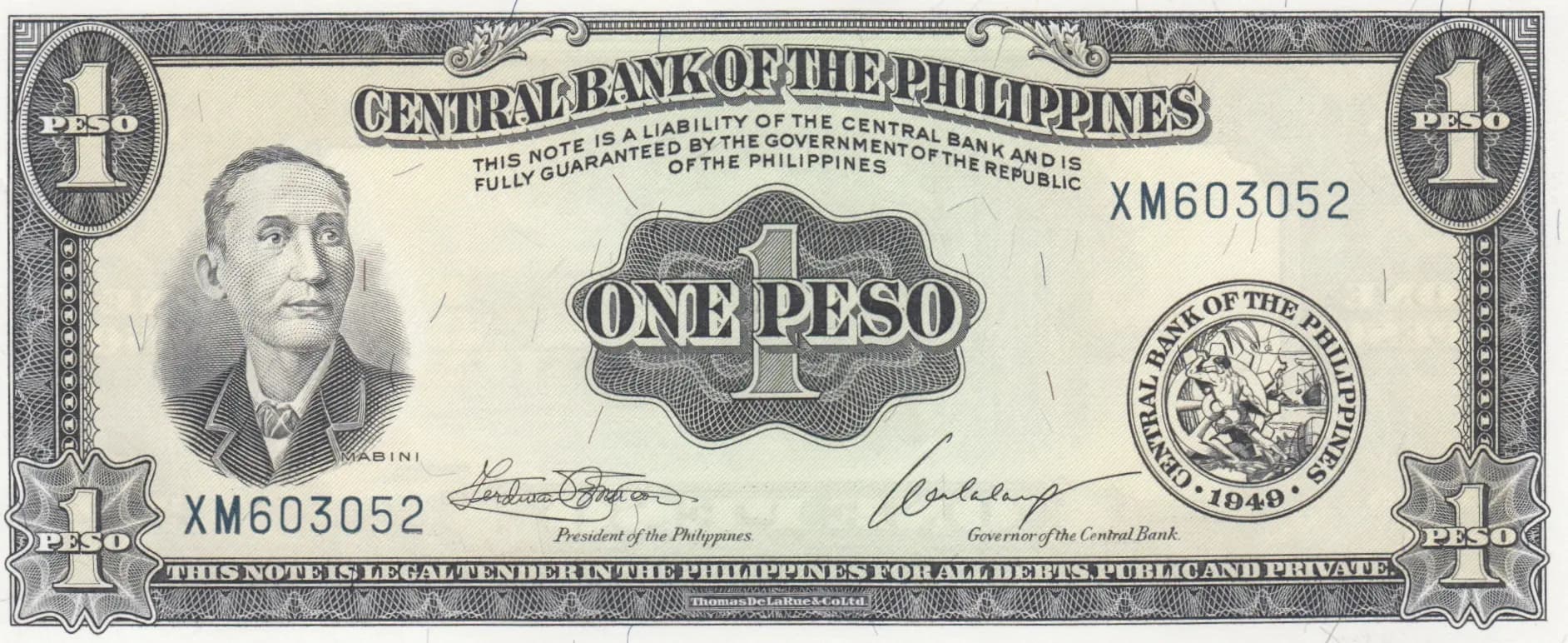
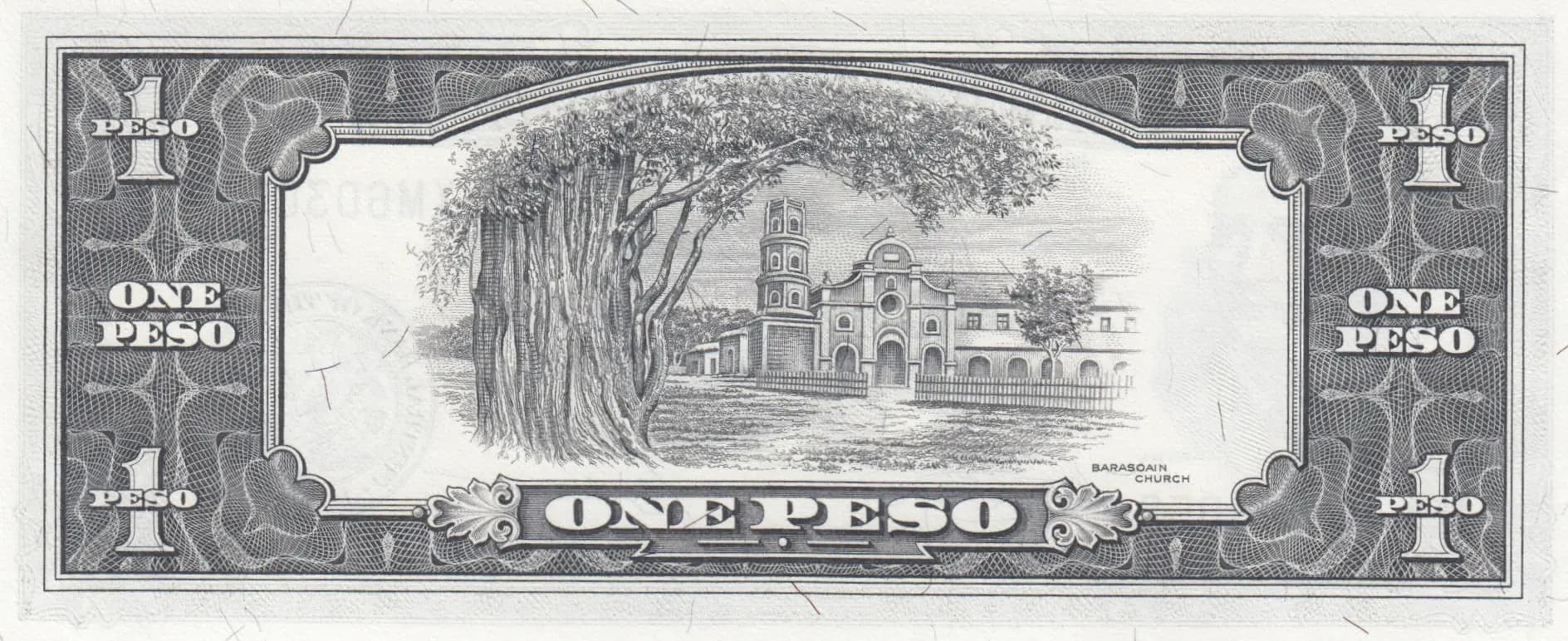
This is a well-preserved 1949 Central Bank of the Philippines 1 Peso note (Pick P-133h) featuring the iconic portrait of Filipino nationalist Apolinario Mabini on the obverse and the historic Barasoain Church on the reverse. The note displays the characteristic black engraving on cream/light gold and blue underprint typical of Thomas de la Rue's Philippine currency work, with the fine line work and ornamental borders remaining sharp and clearly legible despite some age-related creasing and yellowing consistent with UNC-graded historical currency.
common. This 1 Peso note from 1949 is a common issue in the Philippine currency series. The eBay price history provided shows consistent sales in the $2-$5 range for UNC specimens (with occasional outliers), and catalog values from 2019 list UNC examples at approximately $1, indicating abundant supply in the secondary market. Large print runs were typical for base denominations from the Central Bank of the Philippines during this period, and the note's survival in multiple grades across numerous auction sales confirms its commonality among collectors.
This note was issued during the early years of the Central Bank of the Philippines' operation following Philippine independence in 1946. The obverse features Apolinario Mabini, a key intellectual figure in the Philippine Revolution and the First Philippine Republic, while the reverse depicts Barasoain Church in Bulacan, the site of the proclamation of the Philippine Republic in 1899—both symbols reflecting the nation's revolutionary heritage and independence. This currency design choice underscores the newly independent Philippine government's effort to establish national identity through numismatic iconography featuring figures and landmarks central to Filipino history.
The obverse features a formal portrait of Apolinario Mabini positioned at the left side, depicted in formal attire with suit and tie, signed by artist Habini. The right side displays the Large Central Bank Seal Type 1 dated 1949. Ornamental circular frames containing the denomination occupy all four corners with decorative scrollwork and geometric patterns forming an intricate border throughout. The reverse presents a detailed engraved landscape vignette depicting the Barasoain Church, a colonial-style ecclesiastical structure with bell tower and architectural detailing, positioned centrally with a prominent tree in the foreground and period fencing, again framed by matching ornamental corner designs and denomination indicators. The overall composition reflects late 1940s Thomas de la Rue engraving standards with fine parallel line shading and intricate geometric ornamentation characteristic of security printing of the era.
FRONT SIDE: 'Central Bank of the Philippines' (issuing authority); 'This note is a liability of the Central Bank and is fully guaranteed by the government of the Republic of the Philippines' (legal guarantee); 'One Peso' (denomination in words); 'Peso' (denomination abbreviated); 'President of the Philippines' and 'Governor of the Central Bank' (signature titles); 'This note is legal tender in the Philippines for all debts public and private' (legal tender clause); 'Thomas De La Rue & Co Ltd' (printer attribution); 'HABINI' (artist/engraver signature). BACK SIDE: 'One Peso' and 'Peso' (denomination); 'Barasoain Church' (landmark identification and historical reference).
Intaglio engraving (steel plate engraving) printed by Thomas de la Rue & Co Ltd, London. The note exhibits the characteristic fine line work, detailed cross-hatching, and sharp ornamental detail typical of high-security intaglio currency production. The black ink on light gold and blue underprint demonstrates the multi-pass printing technique employed for Philippine currency of this period, with security features achieved through engraving complexity rather than modern security devices.
This note is cataloged as Pick P-133h, indicating it is one of at least six identified varieties of the 1 Peso 1949 issue from the Central Bank of the Philippines. Known varieties in the PMG population include P-133c, P-133e, P-133f, P-133s10, and P-133s6, all printed by Thomas de la Rue. Varieties likely reflect differences in seal types, signatures, or printer's identification marks. The serial number visible in the visual analysis (XM603052) should be compared against known serial number ranges to definitively establish the specific variety designation, though the 'h' designation in the Pick catalog and the 'Large Central Bank Seal Type 1' notation suggest this particular specimen represents the P-133h variety variant.