1 peso 1949
Market Prices
10 salesAbout This Note
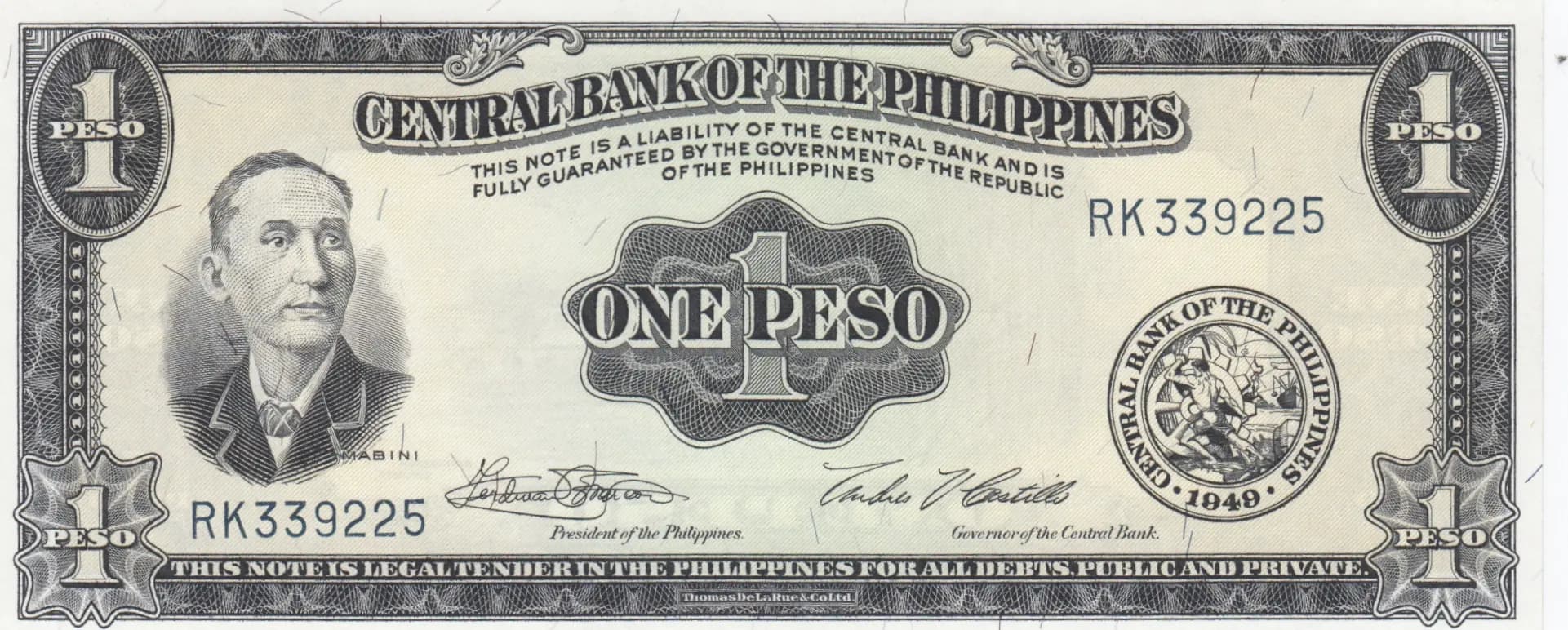
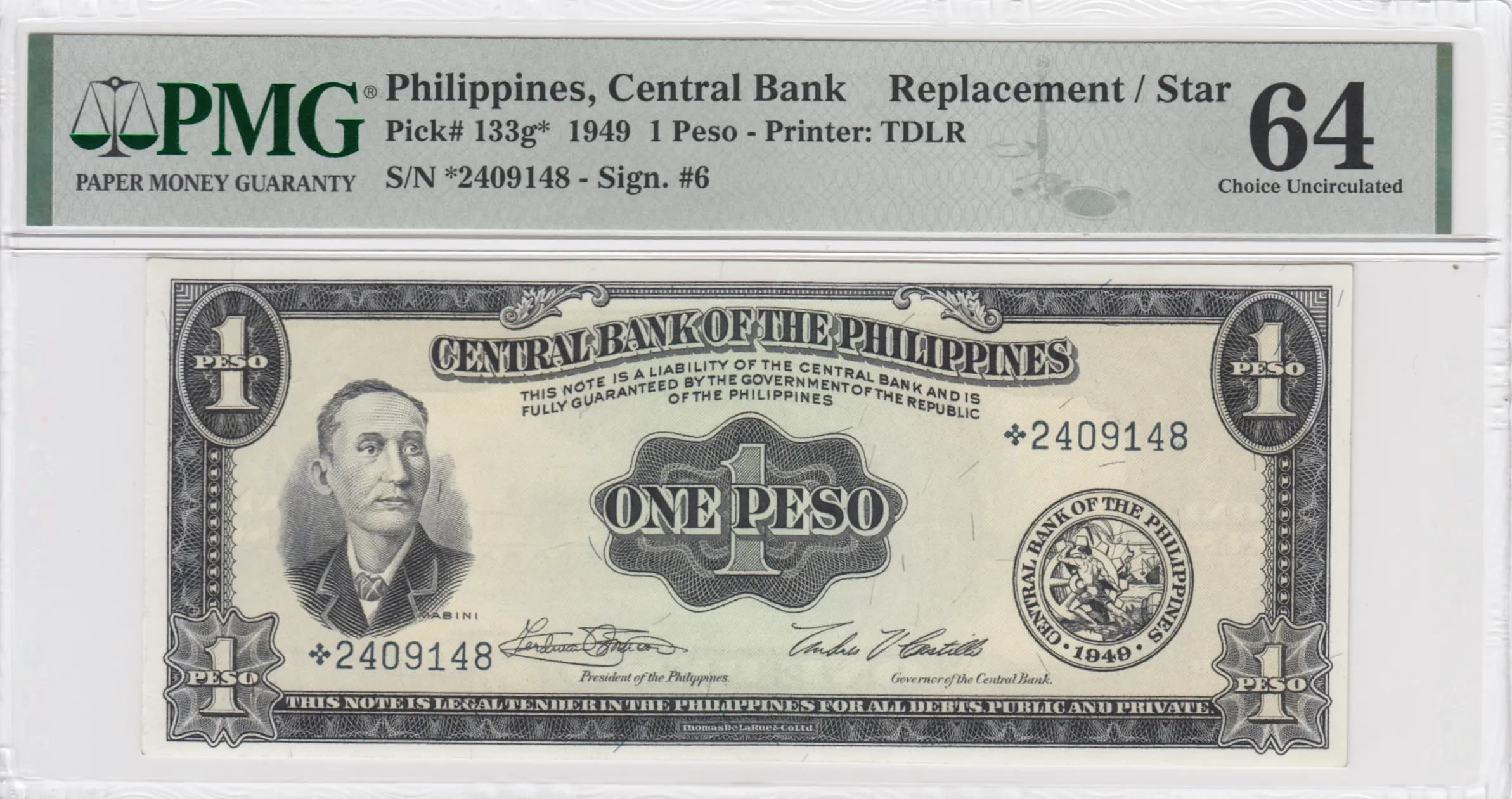
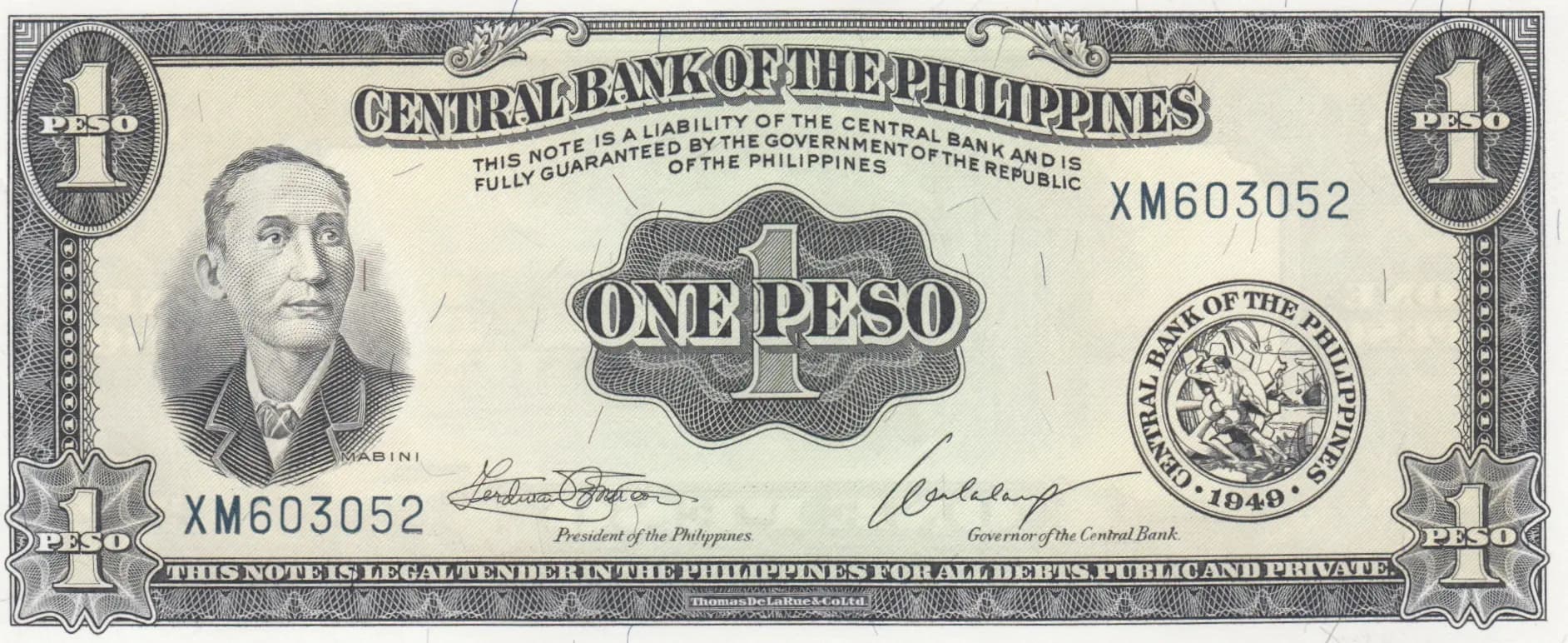
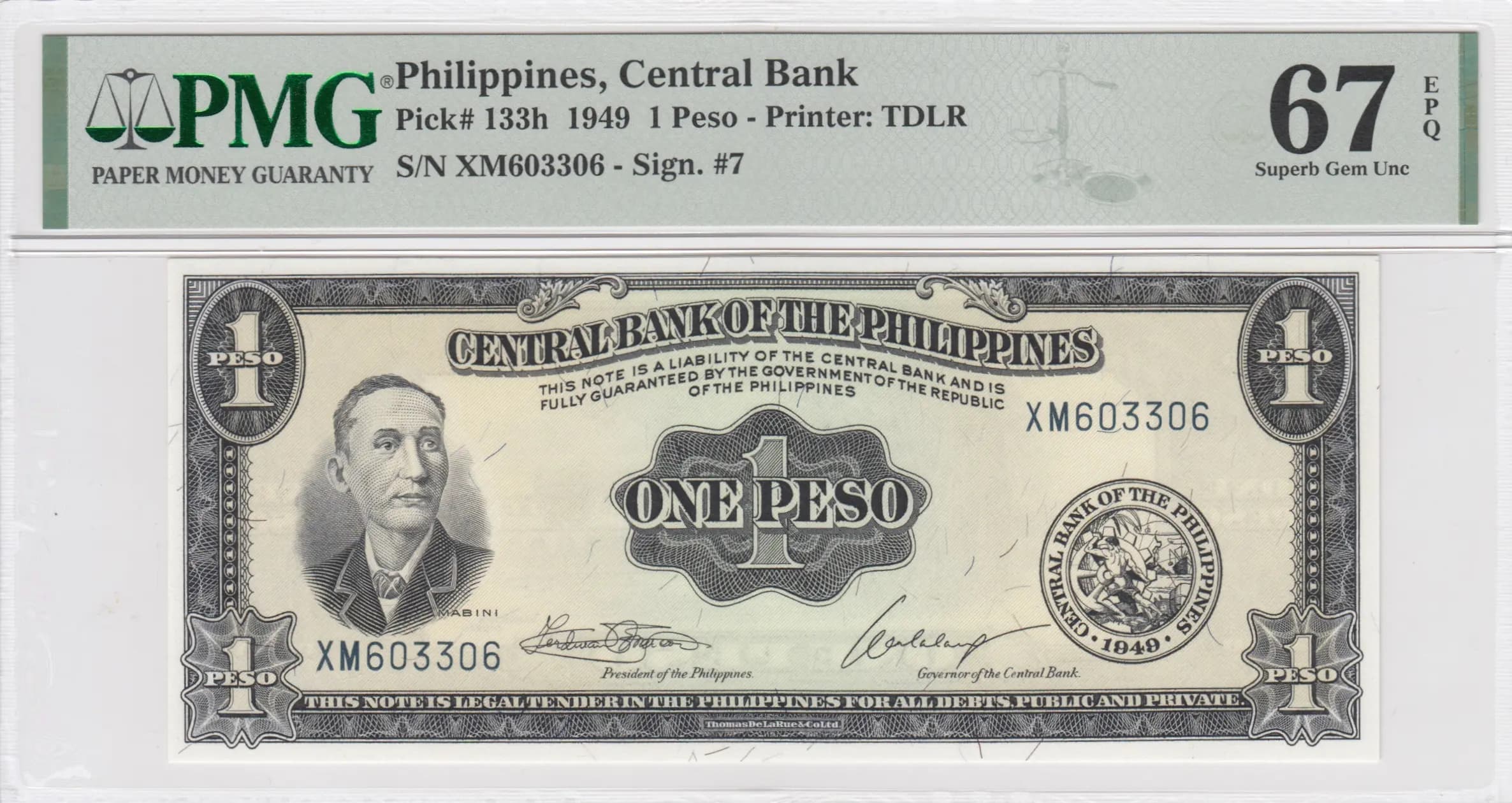
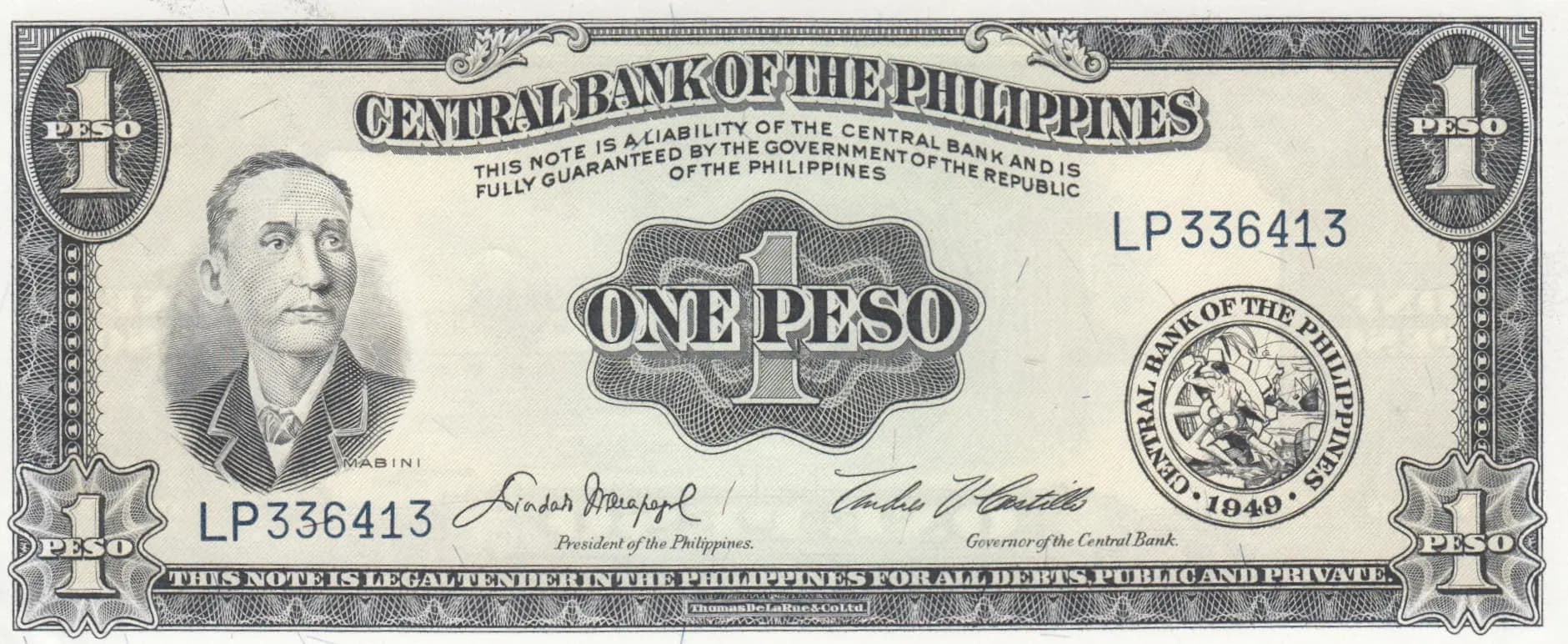
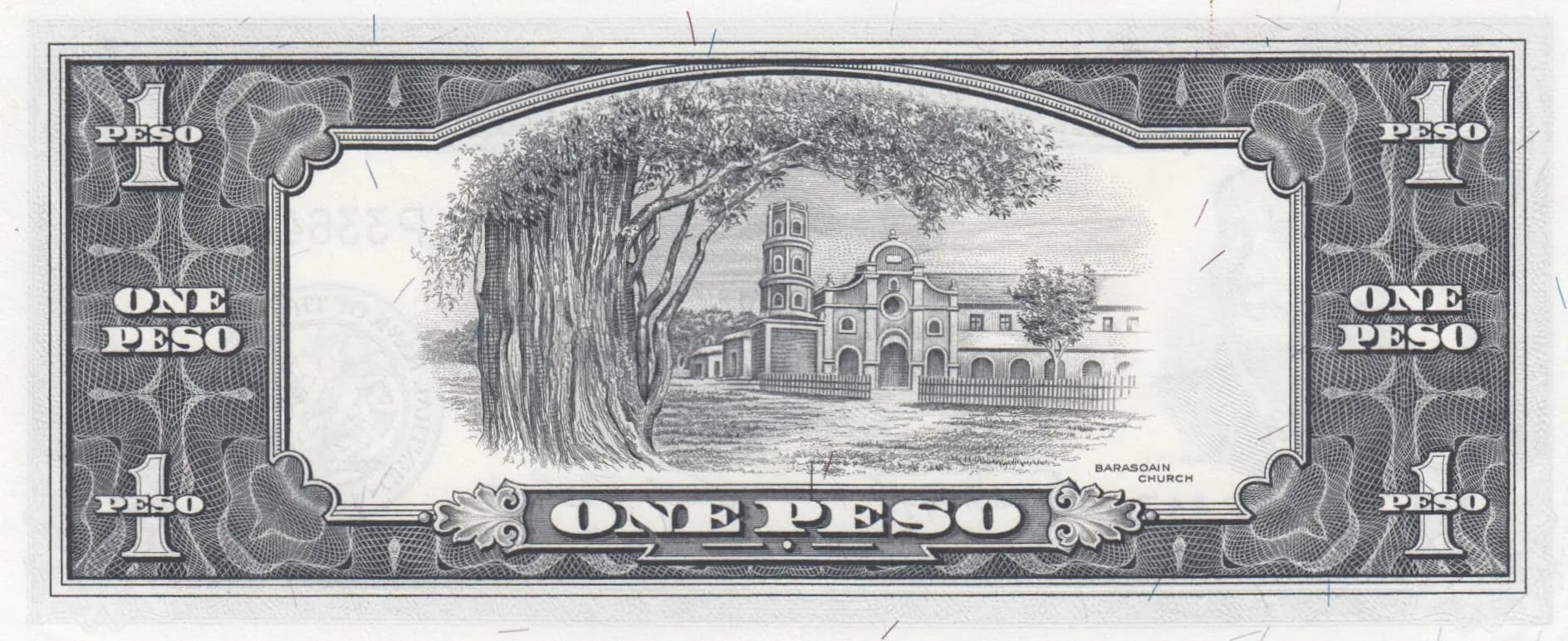
This is a 1949 Philippine 1 Peso note issued by the Central Bank of the Philippines, printed by Thomas de la Rue and graded UNC. The obverse features a formal portrait of Apolinario Mabini on the left with the Central Bank seal dated 1949, while the reverse displays the historically significant Barasoain Church beneath a large gnarled tree. Despite some age-related creasing visible in the reverse, the note retains excellent printing clarity with intricate line engraving work throughout, making it a desirable example of early post-war Philippine currency.
Common. This note sold regularly on the secondary market from 2014–2021 at modest prices ranging from $1.25 to $4.25 depending on condition, with catalogue value for UNC condition listed at $2.50 as of 2019. Such consistent market availability and low valuations indicate this was a substantial print run with no scarcity premium. The P-133 series variants show multiple catalogued versions, further confirming widespread circulation and availability.
This note was issued during the early period of the Central Bank of the Philippines' operation, established in 1949 following Philippine independence from the United States. The portrait of Apolinario Mabini honors the nationalist leader and founding figure of Philippine independence, while the reverse depicts Barasoain Church in Malolos, site of the first Philippine Republic's constitutional convention in 1899—linking the currency to the nation's revolutionary heritage and democratic foundations.
The obverse presents a formal left-facing portrait of Apolinario Mabini in profile, rendered in fine line engraving detail, positioned on the left third of the note. The dominant Central Bank seal occupies the lower right, circular in design with a profile portrait and dated 1949. Ornamental geometric corner designs frame the composition. The reverse features a landscape composition centered on Barasoain Church, rendered in detailed architectural engraving showing the colonial-style structure with its prominent bell tower and wooden fence, framed by a distinctive large gnarled tree. Corner ornaments mirror the obverse design. Both sides utilize black printing on a light gold and blue underprint, with serial numbers appearing on the obverse.
FRONT: 'CENTRAL BANK OF THE PHILIPPINES' — Central Bank of the Philippines | 'THIS NOTE IS A LIABILITY OF THE CENTRAL BANK AND IS FULLY GUARANTEED BY THE GOVERNMENT OF THE REPUBLIC OF THE PHILIPPINES' — This note is a liability of the Central Bank and is fully guaranteed by the Government of the Republic of the Philippines | 'ONE PESO' — One Peso | 'THIS NOTE IS LEGAL TENDER IN THE PHILIPPINES FOR ALL DEBTS, PUBLIC AND PRIVATE' — This note is legal tender in the Philippines for all debts, public and private | Additional text identifying signatures as 'President of the Philippines' and 'Governor of the Central Bank'. BACK: 'ONE PESO' — One Peso | 'BARASOAN CHURCH' — Barasoan Church (note: 'Barasoan' is variant spelling of 'Barasoain')
Intaglio line engraving, characteristic of Thomas de la Rue's security printing tradition. The intricate, fine-detail engraving patterns visible throughout both the portrait and architectural elements, combined with the colored underprint (light gold and blue), are hallmarks of TDLR's sophisticated banknote production methods employed during this era.
This note is catalogued as Pick P-133f, indicating it is a specific variant within the P-133 series of 1 Peso notes from 1949. PMG records document multiple variants for this base Pick number (P-133c, P-133e, P-133f, and specimen variants P-133s10 and P-133s6), all printed by Thomas de la Rue. The visual analysis shows serial number LP336413, characteristic of the regular issue series. The specific variety designation (P-133f) likely reflects distinctions in signature combinations, seal types, or other features that distinguish it from the P-133c and P-133e variants, though all share the same obverse portrait of Mabini and reverse Barasoain Church design.