5 rials saidi 1970
Market Prices
7 salesAbout This Note
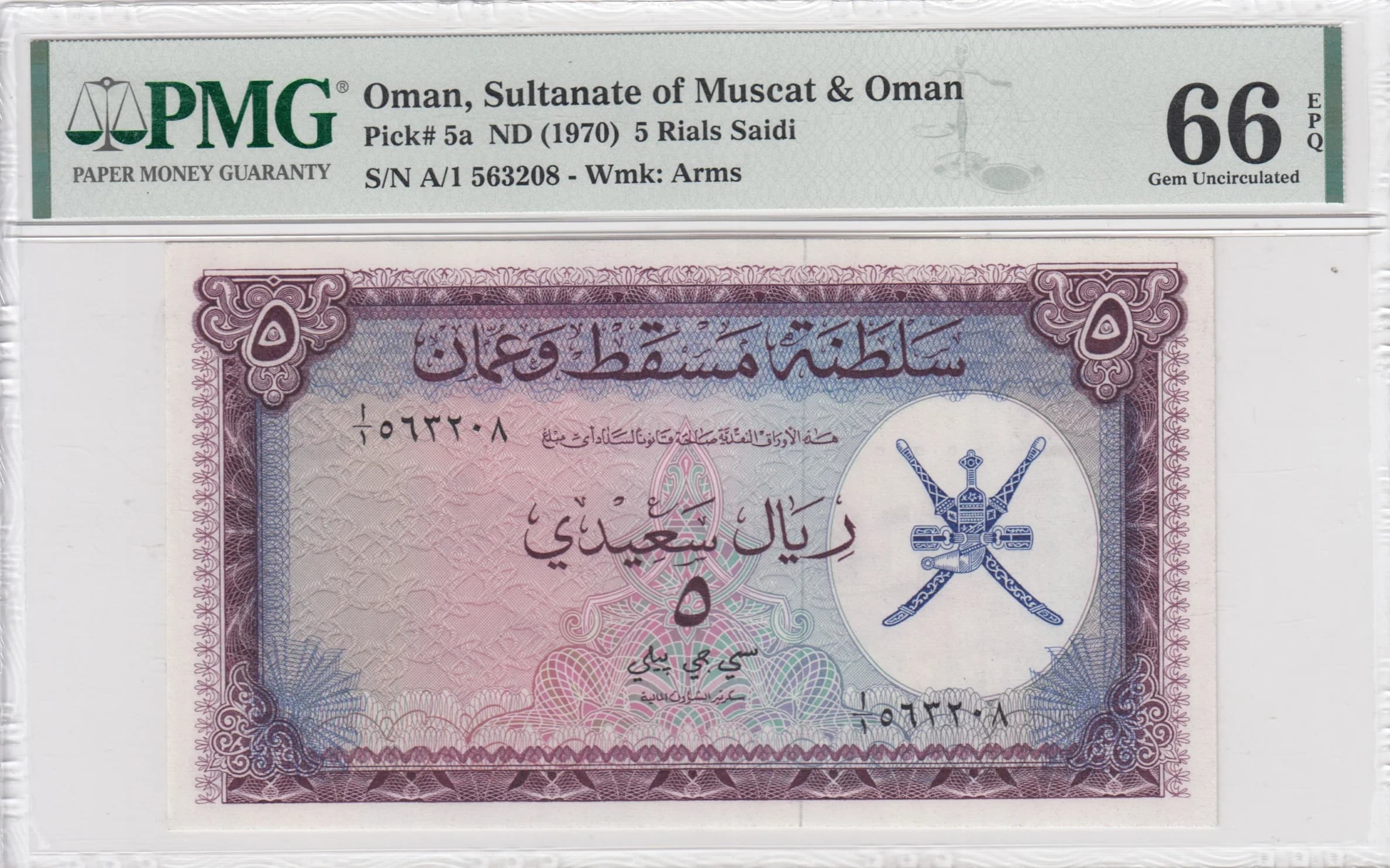
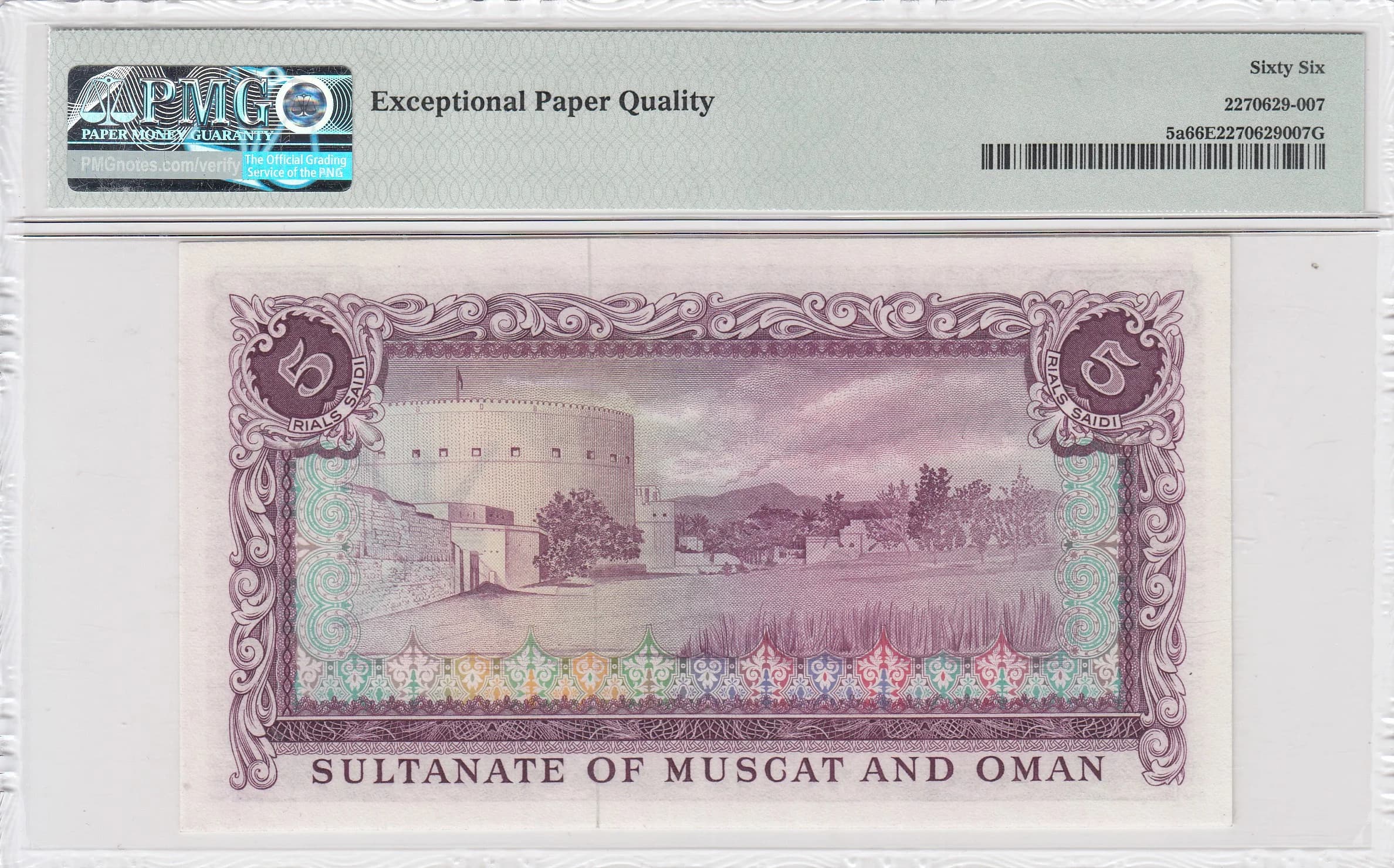
This is a pristine example of the 1970 Sultanate of Muscat and Oman 5 Rials Saidi (Pick P-5), graded PMG 66 EPQ. The note exemplifies the early currency of the sultanate with its distinctive purple and maroon ornate borders, prominent Omani national emblem on the obverse, and the historically significant Nizwa Fort depicted on the reverse. As an uncirculated specimen from the first decade of Omani independence, this note represents an important piece of Middle Eastern numismatic history in exceptional condition.
Common. While early issues of Omani currency have numismatic interest, the 5 Rials Saidi is a regular-issue denomination from the first currency series of the sultanate with a substantial print run. eBay market data shows PMG 66 examples selling in the $400-$500 range historically, with more recent PMG 65 examples achieving $385-$770. These prices reflect collector demand rather than extreme scarcity. The note remains relatively accessible to collectors compared to rare overprints or short-lived denominations, and the existence of multiple graded examples in PMG's population reports indicates adequate surviving specimens.
Issued in 1970 by the Sultanate of Muscat and Oman during the early years following Sultan Qaboos bin Said's assumption of power in 1970, this banknote marks a transitional period in Omani currency and national identity. The inclusion of Nizwa Fort, one of Oman's most iconic historical structures, reflects the nation's connection to its rich architectural and defensive heritage during the period of modernization. The crossed khanjars and shield emblem on the obverse represent the traditional symbols of Omani sovereignty and pride during this formative era of the sultanate.
The obverse features a symmetrical design centered on the Omani national emblem—a circular white medallion containing crossed khanjars (traditional curved daggers) surmounted by a stylized crown and shield, symbolizing national sovereignty and Omani heritage. Ornate decorative borders in purple and maroon with detailed scrollwork occupy all four corners, with green and blue tinted background elements adding depth. The reverse showcases Nizwa Fort, the historic 17th-century fortress in central Oman, rendered in fine engraving detail with its characteristic crenellated walls and arched gateway entrance. The fort is depicted within its landscape setting, showing surrounding vegetation, cultivated fields, and mountains in the background. Both sides employ the same distinctive corner scroll designs with denomination numerals integrated into the decorative cartouches. The bilingual design (Arabic/English) reflects the sultanate's international and domestic communication needs.
Front side: 'سلطنة عُمان' (Sultanate of Oman), 'خمسة ريالات سعيدي' (Five Rials Saidi), Arabic numeral '٥' (5), and English serial number 'A/1 563208'. Back side: 'SULTANATE OF MUSCAT AND OMAN' (English text identifying the issuing authority), 'RIYAL' and 'SAIDI' (denomination identifiers in English), and Arabic numeral '٥' (5) in ornate cartouches at the corners.
Intaglio (engraved) printing, characteristic of high-security banknote production of the era. The fine line work visible in the architectural rendering of Nizwa Fort, the detailed scrollwork borders, and the sharp printing quality throughout indicate professional security printing. The watermark featuring the national arms is integrated into the paper itself. Based on cataloging conventions for 1970 Omani currency, this note was likely produced by a specialized security printer such as De La Rue or similar establishments contracted by the Sultanate of Muscat and Oman.
This specimen is identified as Pick P-5a, the standard variety of the 5 Rials Saidi from 1970. The serial number prefix 'A/1' is consistent with regular issue notes from the first printing series. No overprints, color variants, or signature varieties have been documented for this base Pick number. The visual analysis confirms this is the standard design without modifications, confirming its classification as P-5a.