1/2 rial saidi 1970
Market Prices
13 salesAbout This Note
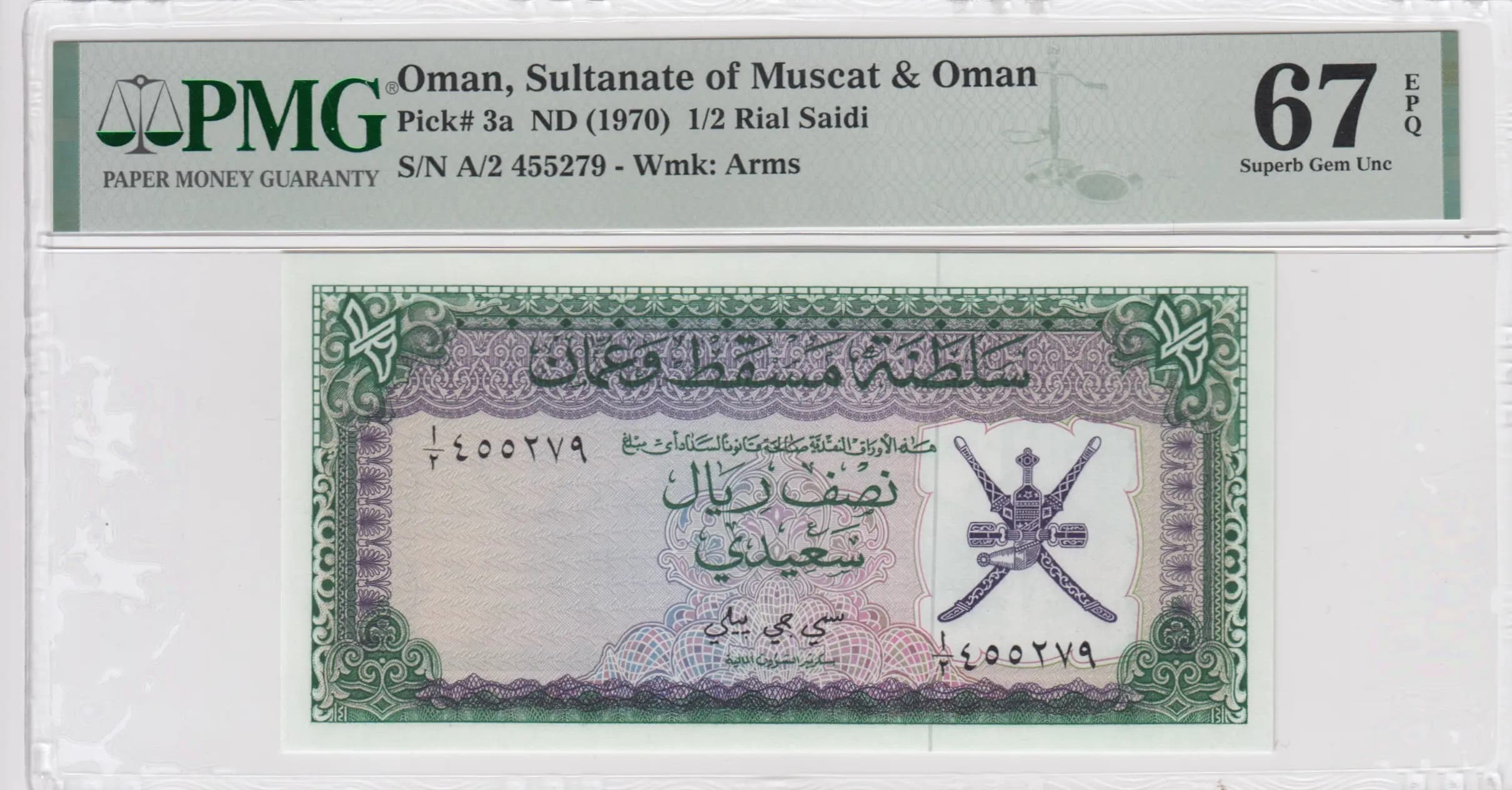
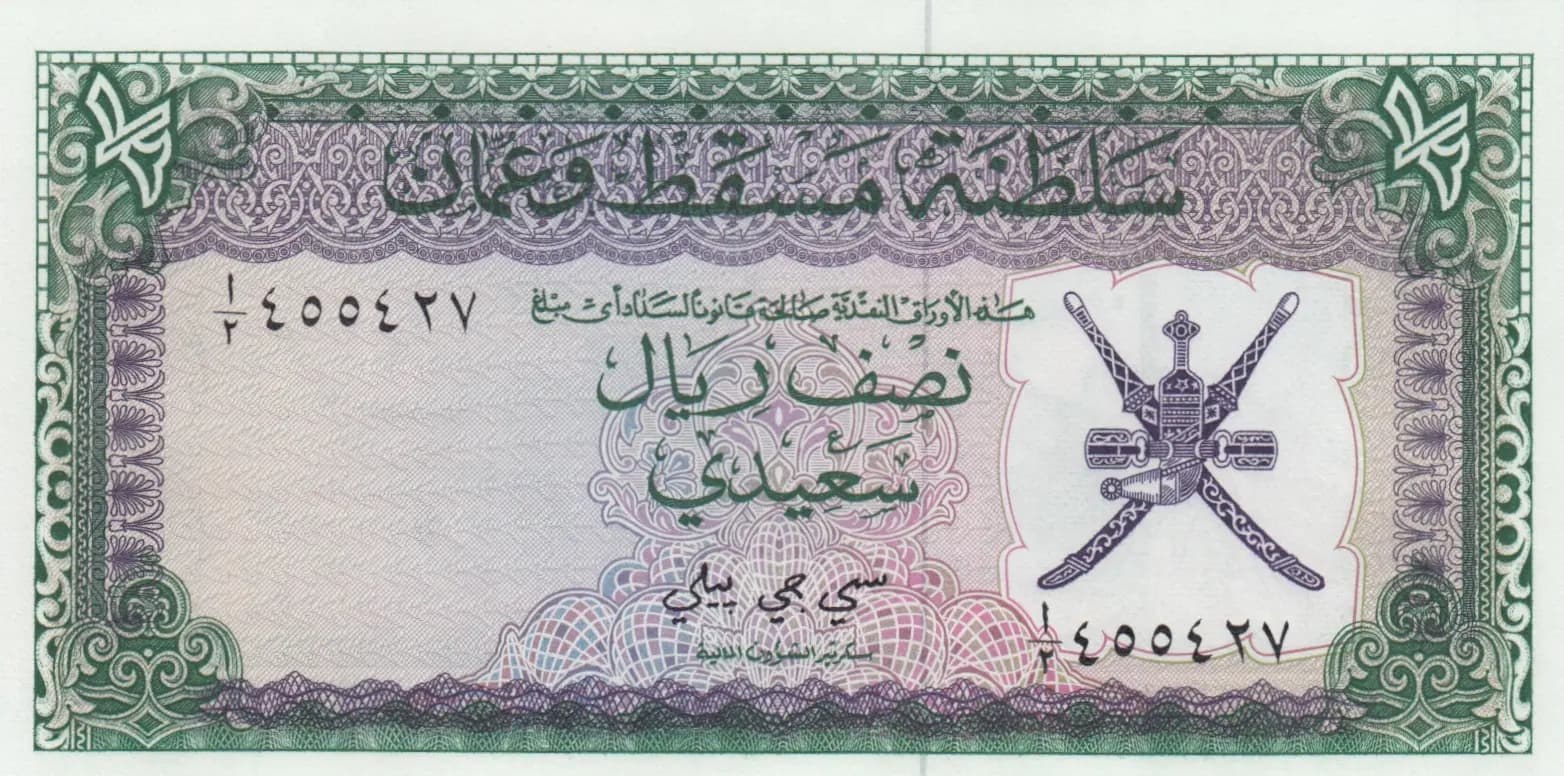
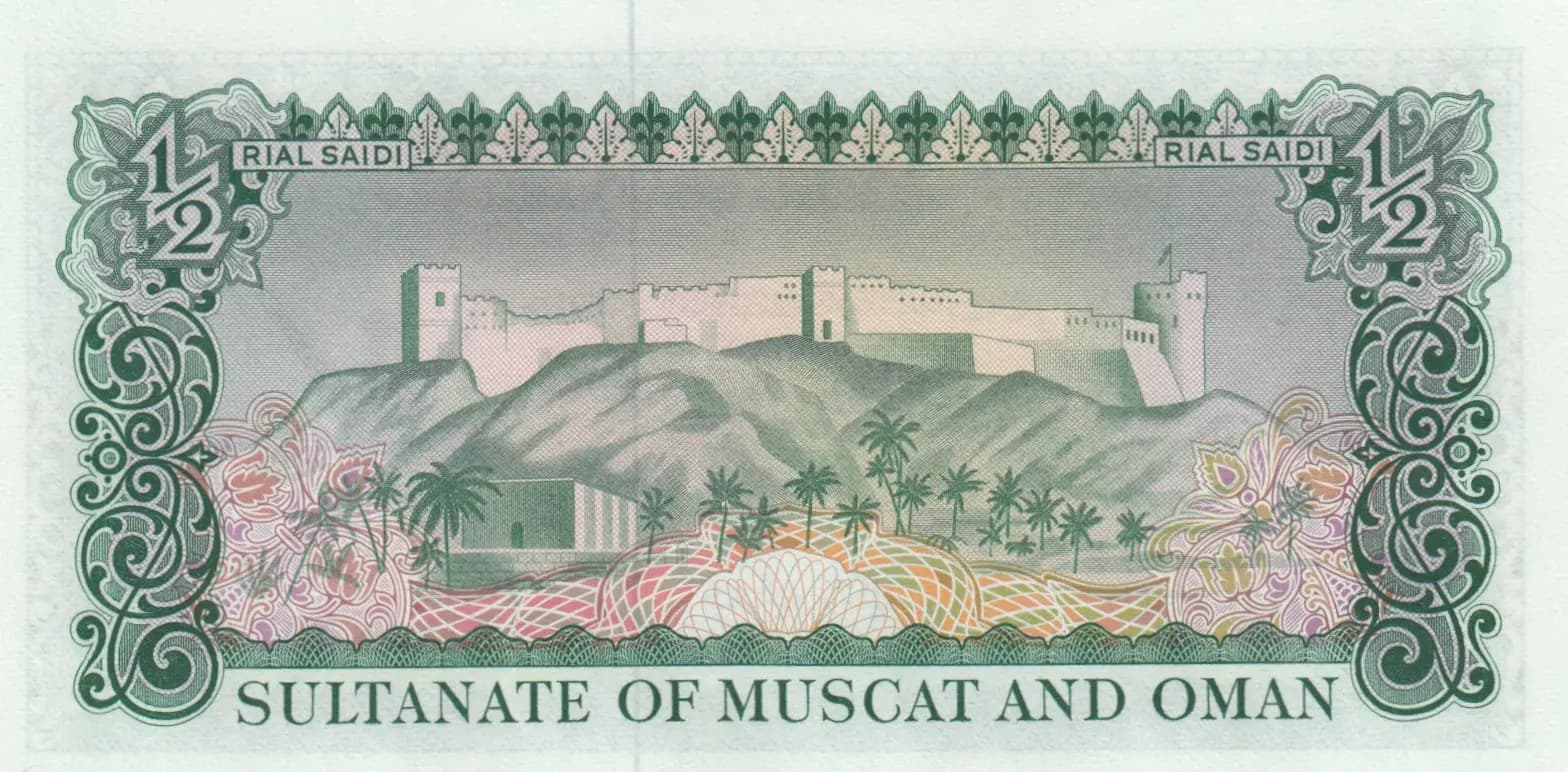
This 1970 half rial saidi from the Sultanate of Muscat and Oman is presented in uncirculated condition with pristine appearance throughout. The note features vibrant green and purple coloring with an elaborate arabesque border design on the obverse, centered on the national emblem of crossed swords and shield, while the reverse depicts the historically significant Sumail Fortress in a detailed landscape vignette. The exceptional state of preservation and fine engraving work make this an attractive example of early Omani currency.
Common. eBay market data shows consistent sales activity across multiple condition grades, with UNC examples regularly selling in the $50-70 range and PMG-graded examples from $65-237 depending on specific grade. The 2019 catalogue value for UNC is listed at $85, indicating steady collector demand but no significant scarcity. The note was part of a standard circulation issue from 1970 and does not exhibit characteristics of a rare or limited issue.
This note was issued during the early years of the Sultanate of Muscat and Oman, representing the nation's transition to modern currency following Sultan Qaboos bin Said's 1970 coup. The reverse design features Sumail Fortress (also known as Sumayil Fort), a prominent historical structure in Oman's Dakhiliyah region, reflecting the sultanate's connection to its architectural heritage and territorial identity. The use of Arabic script alongside English denominations reflects the dual linguistic and cultural positioning of the newly modernizing state.
The obverse features the national emblem of the Sultanate of Oman positioned on the right side—a traditional design of two curved crossed swords (representing the nation's martial heritage) with a central shield or khanjar dagger. The entire note is framed by intricate arabesque and geometric patterns in green with purple and pink ornamental elements, characteristic of Islamic design traditions. The reverse depicts Sumail Fortress, a historically significant fortified structure located on elevated terrain in the interior of Oman, rendered in a detailed landscape vignette showing the fort set against rolling hills with palm trees and desert vegetation in the foreground. Both sides employ fine line engraving with decorative borders and geometric mesh patterns.
Front side: 'نصف ريال' (Nisf Riyal / Half Rial), 'سلطنة عمان' (Saltanat Uman / Sultanate of Oman), serial number '٢٥٠٤٢٧' (250427), Islamic calendar year '١٣٩٠' (1390 AH, corresponding to 1970 CE). Back side: '1/2' and 'RIAL SAIDI' (English denomination), 'SULTANATE OF MUSCAT AND OMAN' (issuing authority in English).
Intaglio (engraved) printing, the standard security printing method for banknotes of this era. The fine line work visible in the arabesque borders, microprint geometric patterns, and detailed fortress vignette are characteristic of intaglio production. The printer for this Pick-3 issue is not definitively identified from available documentation, though Omani notes from this period were typically produced by established European or British security printers.
Serial number 250427 is observed on this example. Pick 3 is the standard half rial saidi issue of 1970; the PMG population data indicates at least two variants exist for related Omani denominations in the same series (P-31 at 100 Baisa and P-36 at 10 Rials), though no specific sub-varieties with distinct signatures or overprints are documented for Pick-3 itself. The note appears to be a regular issue without distinguishing variety characteristics.