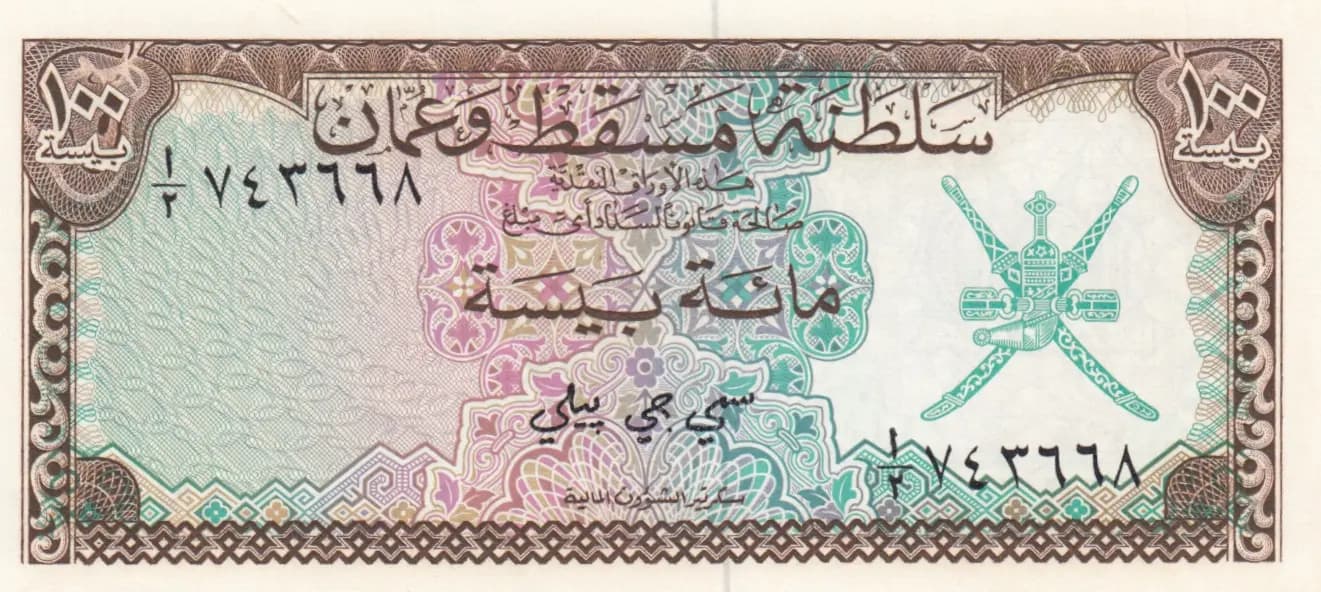
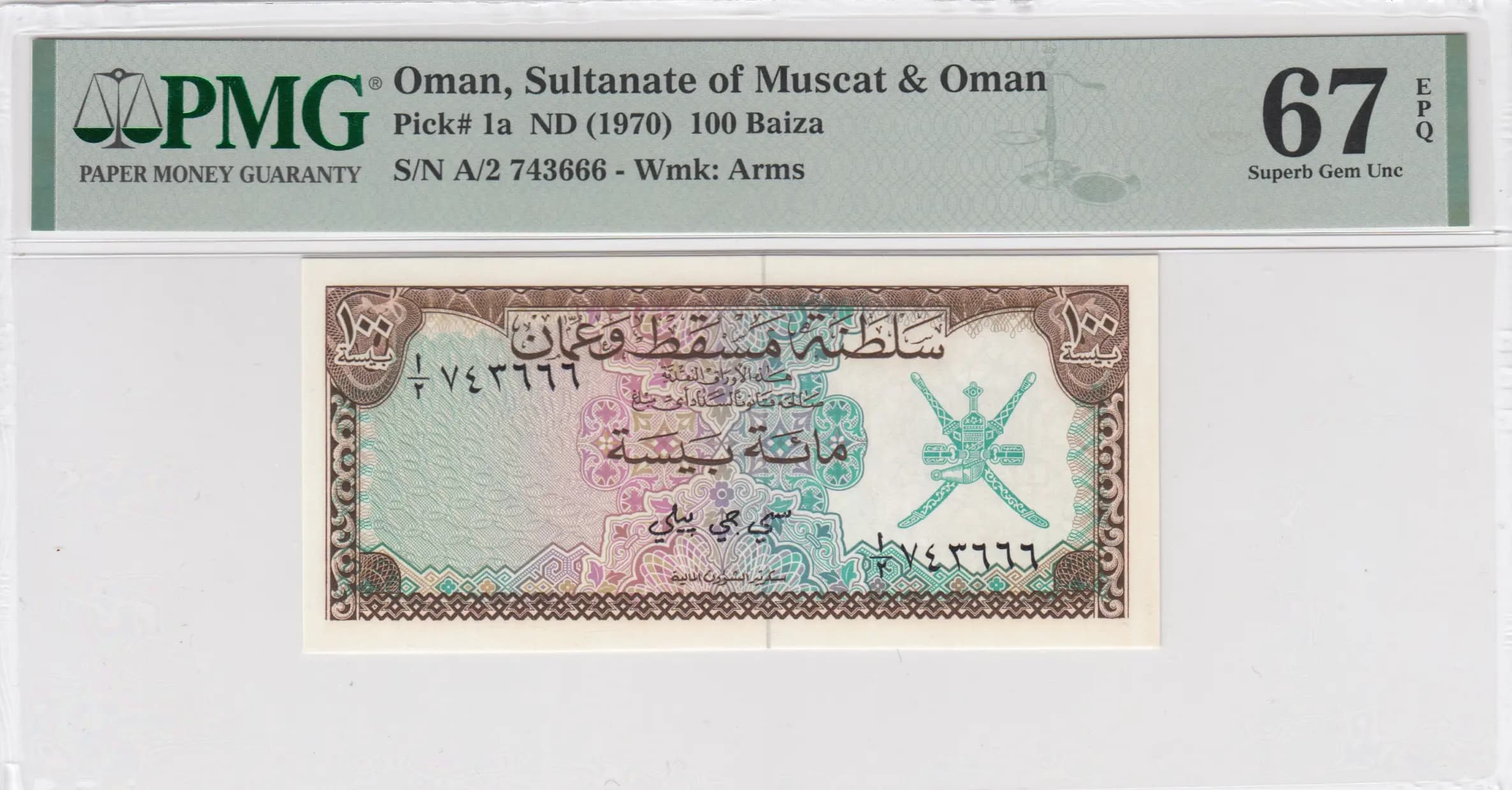
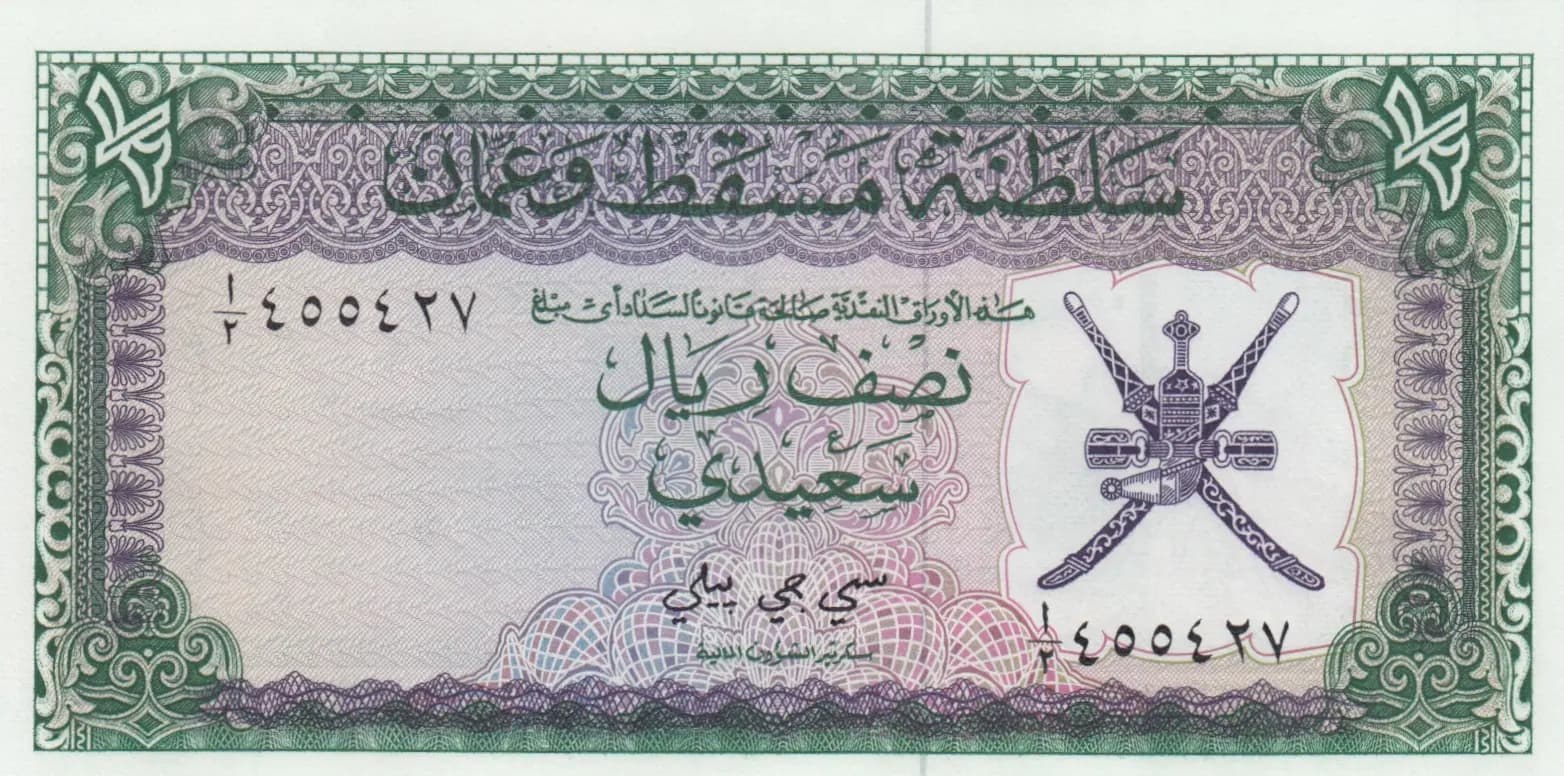
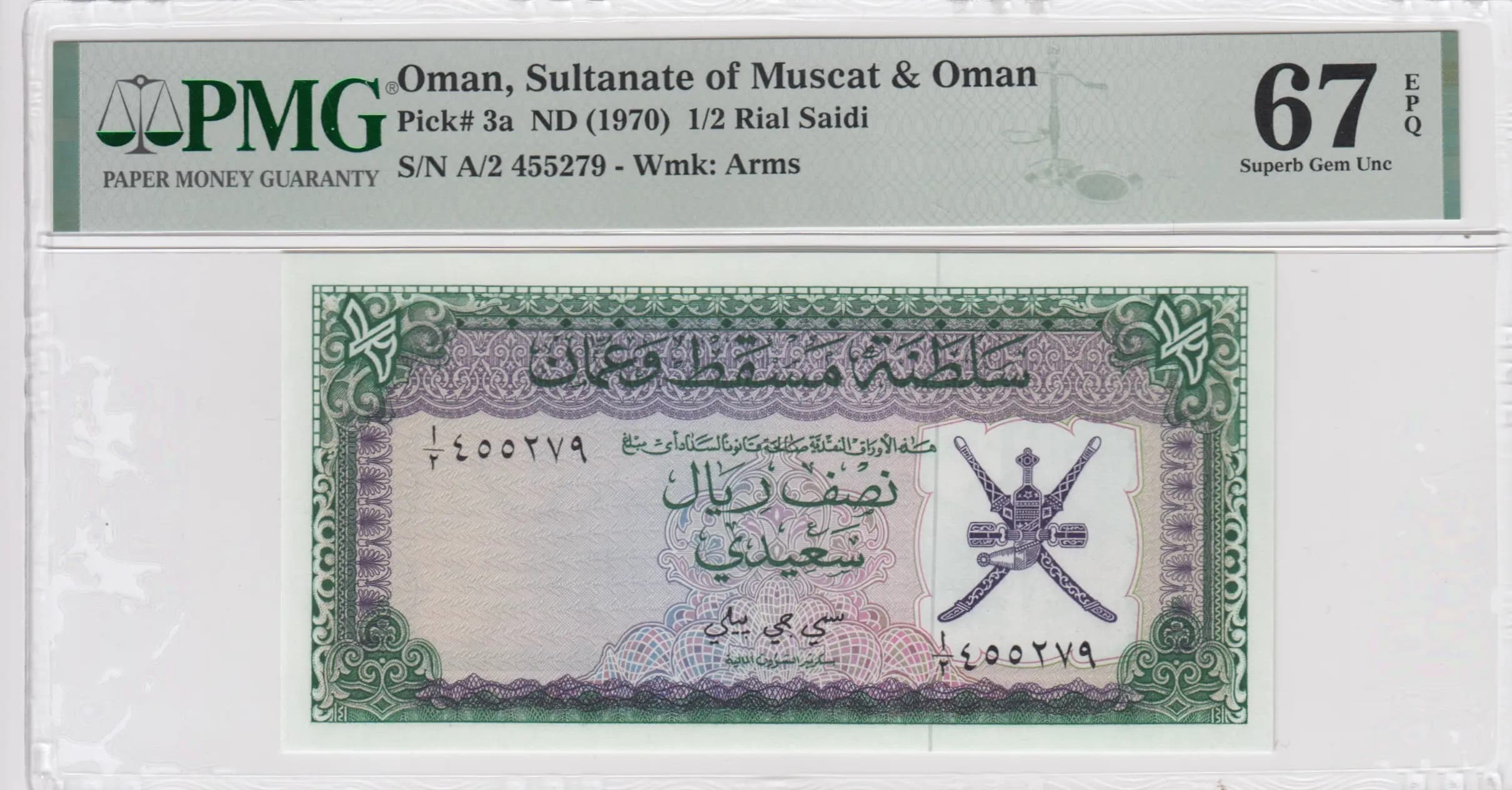
1 rial saidi 1970
Market Prices
10 salesAbout This Note
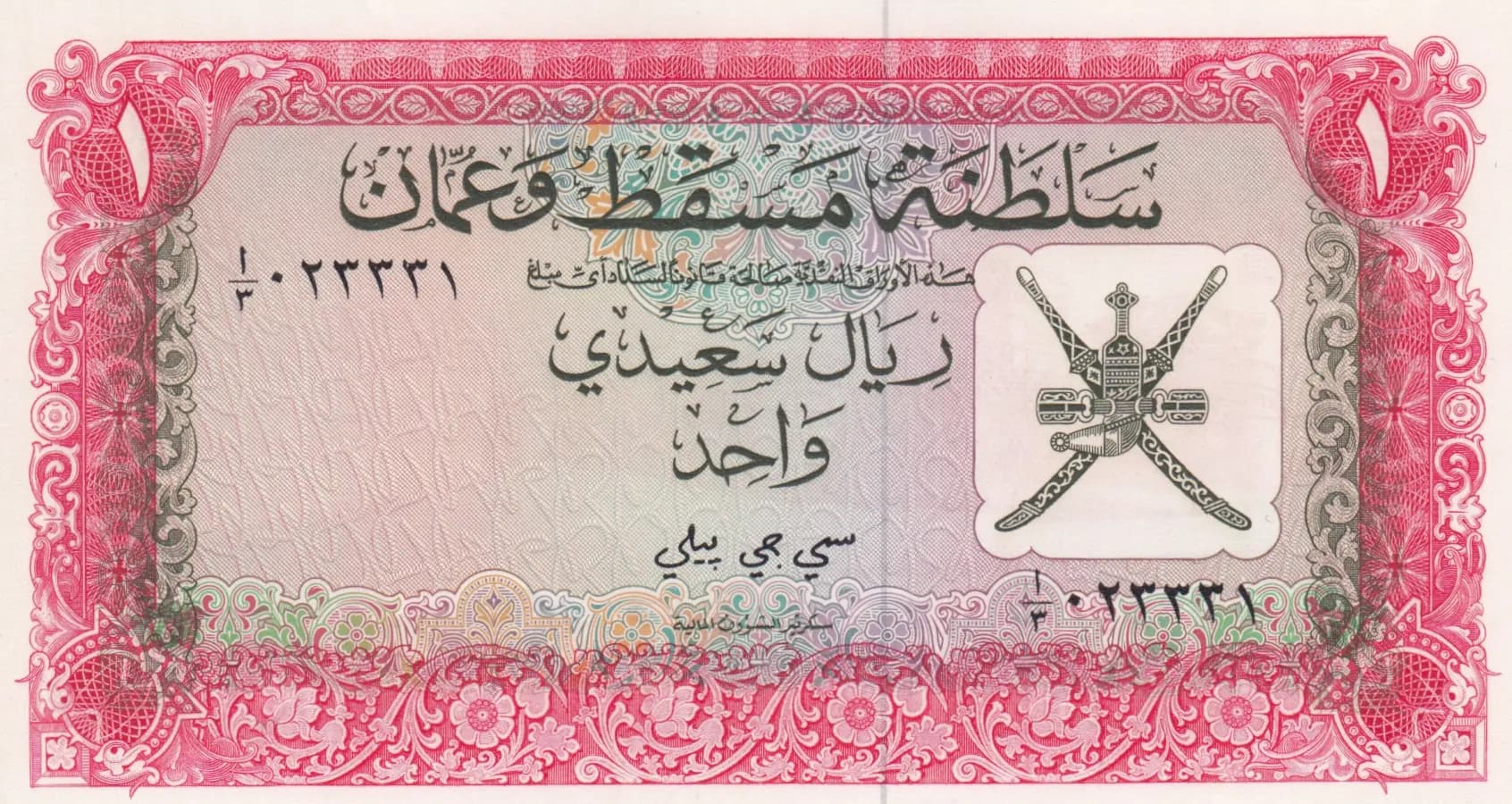
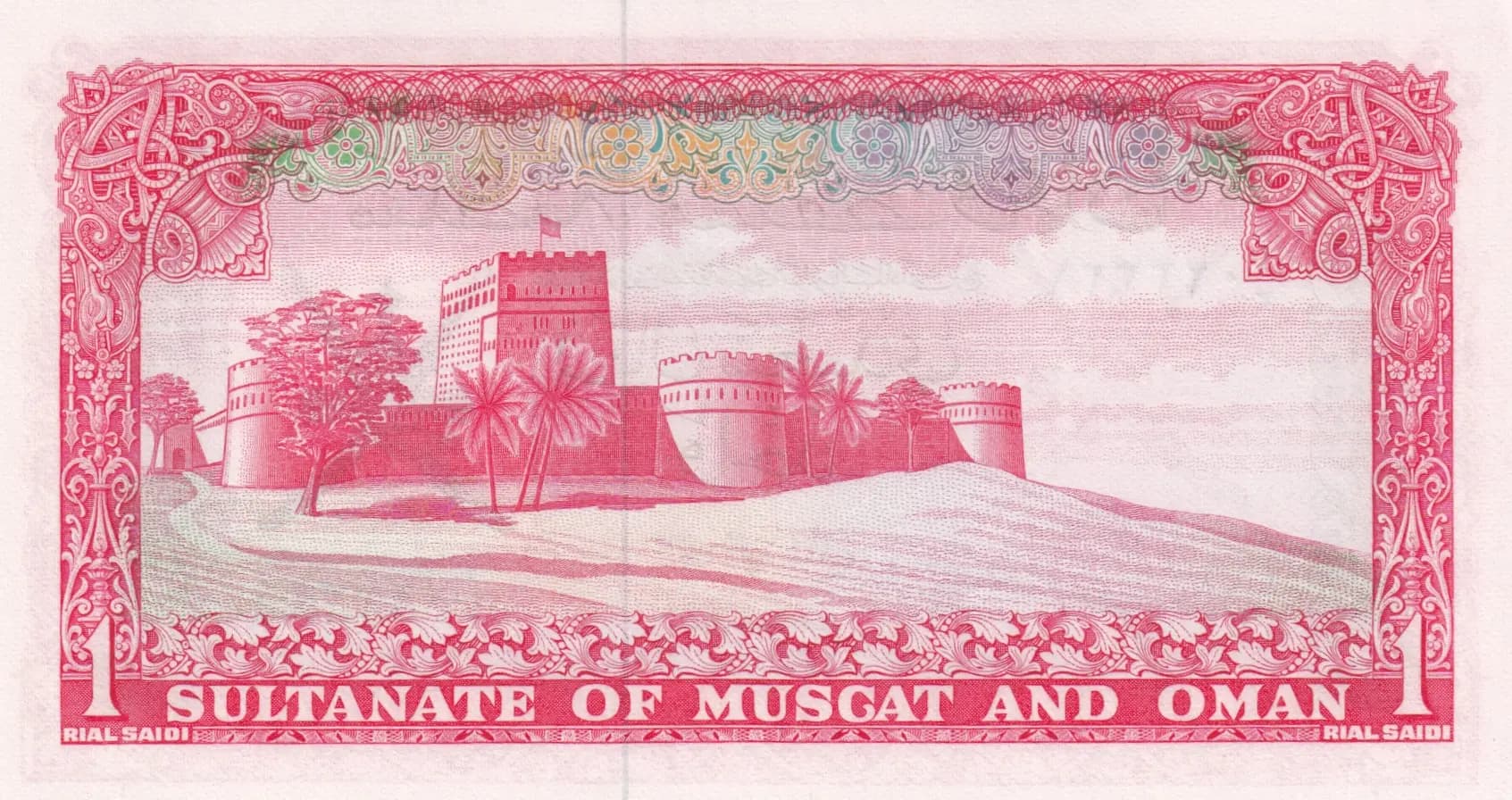
This Sultanate of Muscat and Oman 1 Rial Saidi from 1970 (Pick P-4) displays the classic early design featuring the crossed swords and dagger emblem of the sultanate in ornate pink and green tones. The reverse depicts Sohar Fort, a historically significant Omani landmark rendered in detailed engraved style. The note shows light age-related patina consistent with UNC grade, with crisp printing and clear detail throughout.
common. eBay price data shows consistent sales in the $100-$150 range for UNC examples (2015-2021), with even lower prices for lower grades ($20-$80), indicating reasonable availability in the collector market. As the first issue of the 1 Rial Saidi denomination for an independent Omani currency, it has numismatic interest but was evidently printed in quantities sufficient to support regular circulation and subsequent collector acquisition.
Issued during the reign of Sultan Said bin Taimur (1932-1970), this note represents the early currency period of the Sultanate of Muscat and Oman, just before the modernization reforms under Sultan Qaboos bin Said. The Sohar Fort depicted on the reverse was a strategic maritime stronghold symbolizing Oman's historical naval and commercial importance in the Arabian Gulf and Indian Ocean trade routes.
The obverse features the Arms of Muscat and Oman—crossed swords with a central dagger (khanjar), the iconic symbol of Omani sovereignty and tribal heritage—positioned in a white rounded square on the right side. The reverse depicts Sohar Fort (Qala'at Sohar), a crenellated fortification with multiple towers, a central gatehouse with flag, and palm trees rendered in detailed engraved style characteristic of 1970s currency design. Both sides are framed by elaborate ornamental borders with floral and geometric patterns in pink, green, and cream tones.
Front side — Arabic: 'سلطنة عمان' (Sultanate of Oman), 'ريال سعيدي' (Rial Saidi), 'واحد' (One), serial number in Arabic numerals, and initials 'س ب ص'. Back side — English: 'SULTANATE OF MUSCAT AND OMAN', '1' (denomination), 'RIAL SAIDI' (currency designation).
Intaglio/engraving with multi-color offset printing. The detailed architectural rendering of Sohar Fort and the fine border ornamentation are characteristic of high-security currency engraving. External catalog references do not specify the security printer for P-4; the design sophistication suggests production by a major Western currency printer of the era.
Serial number prefix 'س ب ص' visible on the obverse. This 1970 issue predates the 1973 decimal currency reform. No significant varieties documented in major catalogs for Pick P-4, though minor variations in serial number prefixes and signature combinations may exist across printings.