100 baiza 1970
Market Prices
49 salesAbout This Note
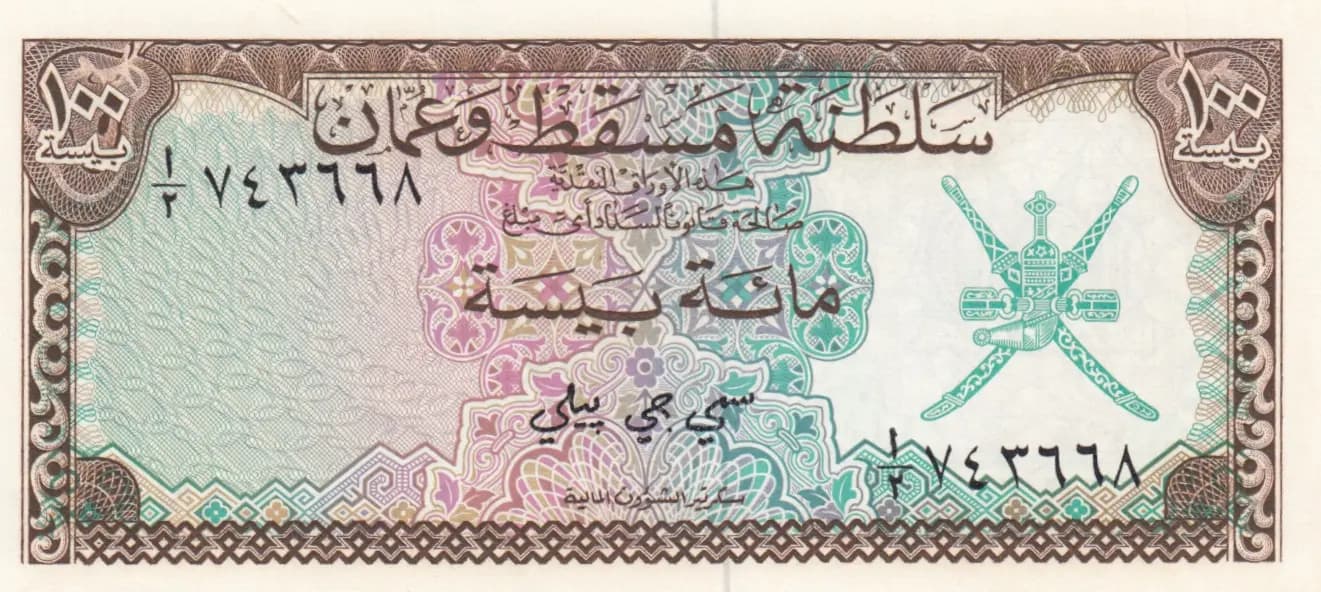
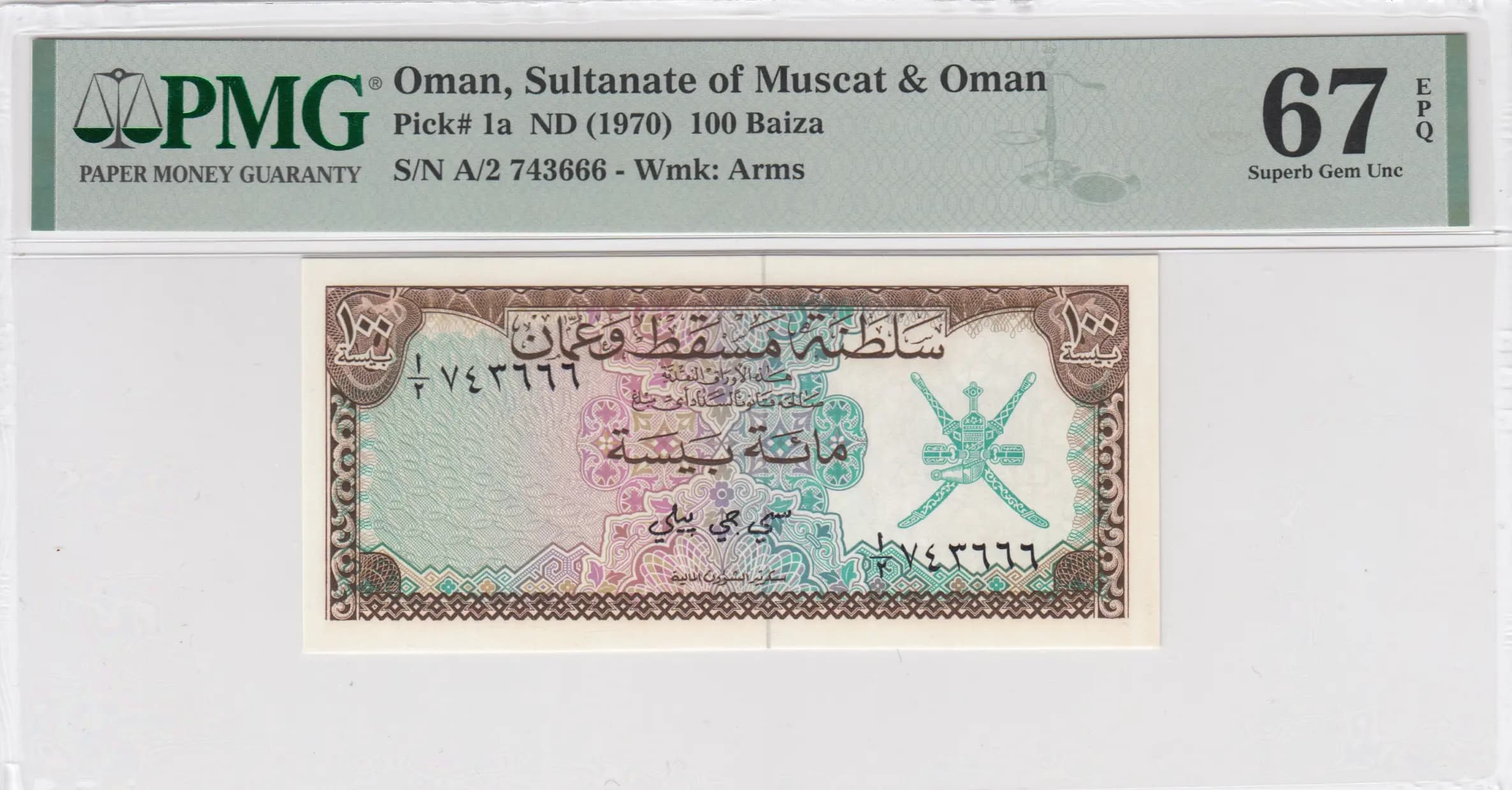
This is a PMG 67 EPQ (Superb Gem Uncirculated) example of the 100 Baiza note from the Sultanate of Muscat and Oman, issued in 1970 as Pick P-1a. The note features exceptionally preserved paper quality with no visible wear, featuring striking Islamic geometric and arabesque design elements in brown and teal colorways. This early Omani banknote represents a significant piece of numismatic history from the sultanate's early currency period.
Common. The eBay price data provided shows consistent sales across all condition grades from 2013-2024, with typical UNC examples selling in the $19-$37 range and PMG 67 examples ranging from $17-$62 depending on market conditions and bidding activity. This broad and frequent market activity across nearly a decade indicates substantial circulation in the collector market and a healthy print run. The 2019 catalog valuation of $40 UNC further supports common status. While early Omani currency is collected, this particular note does not show the scarcity markers (small print runs, recall status, or extreme rarity in higher grades) that would classify it as scarce or rare.
The Sultanate of Muscat and Oman issued this 100 Baiza note in 1970, marking the beginning of the nation's modern currency period following the 1968 coup that modernized the sultanate. The ornate Islamic geometric patterns and arabesque designs throughout the note reflect traditional Omani artistic heritage and Islamic design principles. The Arms watermark and formal 'Sultanate of Muscat and Oman' inscription represent the political identity of this transitional period in Omani history.
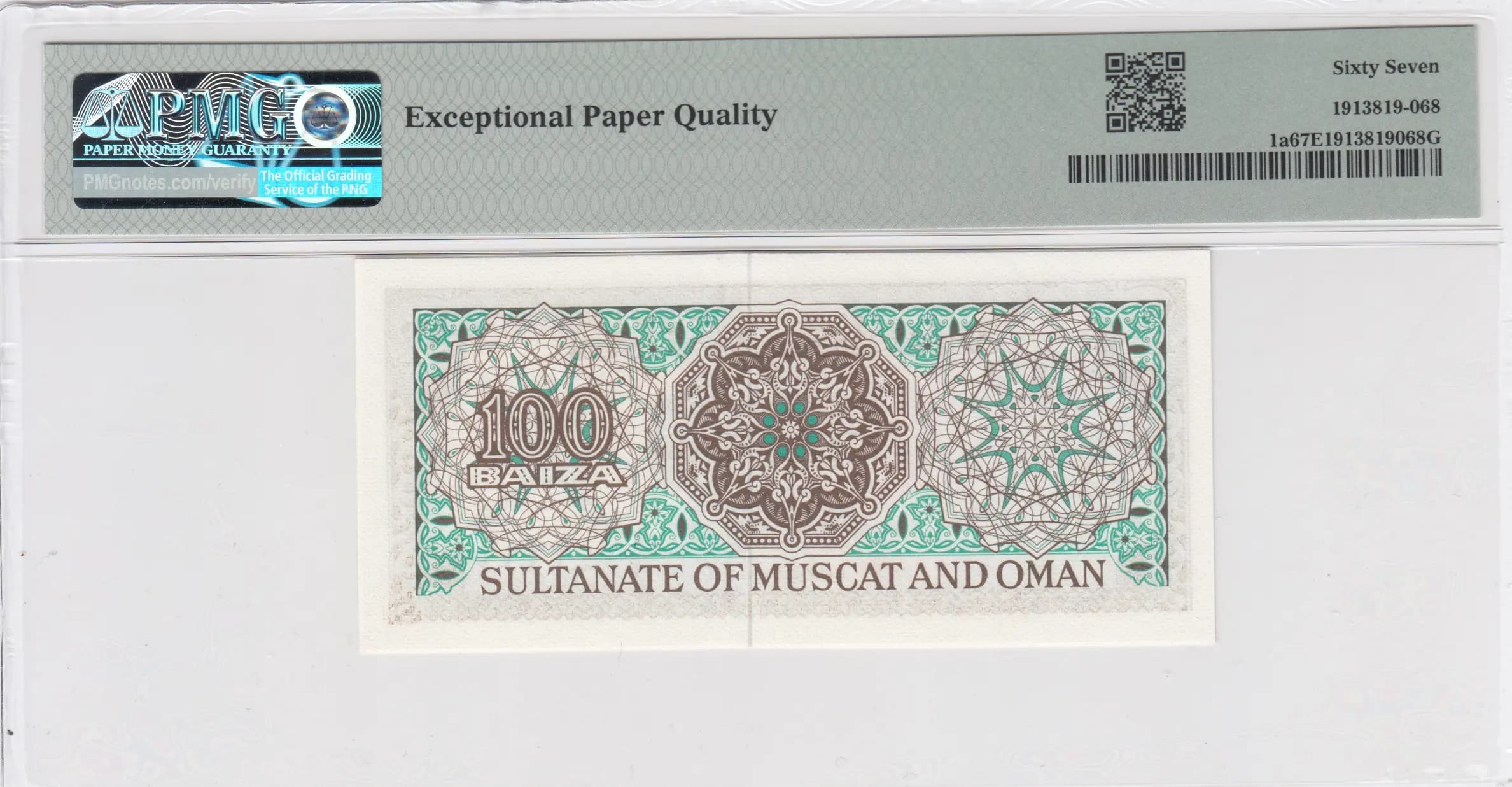
The 100 Baiza note features a masterfully executed design based entirely on Islamic geometric and arabesque ornamentation, characteristic of early 1970s Omani currency design. The obverse displays the Arms of Oman (appearing as a watermark and security element) at the right side with decorative borders. The reverse is dominated by a large octagonal medallion featuring intricate lattice work, floral arabesques, and geometric patterns rendered in brown and teal. Corner ornaments and symmetrical decorative elements frame the denomination text '100 BAIZA'. The design eschews traditional portraiture in favor of heraldic and ornamental elements reflecting Islamic artistic traditions—a common approach in Gulf state currencies of this era. The palette of brown on blue-green with multicolor underprinting creates visual depth and security through color complexity.
Obverse (Front): 'Sultanate of Muscat and Oman' (English text identifying the issuing authority); 'Arms' (watermark designation). Reverse (Back): '100' (denomination numeral); 'BAIZA' (currency unit designation); 'SULTANATE OF MUSCAT AND OMAN' (issuer identification). PMG Holder Inscriptions: 'Pick# 1a ND (1970) 100 Baiza' (catalog reference); 'S/N A/2 743666' (serial number); 'Wmk: Arms' (watermark type); '67 EPQ' (grade and exceptional paper quality designation); 'Superb Gem Unc' (condition grade description); Certification number '1913819-068'.
The note employs intaglio (engraved) printing techniques, evidenced by the fine geometric lattice patterns, precise arabesque detailing, and crisp line work visible in the octagonal medallion and border designs. The multicolor printing with brown, teal, and cream/off-white tones indicates a sophisticated multi-pass printing process typical of currency production by established security printers. The fine detail and exceptional paper quality noted in the PMG grading suggests production by a specialized security printer, likely De La Rue or a similar established currency printer working for Middle Eastern clients during this period.
This note is cataloged as Pick P-1a (the 'a' variant designation), indicating it is part of the first issue series of the Sultanate of Muscat and Oman. The observed serial number prefix 'A/2' with serial number 743666 is consistent with early production. The Arms watermark is the standard security feature for this Pick number. PMG has cataloged multiple variants of the 100 Baiza denomination (P-13a and P-13s are noted in the population data, though these refer to later 'Baisa' spelling variants), but this Pick P-1a represents the original 1970 issue with 'Baiza' spelling. No major printing varieties or signature variations are documented for this early note type.