100 baiza 1970
Market Prices
49 salesAbout This Note
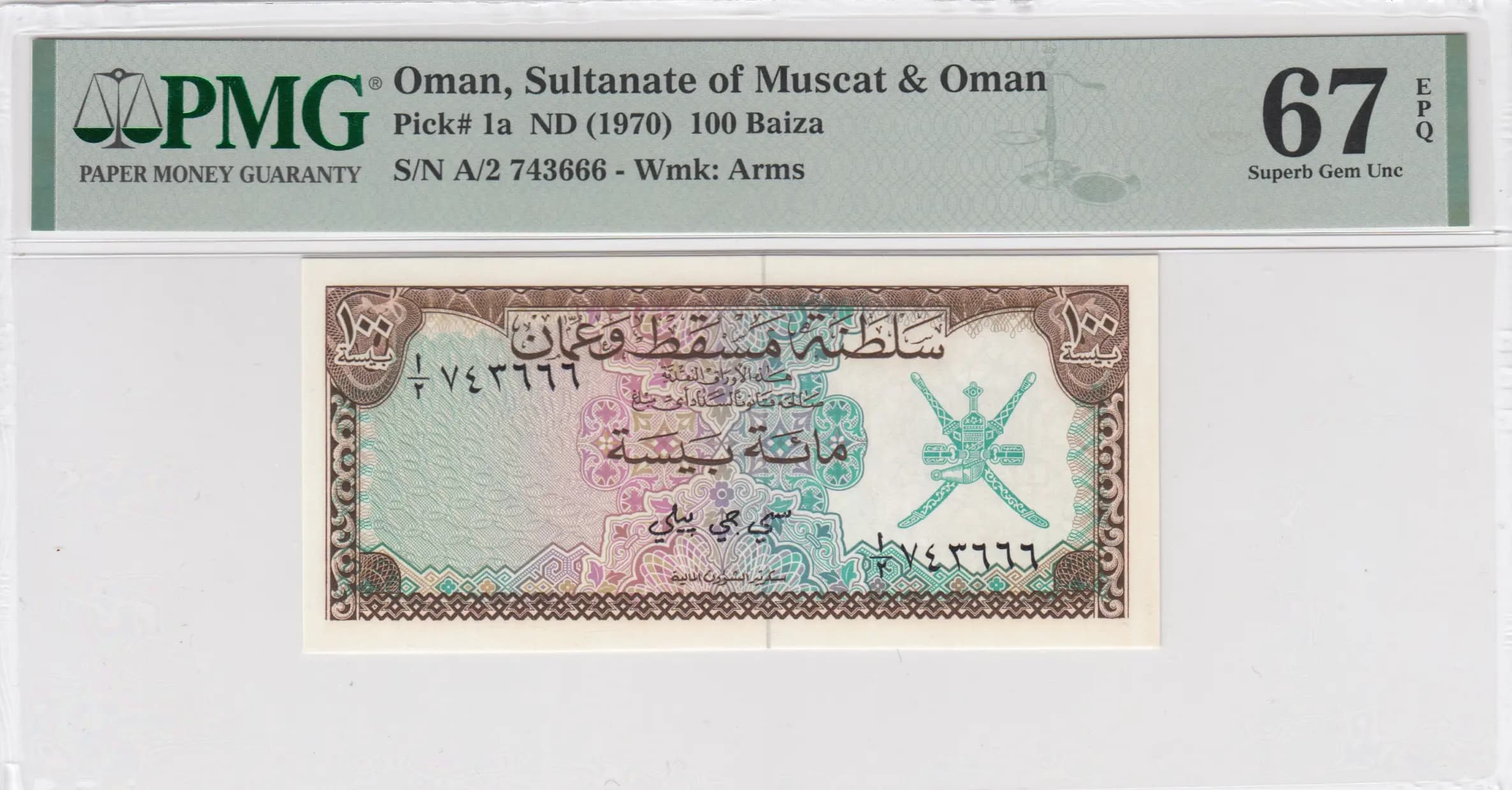
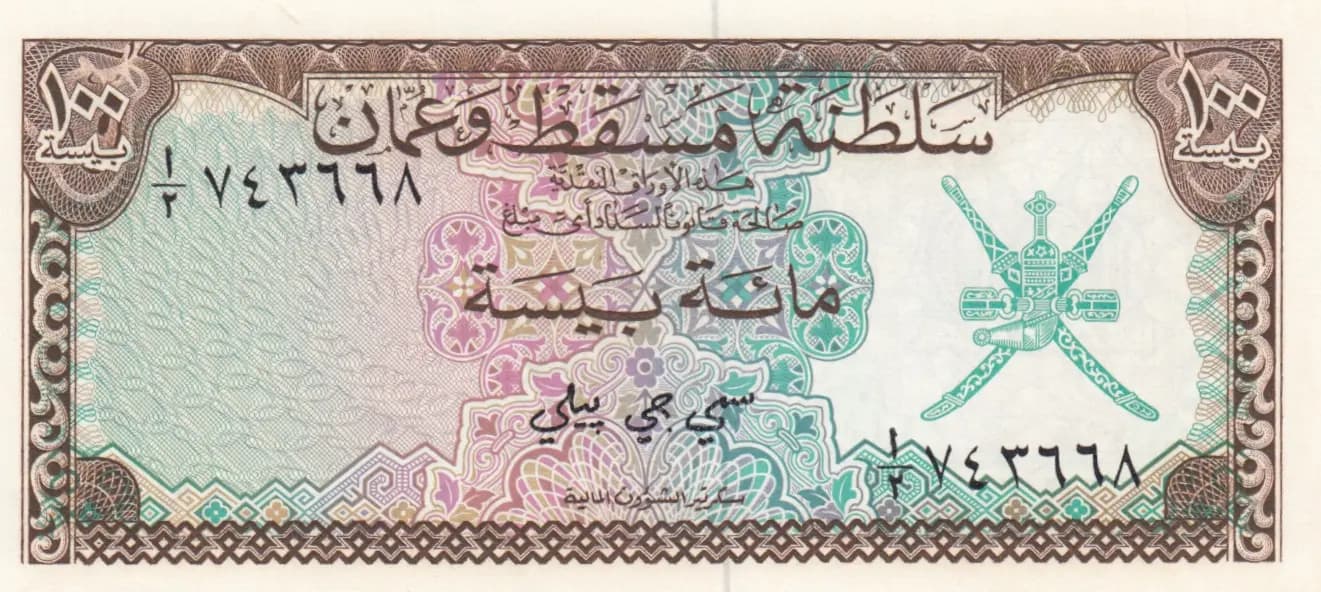
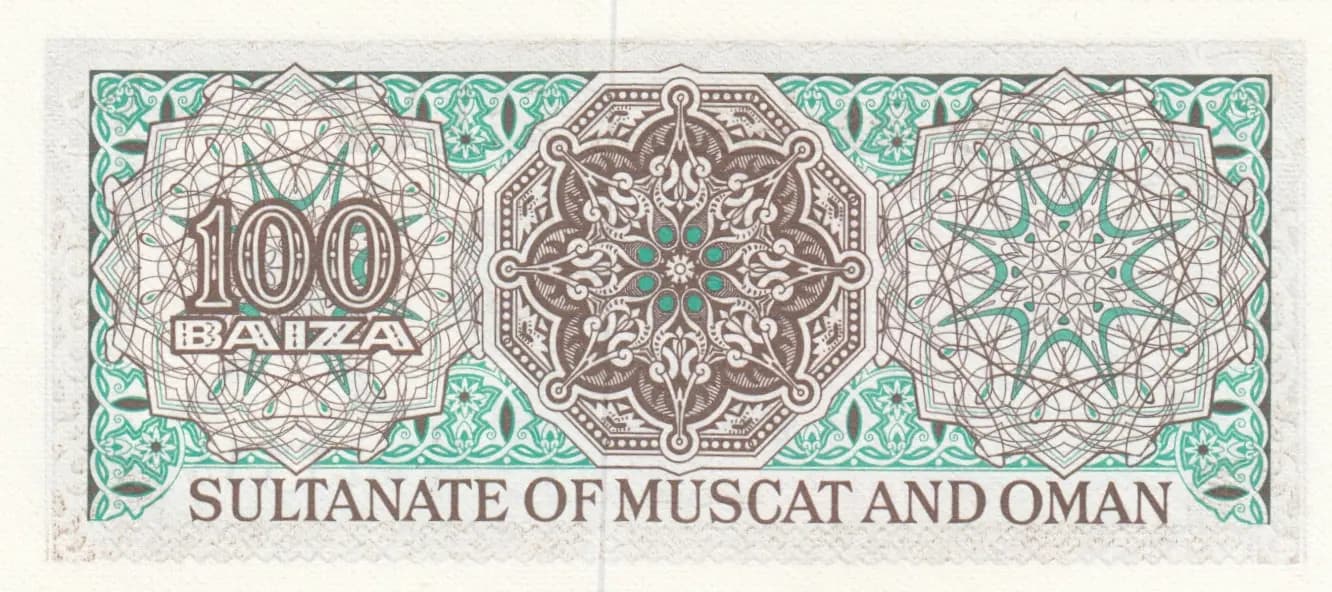
This 1970 100 Baiza note from the Sultanate of Muscat and Oman represents an important early issue from the sultanate's monetary system, presented here in uncirculated condition with crisp paper and sharp printing throughout. The obverse features the national emblem at right set against an intricate turquoise, brown, and purple color scheme with ornate Islamic geometric patterns, while the reverse displays an elaborate central medallion with complex lattice work, all rendered in fine-line detail typical of 1970s security printing. As Pick-1, this is the foundational note of Oman's banknote series, making it historically significant to collectors of Arabian Peninsula currency.
Common. The eBay sales data spanning 2013-2024 shows consistent, frequent sales of this note in UNC condition ranging from approximately $18-$37, with an average around $26-$28. The large volume of sales transactions (60+ recorded instances), steady pricing without significant appreciation, and the 2019 catalog valuation of $40 UNC all indicate this is a commonly available note in the secondary market. As the first Pick number of an active issuer with a substantial print run, this note remains readily obtainable for collectors.
Issued during the reign of Sultan Qaboos bin Said (who came to power in 1970), this note marks the modernization of Oman's currency system following the country's opening to the world after centuries of isolation. The prominent use of traditional Islamic geometric patterns and the national emblem reflects the sultanate's identity and cultural heritage during this transformative period. This early issue preceded Oman's adoption of the Rial Omani in 1973, making the Baiza notes a transitional and historically significant currency issue.
The 100 Baiza note features the national emblem of Oman at the right side of the obverse — a traditional Islamic symbol depicting curved horns and decorative details characteristic of Arabian heraldic design. The obverse field is dominated by an intricate background of interlocking Islamic geometric patterns rendered in turquoise, brown, purple, and cream, with ornamental cartouches framing the Arabic inscriptions. The reverse showcases a four-fold symmetrical central medallion with fine Islamic geometric and floral motifs, flanked by two large decorative squares featuring complex lattice work. The entire design palette emphasizes traditional Islamic artistic elements central to Omani cultural identity, with no portraits present — typical of Islamic monetary design principles of the era.
Front Side: 'سلطنة عمان' (Sultanate of Oman) appears in an ornamental cartouche in Arabic; 'مائة فلس' (One Hundred Fils) is inscribed in Arabic script; serial numbers (e.g., 1/2743668) appear in both upper left and lower right corners. Back Side: '100 BAIZA' is prominently displayed in English; 'SULTANATE OF MUSCAT AND OMAN' appears in English text at the bottom.
This note employs multi-color intaglio (copperplate) printing, evident from the sharp, finely detailed geometric patterns and the crisp registration of the turquoise, brown, purple, and cream color separations. The intricate line work in the medallions and lattice patterns, combined with the raised tactile quality typical of intaglio production, provided significant security against counterfeiting. The printer for Oman's early banknote series is consistent with De La Rue or similar established security printers, though specific attribution would require further documentation.
This note is cataloged as Pick-1a (100 Baiza, 1970). PMG records indicate variants P-13a and P-13s exist for the 100 Baiza denomination, with P-13s likely representing specimen notes with overprints or special markings. The observed serial number format (e.g., 1/2743668) appears consistent with standard issue notes. No overprints, special prefixes, or signature variants are evident in the visual analysis provided, indicating this is a standard circulating issue of the regular type.