5 rials 1973
Market Prices
6 salesAbout This Note
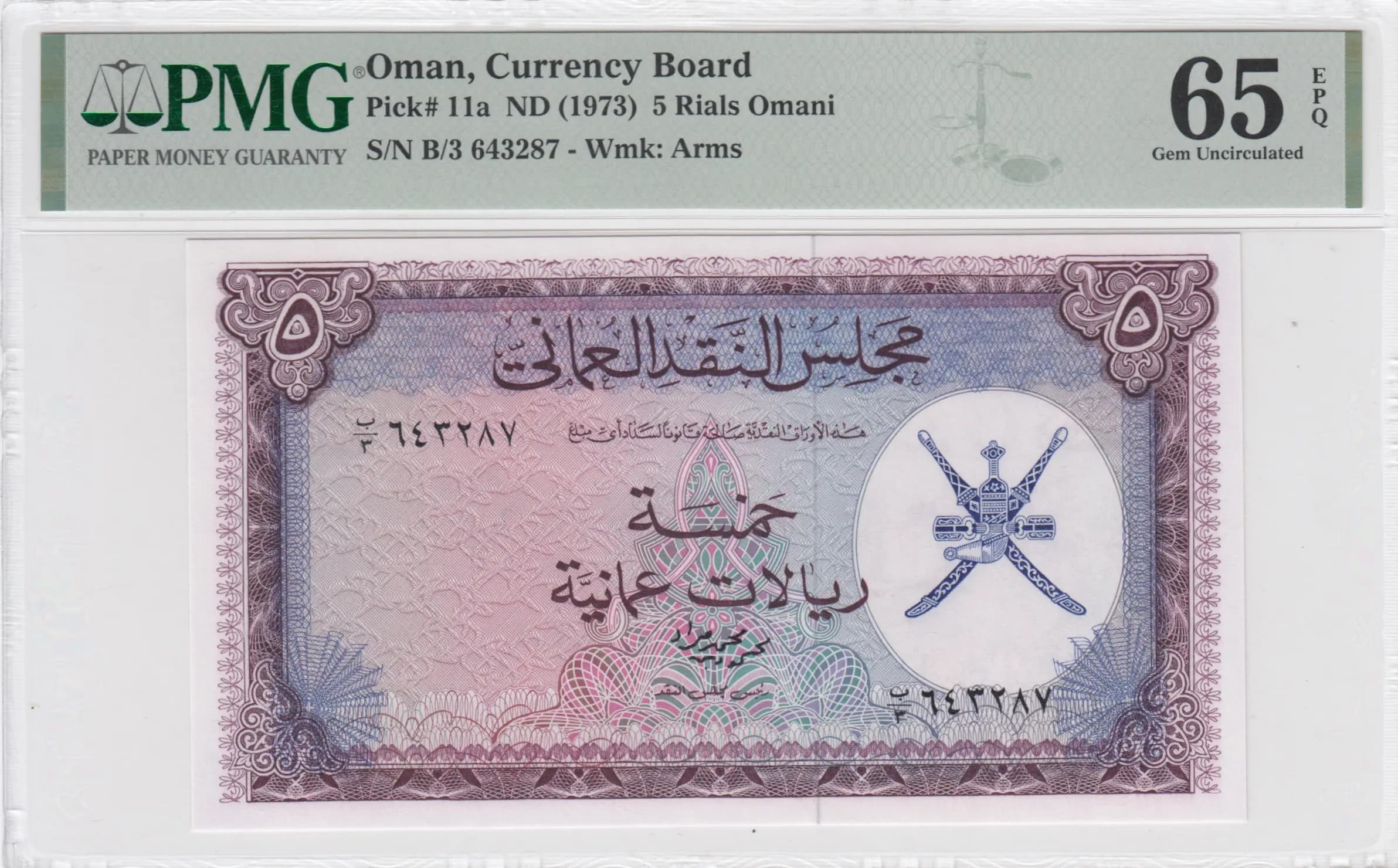
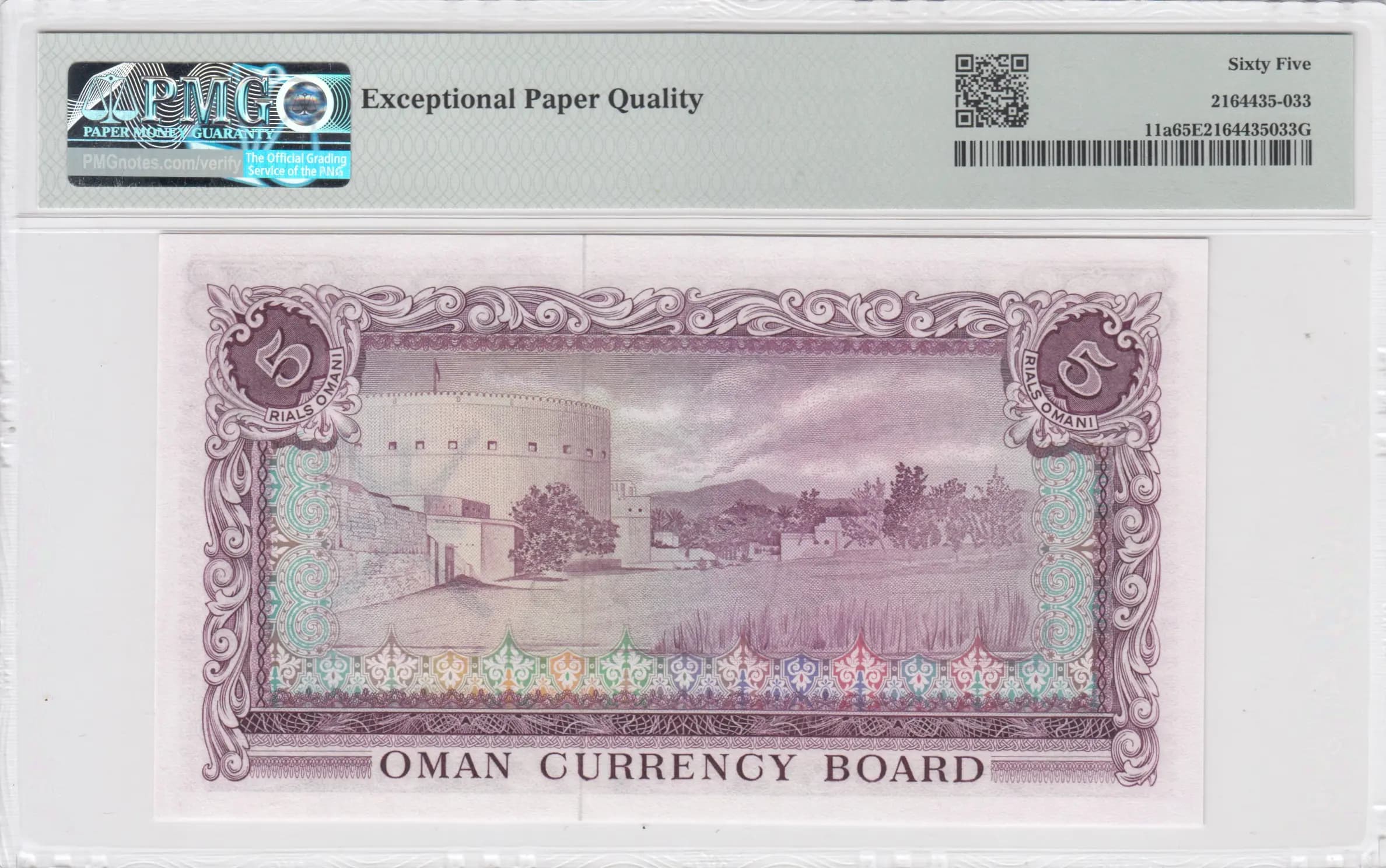
This is a PMG 65 EPQ example of the 1973 Oman Currency Board 5 Rials (Pick-11), notable for its pristine uncirculated condition and exceptional paper quality. The note features striking purple and blue multicolor printing with the National Emblem of Oman prominently displayed on the obverse, while the reverse showcases a detailed engraved landscape of Nizwa Fort. This early currency board issue represents Oman's monetary independence during a pivotal period in the sultanate's modern history, with market data showing PMG 65 examples consistently commanding prices in the $250-$450 range.
Common. While this is an early Oman Currency Board issue from 1973, the denomination and broad circulation period mean examples are readily available in the collector market. eBay transaction data from 2014-2022 shows consistent availability of this note in various grades, with VF and lower grades regularly selling for $60-$190. PMG 65 examples are less frequently encountered than lower grades but still appear regularly at auction, commanding $250-$610 depending on market conditions. The 1973 date and Pick-11 designation have no special rarity designation in standard catalogs, indicating normal production and distribution.
Issued by the Oman Currency Board in 1973, this note marks a significant moment in Oman's economic sovereignty, coinciding with the early years of Sultan Qaboos bin Said's modernization of the nation. The depiction of Nizwa Fort on the reverse reflects the historical and cultural importance of this 17th-century fortified structure in central Oman, while the National Emblem (crossed khanjars with shield) symbolizes Omani national identity and traditional values during this period of transition and development.
The obverse features the National Emblem of Oman—a circular white medallion containing two crossed khanjars (traditional curved daggers) with a heraldic shield at their intersection—positioned prominently on the right side of the note. This emblem serves as the primary security watermark element. The reverse depicts Nizwa Fort, the historic 17th-century fortification located in the Dakhiliyah region of Oman, rendered in fine-line engraving with detailed architectural stonework, crenellated walls, surrounding vegetation, and mountainous backdrop. Both sides feature ornate baroque-style decorative borders with scrollwork and guilloche patterns in burgundy and maroon on a light multicolor background (light pink, purple, and blue tinting). The overall design employs a sophisticated color palette with turquoise and green accents in the decorative elements.
FRONT: 'مجلس العملة' (Majlis al-Umla) = Currency Board; 'بنك الدولة' (Bank al-Dawla) = State Bank; 'رياليات عمانية' (Riyaliyat Umaniyya) = Omani Riyals; '٥' (Khamsa) = 5 (denomination in Arabic numerals); 'B/3 643287' = Serial number prefix and identification. BACK: 'OMAN CURRENCY BOARD' = English text identifying the issuer; '٥ RIALS ٥' = Denomination in both Arabic and English; Additional alphanumeric references include catalog and grading designations from the professional grading service.
Intaglio (recess) engraving on steel plates, combining fine-line engraving throughout with color lithography for the multicolor underprint. The note exhibits high-quality engraving characteristic of currency board issues of this era, with sharp guilloche patterns, detailed landscape vignettes, and precise line work. The color gradients and security printing elements suggest professional currency production standards, likely executed by an international security printer such as De La Rue or similar firm specializing in central bank note production during the 1970s.
This note is cataloged as Pick-11a by PMG, indicating it is the sole identified variety for this base Pick number. The serial number prefix 'B/3' and specific serial sequence '643287' are consistent with Currency Board production standards of the period. No known overprints, color variations, or significant printing errors have been documented for this issue. The note represents the standard regular issue of the 5 Rials denomination from 1973.