1/2 rial saidi 1970
Market Prices
13 salesAbout This Note
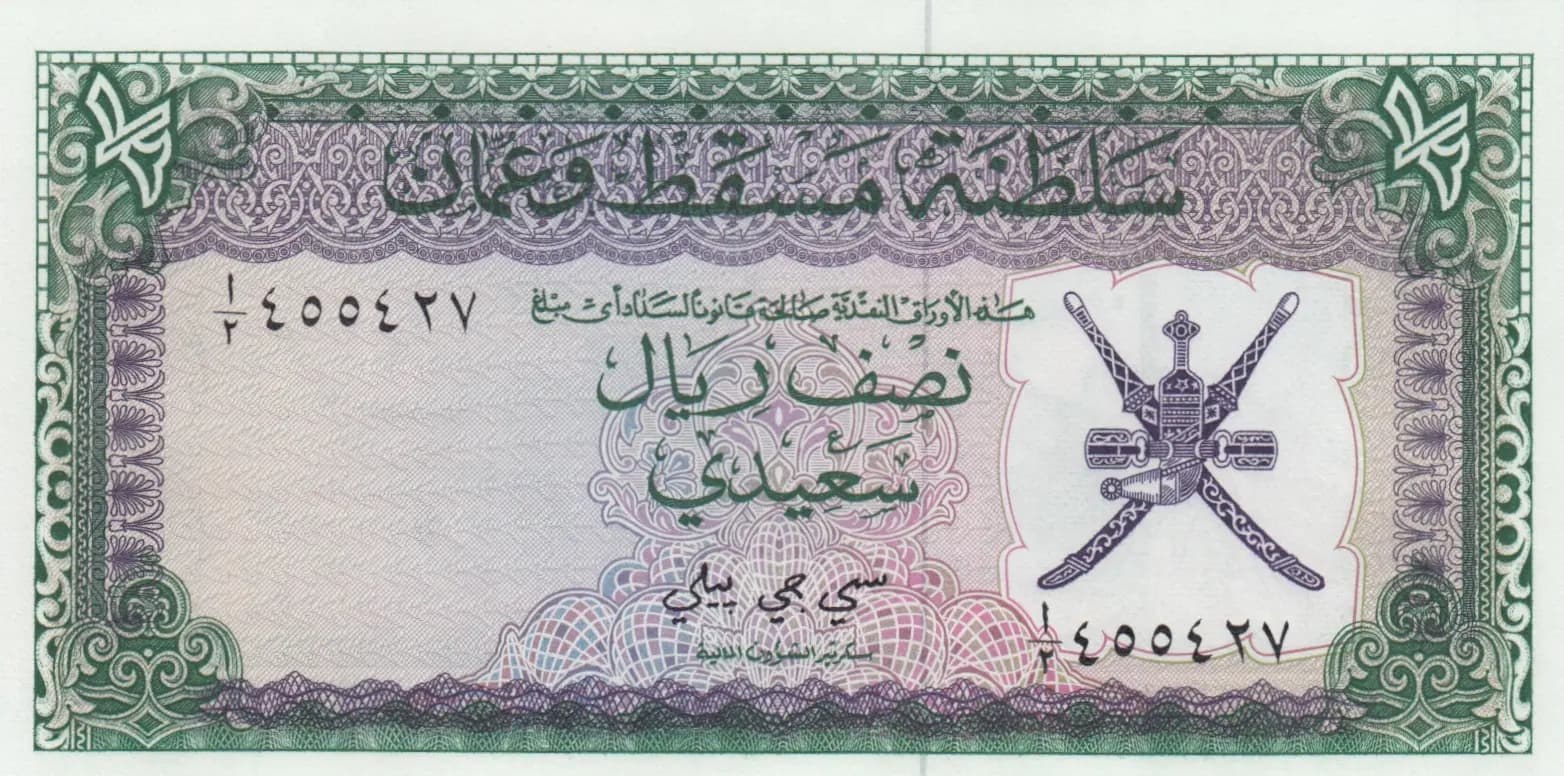
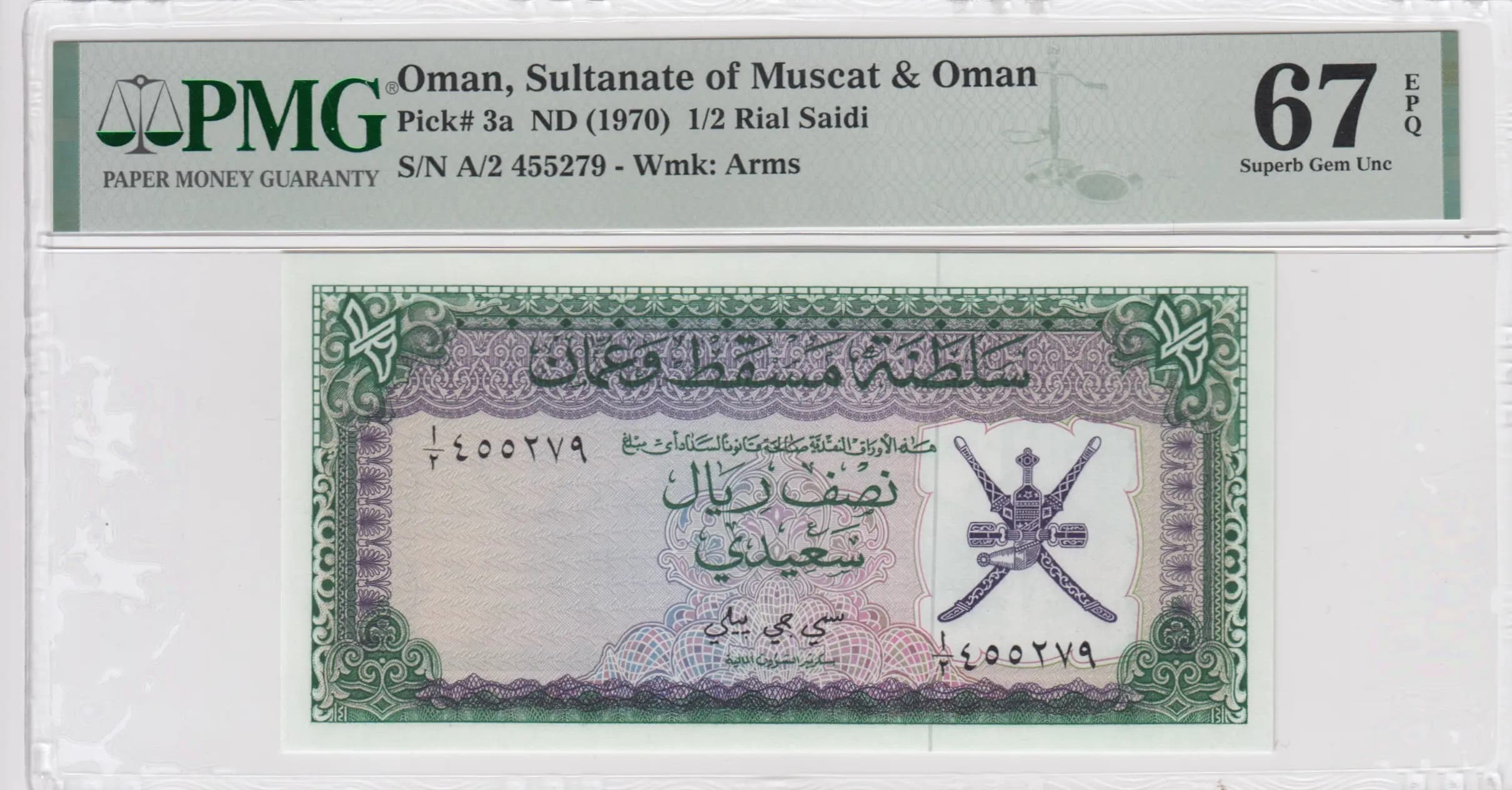
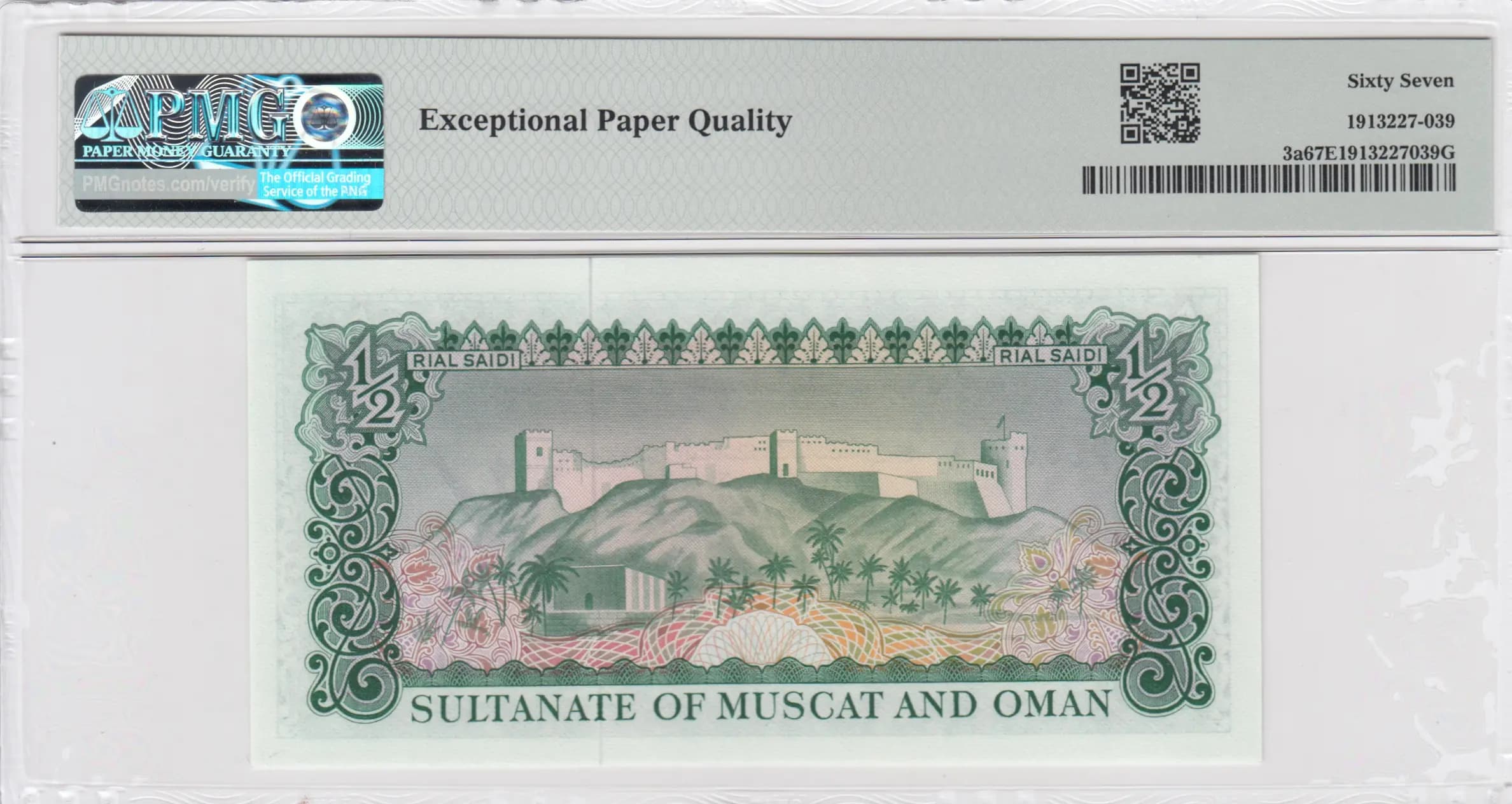
This is a PMG 67 Superb Gem Uncirculated example of the 1/2 Rial Saidi issued by the Sultanate of Muscat and Oman in 1970 (Pick #3a). The note features striking green and purple multicolor printing with the national arms prominently displayed on the obverse and the iconic Sumail fortress depicted on the reverse. The exceptional paper quality designation (EPQ) combined with the high grade reflects an outstanding specimen in pristine, uncirculated condition with no signs of wear or handling.
Common. This is a regular issue banknote from the Sultanate of Muscat and Oman's first modern currency series (1970). The eBay price history shows consistent market activity with numerous sales ranging from $33 to $237.50 depending on grade, with PMG 67 examples selling in the $87-$122 range across multiple transactions from 2015-2022. These price points and transaction frequency indicate healthy supply in the collector market. While this specific PMG 67 EPQ grade represents an exceptional specimen, the underlying note type is not scarce. The catalog value for UNC condition (approximately $85 as of 2019) further supports a common classification.
This banknote was issued during a significant transitional period for Oman, just before the 1970 coup d'état that brought Sultan Qaboos to power and transformed the sultanate. The reverse depicts Sumail fortress (also known as Samil or Al-Sumail), a historically important fortification in Oman's interior that served as a strategic stronghold. The arms depicted on the obverse—the crossed khanjars (traditional curved daggers) with an ornamental crown—represent the sultanate's national identity and are deeply symbolic of Omani heritage and sovereignty.
The obverse displays the national coat of arms—two crossed khanjars (ornamental curved daggers) intersecting above a decorated roundel, crowned by an ornamental geometric and floral crown motif—positioned at the right side of the note. The design is rendered in green and purple on a multicolor underprint with beige/cream tones dominating the background. Elaborate ornamental borders in geometric and floral patterns frame the design in green corner elements. The reverse features a detailed landscape engraving of Sumail fortress, a traditional fortified settlement depicted on elevated terrain with characteristic towers, defensive walls, and castle architecture of traditional Arabian design. Palm trees appear in the foreground, and the surrounding landscape shows mountainous terrain in orange and tan tones. The denomination and issuing authority text frame this central fortress vignette. The watermark consists of the arms design repeated throughout the paper.
OBVERSE: Arabic inscriptions include 'سلطنة عمان' (Sultanate of Oman) and 'نصف ريال' (Half Rial). English text reads 'Rial Saidi.' Serial number A/2 455279. REVERSE: 'SULTANATE OF MUSCAT AND OMAN' and 'RIAL SAIDI' with denomination '1/2' prominently displayed. Watermark features the Arms. PMG certification holder displays: Pick# 3a ND (1970) 1/2 Rial Saidi, Grade 67 with Exceptional Paper Quality (EPQ) designation, Certification number 1913227-039.
This note employs intaglio printing (evidenced by the fine line work visible in the ornamental borders and architectural details of the fortress engraving) combined with multicolor offset lithography for the background colors. The distinct color separation—green, purple, beige, and accent tones—indicates a sophisticated multi-pass printing process typical of high-security banknote production from this period. The specific printer for this Pick issue is not definitively identified in standard references, but Oman's early currency was typically produced by established European security printers such as De La Rue or Bradbury Wilkinson.
This example is identified as Pick #3a, indicating it is variety 'a' of the 1/2 Rial Saidi. The serial number prefix 'A/2' visible on this specimen (A/2 455279) represents one of the serial numbering series used during this issue. PMG records indicate two variants exist for this base Pick number (P-31 at 100 Baisa and P-36 at 10 Rials represent different denominations in the same series). The 1970 date is confirmed as 'ND (No Date)' printing with the year derived from the issue period, as is typical for this series.