20 rials 1977
Market Prices
7 salesAbout This Note
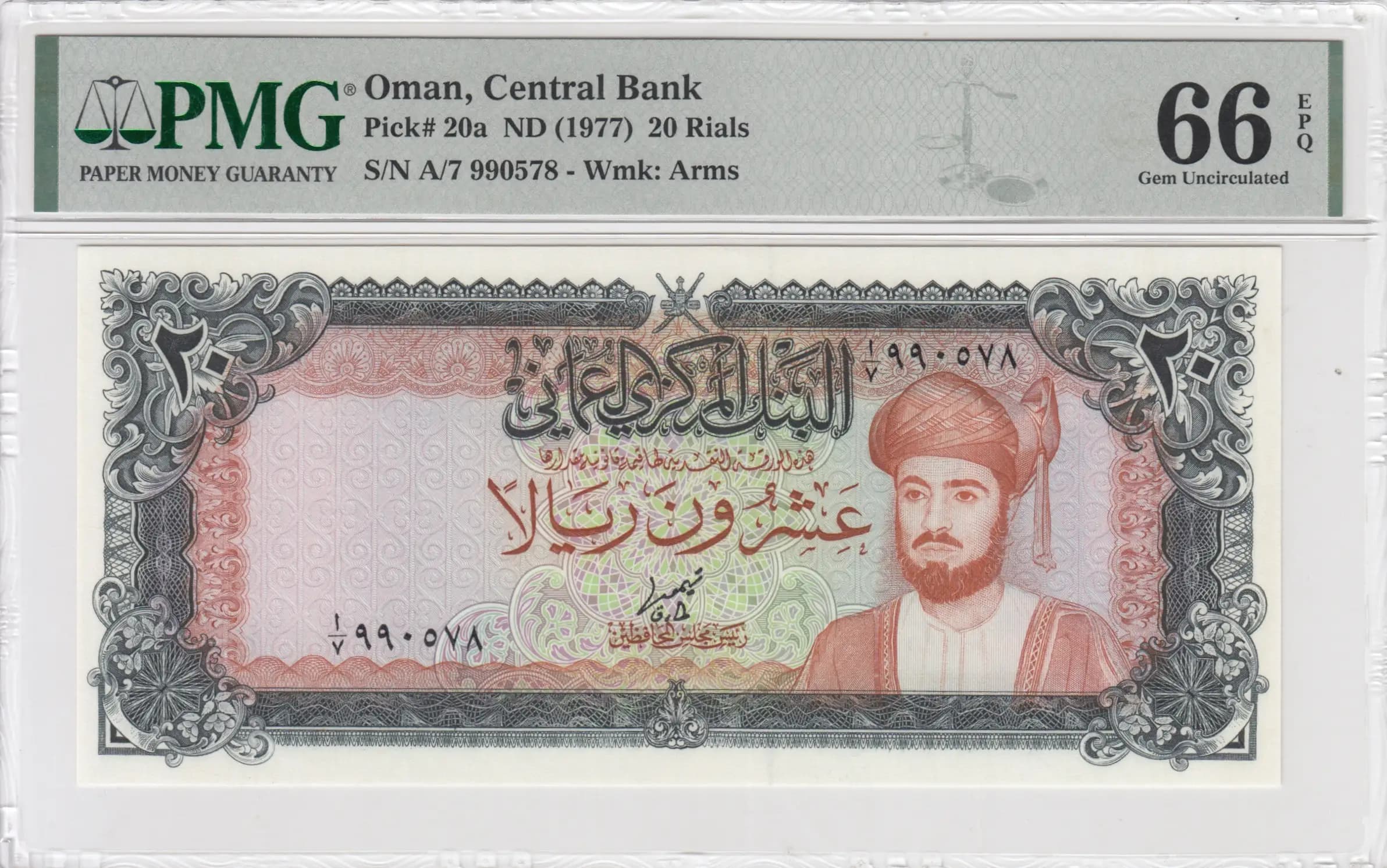
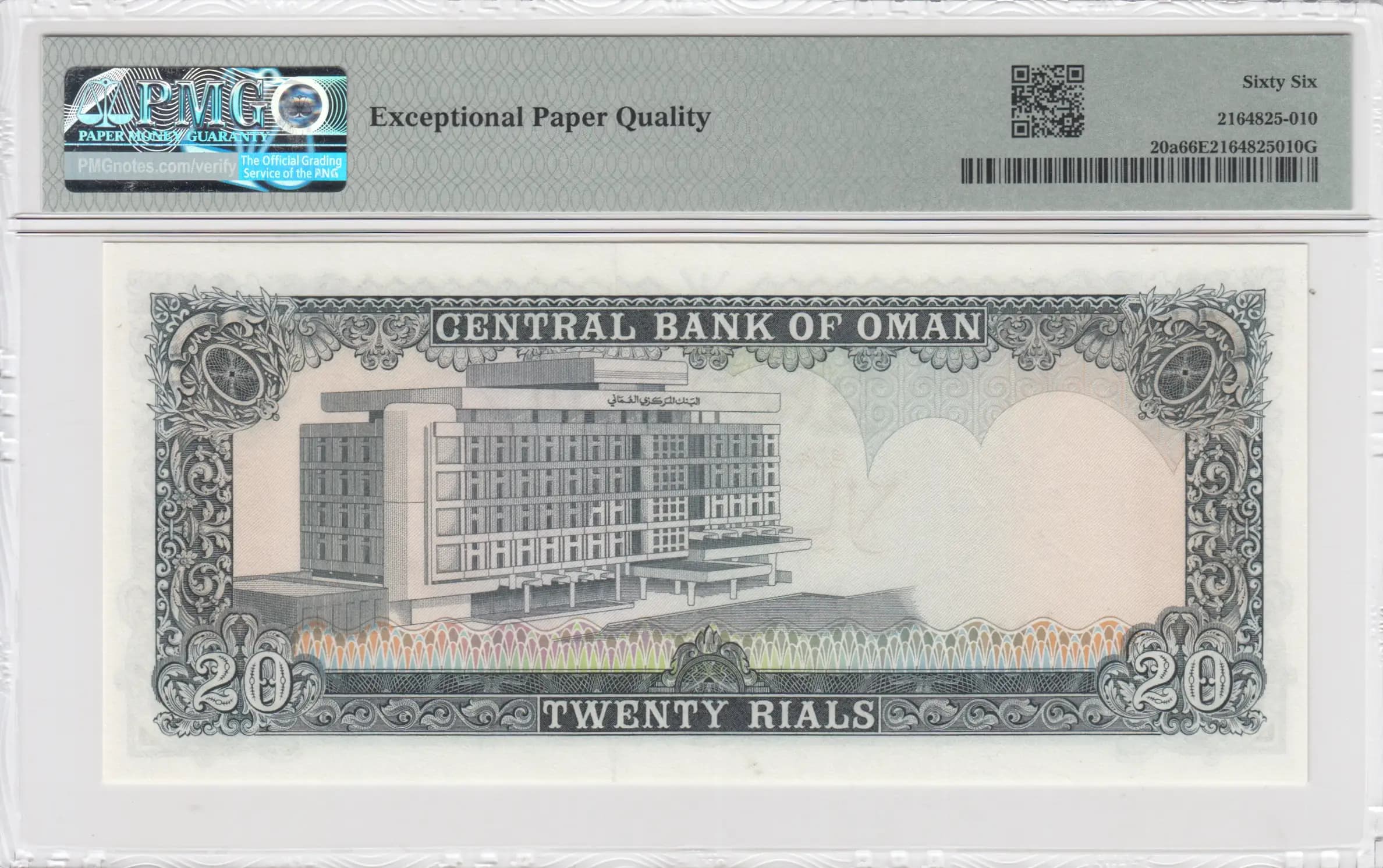
This is an exceptional example of the Central Bank of Oman's 20 Rials note from 1977, graded PMG 66 EPQ. The note displays pristine condition with sharp engraving, vibrant color printing in cream, red, pink, and black tones, and no visible signs of circulation. The front features a portrait of Sultan Qaboos bin Sa'id in traditional dress, while the reverse depicts the modern Central Bank of Oman building in Muscat, making this a historically significant commemorative issue from the early years of the sultanate's banking system.
Common. eBay market data shows multiple sales of PMG 66 examples at $289-$411 range (2018-2022), with lower grades (VF) selling for under $100 and higher grades (PMG 67) reaching approximately $500. The consistent availability of graded examples and moderate price points indicate regular circulation into the collector market. No evidence of limited print run, recall status, or scarcity for this Pick number in this condition grade.
Issued in 1977, this banknote represents the Central Bank of Oman's early currency series following the modernization of Oman's financial institutions under Sultan Qaboos bin Sa'id's reign. The dual dating (1399 Hijri/1977 CE) reflects Oman's integration of Islamic and Gregorian calendars in state documents. The architectural prominence given to the Central Bank building on the reverse symbolizes the nation's commitment to establishing a modern, centralized banking infrastructure during this transformative period of Omani development.
The obverse features a three-quarter portrait of Sultan Qaboos bin Sa'id positioned at the right side of the note, depicting him wearing a deep red/burgundy turban and traditional Omani formal dress, symbolizing both his role as head of state and his connection to Omani cultural heritage. The reverse showcases the Central Bank of Oman's headquarters building in Muscat, rendered as a modern multi-story institutional structure with regularly arranged windows and contemporary architectural styling, flanked by stylized landscaping. Both sides employ an elaborate decorative border framework with intricate floral and geometric patterns typical of Islamic numismatic design, rendered in fine engraving. The color palette of cream, beige, red, pink, black, and grey creates a sophisticated and formal appearance befitting a high-denomination note.
Front Side: 'البنك المركزي لعمان' (Central Bank of Oman) in Arabic; 'عشرون ريال' (Twenty Rials) in Arabic; Serial number 'A/7 990578' in Latin numerals; Dual dates '1977' and '1399' (Islamic calendar year). Back Side: 'CENTRAL BANK OF OMAN' in English; 'TWENTY RIALS' in English; Denomination marking '20' in Arabic numerals.
Intaglio engraving (traditional banknote engraving method) executed with exceptional fine detail throughout all design elements, security features, and border patterns. The sharp clarity of serial numbers, portrait details, and architectural linework observed in the visual analysis indicates professional-grade security printing. The Central Bank of Oman's notes from this period were typically produced by established European security printers, likely De La Rue or a comparable facility, using multi-color intaglio techniques standard for currency production in the 1970s.
Serial number prefix 'A/7' observed on this example (A/7 990578). Early Omani currency issues from 1977-1978 exhibit various serial number prefixes; documented varieties include different prefix letters (A, B, C, etc.) with corresponding numerical sequences. The specific prefix may be cataloged by advanced collectors, but no major recognized varieties affecting value have been established for this Pick number in standard catalogs. Future study of serial number distributions may reveal batch-related varieties among surviving PMG-graded examples.