5 dollars 1981 specimen
Market Prices
15 salesAbout This Note
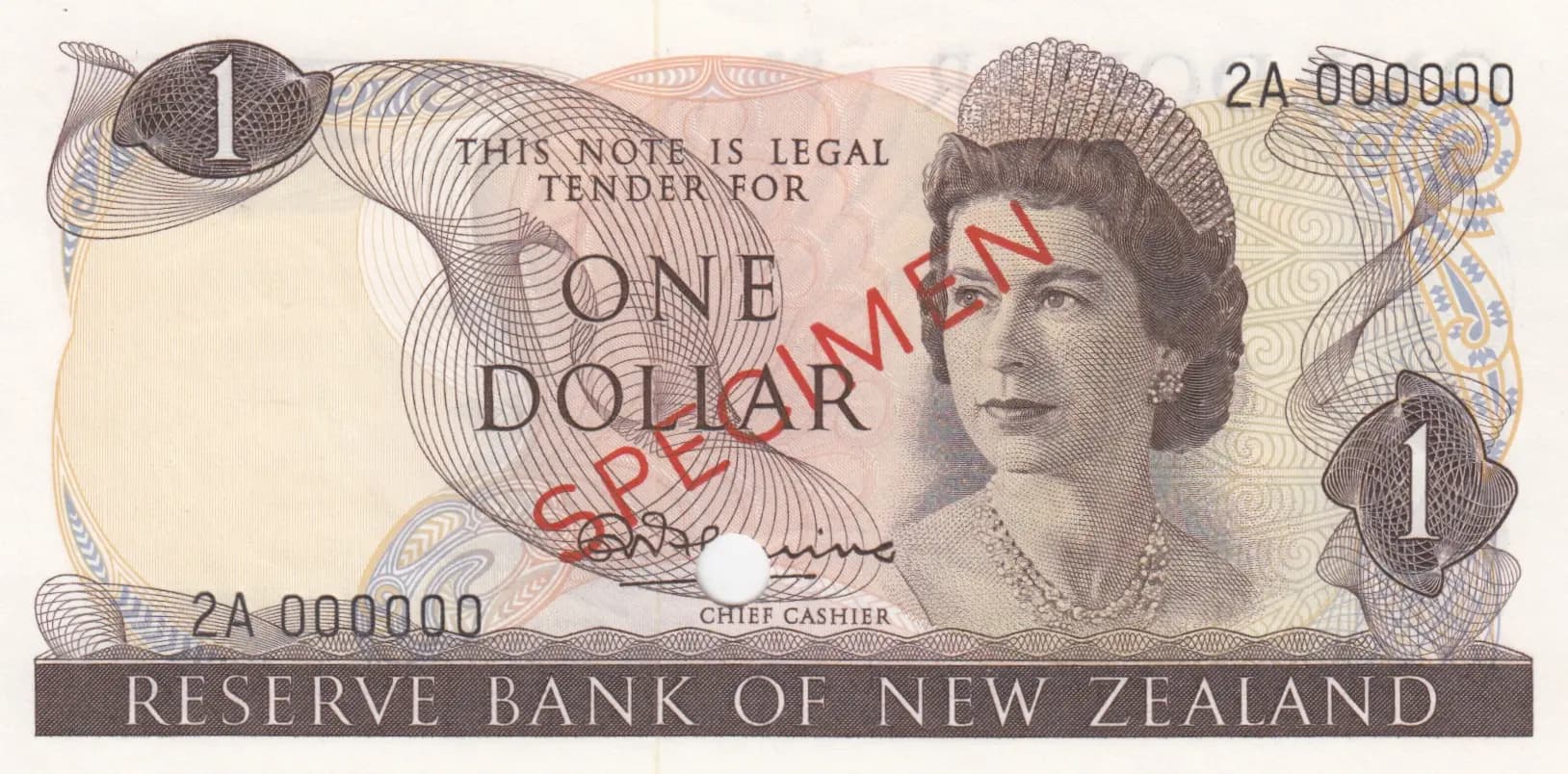
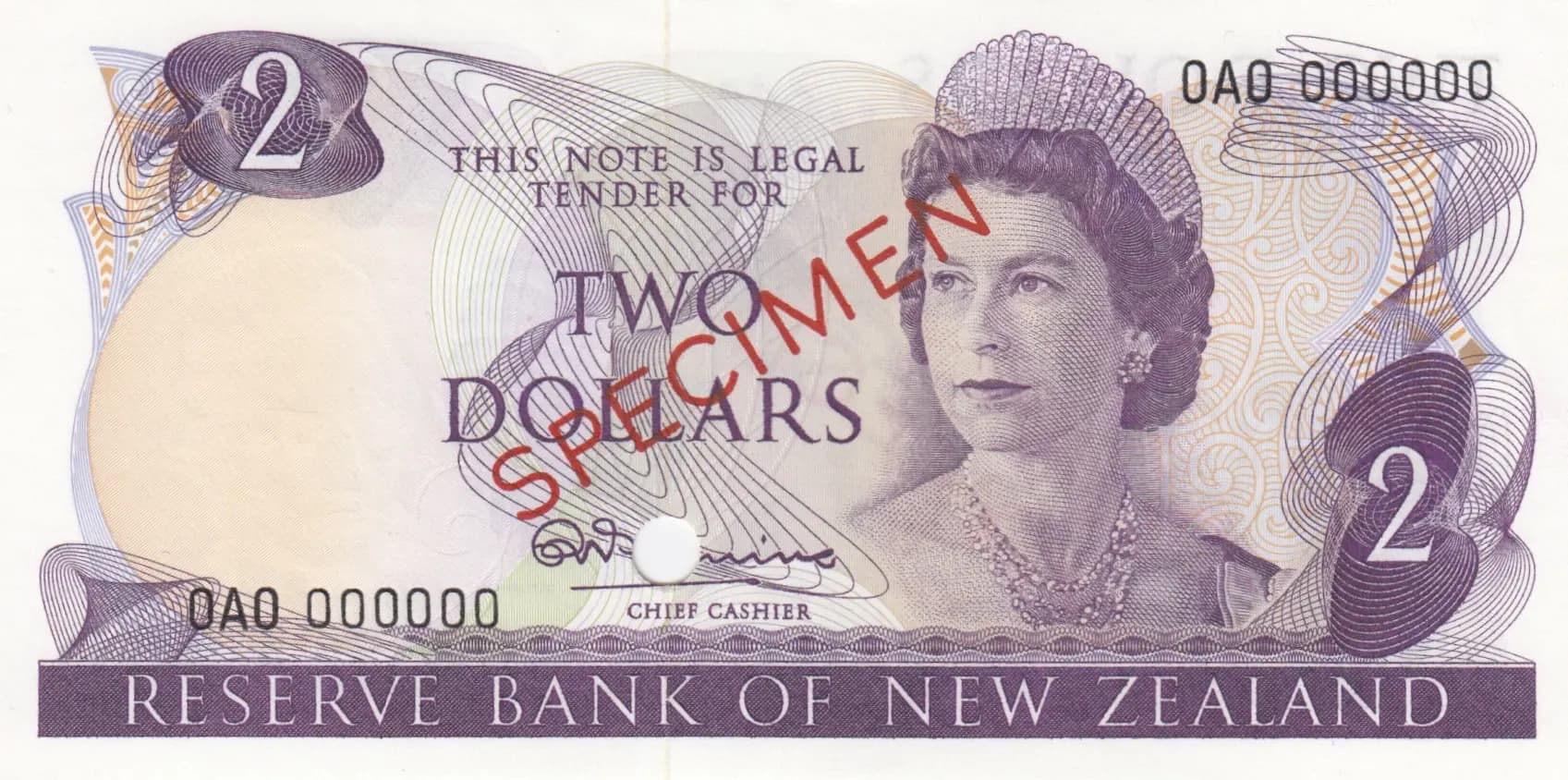
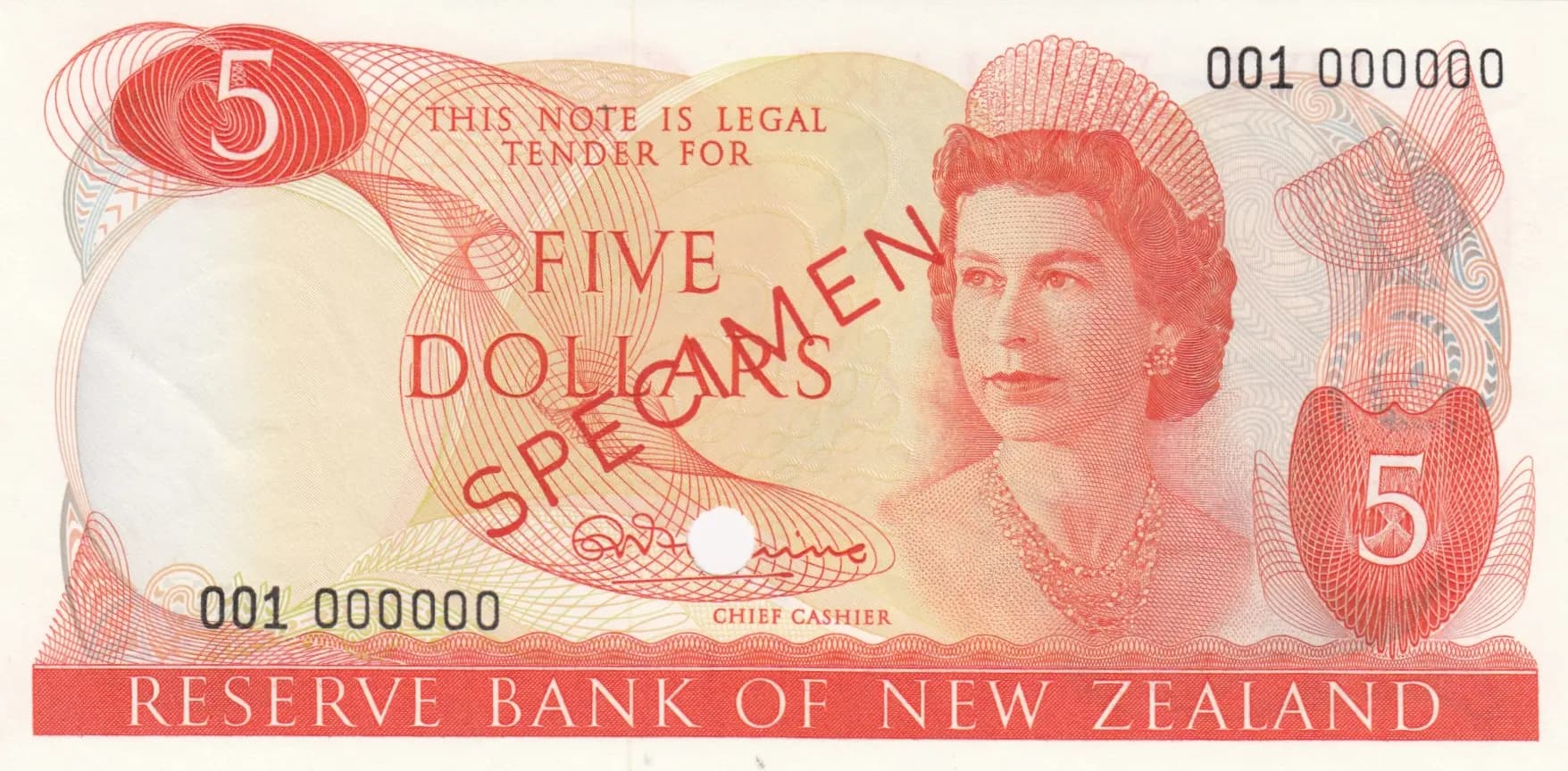
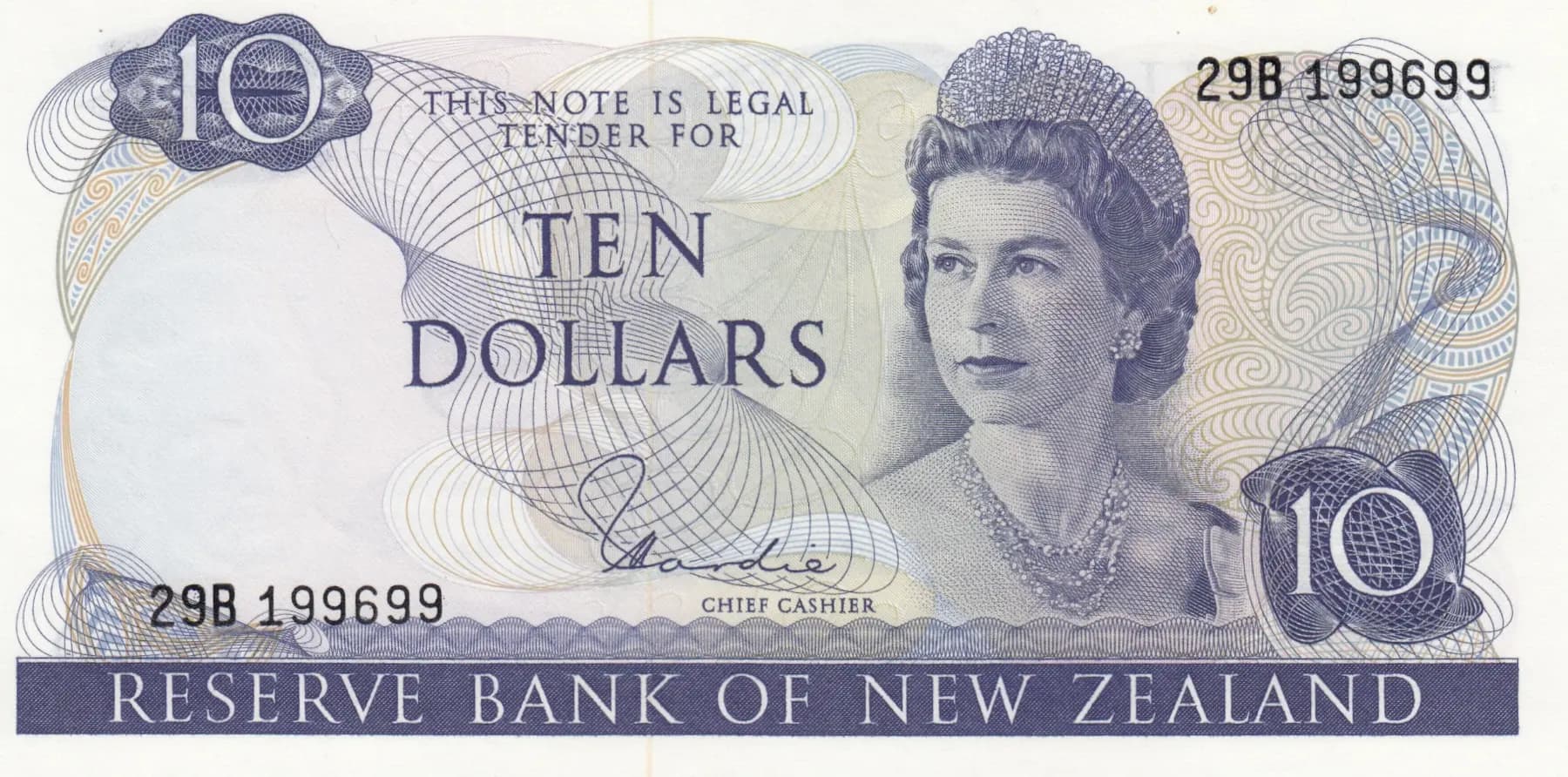
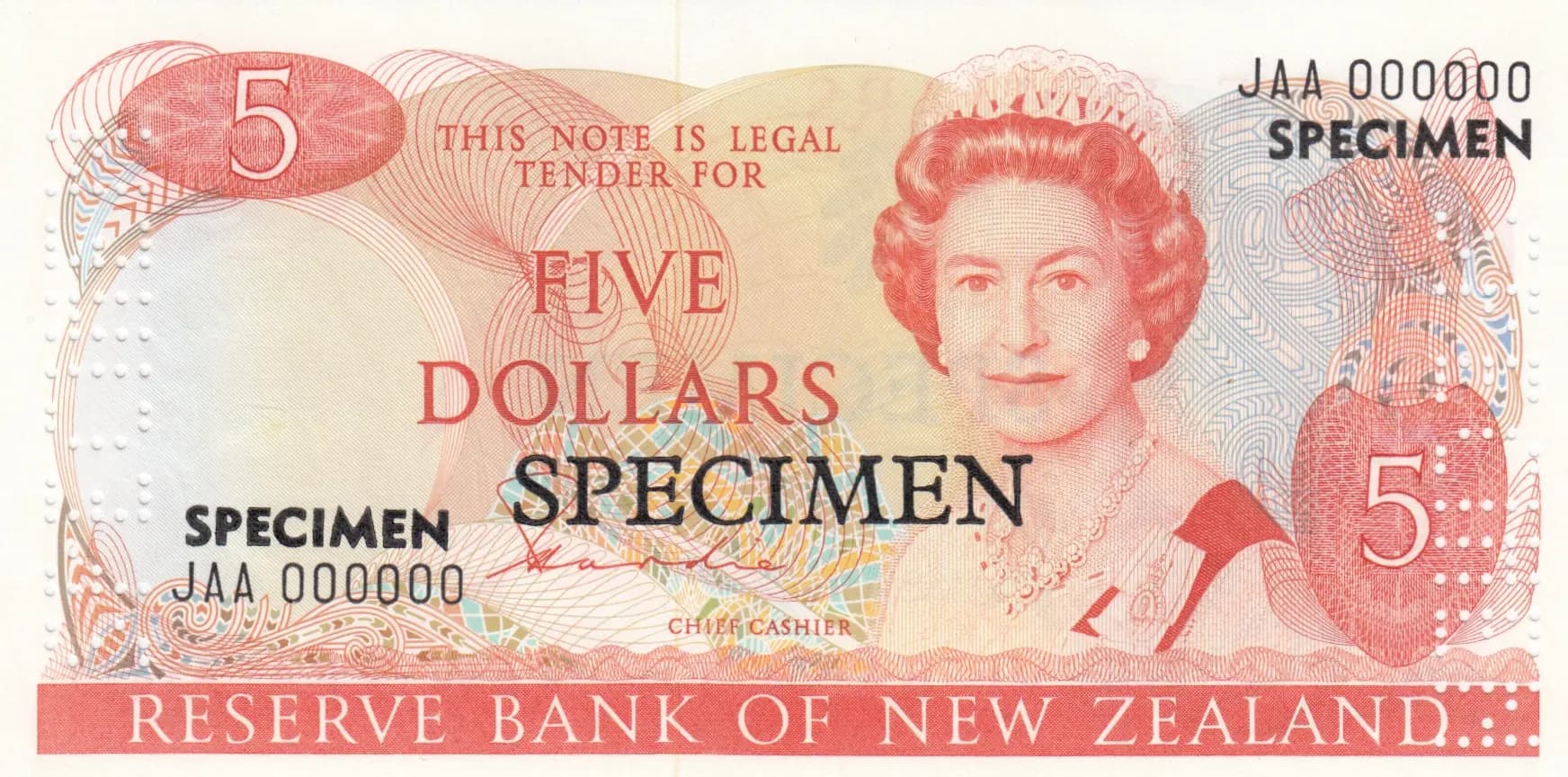
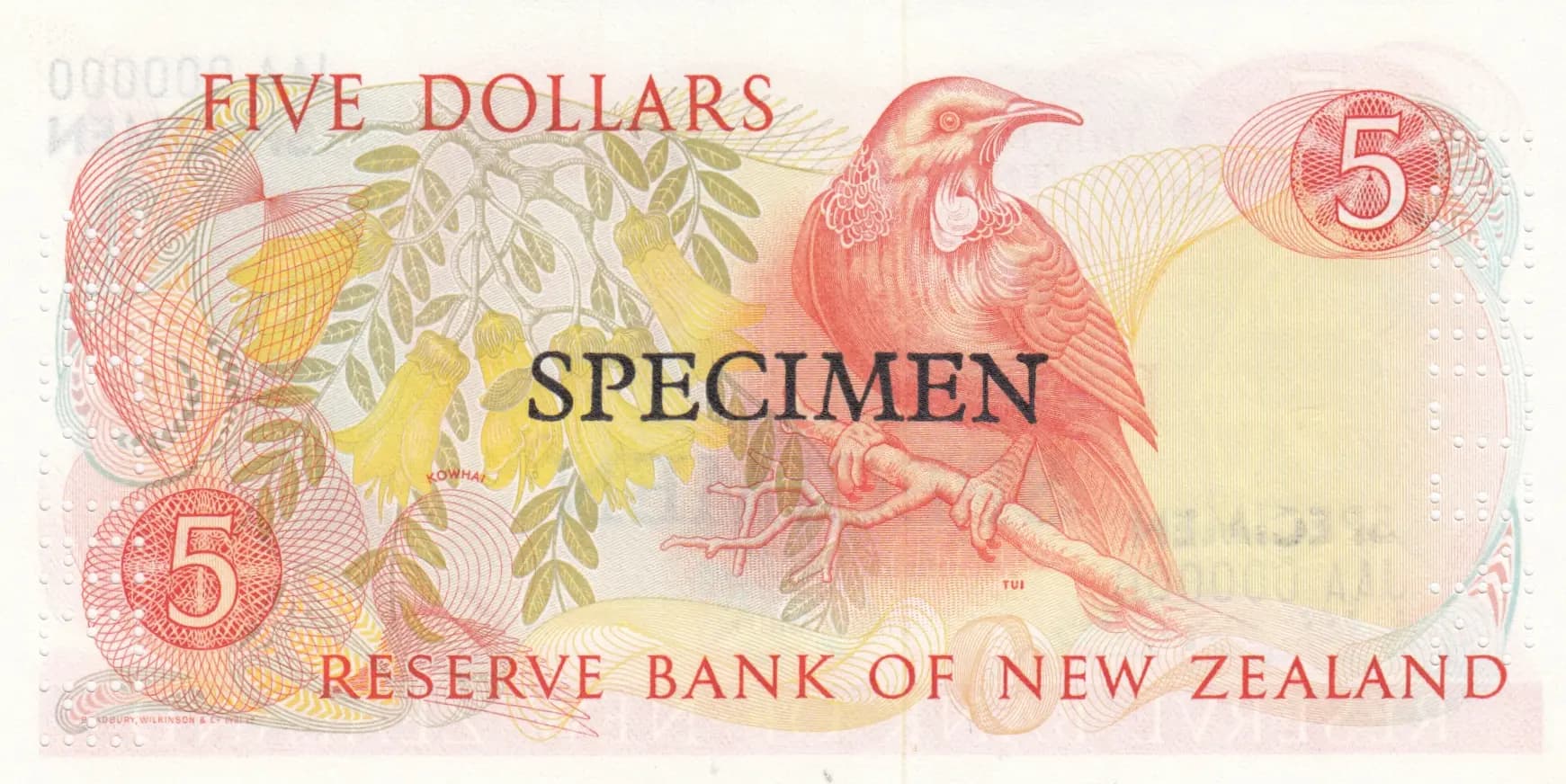
This is a 1981 New Zealand 5 Dollar specimen note from the Reserve Bank of New Zealand, graded in uncirculated condition. The note features a mature portrait of Queen Elizabeth II on the obverse in red/pink tones with ornate geometric security patterns, while the reverse showcases native New Zealand flora and fauna—a Tui bird and Kowhai plant—reflecting the country's natural heritage. As a specimen note with prominent 'SPECIMEN' overprinting and sequential zero serial numbers (JAA 000000), this was produced for demonstration and security testing purposes rather than circulation, making it a notable example of Reserve Bank security printing practices.
Common. This is a specimen note from a standard issue series (1981-1992) produced by a major security printer for distribution to financial institutions. The eBay price tracking data shows specimen and circulated examples regularly selling in the $5-$31 range, with UNC examples averaging around $28-$31 historically. High-grade specimens (PMG 64-66) command $45-$51, but these represent standard appreciation for premium grades rather than scarcity. The series had substantial print runs, and specimen notes were produced in significant quantities for institutional distribution. No evidence of recall, rarity, or limited production run exists for this Pick number.
This 1981 specimen note was issued during a period of New Zealand monetary modernization under the Reserve Bank of New Zealand's leadership. The design choices—featuring Queen Elizabeth II as the reigning monarch and emphasizing native New Zealand species (the Tui bird and Kowhai plant)—reflect the country's cultural identity and Commonwealth ties during the early 1980s. Specimen notes such as this were distributed to banks, government agencies, and security printers worldwide to establish authentication standards and familiarize institutions with the new currency design before the series entered circulation.
The obverse features a portrait of Queen Elizabeth II in her mature years, rendered in red and pink tones and positioned in the center-right of the note. The left side displays a large oval frame containing the numeral '5' with intricate fine-line engraving and cross-hatching. The reverse showcases two native New Zealand species: a detailed engraving of a Tui (a distinctive native honeyeater bird) positioned center-right, and a botanical illustration of the Kowhai plant with characteristic yellow flowers and green foliage on the left side. Both sides feature elaborate geometric borders, decorative scrollwork, and multiple security patterns executed through fine-line printing. Oval denomination frames appear at both top and bottom right of the obverse and corresponding positions on the reverse.
Front side: 'THIS NOTE IS LEGAL TENDER FOR FIVE DOLLARS' (legal declaration); 'SPECIMEN' (overprinted twice, indicating demonstration use); 'JAA 000000' (specimen serial number format); 'CHIEF CASHIER' (signature line); 'RESERVE BANK OF NEW ZEALAND' (issuing authority). Back side: 'FIVE DOLLARS' (denomination); 'SPECIMEN' (overprinted across center); '5' (denomination numerals in oval frames); 'TUI' (identification of native bird illustrated); 'KOWHAI' (identification of native plant illustrated); 'RESERVE BANK OF NEW ZEALAND' (issuing authority).
This note was produced using traditional intaglio (engraved) printing by Bradbury Wilkinson & Company (BWC), New Malden, a renowned security printer. The visual analysis confirms characteristic intaglio elements: elaborate geometric line patterns, fine cross-hatching, intricate oval frames with detailed scrollwork, and the precise execution of portrait and botanical engravings. The specimen overprinting was applied as a secondary security measure. The watermark (Captain James Cook) was incorporated during the paper manufacturing process, and the note exhibits the crisp detail and tactile quality distinctive of professional security printing from this era.
This note is specifically identified as Pick P-171s, the specimen variety of the 1981 New Zealand 5 Dollar series. The PMG population report indicates three variants exist under the base P-171 Pick number (P-171a, P-171b, P-171c), all printed by BWC. This specimen exhibits the characteristic features of the series: serial number prefix 'JAA' with specimen zero values (JAA 000000), dual 'SPECIMEN' overprints, and the standard Chief Cashier signature line. The note represents the Bradbury Wilkinson printing variant confirmed through catalogue references and printer marking 'BWC' visible on the note.