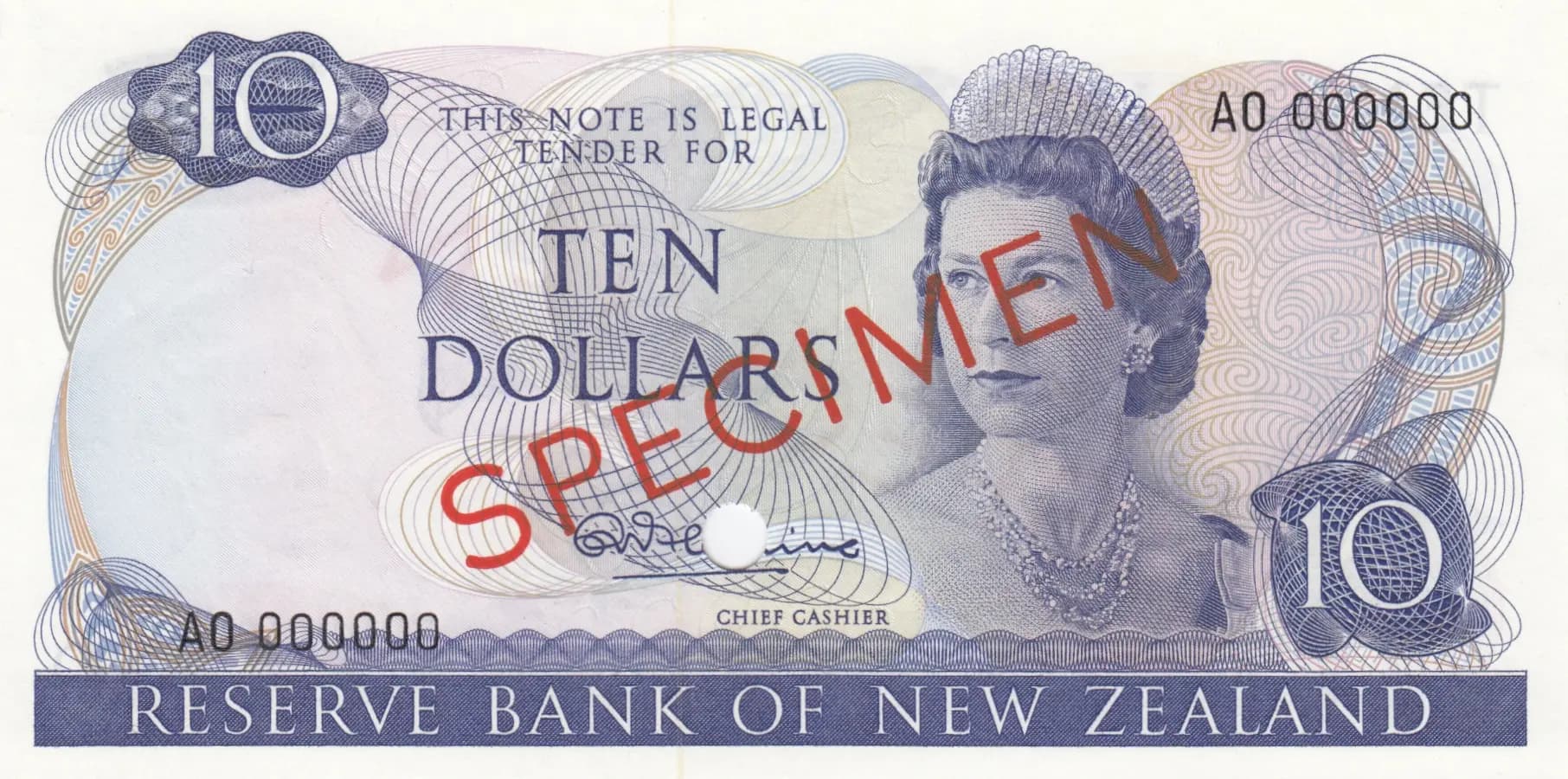
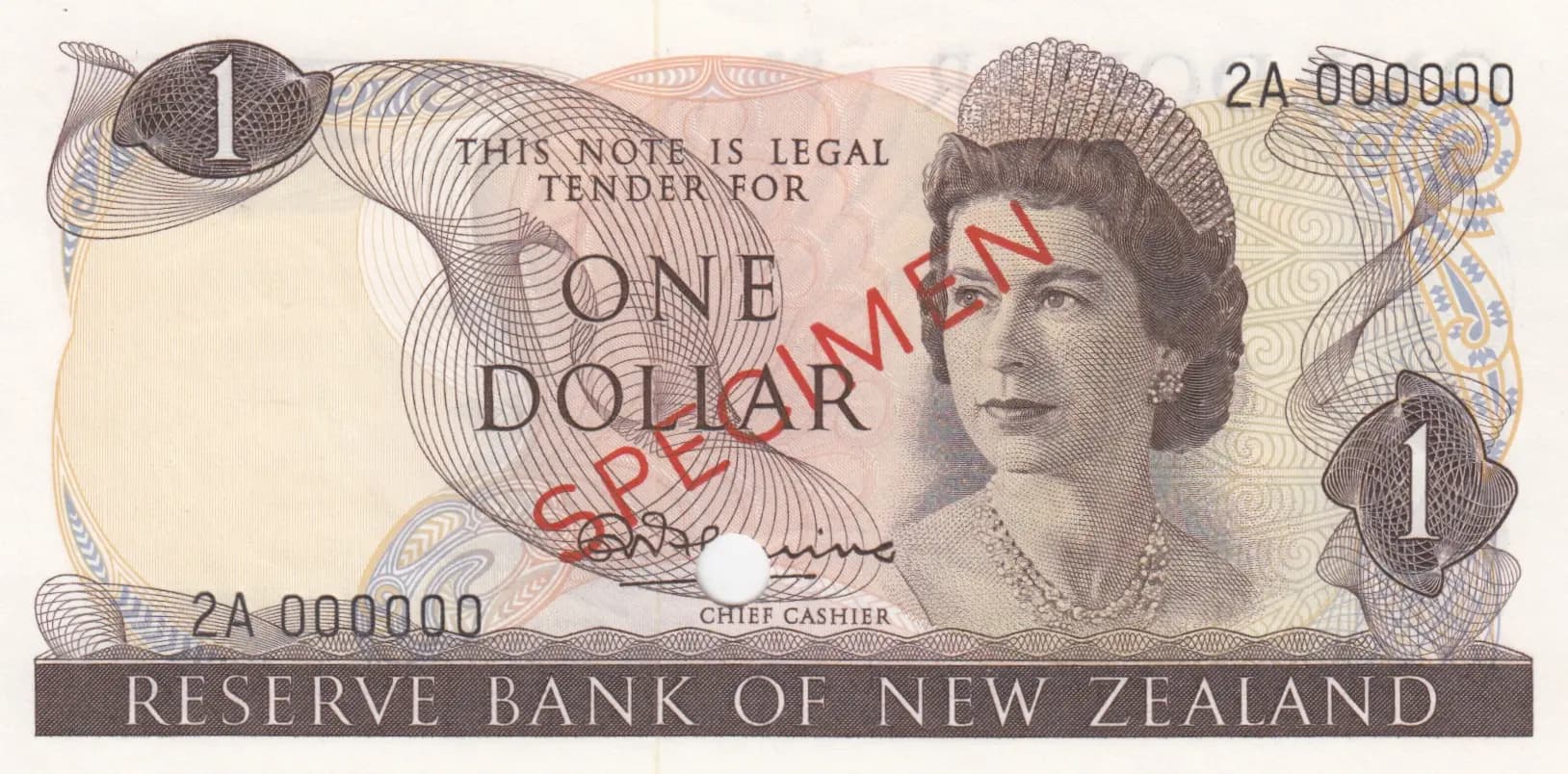
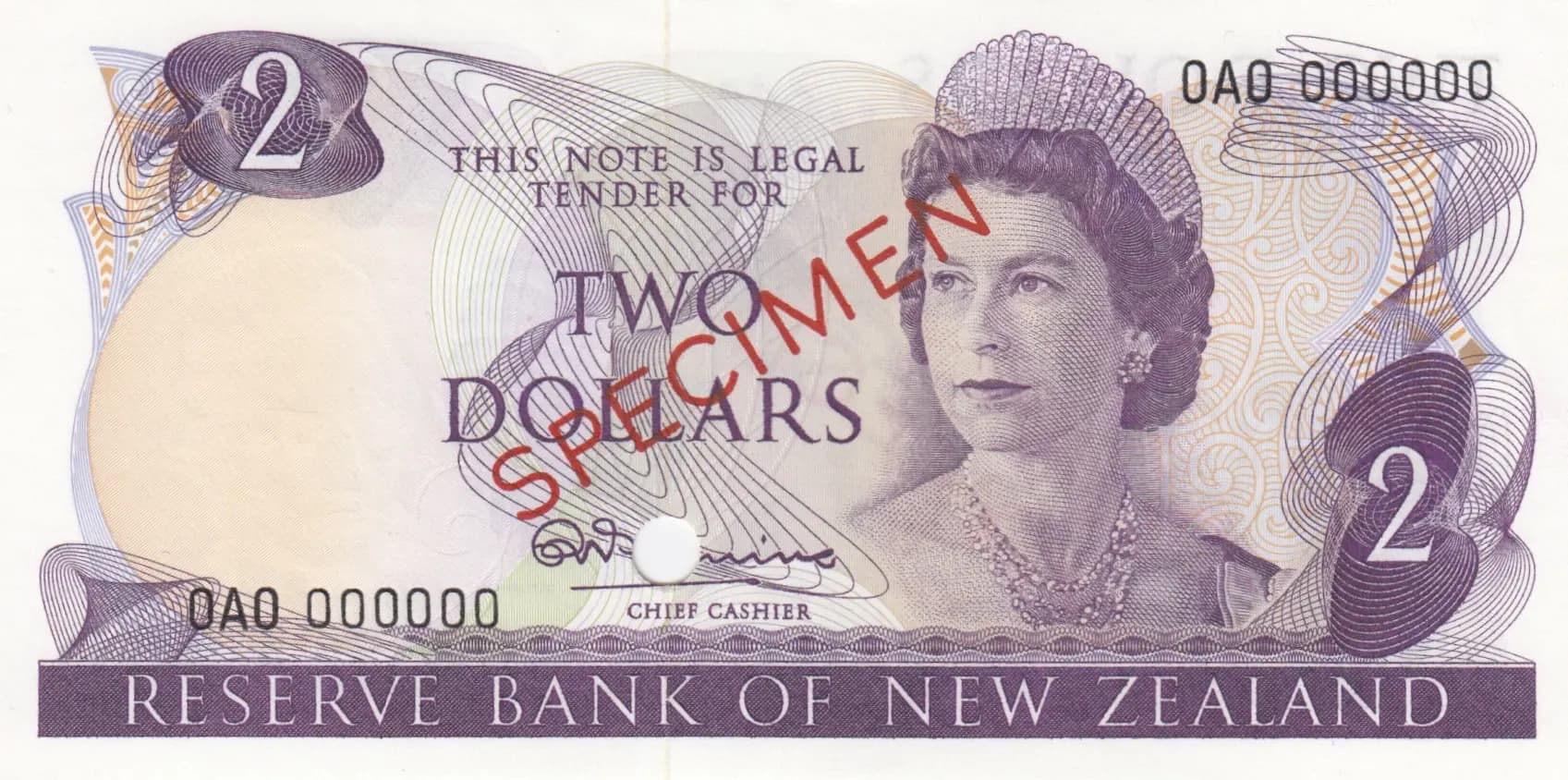
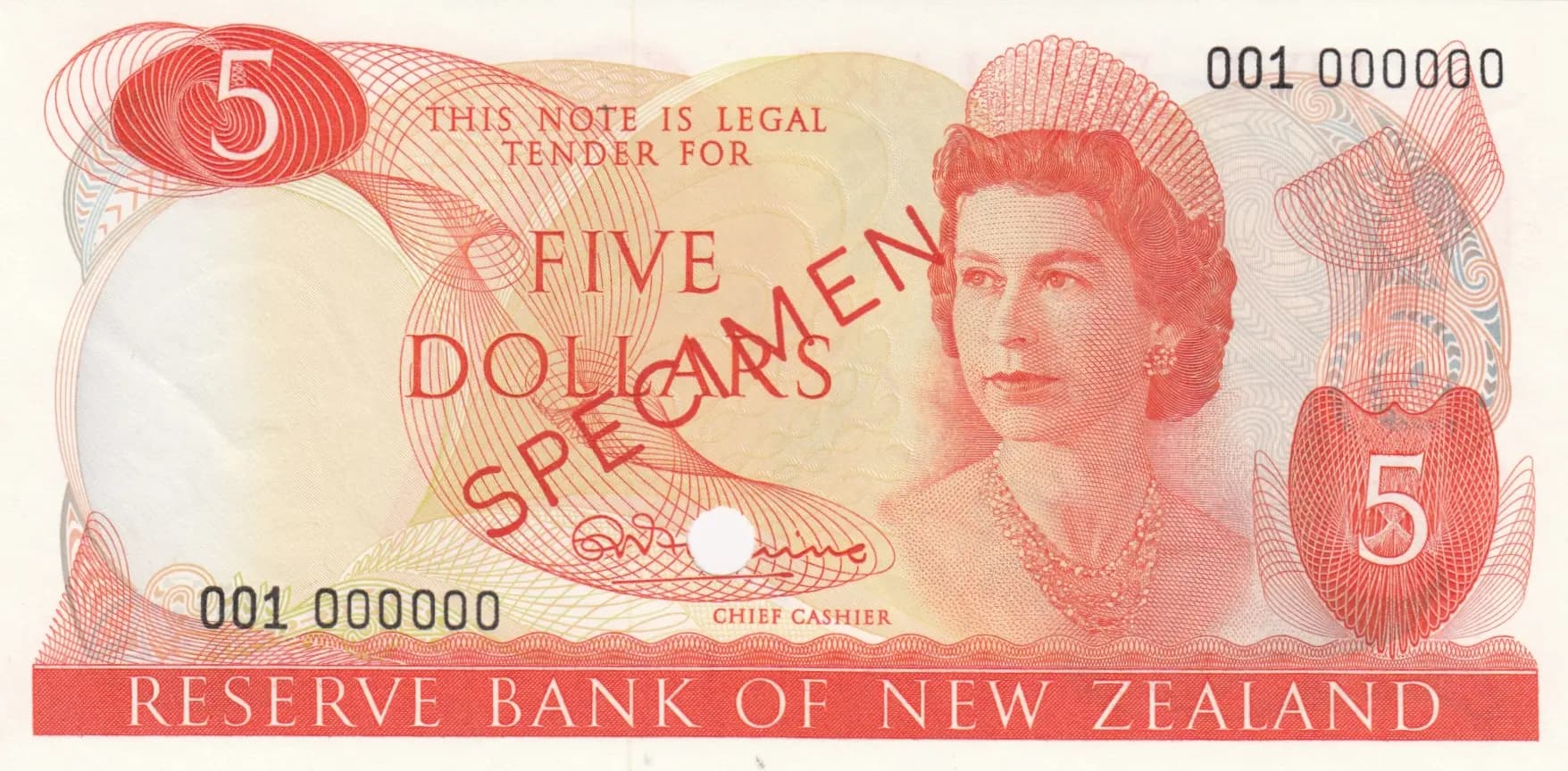
10 dollars 1977
Market Prices
10 salesAbout This Note
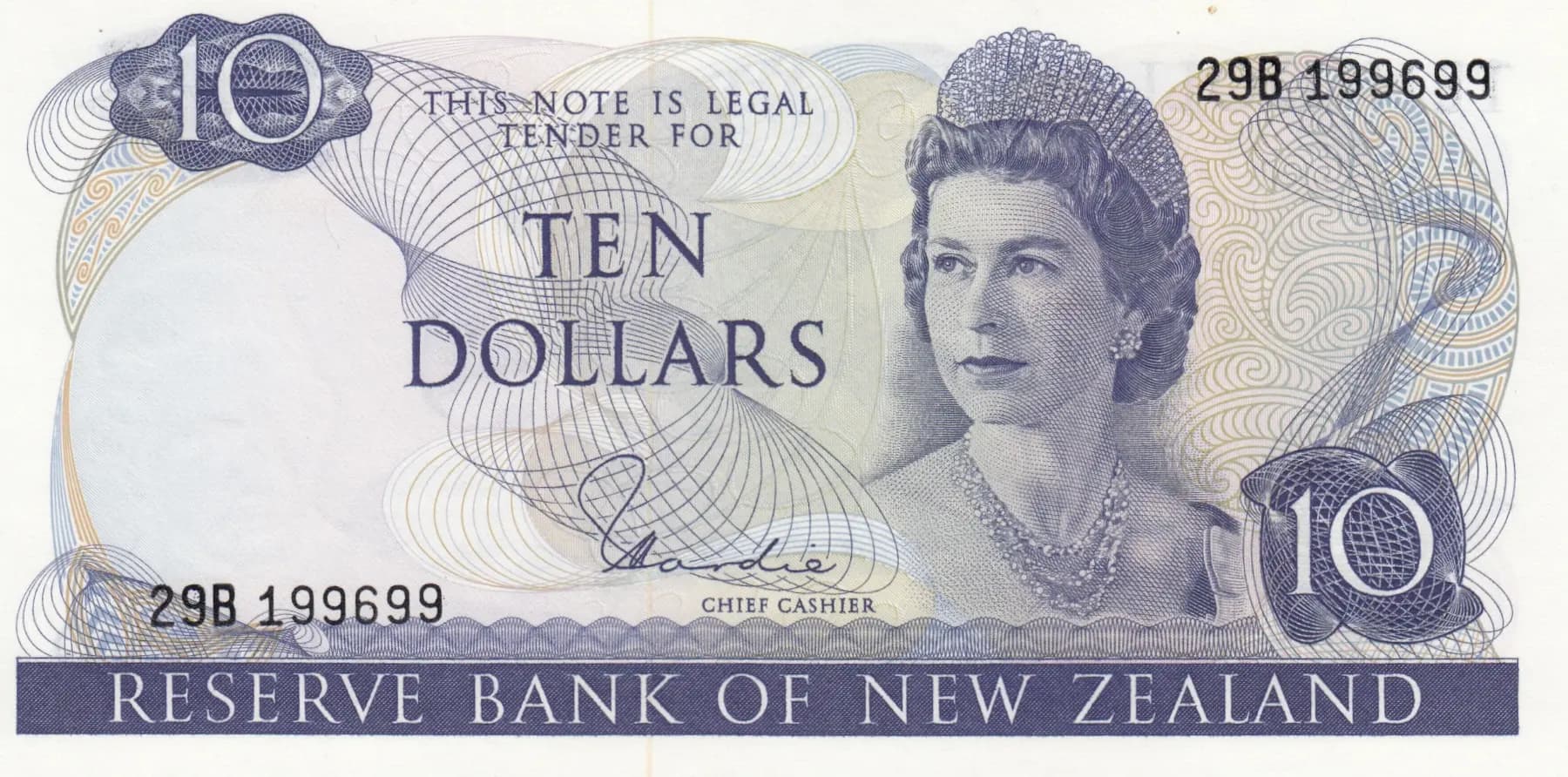
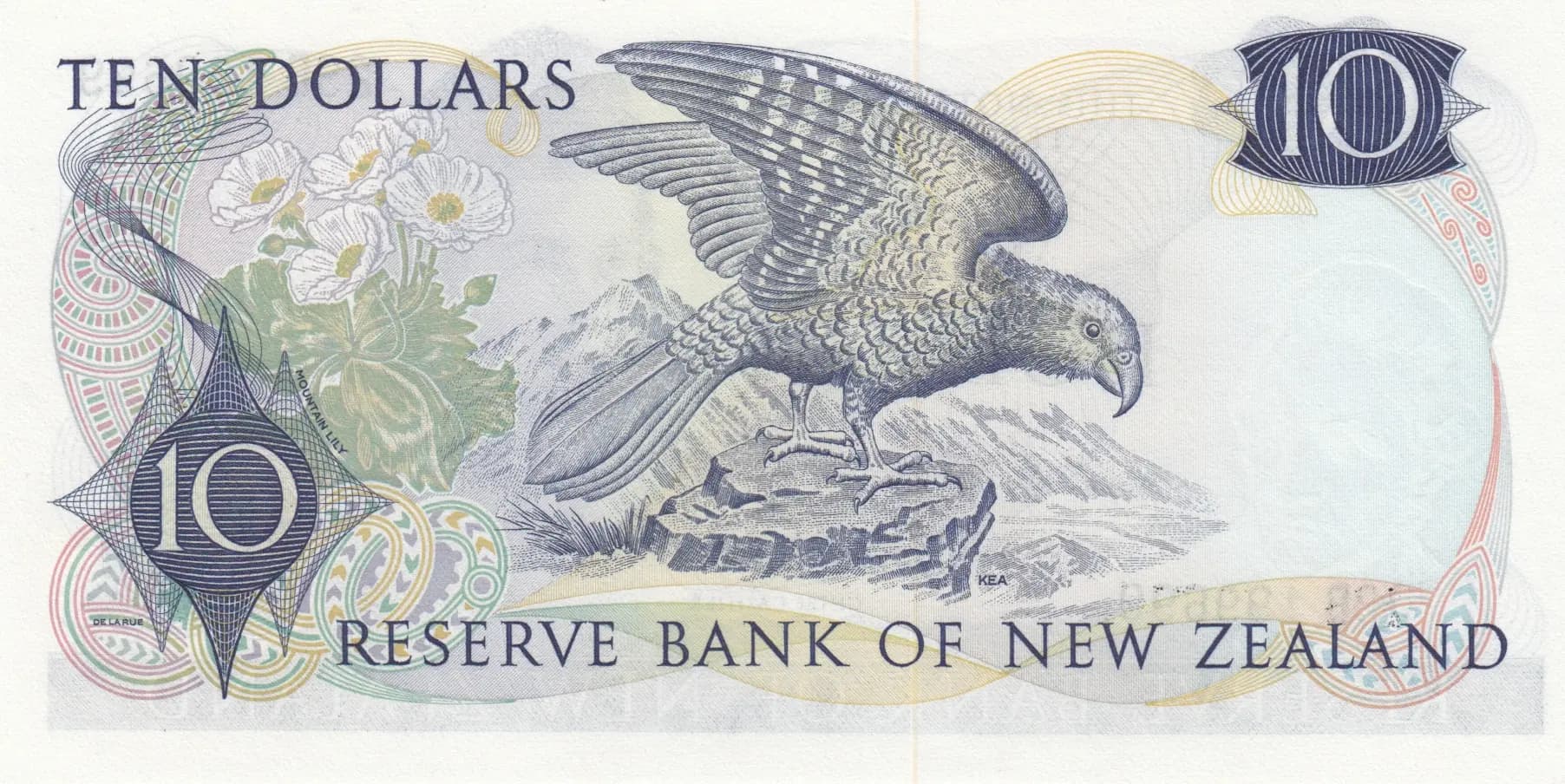
This is an exceptional uncirculated example of the 1977 New Zealand $10 note (Pick-166d), featuring Queen Elizabeth II in profile on the obverse and a beautifully detailed native kea bird on the reverse. The note displays pristine condition with sharp impressions, complex guilloche patterns in blue, gold, and cream tones, and exhibits no wear, creases, or handling marks. With recent eBay sales of similar UNC examples commanding $100-$114.50, this represents a desirable mid-range Commonwealth banknote from the De la Rue printing era.
Common. The 1977 New Zealand $10 note is a regular-issue banknote from a major Commonwealth central bank with substantial print runs. eBay market data shows consistent sales in the $15-$25 range for circulated examples (VF-EF) and $100-$115 for uncirculated specimens, indicating healthy supply in the secondary market. The Pick-166d variant is one of several documented varieties for this base denomination, but none are cataloged as rare or limited. This note remains easily obtainable for collectors at modest premiums over face value.
Issued during the reign of Queen Elizabeth II (1977), this note represents New Zealand's currency during a period of economic development and national identity consolidation. The reverse imagery of the kea—a native New Zealand alpine parrot—reflects the nation's emphasis on indigenous natural heritage and conservation, while the watermark featuring Captain James Cook honors the European explorer's pivotal role in New Zealand's colonial history and geographical mapping.
The obverse presents Queen Elizabeth II in formal profile facing left, adorned with a pearl necklace, positioned on the right side of the note against a cream background. Ornamental circular emblems containing the numeral '10' flank the portrait, with intricate rosette and geometric patterns providing security details throughout. The reverse features a detailed engraving of the native kea (Nestor notabilis), an alpine parrot endemic to New Zealand, depicted in profile facing left with meticulously rendered feather work. The kea is positioned in its natural habitat with rocky terrain and mountain ranges in the background, accompanied by white flowers (likely alpine varieties) and decorative geometric patterns on the left side. The color palette combines cream, blue-grey, green, pink/red accents, and gold throughout both sides.
Front side: 'THIS NOTE IS LEGAL TENDER FOR TEN DOLLARS' | 'RESERVE BANK OF NEW ZEALAND' | 'CHIEF CASHIER' [signature area] | Serial number: '29B 199699' (appears top right and bottom left). Back side: 'TEN DOLLARS' | 'RESERVE BANK OF NEW ZEALAND' | 'KEA' [artist signature identifying the bird species] | 'DE LA RUE' [printer identification, visible in design elements].
Intaglio engraving (banknote gravure), executed by De la Rue of London. The note exhibits characteristic features of high-security banknote production: complex fine-line guilloche patterns, multi-color intaglio printing, intricate portrait and landscape engraving with exceptional detail definition, and layered security features in the ornamental design elements. The sharp impressions and fine detail visible throughout are consistent with professional intaglio production standards of the 1970s-1980s era.
Identified as Pick-166d per catalog data. PMG records indicate six documented varieties (P-166a through P-166d, plus P-166d* and P-166s), all printed by TDLR (De la Rue). The serial number visible on this example ('29B 199699') suggests mid-to-later issue production. No date appears on the note (ND designation in catalogs reflects the 1967-1981 issue period). Without direct access to signature varieties or printer mark variations, the specific identifying characteristics placing this in the -166d category rather than -166a/b/c variants cannot be definitively articulated from visual inspection alone, though such distinctions typically involve signature blocks or subtle design element changes across the series.