5 dollars 1967 specimen
Market Prices
4 salesAbout This Note
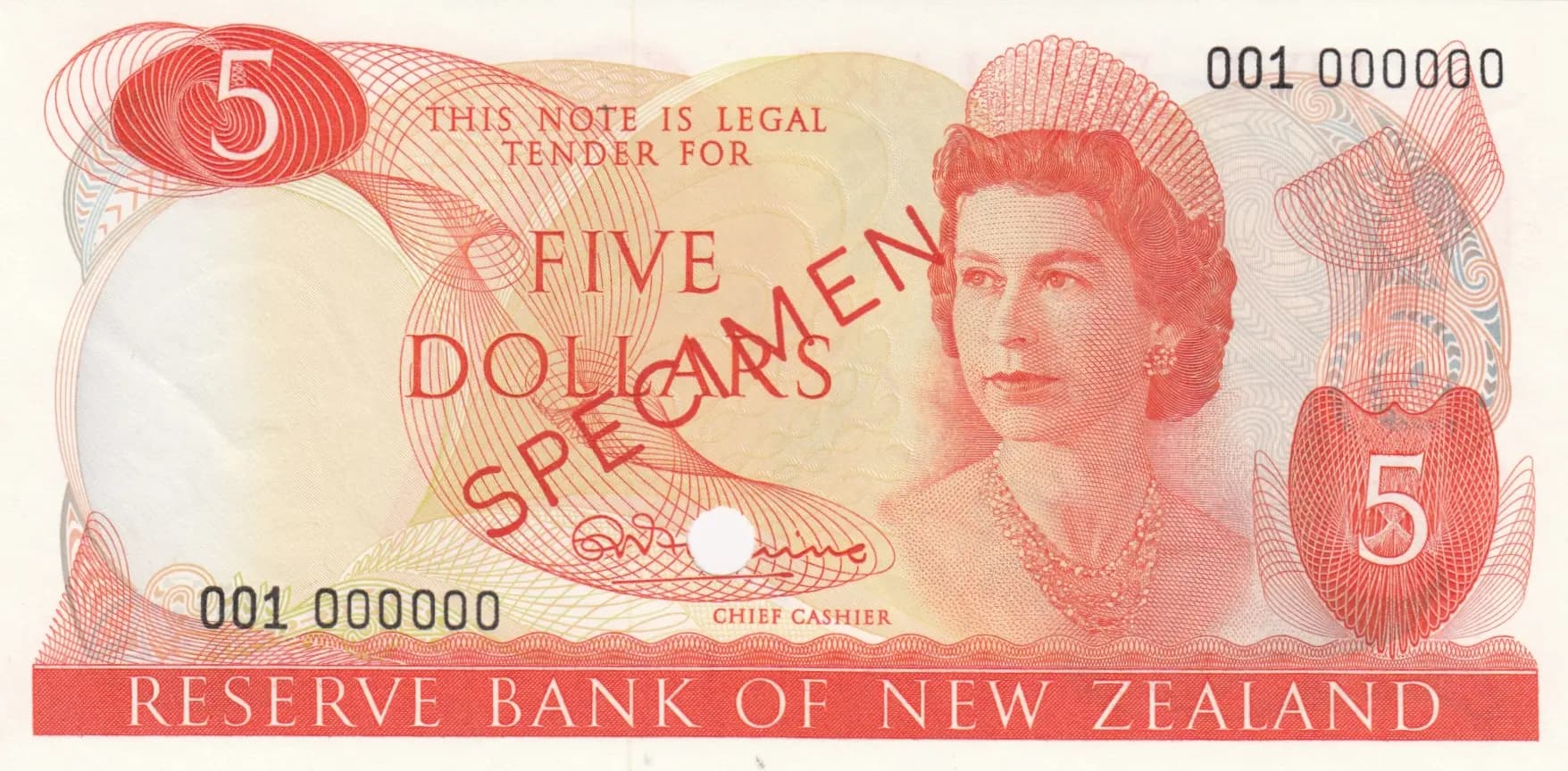
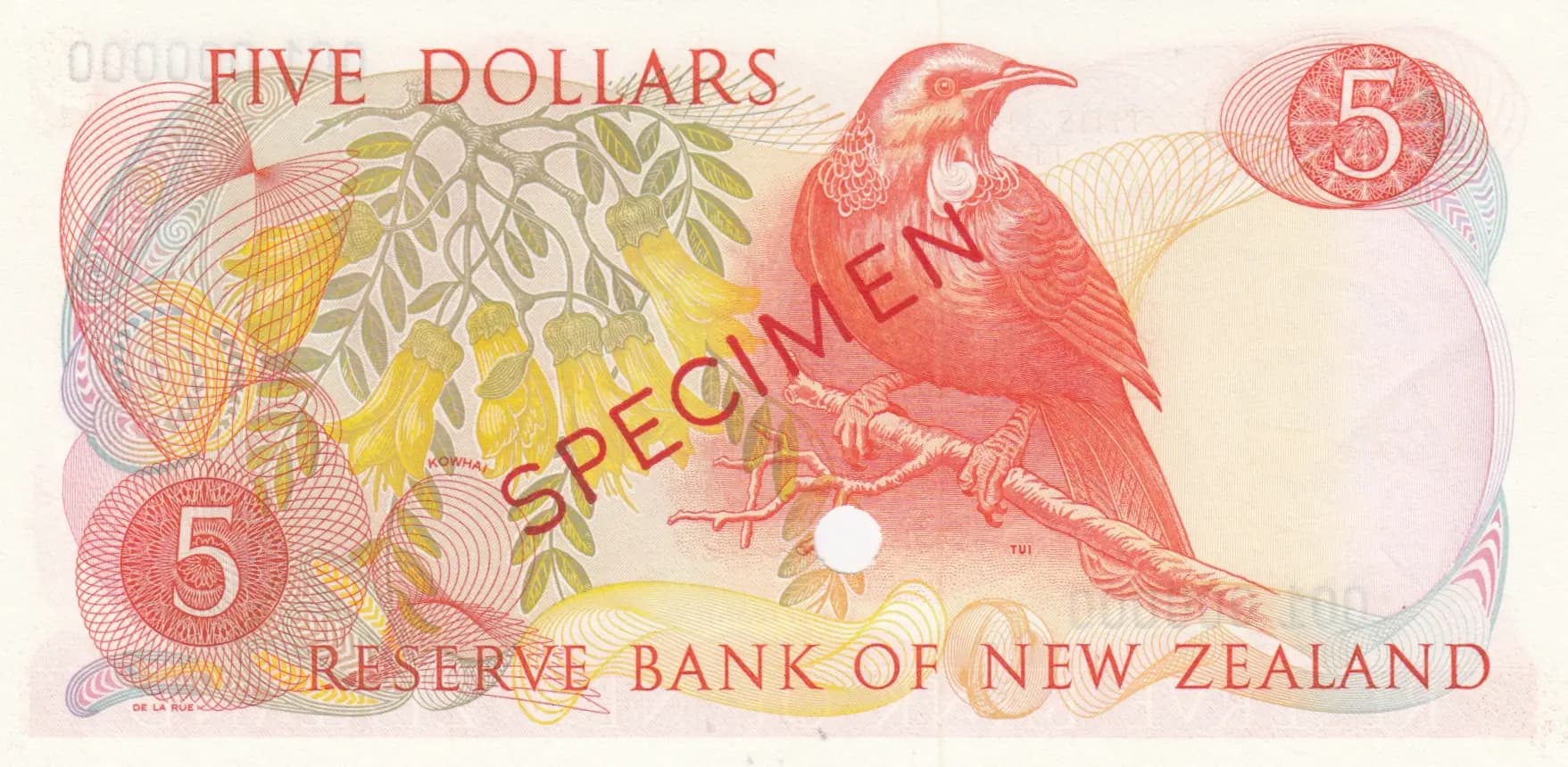
This is a 1967 New Zealand Five Dollar specimen note issued by the Reserve Bank of New Zealand and printed by De la Rue, London. The note is in uncirculated condition with vibrant red, cream, and multicolor printing throughout, featuring Queen Elizabeth II on the obverse and a native Tui bird with flowering vines on the reverse. As a specimen note with the diagonal 'SPECIMEN' overprint and serial number 001 000000, this piece represents an important part of New Zealand's currency history and is particularly desirable to collectors of Commonwealth currency and specimen notes.
Common. While this is a specimen note (which commands a premium over regular circulation issues), specimen notes from major Commonwealth currency authorities like the Reserve Bank of New Zealand were typically produced in sufficient quantities for distribution to banks and collectors. eBay transaction data shows UNC examples selling in the $200-$490 range, consistent with common specimen notes rather than rare pieces. The 1967-1981 series had extended circulation, further supporting a common classification.
This note was issued during the latter period of Queen Elizabeth II's reign as New Zealand's monarch, reflecting the country's continued ties to the British Commonwealth in 1967. The prominent depiction of the Tui, a native New Zealand bird, on the reverse exemplifies the Reserve Bank's effort to incorporate indigenous cultural and natural symbols into its currency design, replacing earlier British-centric imagery. The De la Rue printing company, historically the security printer for British Commonwealth currencies, produced this note using advanced intaglio techniques characteristic of the era's banknote security standards.
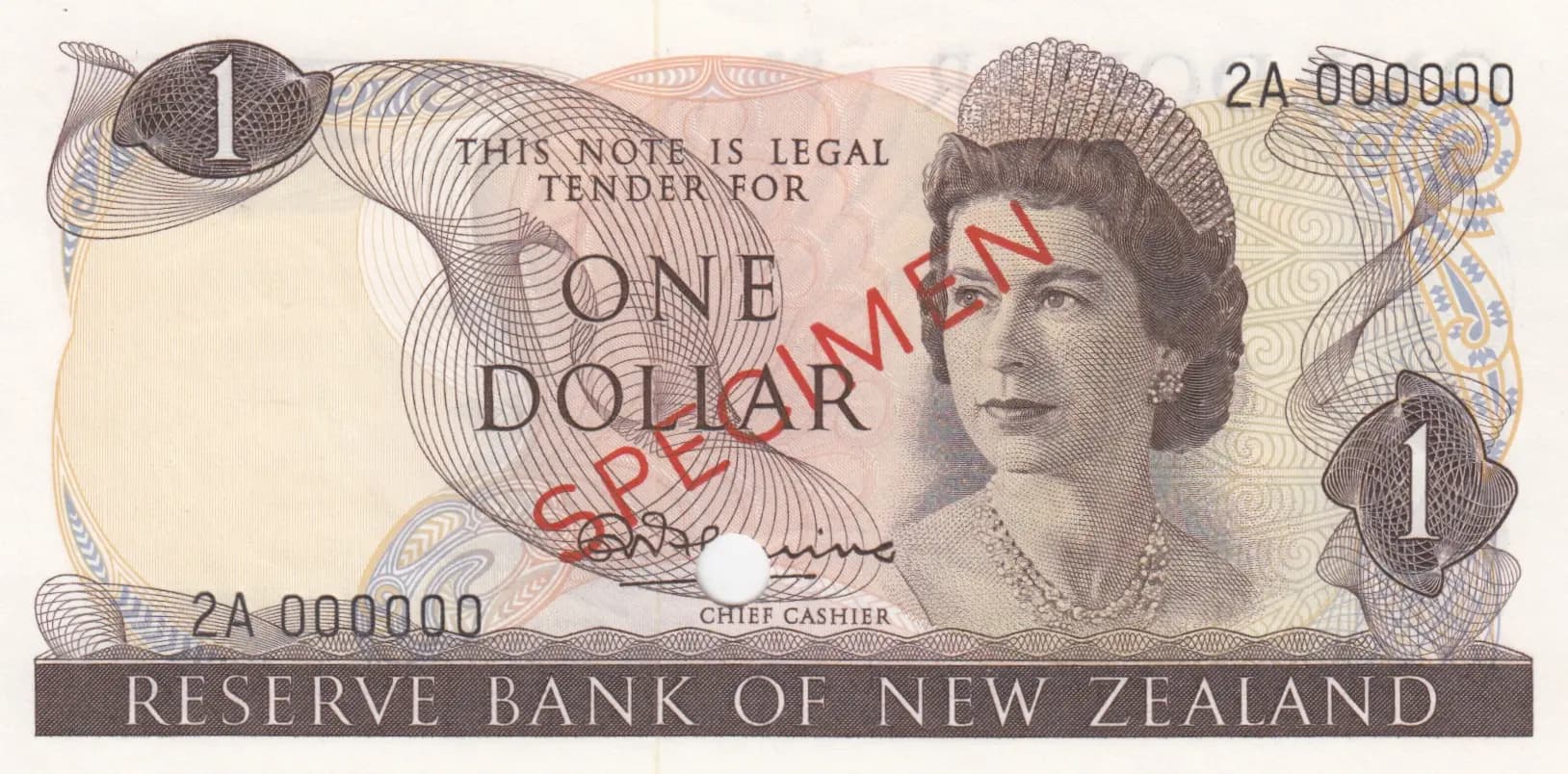
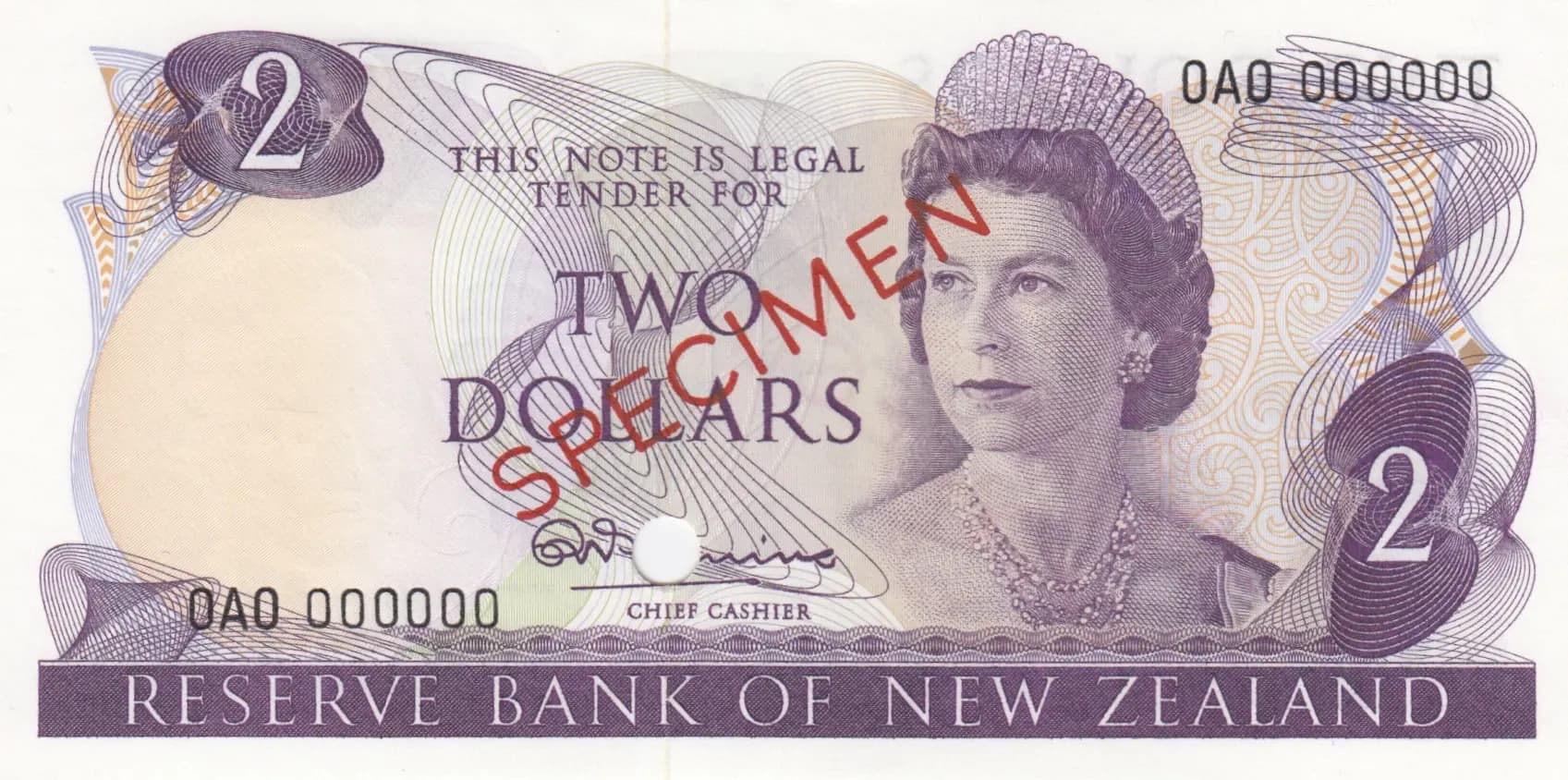
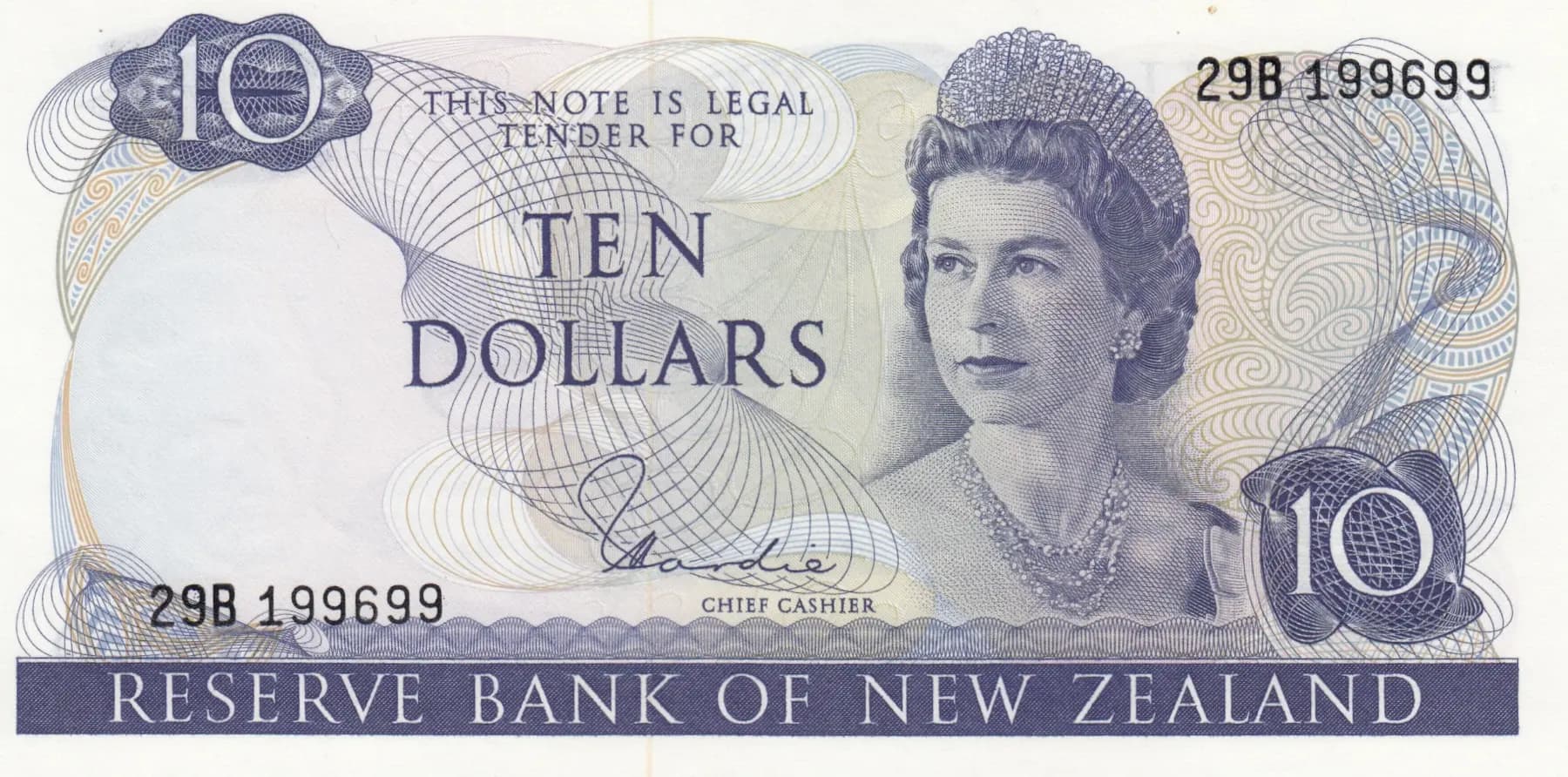
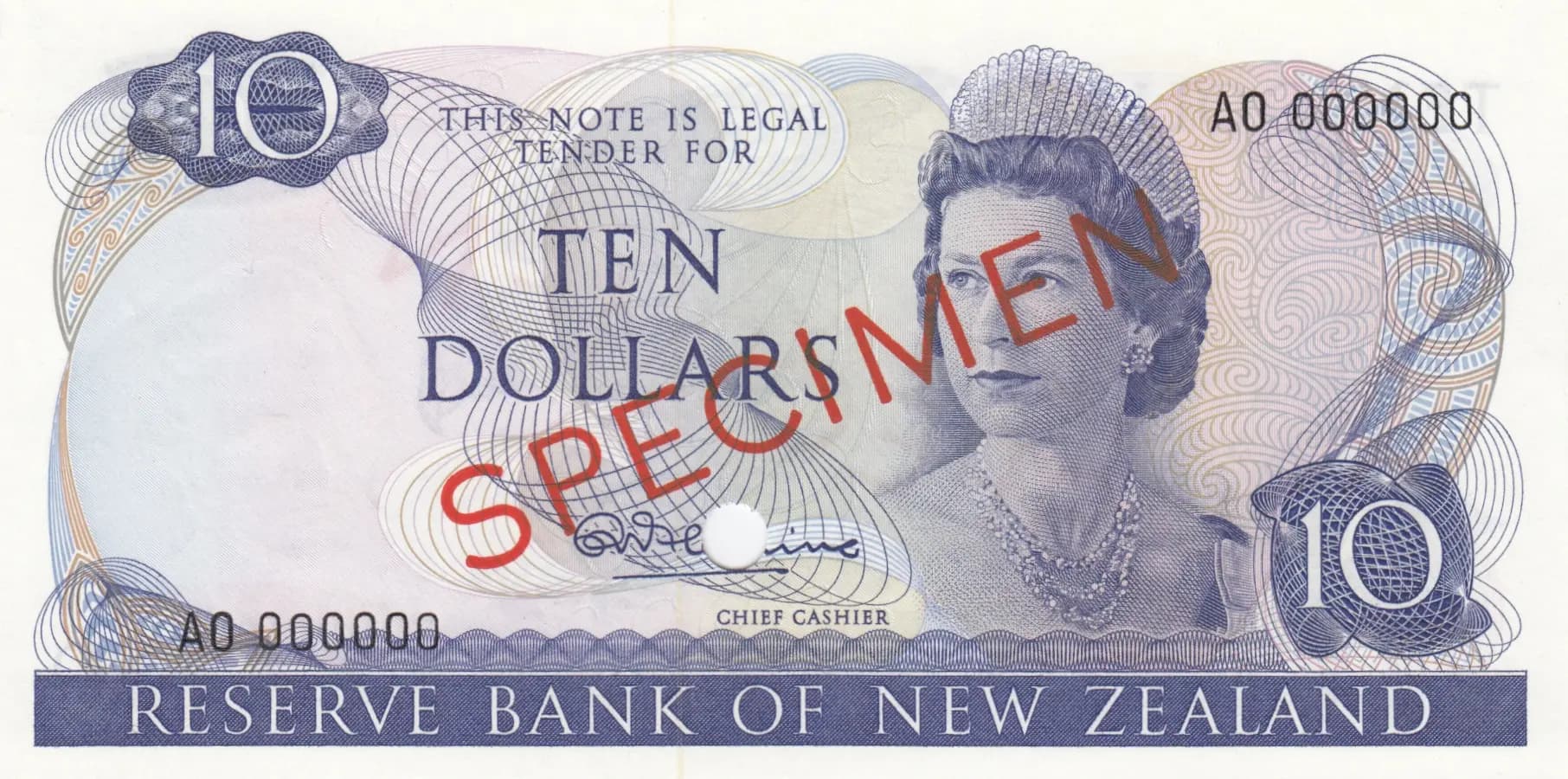
The obverse features a right-facing portrait of Queen Elizabeth II positioned center-right, depicted in formal attire with earrings, rendered in the classical intaglio style characteristic of Commonwealth currency. The denomination '5' appears in two ornate oval decorative frames positioned at top left and bottom right corners. Extensive guilloche patterns and fine-line security work fill the background in red and cream tones. The reverse showcases a naturalistic illustration of the Tui (Prosthemadera novaeseelandiae), a native New Zealand honeyeater bird, depicted in red and perched on a flowering branch with yellow blossoms and green foliage, representing the country's unique flora and fauna. Both sides incorporate white circular security elements and complex linework throughout.
Front side: '5' (numeral designation), 'THIS NOTE IS LEGAL TENDER FOR', 'FIVE DOLLARS', 'SPECIMEN', 'CHIEF CASHIER', 'RESERVE BANK OF NEW ZEALAND', '001 000000' (specimen serial number). Back side: 'FIVE DOLLARS', 'SPECIMEN', '5' (numeral in circular frames), 'RESERVE BANK OF NEW ZEALAND', 'DE LA RUE' (printer attribution), 'KOINHAT' (likely plant/botanical identification), 'TUI' (bird species identification).
Intaglio (copperplate engraving) printing combined with multicolor offset lithography, standard for De la Rue's Commonwealth banknote production in this period. The extensive guilloche patterns, fine-line security printing, and sharp portrait definition are characteristic of high-security intaglio work. Security features including the watermark area (Captain James Cook) and complex background patterns reflect the advanced anti-counterfeiting technology employed by De la Rue for this issue.
This note is cataloged as Pick P-165s, the specimen variety of the 1967 Five Dollar issue. The 's' designation indicates specimen status, confirmed by the prominent diagonal 'SPECIMEN' overprint visible on both obverse and reverse, and the specimen serial number '001 000000'. PMG records indicate five variants exist for this base Pick number (P-165a, P-165b, P-165d, P-165d*, and P-165s), with all variants produced by TDLR (De la Rue, London). The specimen variety (P-165s) represents the security printer's presentation note rather than notes intended for circulation.