2 dollars 1967 specimen
Market Prices
5 salesAbout This Note
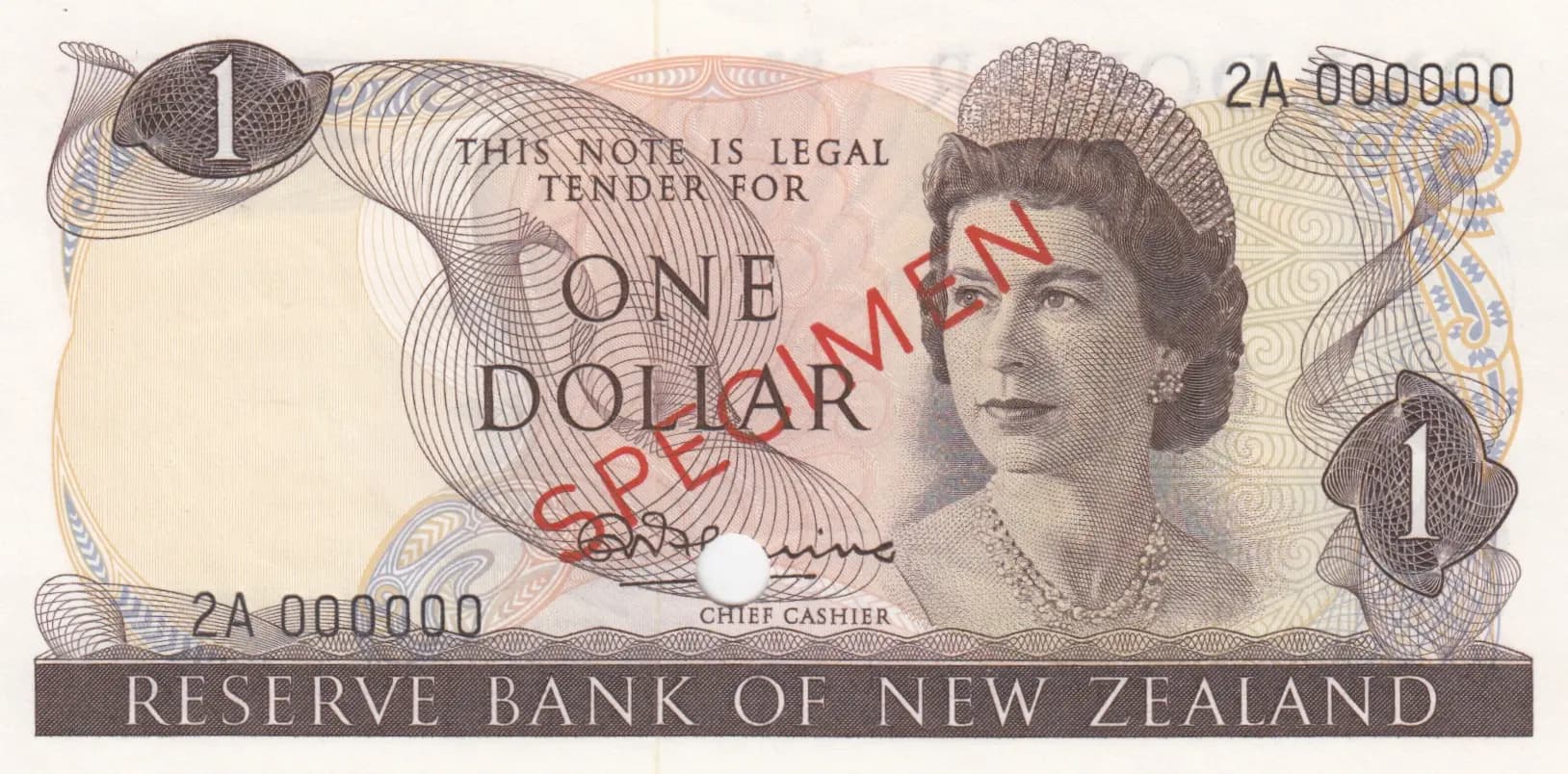
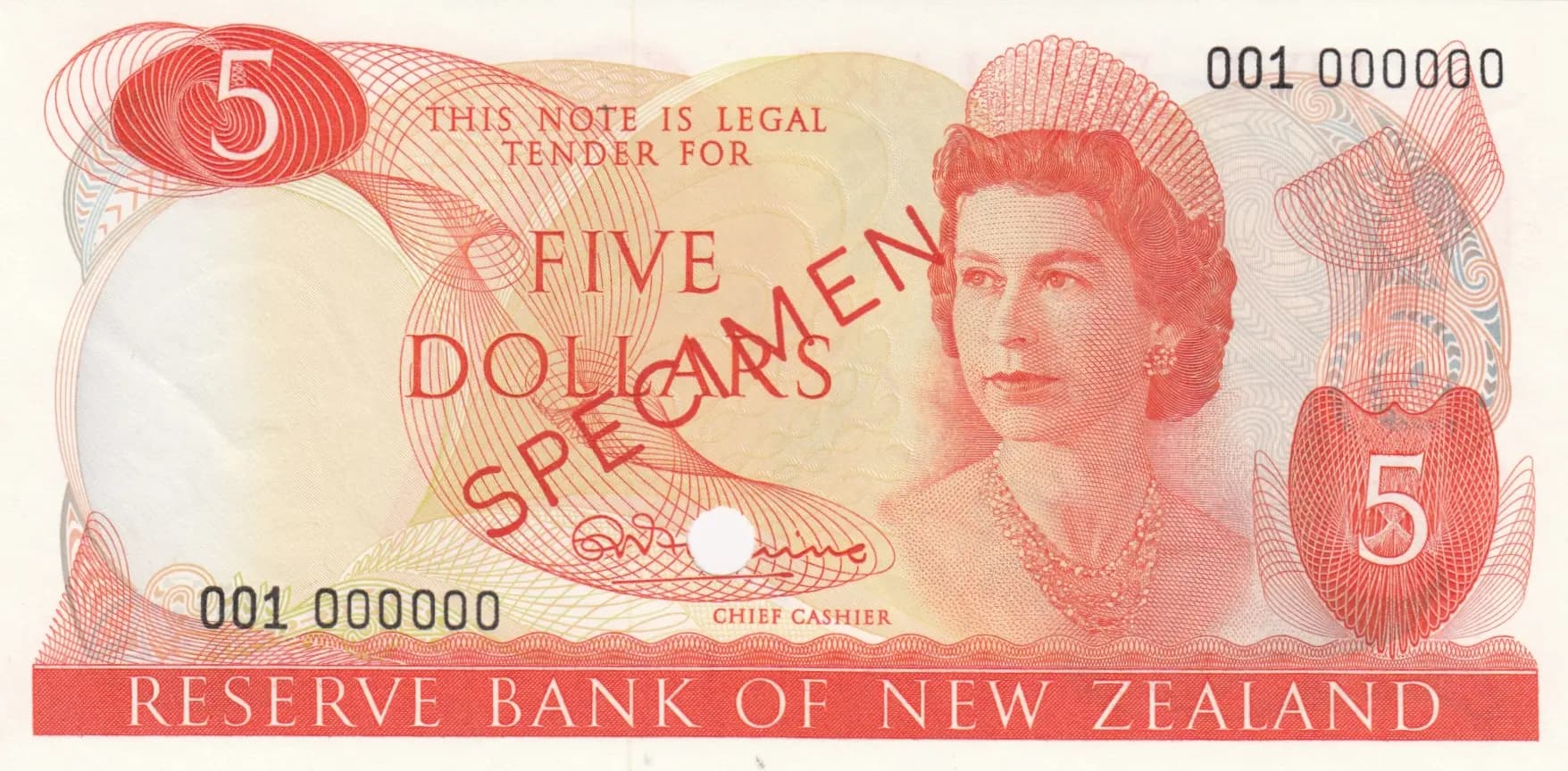
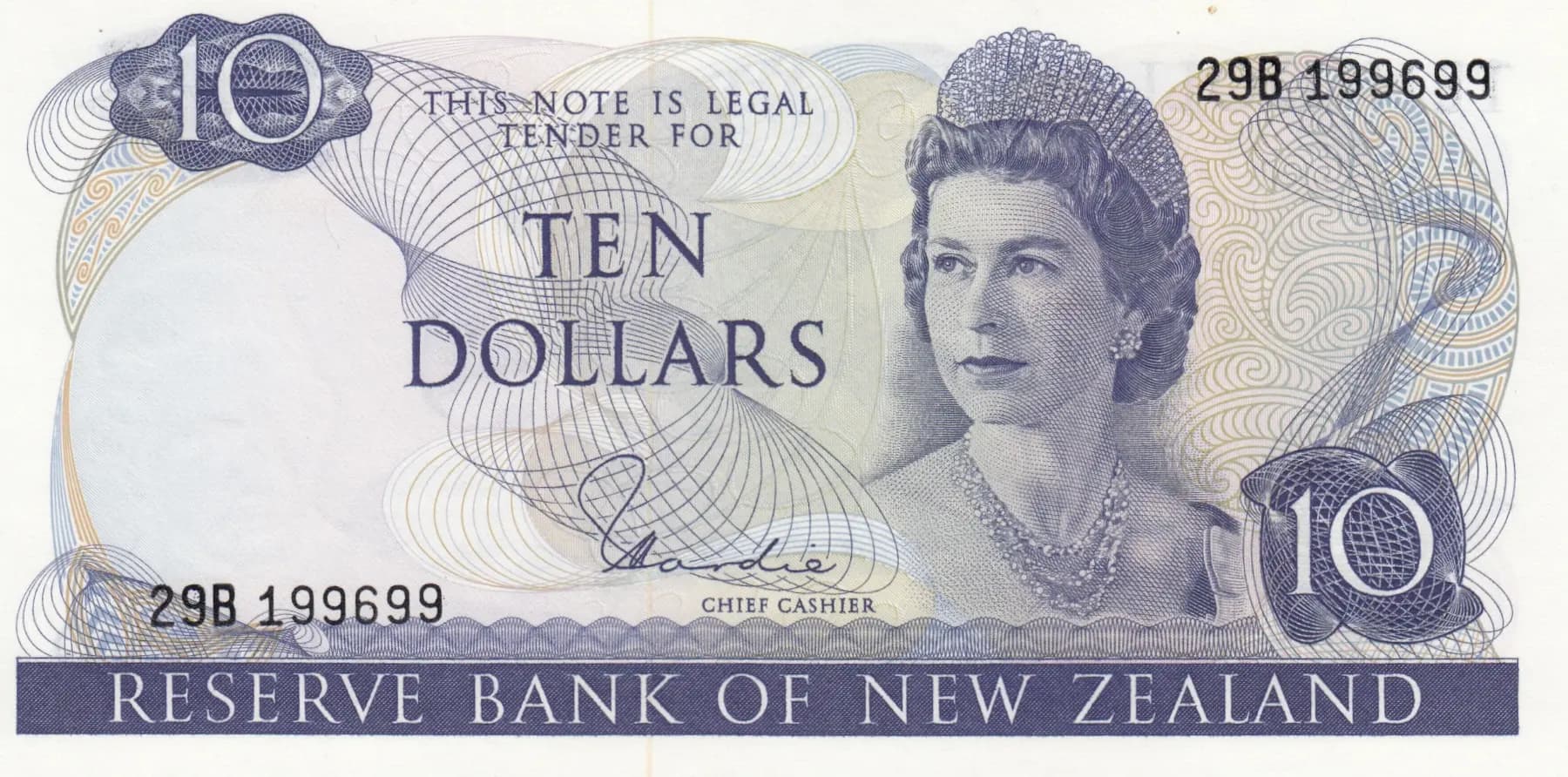
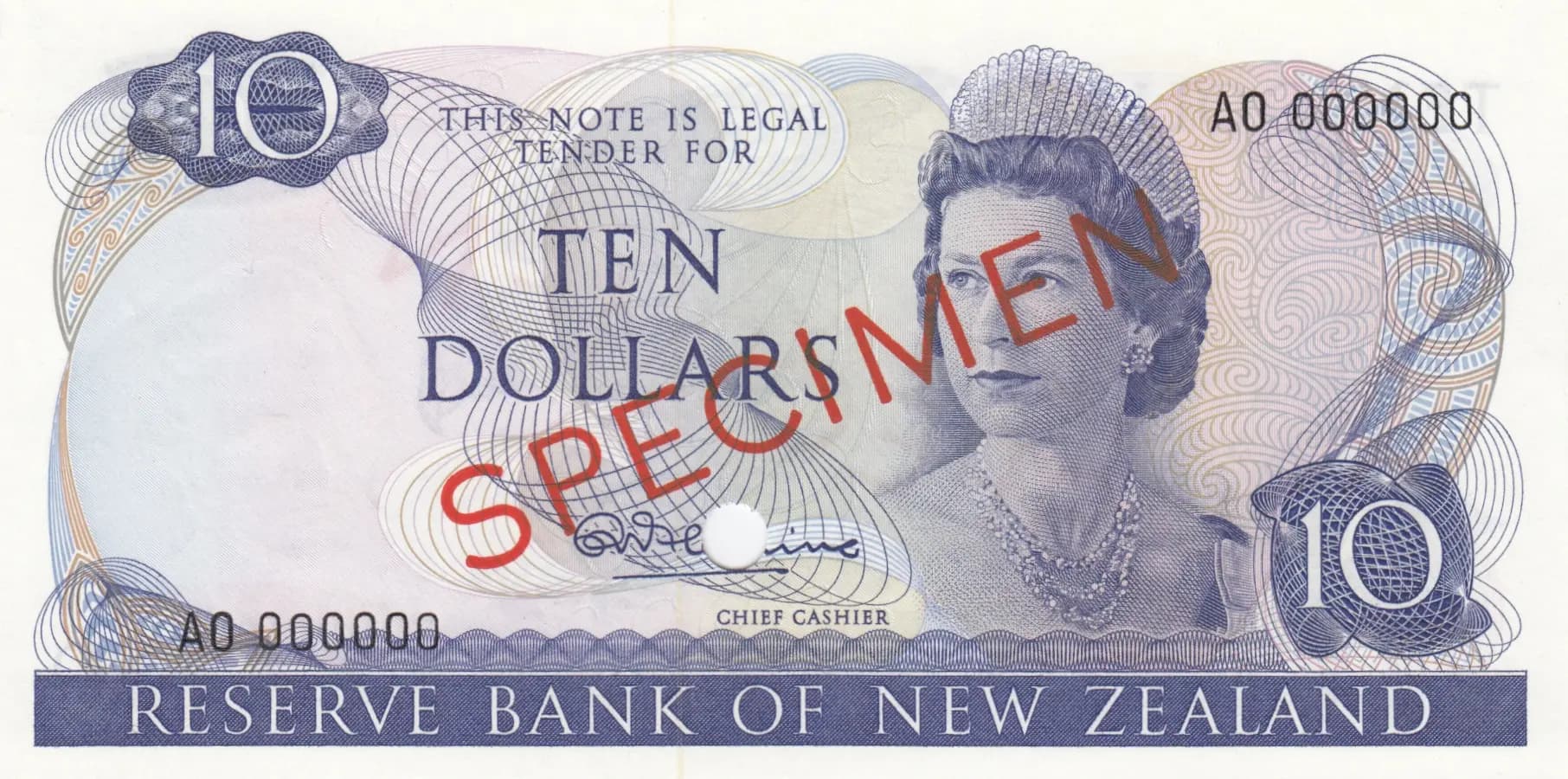
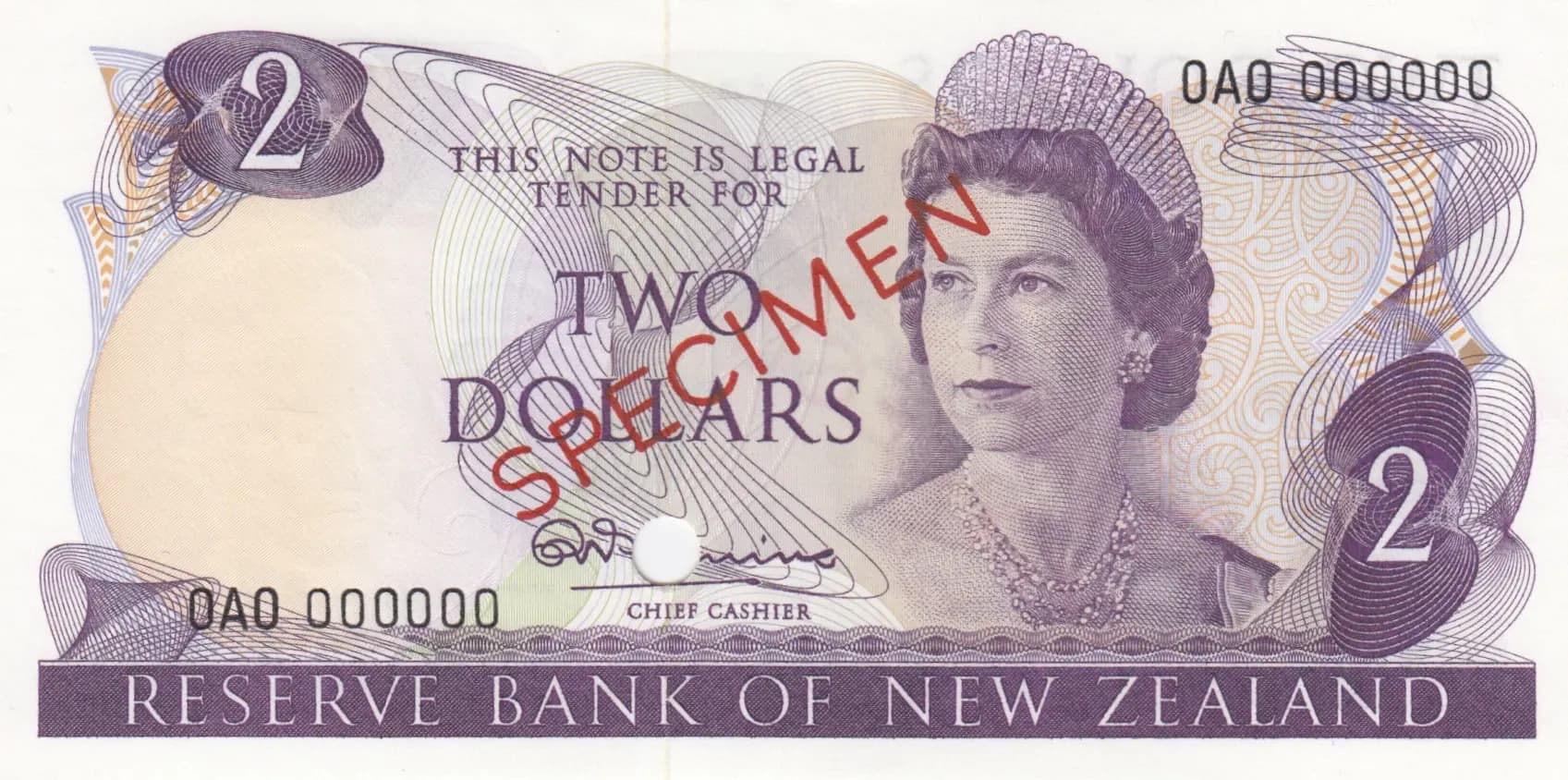
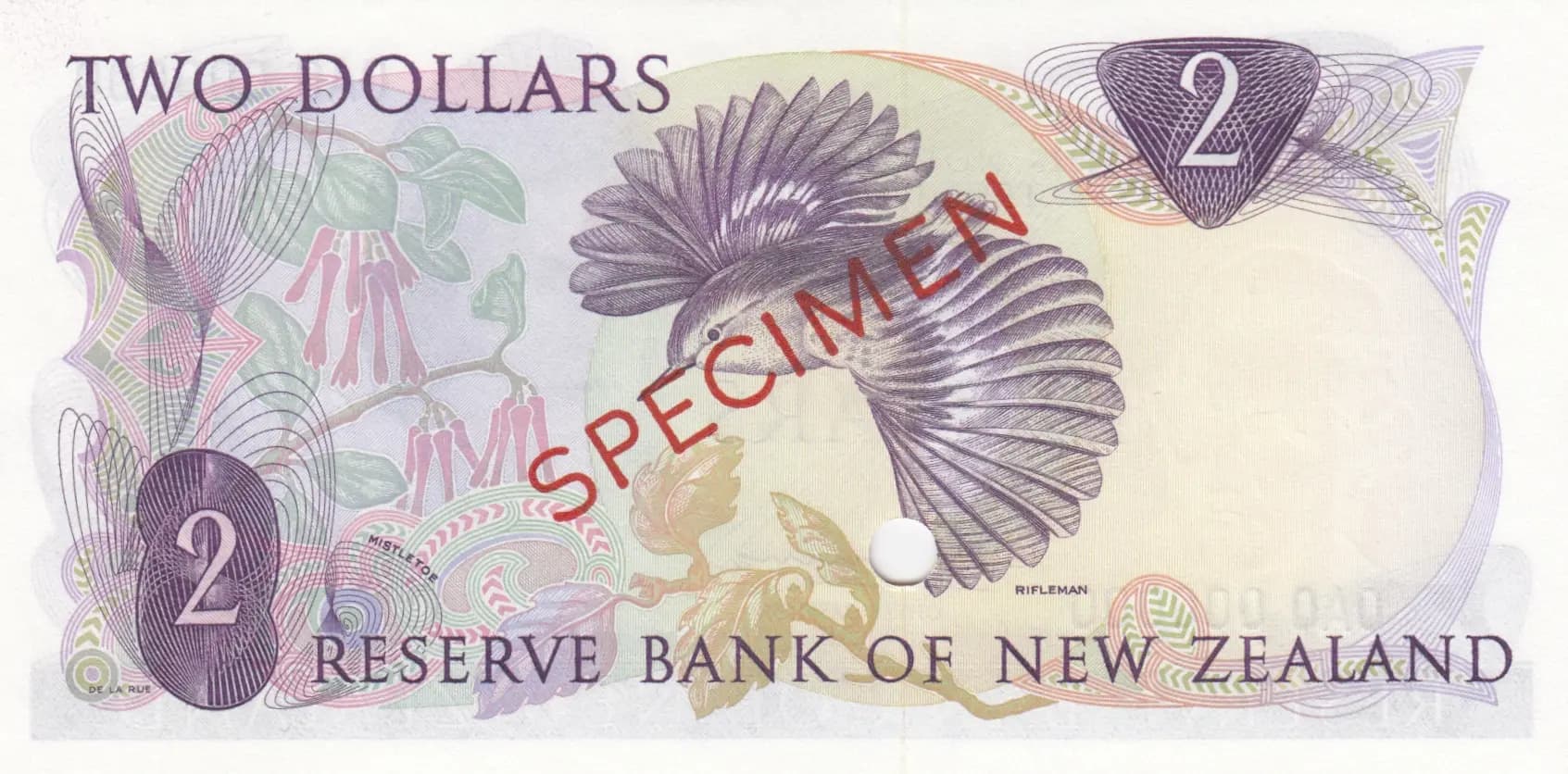
This is a 1967 specimen note of the New Zealand Two Dollar denomination, printed by De la Rue, London. The note features Queen Elizabeth II in profile on the obverse and botanical illustrations of native New Zealand flora on the reverse, both rendered in purple, beige, and multi-color intaglio printing. As an uncirculated specimen with the characteristic red 'SPECIMEN' overprint, this note represents an important early example of New Zealand's decimal currency series and remains in pristine condition with no signs of wear, creasing, or circulation.
Common. While specimen notes command a premium over circulation issues, this particular note type was produced in significant quantities for bank distribution purposes. Market data from eBay sales spanning 2015-2021 shows consistent pricing in the $190-$308 range depending on grading, with multiple sales occurring across different years, indicating steady collector demand and adequate supply. Specimen notes from this era are actively traded and readily available to collectors.
Issued in 1967 by the Reserve Bank of New Zealand during the early years of the decimal currency system, this Two Dollar note commemorates the nation's transition from the pound sterling system. The portraiture of Queen Elizabeth II reflects New Zealand's continued Commonwealth ties during this era, while the reverse design featuring native New Zealand botanical elements—likely pohutukawa flowers—celebrates the nation's natural heritage and cultural identity. As a specimen note, it was produced for distribution to banks and institutions to familiarize them with the new denomination before general circulation began.
The obverse features a formal portrait of Queen Elizabeth II facing right in profile, adorned with pearls and formal regalia, positioned centrally on the note. The design is framed by elaborate guilloche patterns and ornate scrollwork in purple and beige tones with gold/orange accents, creating an elegant border. Large denomination numerals '2' appear in decorative cartouches at the top left and bottom right corners. The reverse displays botanical illustrations of what appear to be native New Zealand pohutukawa or similar bell-shaped flowers rendered in pink and purple tones, surrounded by light green, beige, and purple guilloche patterns. Additional '2' numerals appear in decorative frames at the top right and bottom left, with the entire design unified by intricate fine-line work characteristic of intaglio currency production.
Front side: 'THIS NOTE IS LEGAL TENDER FOR TWO DOLLARS' (legal tender declaration); 'SPECIMEN' (red overprint); 'RESERVE BANK OF NEW ZEALAND' (issuing authority); 'CHIEF CASHIER' (signature line); '2' (denomination numeral); Serial number 'OAO 000000' (specimen serial). Back side: 'TWO DOLLARS' (denomination); 'SPECIMEN' (red overprint); 'RESERVE BANK OF NEW ZEALAND' (issuing authority); 'RIFLEMAN' (design or artist attribution); '2' (denomination numeral).
Intaglio printing (engraved) combined with multi-color lithographic overprinting, executed by De la Rue, London. The base design employs traditional engraved intaglio techniques, evident from the fine guilloche patterns, complex line work, and precise portrait rendering visible throughout both sides. The red 'SPECIMEN' overprint was applied separately using standard specimen marking protocols. This multi-stage printing process was standard for high-security banknote production during this period.
This is a specimen note variant (Pick 164s) of the 1967-1981 series Two Dollar note. The red 'SPECIMEN' diagonal overprint and the standard 'OAO 000000' specimen serial number are characteristic markings of this variety. Specimen notes typically feature zero serial numbers or special prefixes to distinguish them from circulation issues. The lack of visible signatures or varying artist marks suggests this follows the standard specimen production protocol for the 1967 issue.