1 dollar 1967 specimen
Market Prices
5 salesAbout This Note
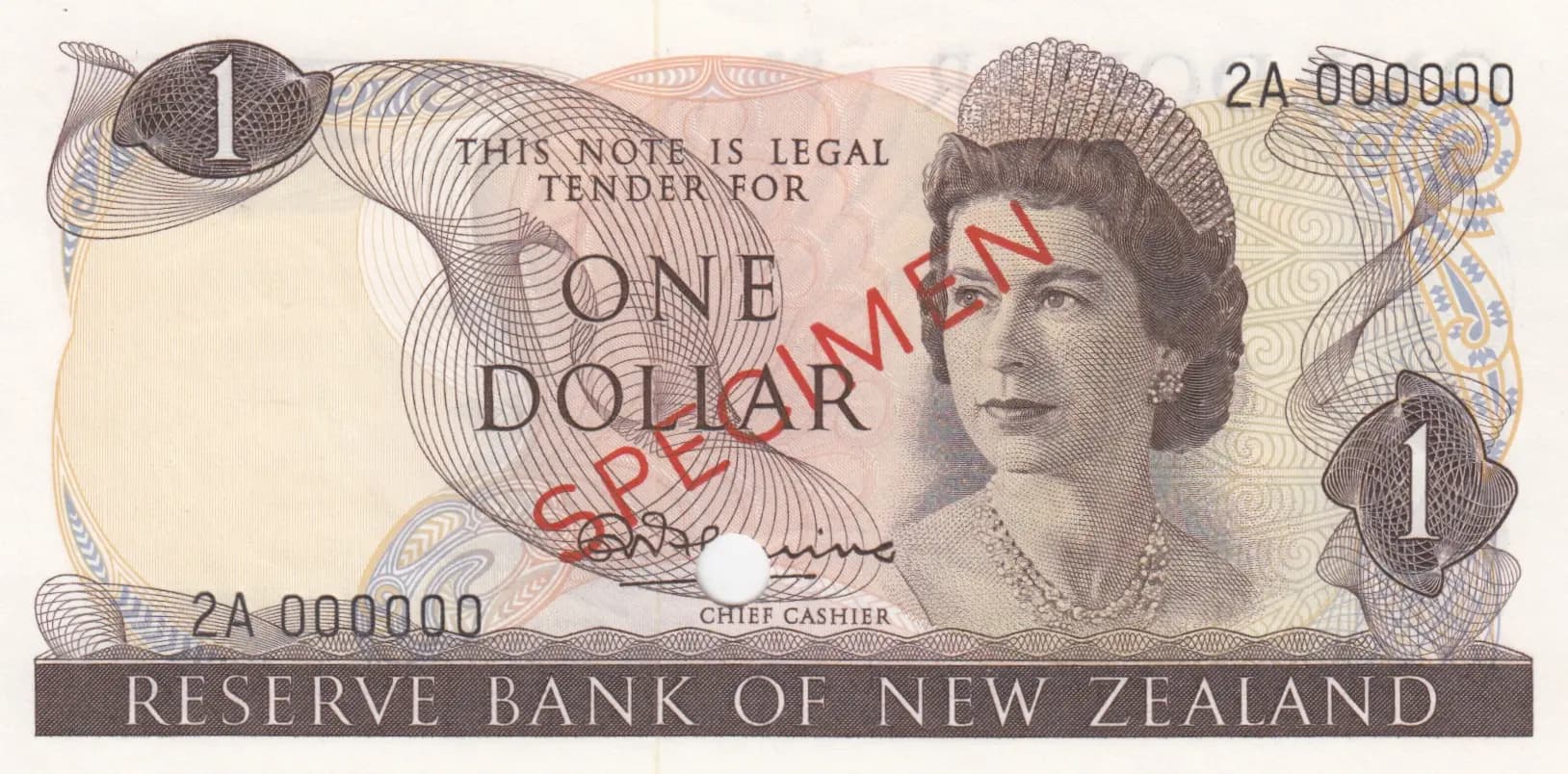
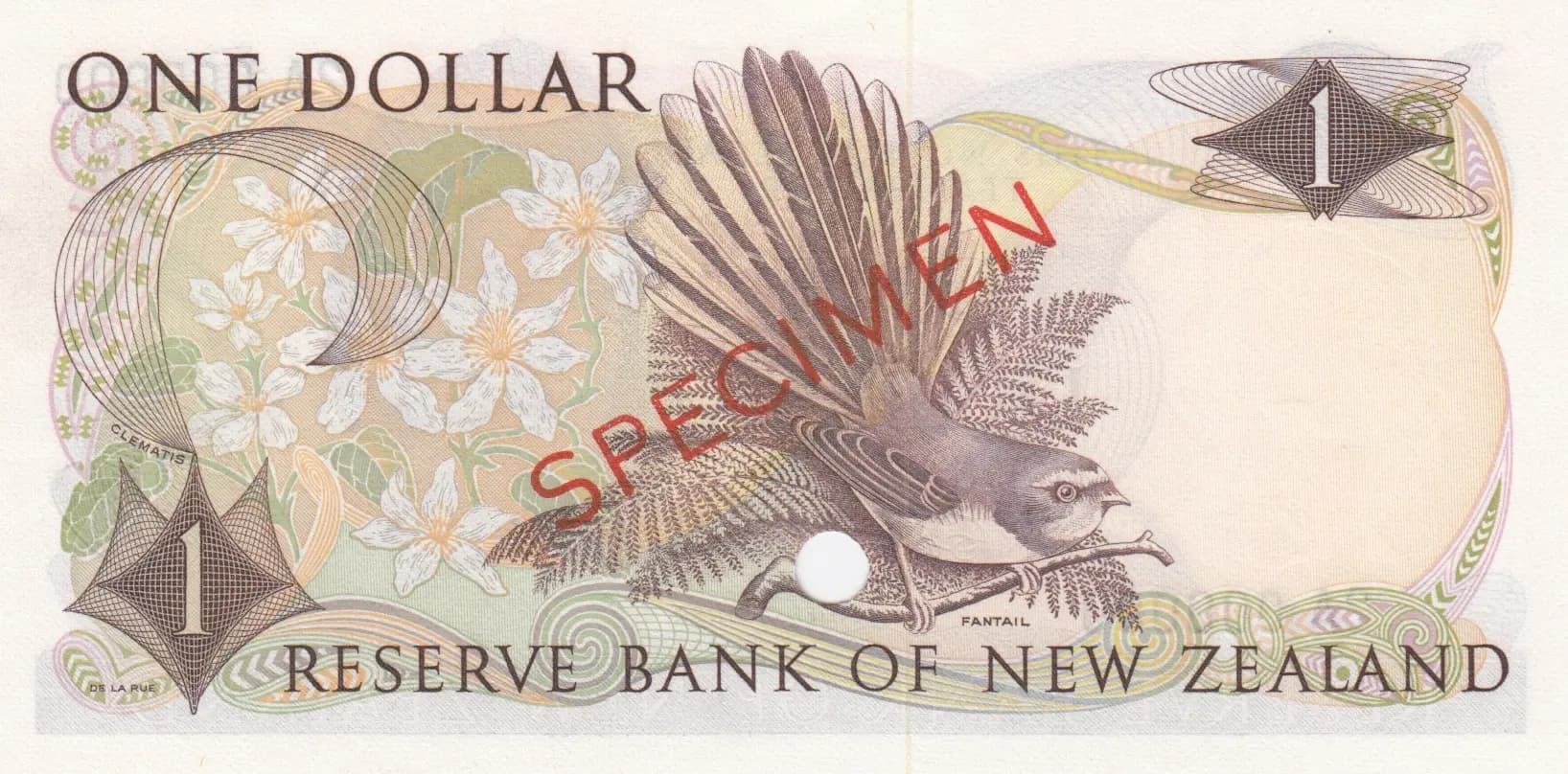
This is a 1967 New Zealand 1 Dollar specimen note in uncirculated condition, printed by De la Rue and issued by the Reserve Bank of New Zealand. The note features Queen Elizabeth II in profile on the obverse and a native pied fantail bird with clematis flowers on the reverse, both rendered in fine engraved detail with extensive guilloche security patterns. As a specimen note marked with red 'SPECIMEN' overprint and bearing specimen serial numbering (2A 000000), this represents an unissued presentation piece that has maintained pristine condition since production.
Common. While specimen notes are not released into circulation and thus see limited distribution compared to regular issued currency, the 1967 New Zealand 1 Dollar specimen represents a standard specimen production for a major Commonwealth issuer. eBay market data shows specimen and UNC examples of this note regularly trading in the $210–$290 range depending on grading, with consistent sales activity across multiple auctions (5 sales documented ranging from 2015 to 2025). This trading pattern and price point are typical of common collectible banknotes rather than scarce or rare pieces. The existence of multiple cataloged variants (P-163a, P-163b, P-163d, P-163s) also indicates substantial production runs across different printing periods. The specimen designation does not elevate this beyond common status in the collector market.
Issued during the final decade of New Zealand's pound sterling currency system (formally replaced by the decimal dollar in 1967), this 1967 specimen represents a transitional period in New Zealand monetary history. The note's design reflects mid-twentieth century Commonwealth currency aesthetics, with Queen Elizabeth II as the reigning monarch on the obverse and New Zealand's native fauna and flora—the fantail bird and clematis flower—celebrating the nation's natural heritage. De la Rue's production of this specimen exemplifies the high security standards applied to Commonwealth currency during the Cold War era.
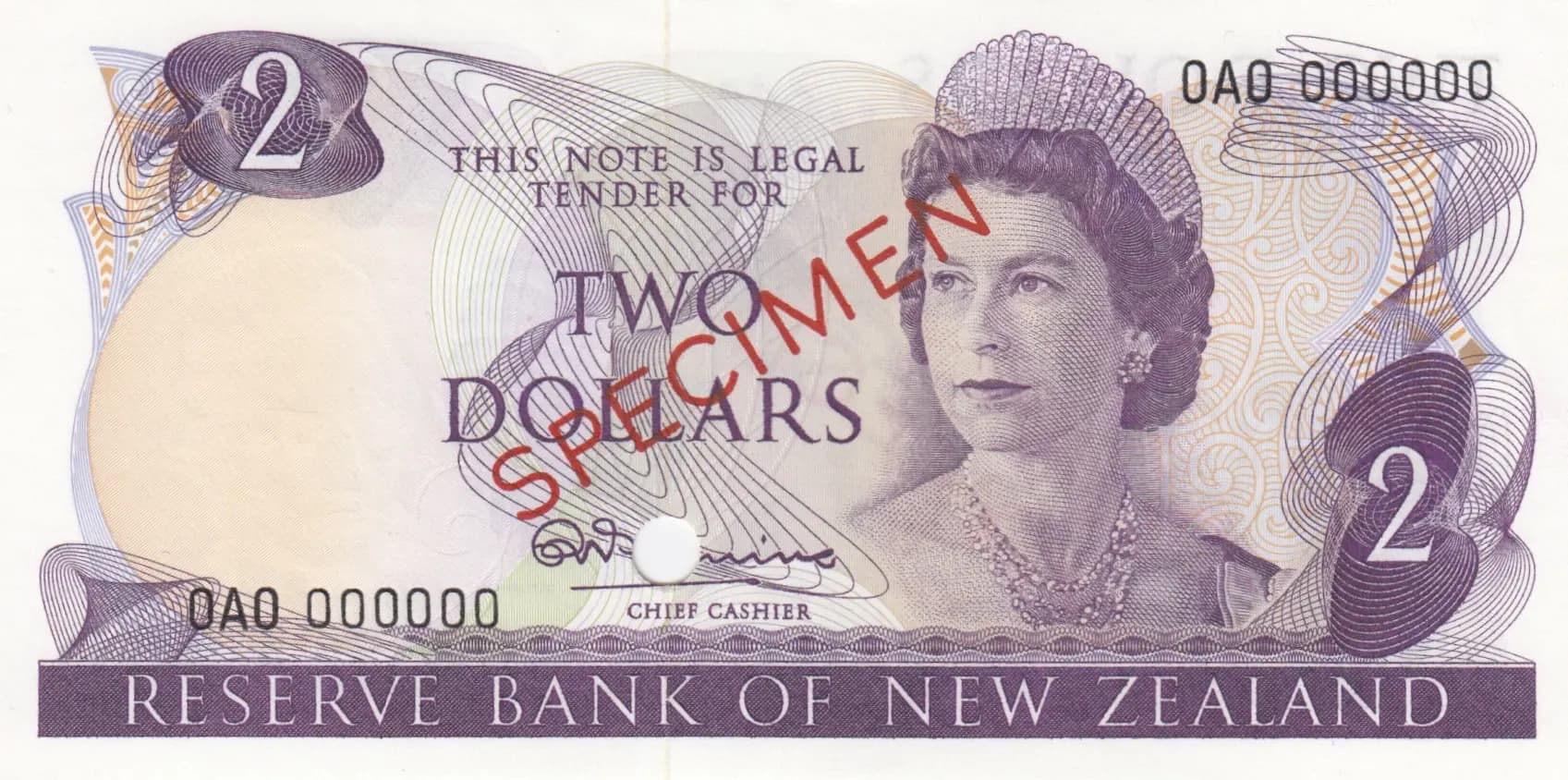
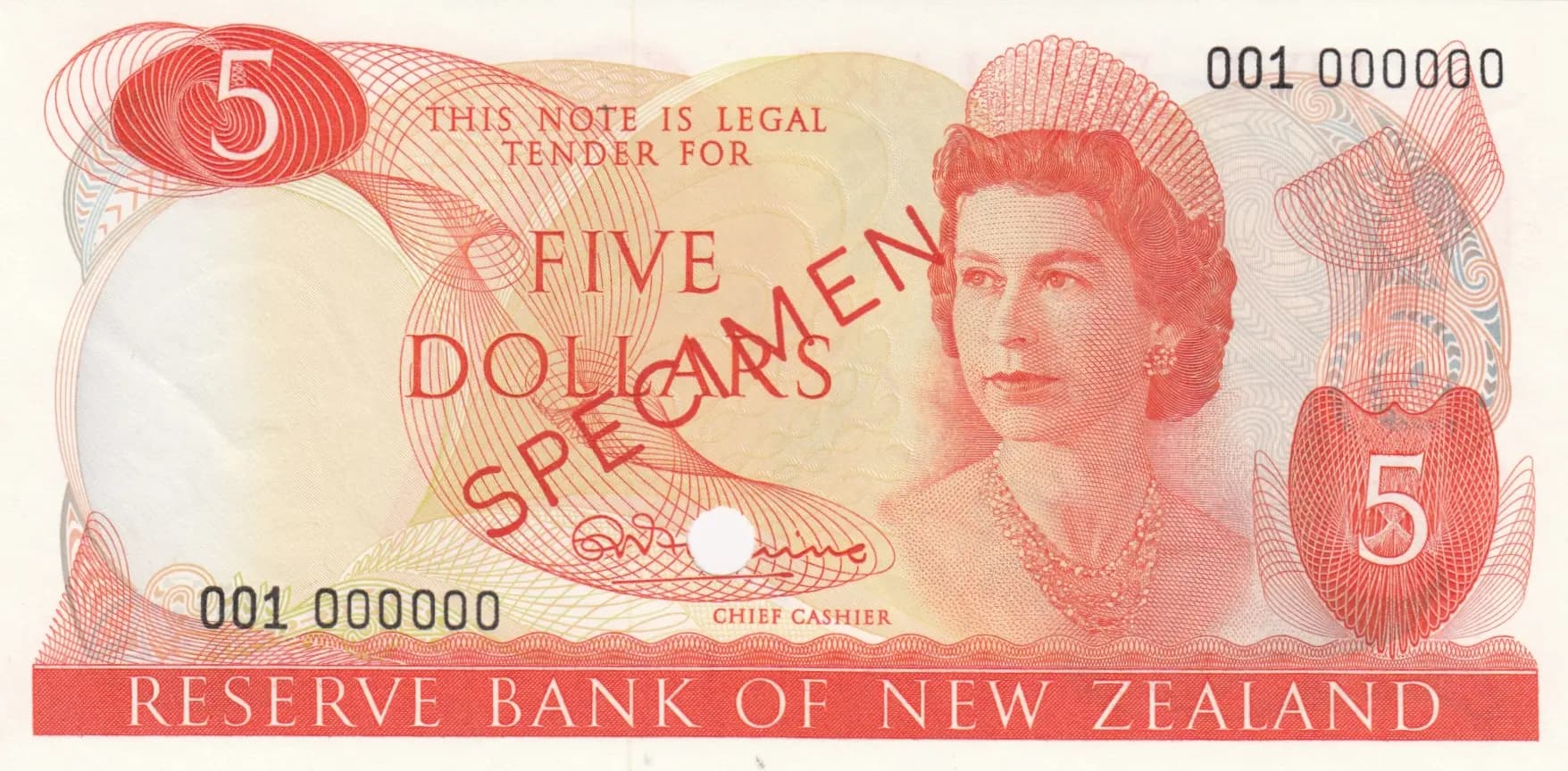
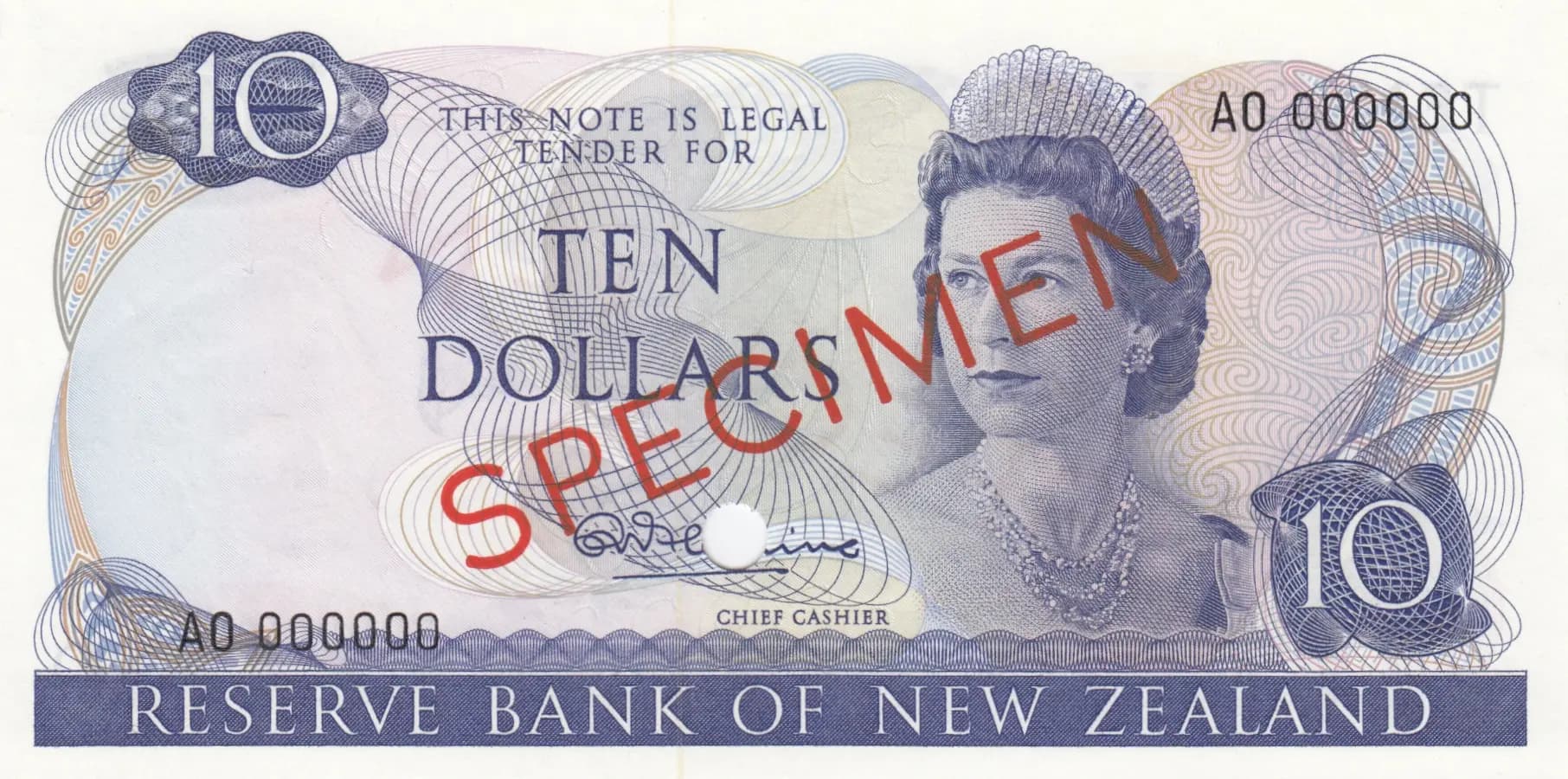
The obverse features Queen Elizabeth II shown in left-facing profile wearing a pearl necklace, positioned on the right side of the note within an ornate frame. The portrait is rendered in fine engraved lines typical of De la Rue's prestige security printing. A prominent circular design containing the numeral '1' appears in the upper left corner. The entire note field is covered with intricate guilloche patterning and geometric designs in brown, tan, beige, and gray tones with blue accents. The reverse depicts New Zealand's native pied fantail bird rendered in detailed naturalistic engraving, shown in flight among clematis flowers and fern fronds. A large numeral '1' in a diamond-shaped geometric frame appears in the lower left, with another '1' in the upper right corner. The color palette shifts to incorporate greens and whites for the botanical elements while maintaining the warm earth tones of the security printing. Both sides feature circular watermark/security elements positioned centrally, with the red 'SPECIMEN' overprint applied diagonally across the full design of both obverse and reverse.
FRONT SIDE: 'THIS NOTE IS LEGAL TENDER FOR ONE DOLLAR' (standard legal tender declaration); 'SPECIMEN' (overprint indicating unissued presentation note); 'RESERVE BANK OF NEW ZEALAND' (issuing authority); 'CHIEF CASHIER' (authorized signatory title); Serial number '2A 000000' (specimen numbering format). BACK SIDE: 'ONE DOLLAR' (denomination); 'SPECIMEN' (overprint repeated); 'FANTAIL' (identification of depicted bird species); 'CLEMATIS' (identification of depicted flower species); 'RESERVE BANK OF NEW ZEALAND' (issuing authority); 'DE LA RUE' (printer/engraver attribution); Numeral '1' (denomination markers in multiple locations).
This note employs intaglio engraving—the primary security printing method used by De la Rue for Commonwealth currency during this period. The extensive guilloche patterning visible throughout the design serves as an anti-counterfeiting measure, with fine parallel lines and geometric patterns created through precision engraving. The detailed portraiture of Queen Elizabeth II and the naturalistic engraving of the fantail and flora demonstrate the high skill of De la Rue's engravers. The circular watermark/security elements and fine line work throughout represent multi-stage engraved plates. The red 'SPECIMEN' overprint was applied separately, likely through relief printing or stamping, following the primary intaglio production. This specimen note represents the full-color, multi-plate production process typical of De la Rue's mid-twentieth-century prestige banknote work.
This specimen is cataloged as P-163s, the specimen variant of the 1967 New Zealand 1 Dollar series. The PMG population report identifies four variants for this base Pick number: P-163a, P-163b, P-163d*, and P-163s (this note). All variants were printed by TDLR (De la Rue). The serial number format '2A 000000' is consistent with specimen production, using placeholder zeros rather than unique sequential numbering. The red 'SPECIMEN' overprint and specimen serial format are definitive identifying features of this variety. No signature variations are evident from the visual analysis, though the 'CHIEF CASHIER' title line is present, indicating the standard authorized signatories format used by the Reserve Bank of New Zealand during this issuance period.