10 dollars 1967 specimen
Market Prices
3 salesAbout This Note
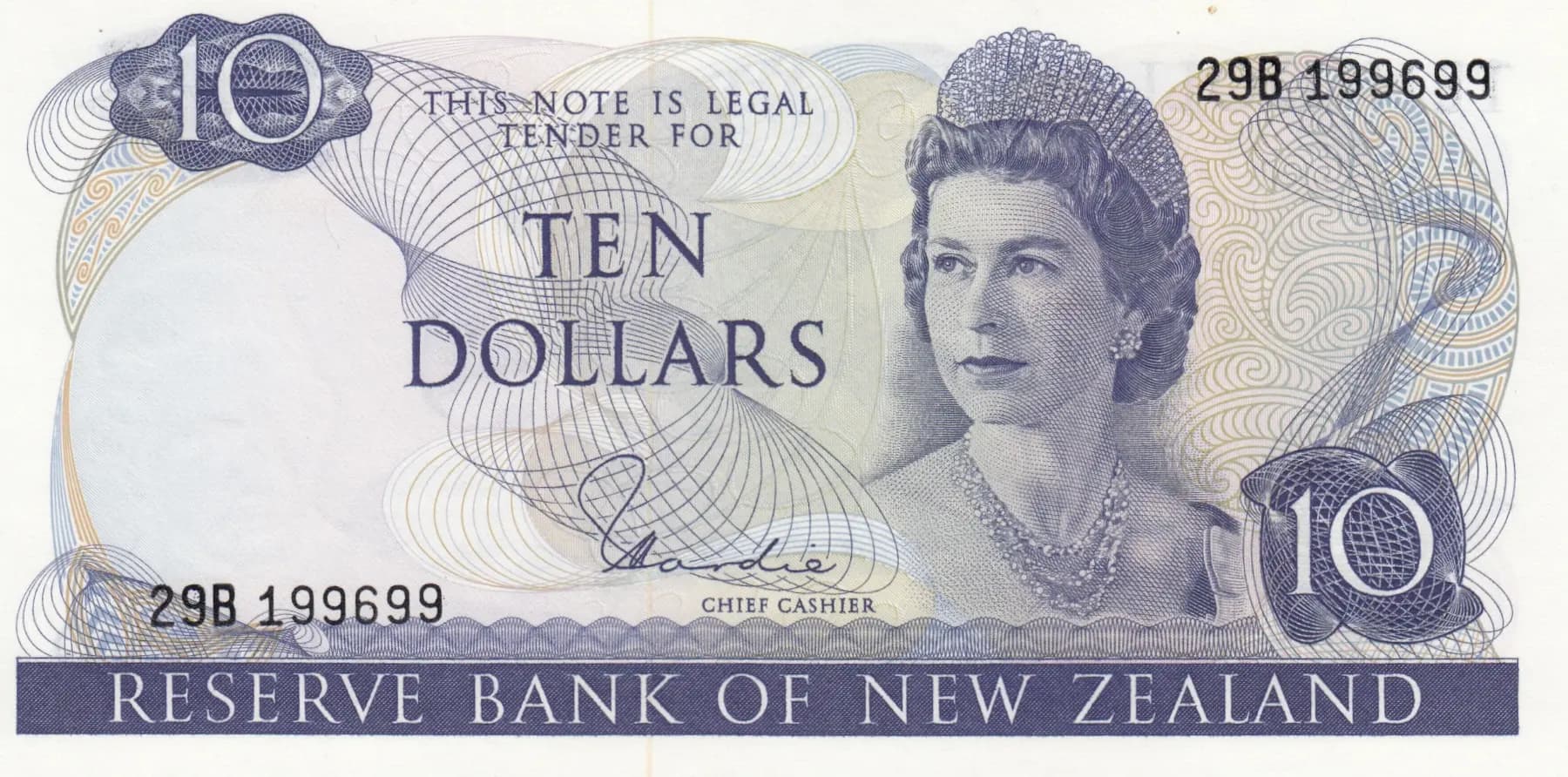
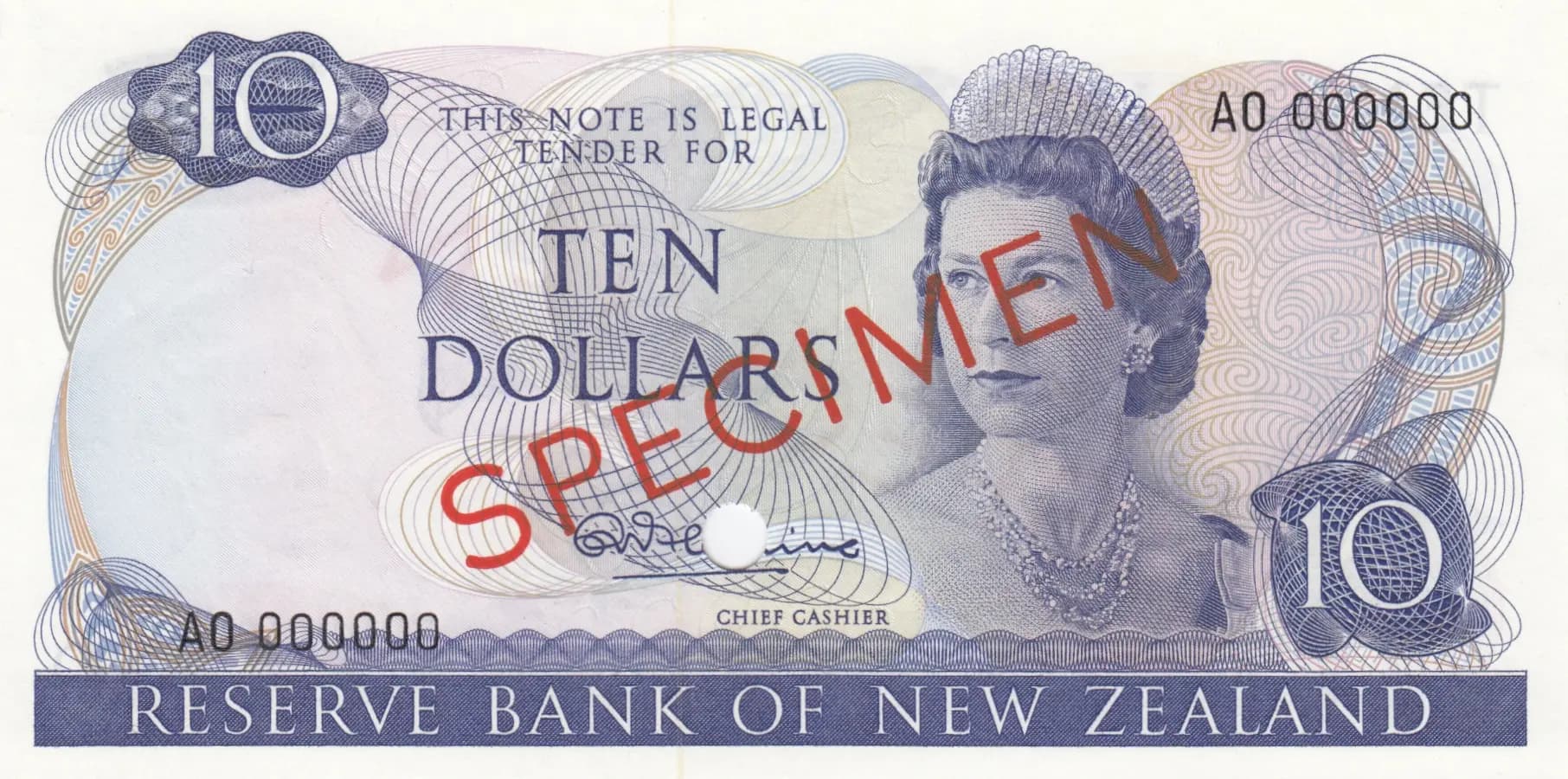
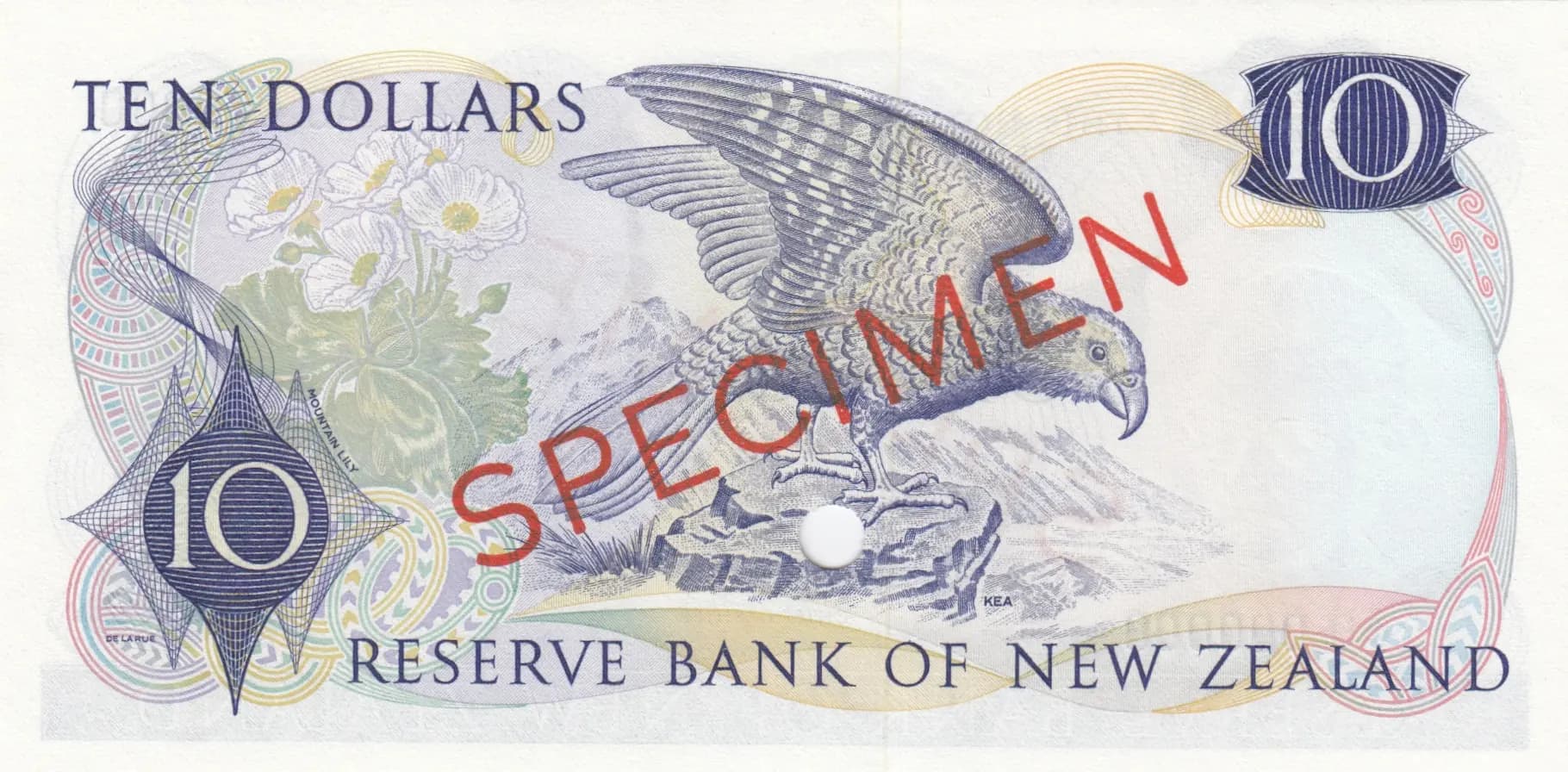
This is a pristine specimen banknote from the Reserve Bank of New Zealand's 1967-1981 series, graded UNC and cataloged as Pick 166s. The note features Queen Elizabeth II in profile on the obverse and a detailed engraving of a kea (New Zealand alpine parrot) on the reverse, both rendered in the fine line engraving style characteristic of De la Rue's currency printing. The red diagonal 'SPECIMEN' overprint and all-zero serial number (A0 000000) identify this as a non-circulating specimen issue, with sharp printing and pristine condition throughout.
Common. While this is a specimen note (a non-circulating example produced for official distribution and archival purposes), specimen banknotes of this series appear with reasonable regularity in the collector market. eBay auction data shows PMG-graded examples (grades 64-66) selling in the $250–$336 range, indicating a moderate but consistent collector demand. The note was issued by a major central bank during a 14-year period with substantial print runs, and specimens were produced in quantities typical for the era. No evidence suggests limited production or rarity status.
Issued during a period of relative economic stability in New Zealand (1967-1981), this banknote reflects the Commonwealth's continued recognition of Elizabeth II as monarch, depicted in formal profile on the obverse. The kea featured on the reverse—an iconic New Zealand alpine parrot endemic to the South Island—represents the Reserve Bank's design philosophy of incorporating indigenous flora and fauna to celebrate national identity and natural heritage.
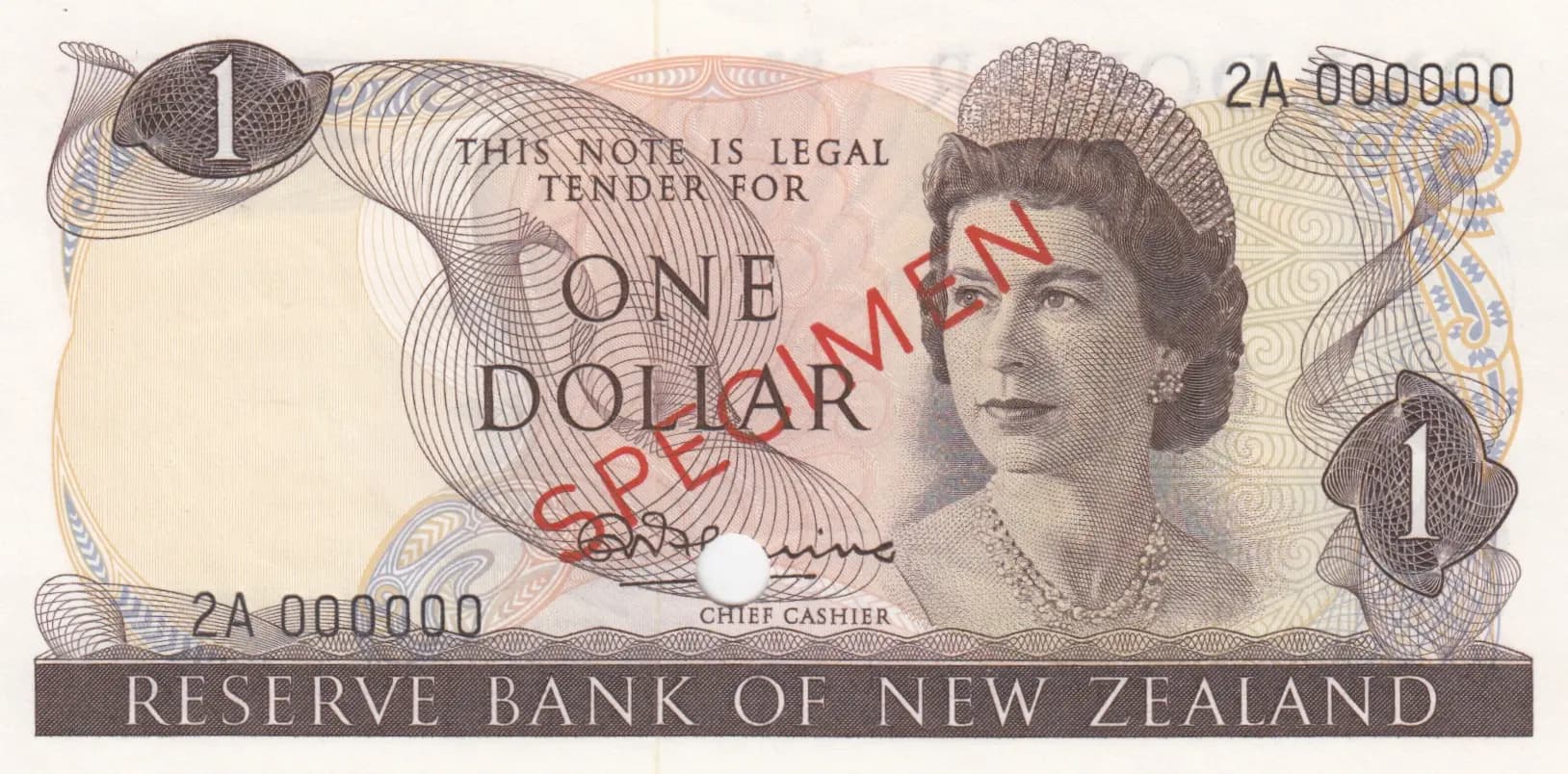
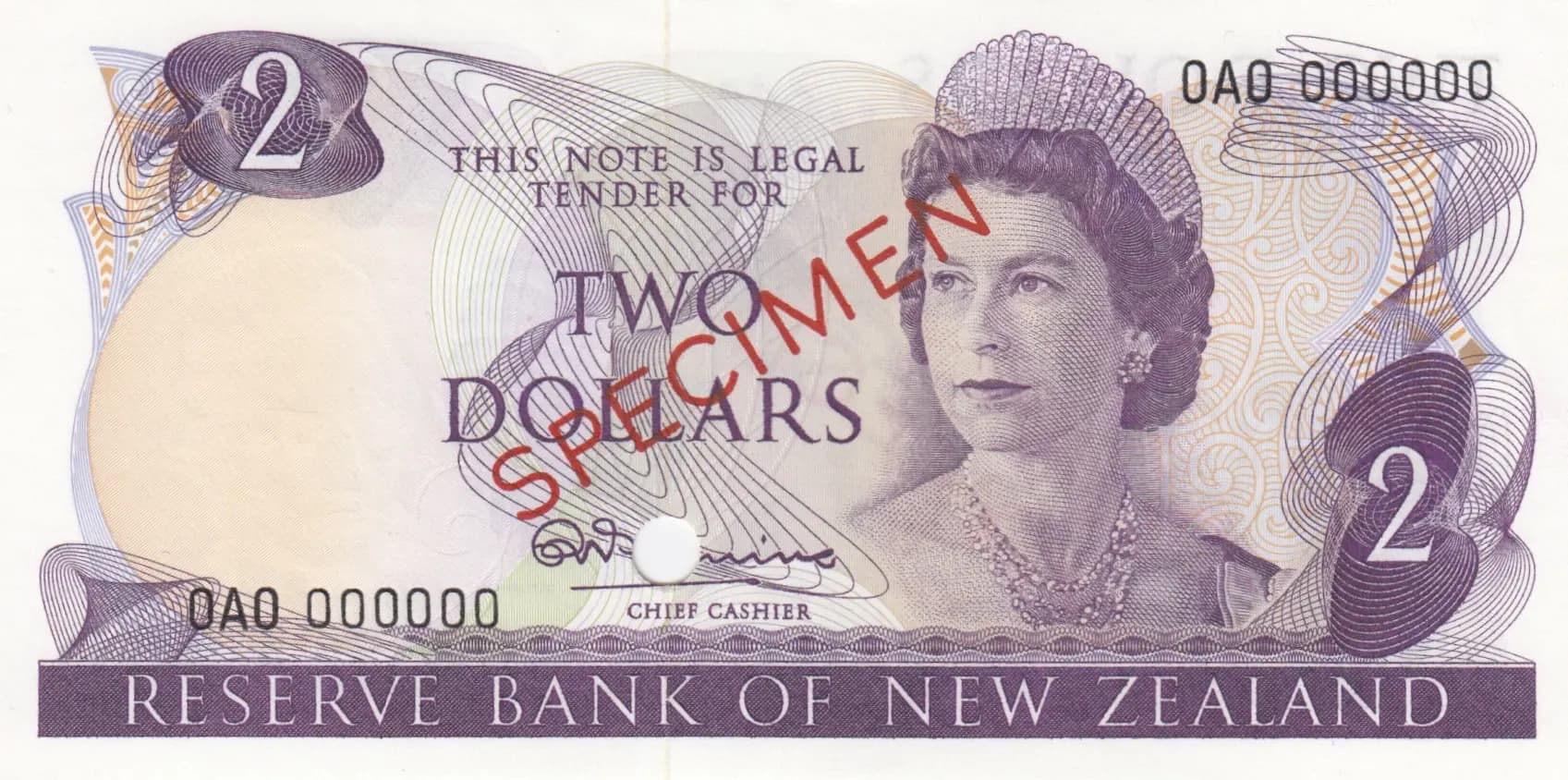
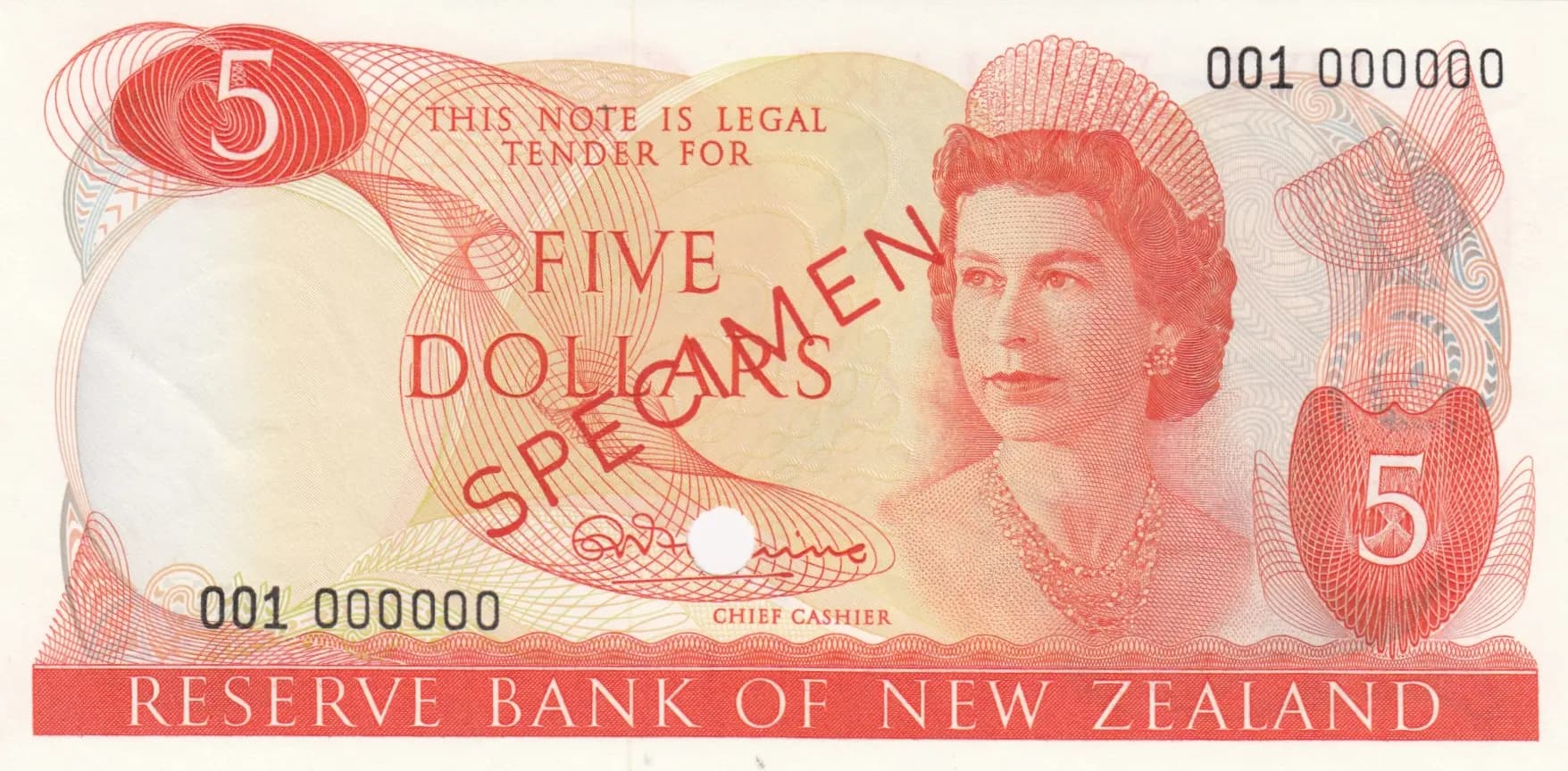
The obverse features a formal portrait of Queen Elizabeth II facing right, rendered in the intricate engraving style typical of Commonwealth currency of this era. The portrait is framed by ornamental scrollwork and geometric patterns, with rounded square denomination markers containing '10' positioned on the left and right sides. The reverse depicts a kea (Nestor notabilis), New Zealand's large mountain parrot, with wings partially spread, perched on rocky terrain. Decorative floral elements—rendered as daisies with yellow centers—appear alongside the bird, and ornamental diamond-shaped frames contain additional denomination markers. Both sides are dominated by navy blue and purple tones with multicolor underprinting in white, pale green, gold, and rose tones. Fine line engraving patterns and complex crosshatching provide security depth throughout.
Front side: 'THIS NOTE IS LEGAL TENDER FOR TEN DOLLARS' (denominal declaration); 'RESERVE BANK OF NEW ZEALAND' (issuer); '10' (denomination markers, left and right); 'SPECIMEN' (red diagonal overprint indicating non-circulating status); 'CHIEF CASHIER' (signature line); 'A0 000000' (specimen serial number). Back side: 'TEN DOLLARS' (denomination); '10' (denomination markers in ornamental frames); 'KEA' (identification of the depicted bird); 'RESERVE BANK OF NEW ZEALAND' (issuer); 'SPECIMEN' (red diagonal overprint).
Intaglio/line engraving, as evidenced by the fine linear patterns, detailed crosshatching, and complex background designs visible in both the portrait and wildlife engraving. Printed by De la Rue, London (TDLR), the world's leading security printer of the period. The multicolor underprint was applied using traditional currency printing methods, with the red 'SPECIMEN' overprint applied separately to distinguish this as a non-circulating specimen issue.
This is cataloged as Pick 166s (specimen variety). The PMG population report lists six variants of the base Pick 166 number (P-166a through P-166d, plus P-166d* and P-166s), all printed by TDLR (De la Rue, London). The 's' designation in Pick 166s explicitly denotes this as a specimen issue, distinguished by the red 'SPECIMEN' overprint and the all-zero serial number (A0 000000). No signature varieties are evident in the observed specimen.