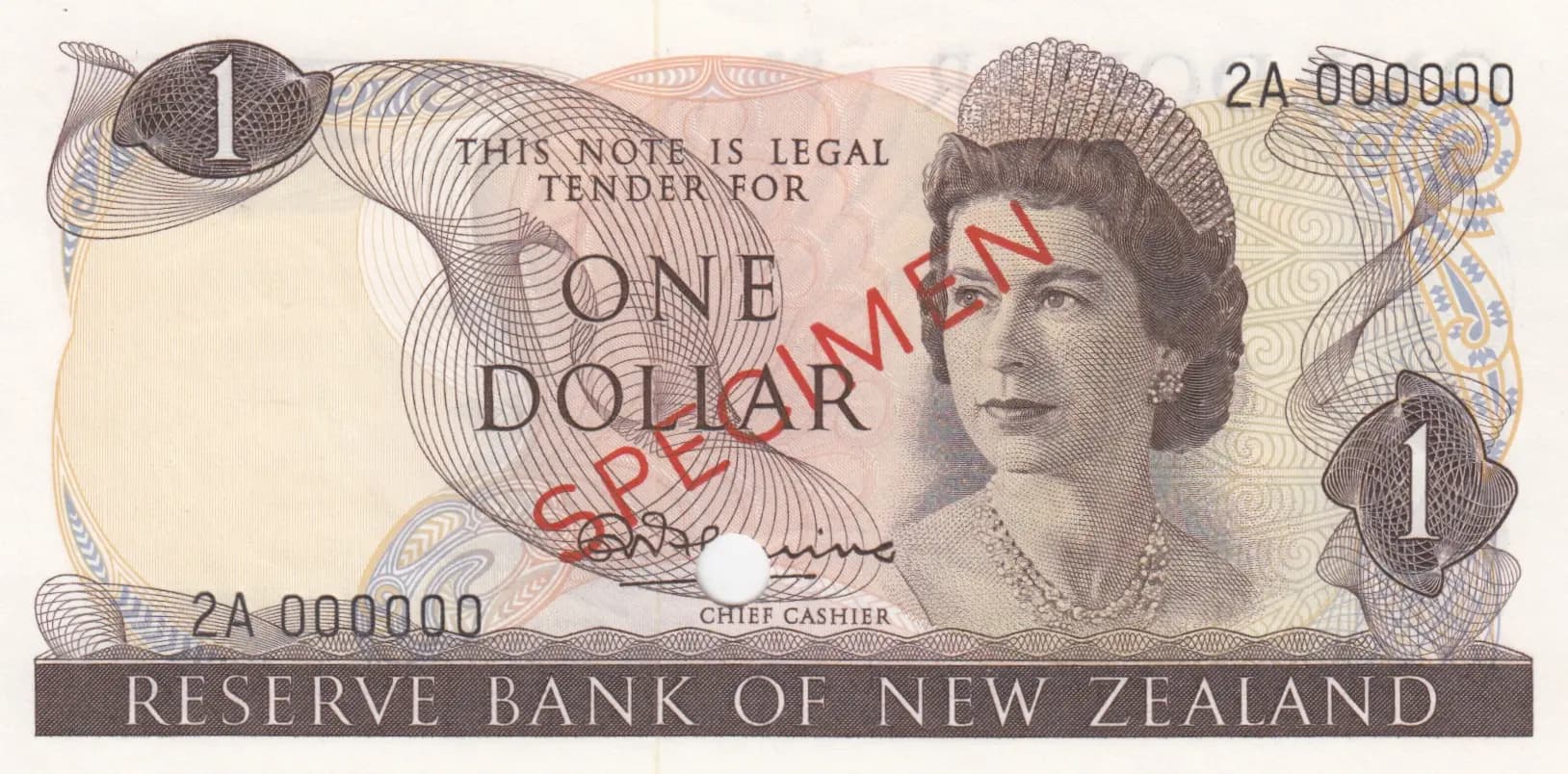
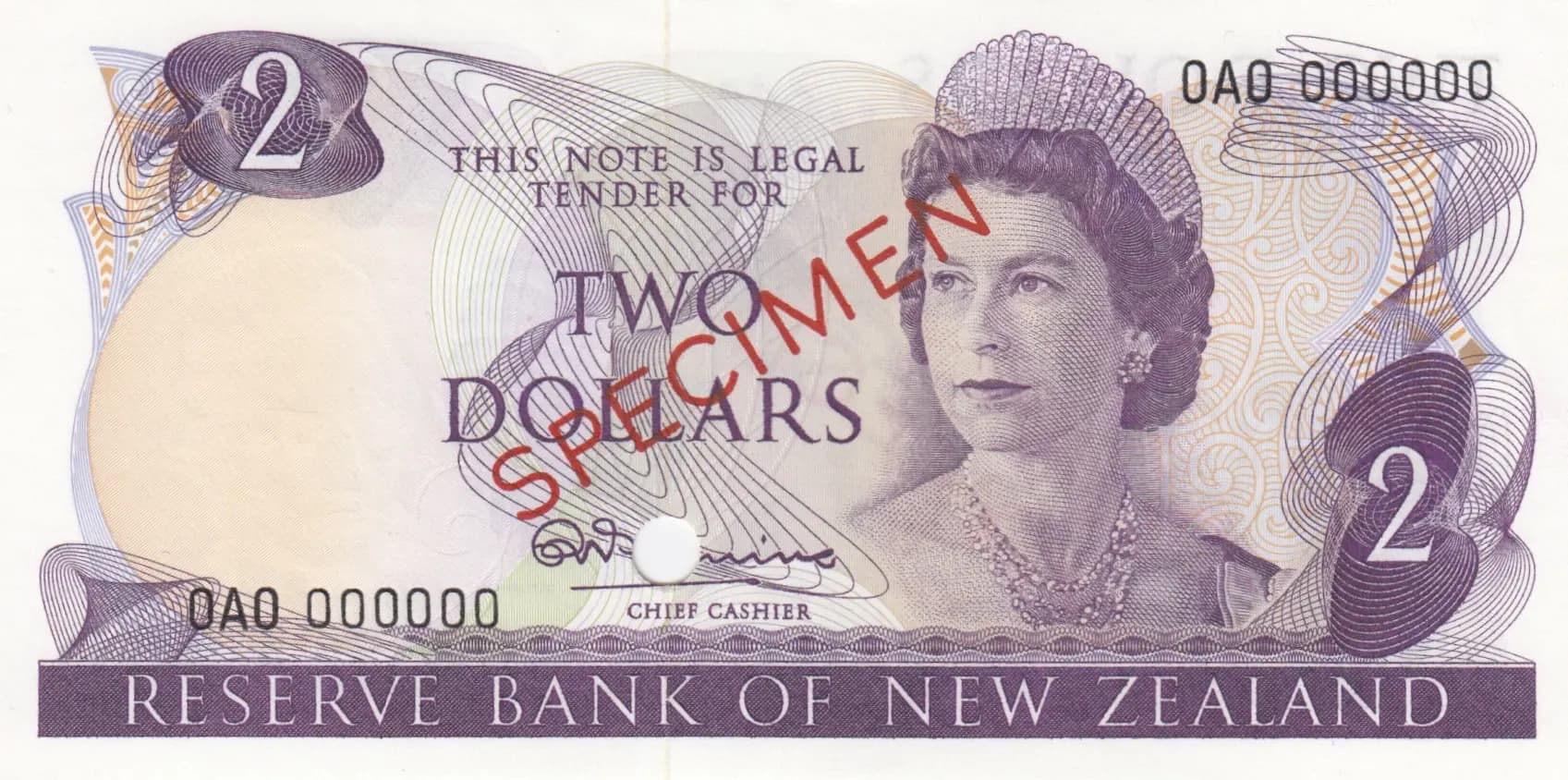
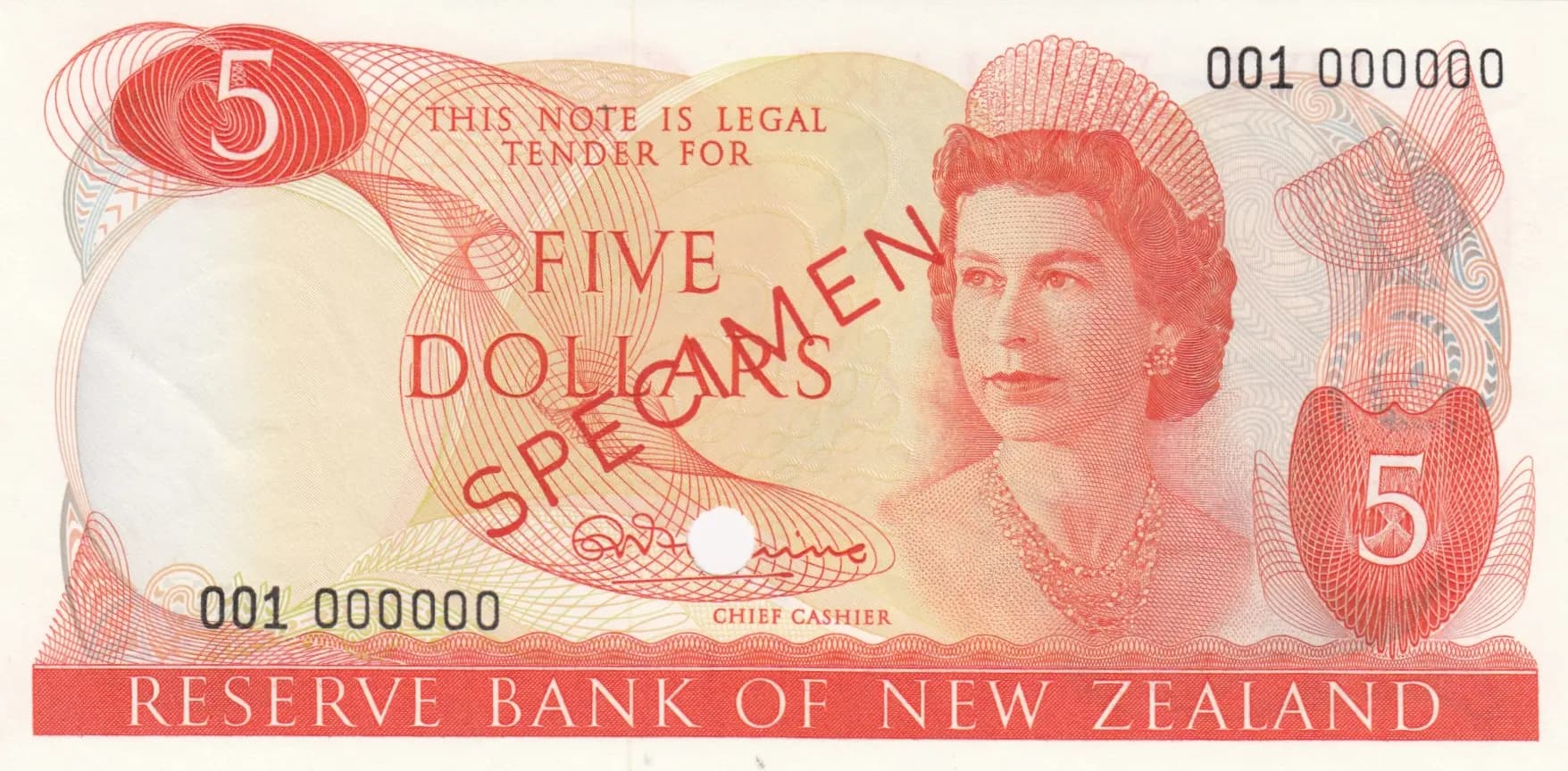
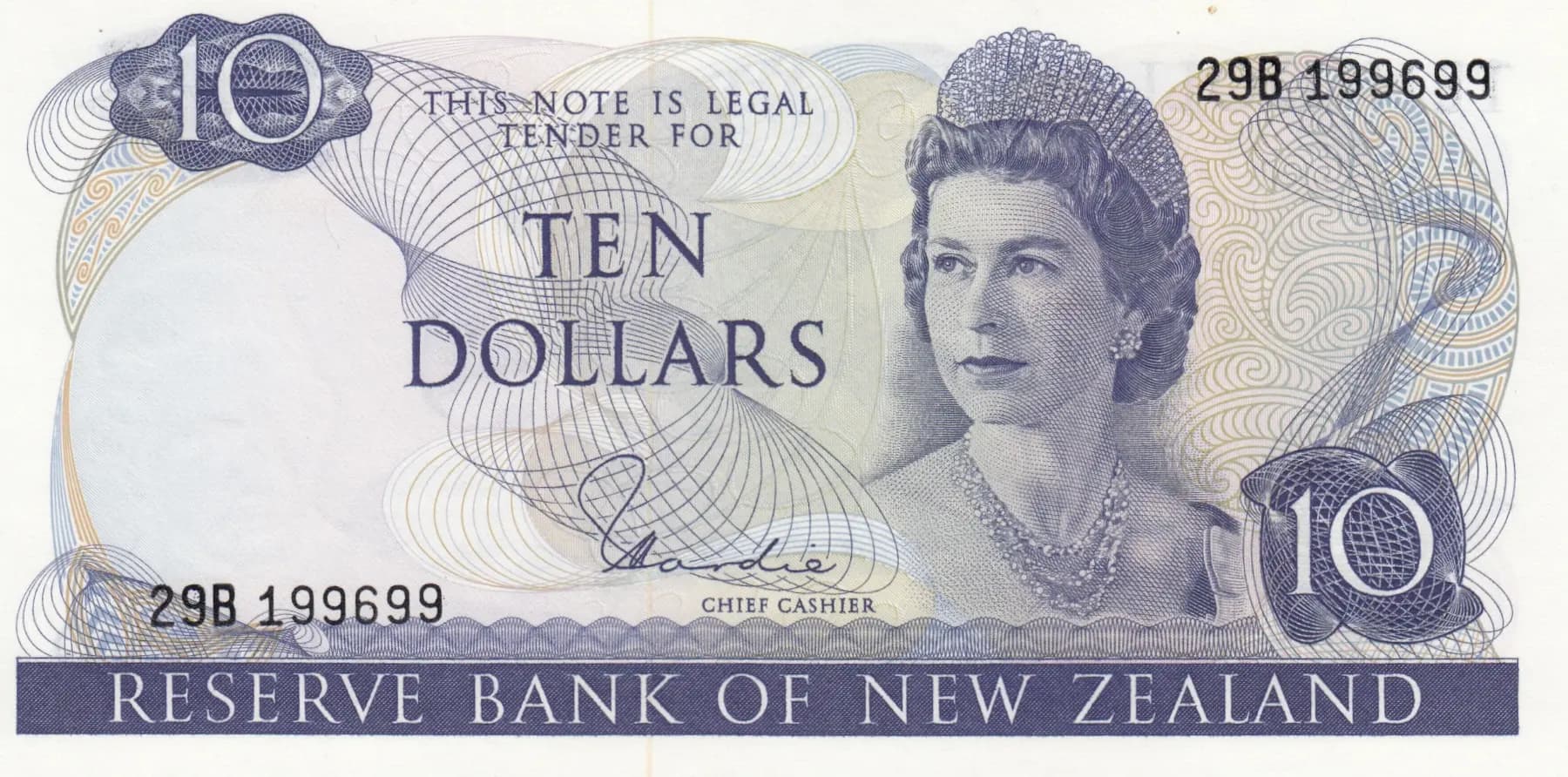
20 dollars 1981 specimen
Market Prices
2 salesAbout This Note
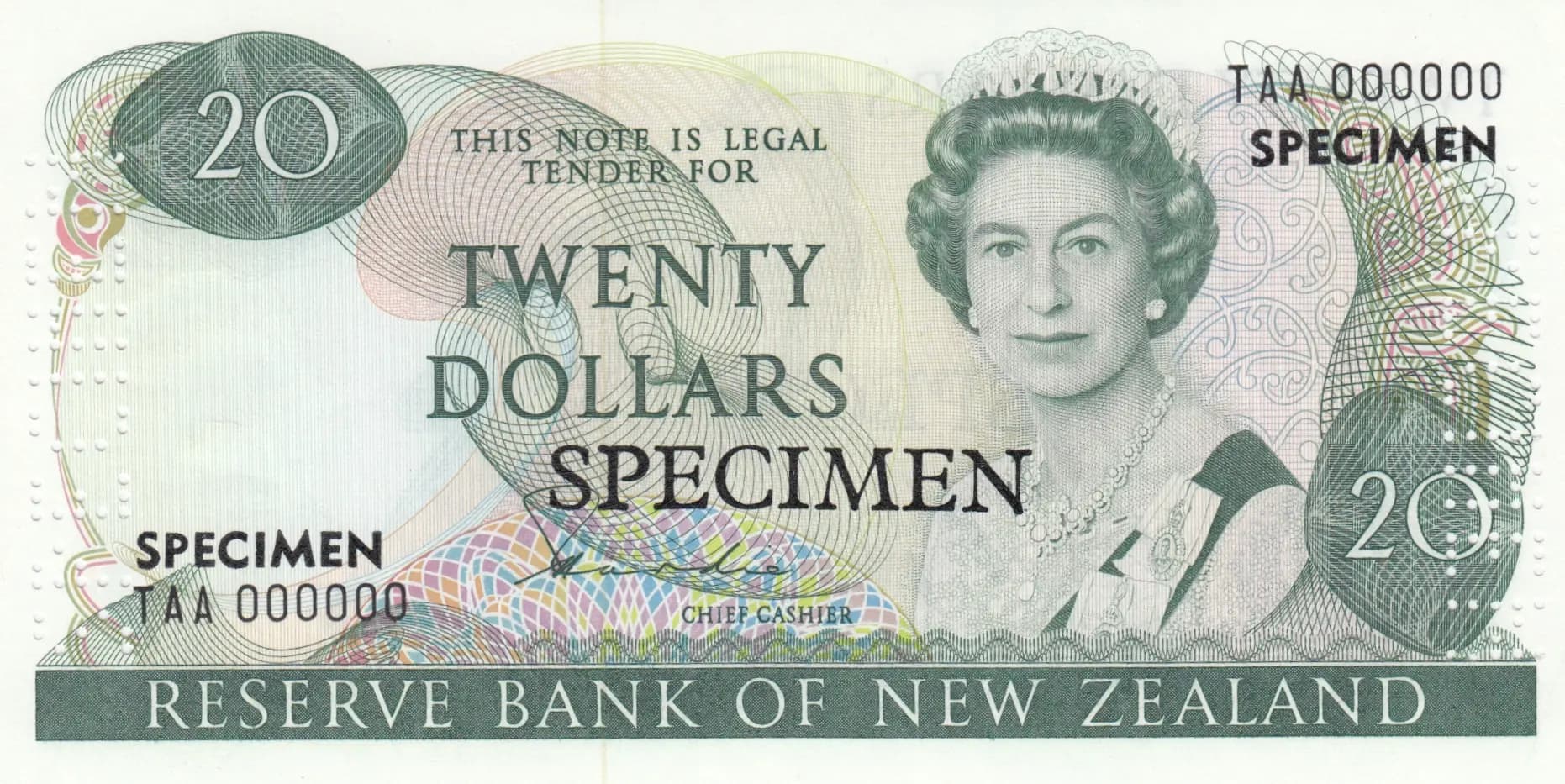
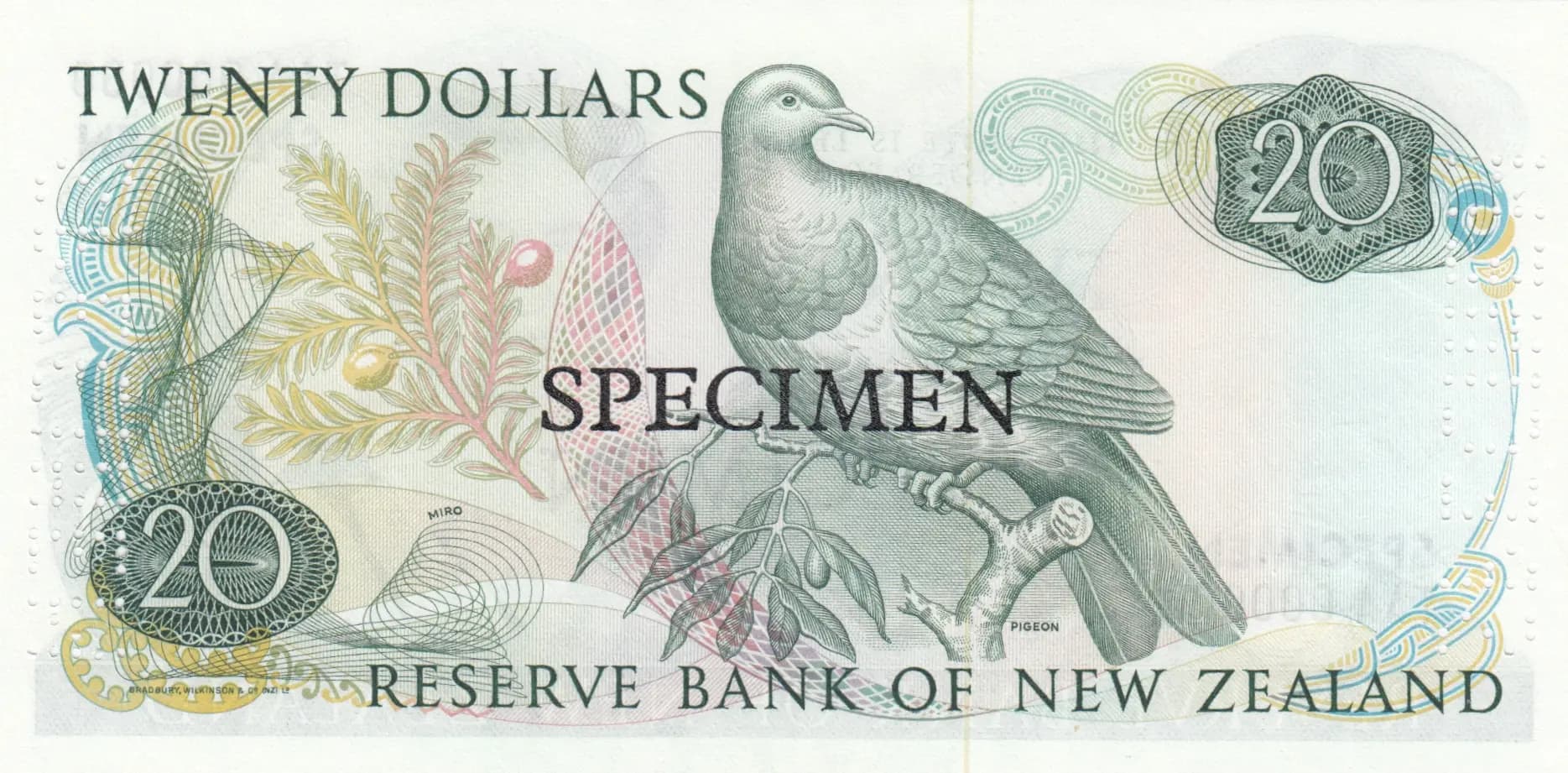
This is an exceptional uncirculated specimen note from the 1981 New Zealand $20 series, featuring a mature portrait of Queen Elizabeth II on the front and a beautifully detailed wood pigeon with botanical elements on the reverse. As a specimen banknote with crisp, clear printing and no signs of wear, it represents a pristine example of Bradbury Wilkinson's high-quality banknote engraving from this period, making it an attractive piece for Commonwealth currency collectors.
Common. While this is a specimen note (which are typically produced in smaller quantities than regular circulation notes), the eBay price data shows recent sales in the $220-$245 range for professionally graded examples, indicating a relatively modest collector demand and steady supply. Specimen notes from this 1981-1992 series are not particularly scarce, and uncirculated examples remain accessible to collectors at reasonable prices. The absence of extreme price premiums or scarcity reports in the PMG population data suggests this variety has not achieved rare status.
Issued by the Reserve Bank of New Zealand during the early 1980s, this banknote reflects New Zealand's continued recognition of Queen Elizabeth II as sovereign and celebrates the nation's native wildlife through the prominently featured wood pigeon. The specimen designation indicates this note was produced for official presentation, archival, or security printer demonstration purposes rather than circulation, making it a specialized collector's item from the final decade of the decimal currency's early evolution.
The obverse features a mature, formal portrait of Queen Elizabeth II positioned on the right side, depicted wearing formal attire with a pearl necklace, rendered in the classical style typical of Commonwealth currency portraiture of this era. The left side contains an ornamental oval frame with the denomination '20' surrounded by elaborate decorative scrollwork, floral patterns, and heraldic elements in green, pink, yellow, and gold. The reverse showcases a wood pigeon (Hemiphaga novaeseelandiae, New Zealand's native pigeon species) depicted in detailed naturalistic engraving, perched among stylized botanical elements including leaves and berries. This design celebrates New Zealand's unique fauna and reflects the Reserve Bank's practice of featuring native wildlife on higher denominations. The multicolor underprint employs green as the dominant color with complementary hues of blue, pink, yellow, and gold creating depth and security features throughout both sides.
FRONT SIDE: 'THIS NOTE IS LEGAL TENDER FOR' / 'TWENTY DOLLARS' / 'SPECIMEN' (overprinted) / 'CHIEF CASHIER' / 'RESERVE BANK OF NEW ZEALAND' / '20' (denomination numeral, appears twice) / 'TAA 000000' (specimen serial number). BACK SIDE: 'TWENTY DOLLARS' / 'SPECIMEN' (overprinted) / 'PIGEON' (species identification) / 'MIRO' (artist/engraver signature) / '20' (denomination numeral, appears twice) / 'RESERVE BANK OF NEW ZEALAND'.
Intaglio (engraved) printing by Bradbury Wilkinson & Co. (BWC), New Malden, utilizing multiple color layers and fine line work. The highly detailed botanical and ornithological imagery, combined with intricate geometric patterns and scrollwork, demonstrates the classical security printer's mastery of engraving technique. The precise color registration and sharp detail clarity visible in the specimen indicate professional-grade currency production standards.
This note is catalogued as Pick P-173s, the 's' designation indicating its status as a specimen note. The visual analysis confirms the 'SPECIMEN' overprints on both obverse and reverse, the replacement serial number 'TAA 000000', and the specimen-specific production standards. PMG has identified four variants for the base Pick-173 number (P-173a, P-173a*, P-173b, P-173c), all printed by BWC. The specific variety classification of this particular specimen would require verification of any distinguishing features such as signature variations or minor design differences, but the fundamental specimen designation (s) is clearly established by the visible overprints and zero serial number.