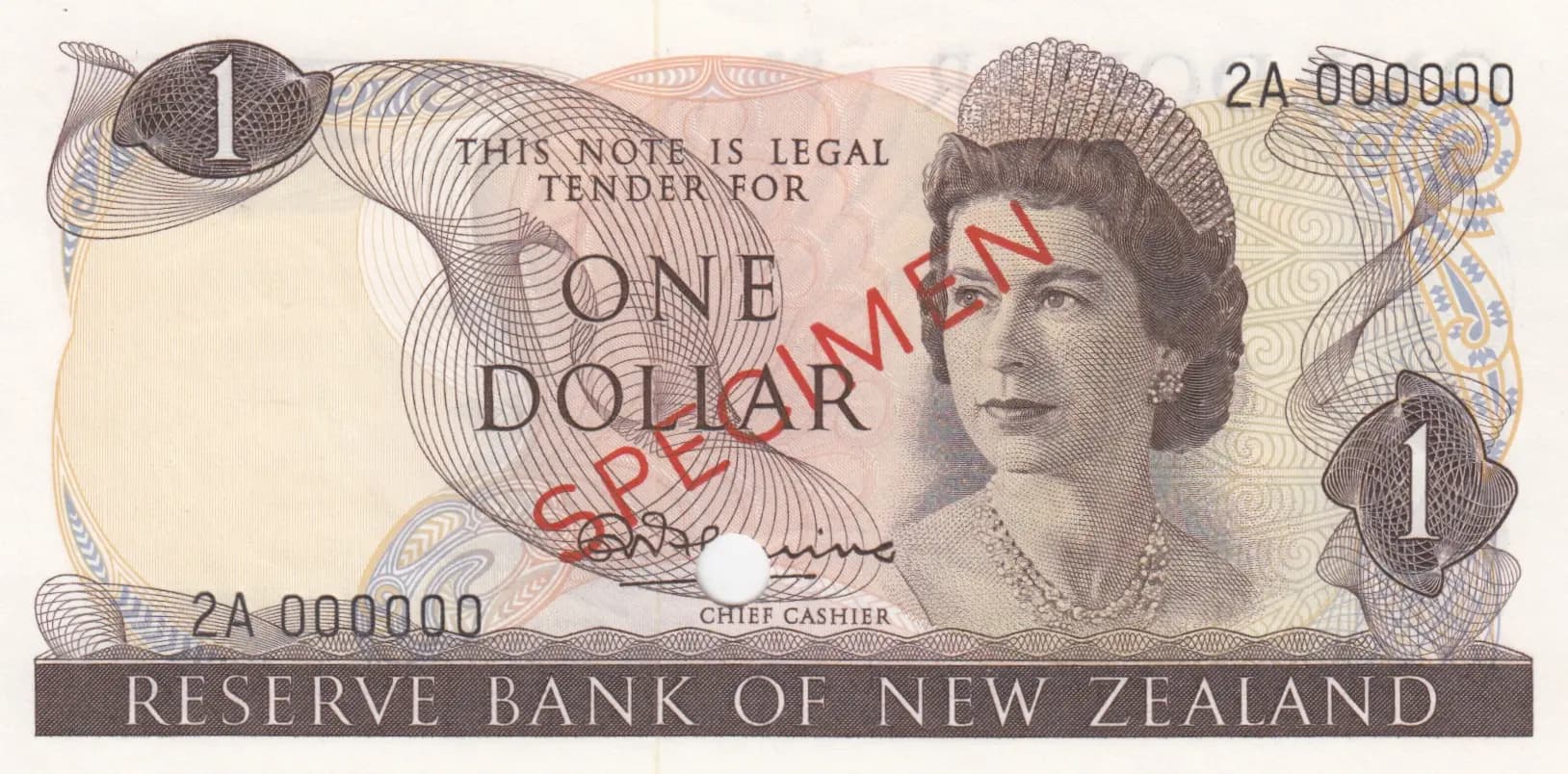
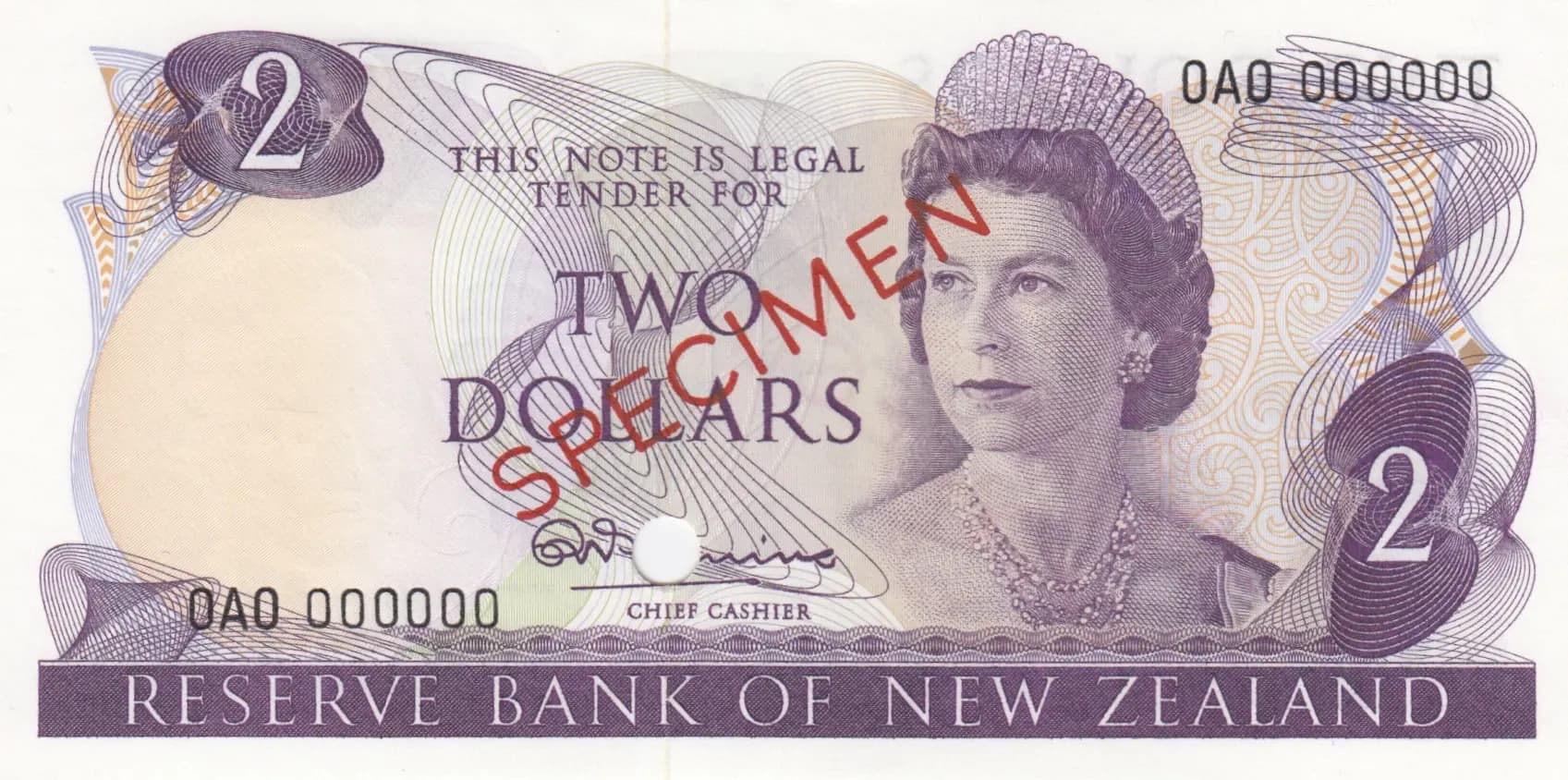
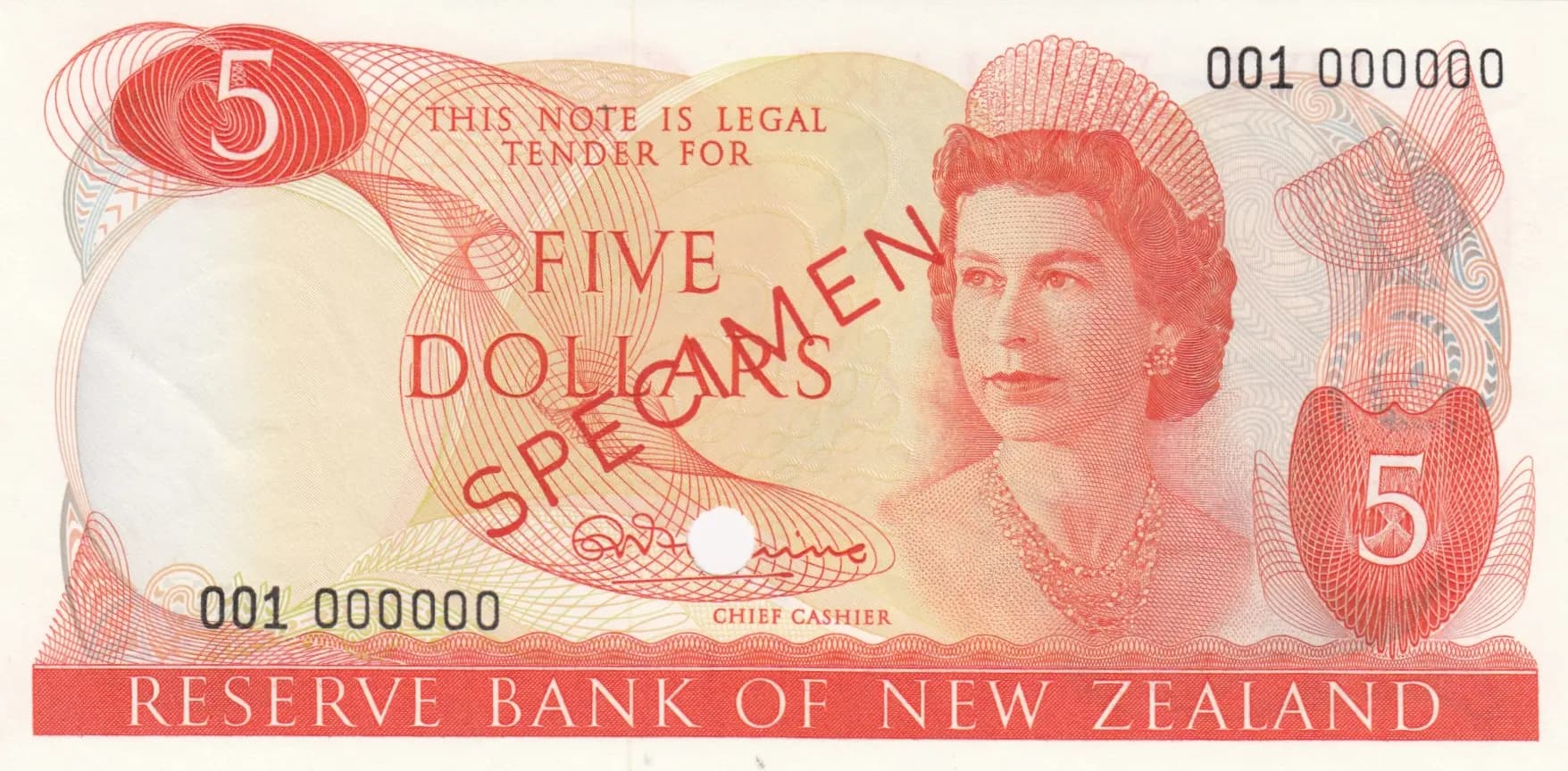
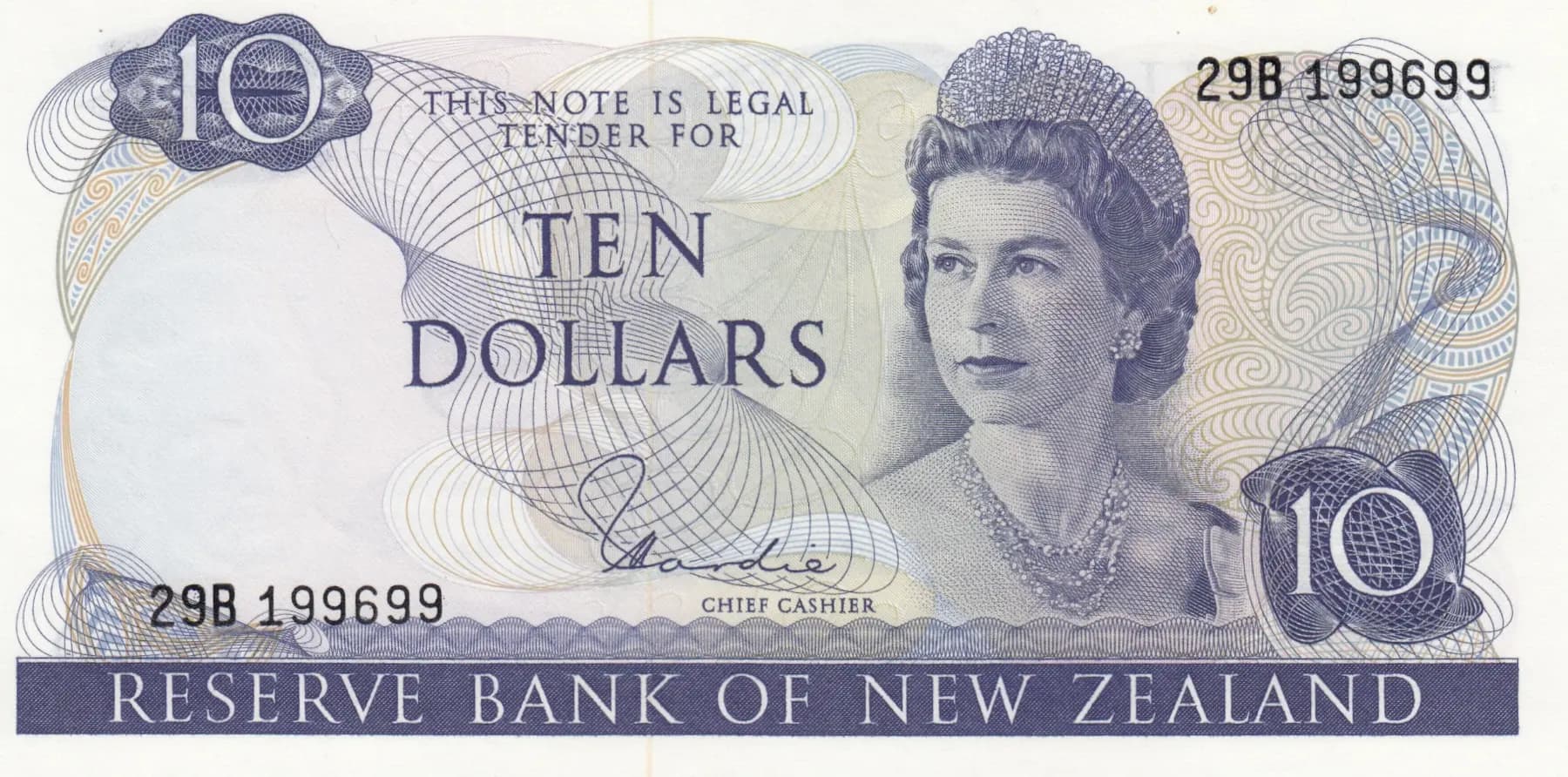
20 dollars 1967 specimen
Market Prices
2 salesAbout This Note
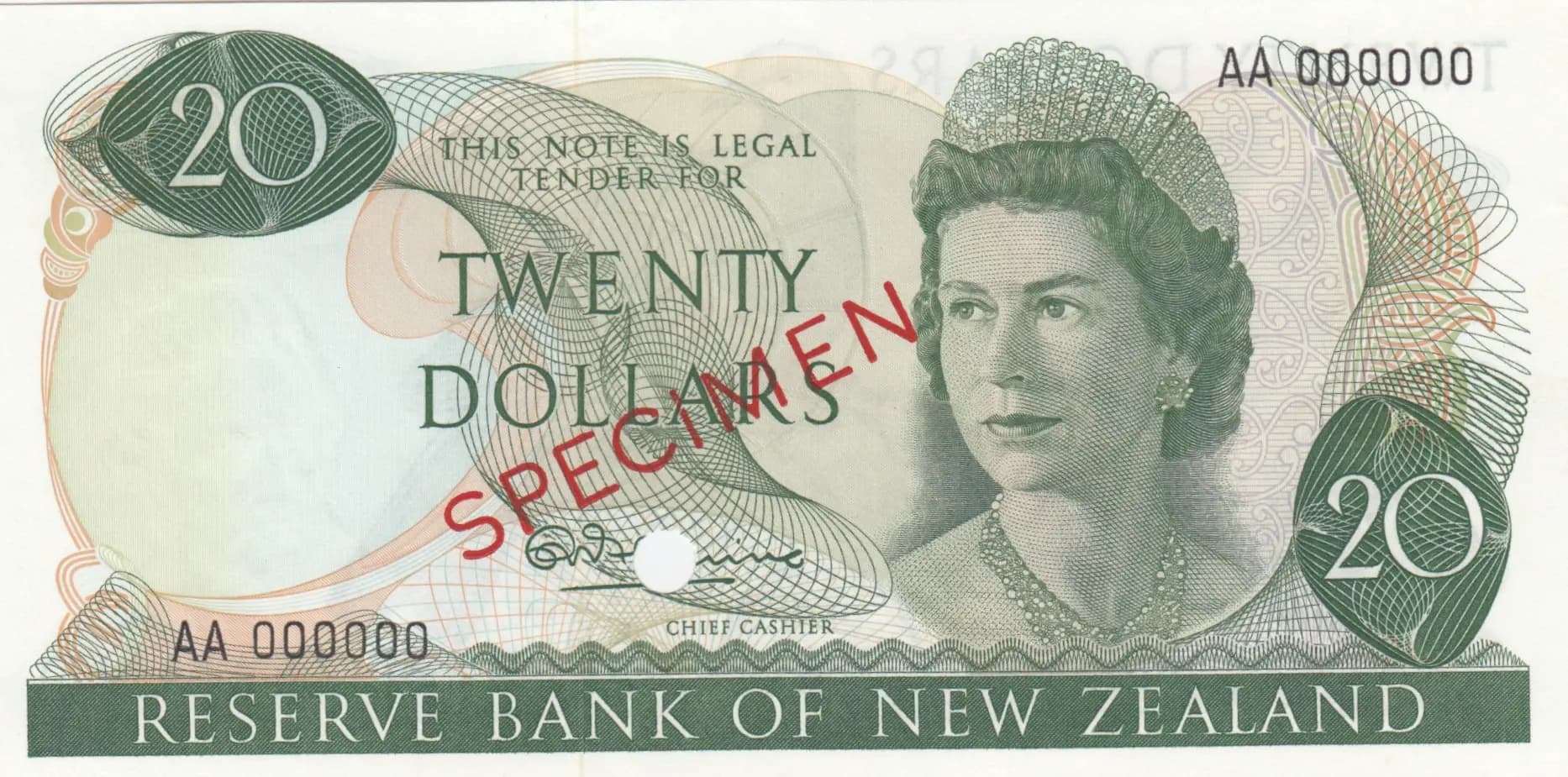
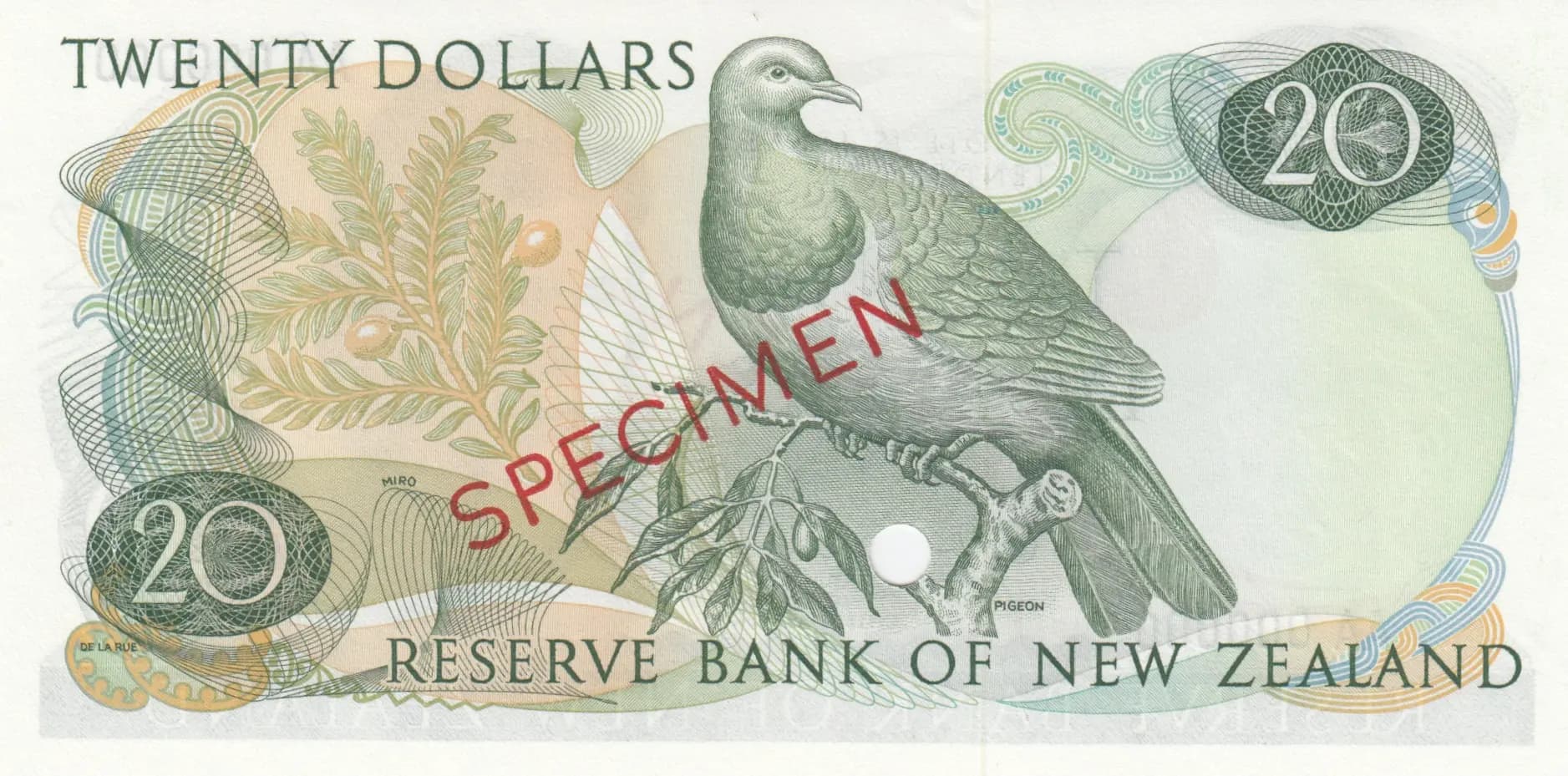
This is a 1967 specimen note of the New Zealand Reserve Bank twenty dollar denomination, printed by De la Rue of London. The note displays pristine uncirculated condition with crisp, unmarred surfaces and features the distinctive red 'SPECIMEN' overprint across both obverse and reverse. The obverse showcases a formal portrait of Queen Elizabeth II in tiara and pearl necklace against a green and beige multicolor underprint, while the reverse depicts a detailed engraving of a New Zealand pigeon perched on botanical elements, making this an aesthetically significant example of mid-20th century Commonwealth currency design.
Uncommon. Specimen notes from the 1967-1981 series represent a smaller subset of total production compared to circulating issues, and this P-167s variety specifically is documented in the PMG population reports as one of seven catalogued variants for the Pick-167 base number. However, the eBay price data provided (PMG 66 sold for $345 in 2021, PMG 63 for $325 in 2020) indicates moderate collector demand rather than premium rarity pricing. Specimen notes of New Zealand are collected but not exceptionally scarce, placing this note in the 'uncommon' rather than 'rare' category. The uncirculated condition and specimen status enhance its appeal to collectors but do not place it in the very rare tier.
Issued during the final years of Queen Elizabeth II's reign as the reigning British monarch, this 1967 specimen note reflects New Zealand's continued ties to the Commonwealth and British currency design traditions of the era. The inclusion of a native New Zealand pigeon on the reverse demonstrates the Reserve Bank's effort to incorporate indigenous natural history into the currency design, representing New Zealand's distinct national identity within the Commonwealth. The specimen status indicates this note was prepared for official presentation purposes and internal banking records, not for public circulation, making it a historically significant document of the Reserve Bank's currency production practices during this period.
The obverse features a formal right-facing portrait of Queen Elizabeth II wearing ceremonial regalia including a tiara and pearl necklace, positioned on the right side of the note against a complex background of green and beige multicolored security printing. Denomination numerals '20' appear in ornamental oval cartouches in the upper left and lower right corners, surrounded by intricate guilloche patterns and fine-line security work typical of De la Rue's premium security printing. The reverse displays a naturalistic engraved illustration of the New Zealand pigeon (identified as 'MIRO'), depicted perched on a botanical branch with leaves, positioned centrally and framed by decorative borders and additional ornamental cartouches. The overall color palette transitions between green, beige, cream, and gold/orange accents on both sides, with the artist signature 'MIRO' visible on the reverse alongside the De la Rue printer attribution.
Front side: 'THIS NOTE IS LEGAL TENDER FOR' / 'TWENTY DOLLARS' / '20' (denomination numerals in oval cartouches) / 'SPECIMEN' (diagonal red overprint) / 'AA 000000' (specimen serial number) / 'CHIEF CASHIER' / 'RESERVE BANK OF NEW ZEALAND'. Back side: 'TWENTY DOLLARS' / '20' (denomination numerals in cartouches) / 'SPECIMEN' (diagonal red overprint) / 'PIGEON' (species identification) / 'MIRO' (artist signature) / 'DE LA RUE' (printer attribution) / 'RESERVE BANK OF NEW ZEALAND'.
Intaglio engraving (letterpress/offset combination) executed by De la Rue, London, utilizing their proprietary security printing methods. The visual analysis reveals characteristic fine-line guilloche patterns, intricate security work throughout the background, detailed botanical and ornamental engraving, and the complex multicolor underprinting typical of De la Rue's high-security currency production. The crisp, well-defined edges and fine detail preservation suggest professional museum-quality intaglio reproduction. The red 'SPECIMEN' overprint was applied separately as a standard overprinting procedure for specimen notes.
This note is catalogued as Pick-167s, the specimen variety of the 1967-1981 series twenty dollar note. The 's' suffix designates it as a specimen issue with the characteristic diagonal red 'SPECIMEN' overprint and serial number configuration (AA 000000) typical of specimen notes prepared for banking officials and archives. The PMG population report identifies seven total variants (P-167a through P-167d, with P-167b*, P-167d*, and P-167s as distinct issues), all printed by TDLR (De la Rue). This specimen variety differs from circulating variants in its overprint, serial numbering, and intended non-circulation status.