100 dollars 1981 specimen
Market Prices
About This Note
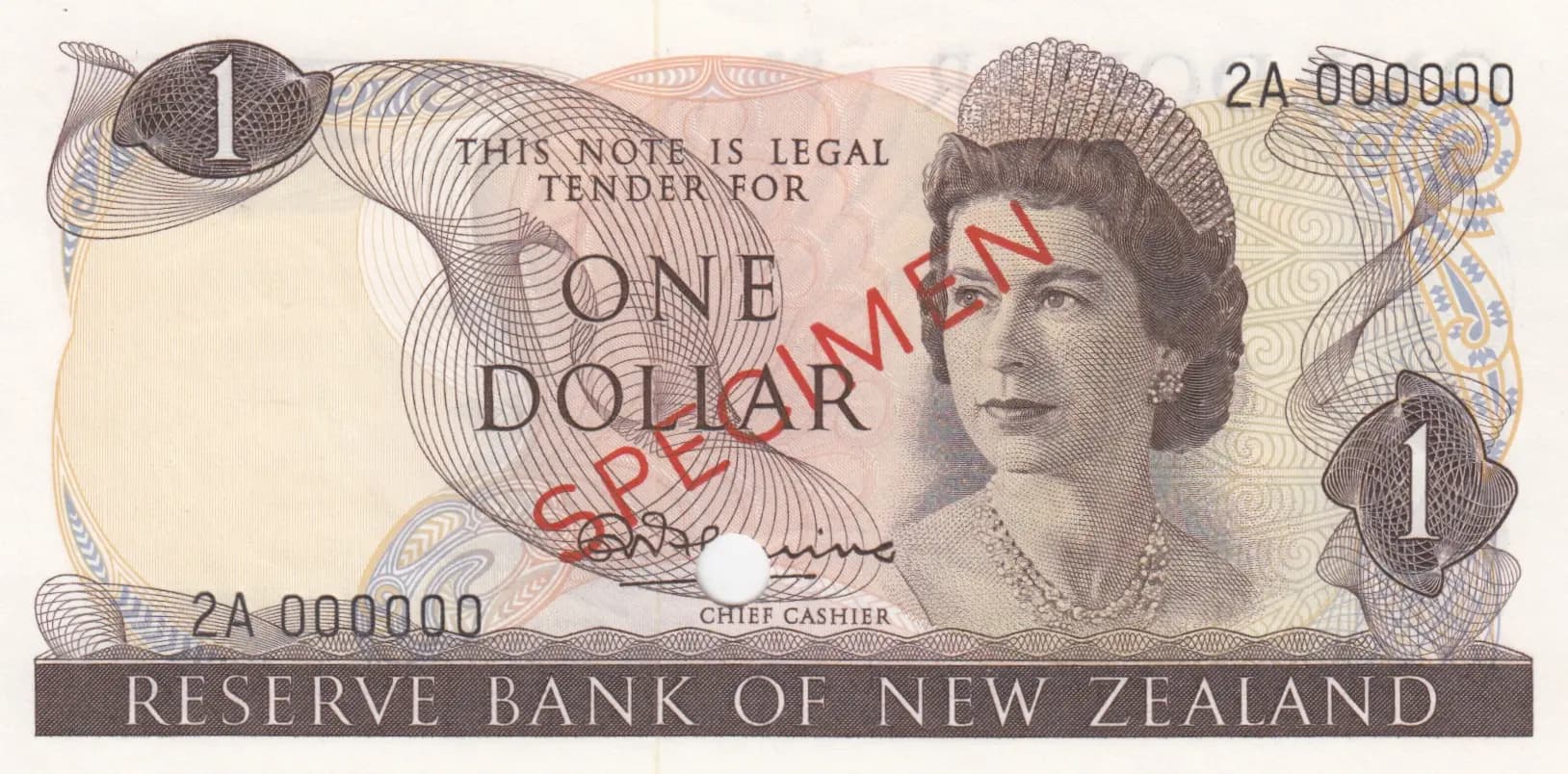
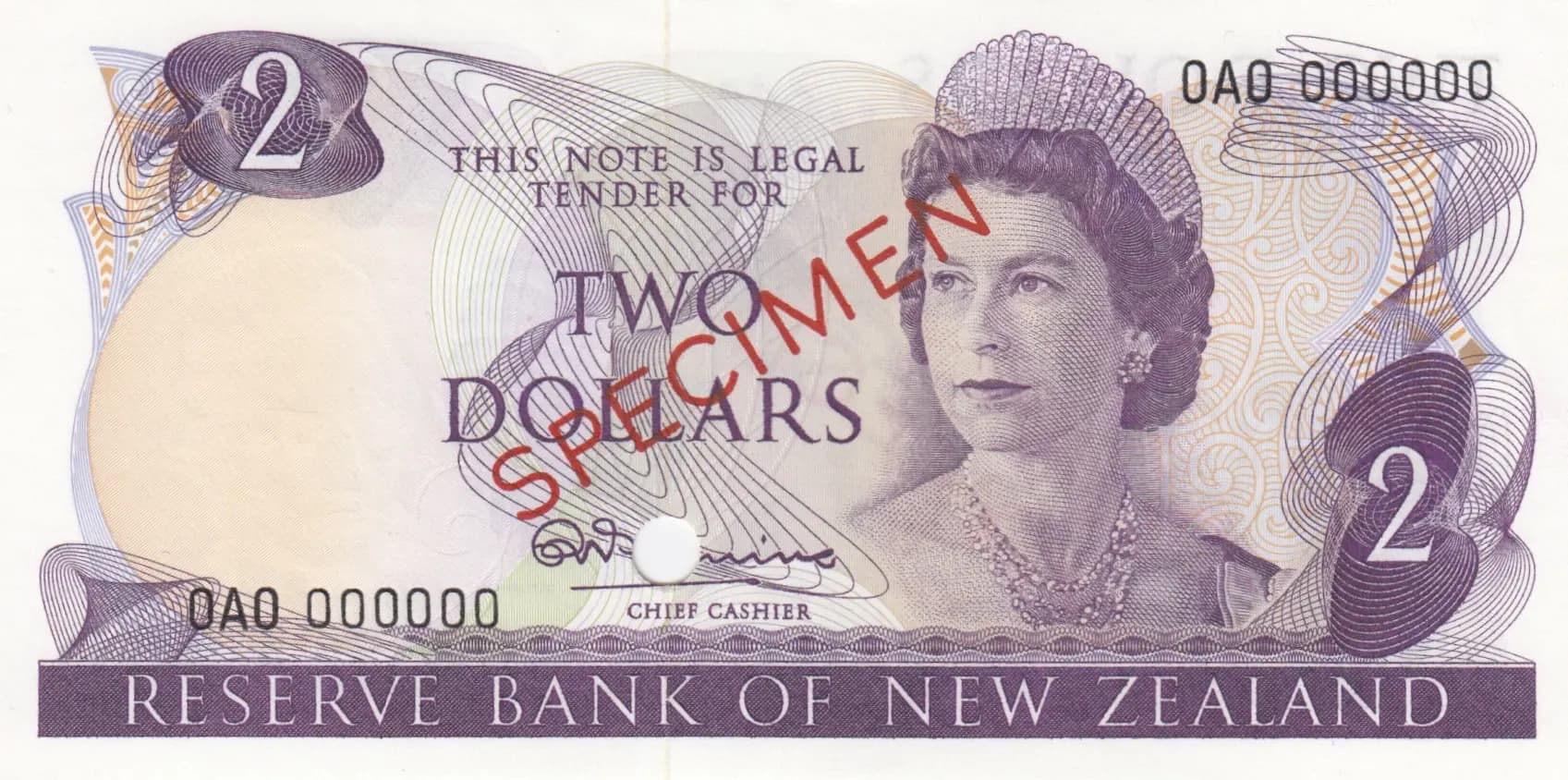
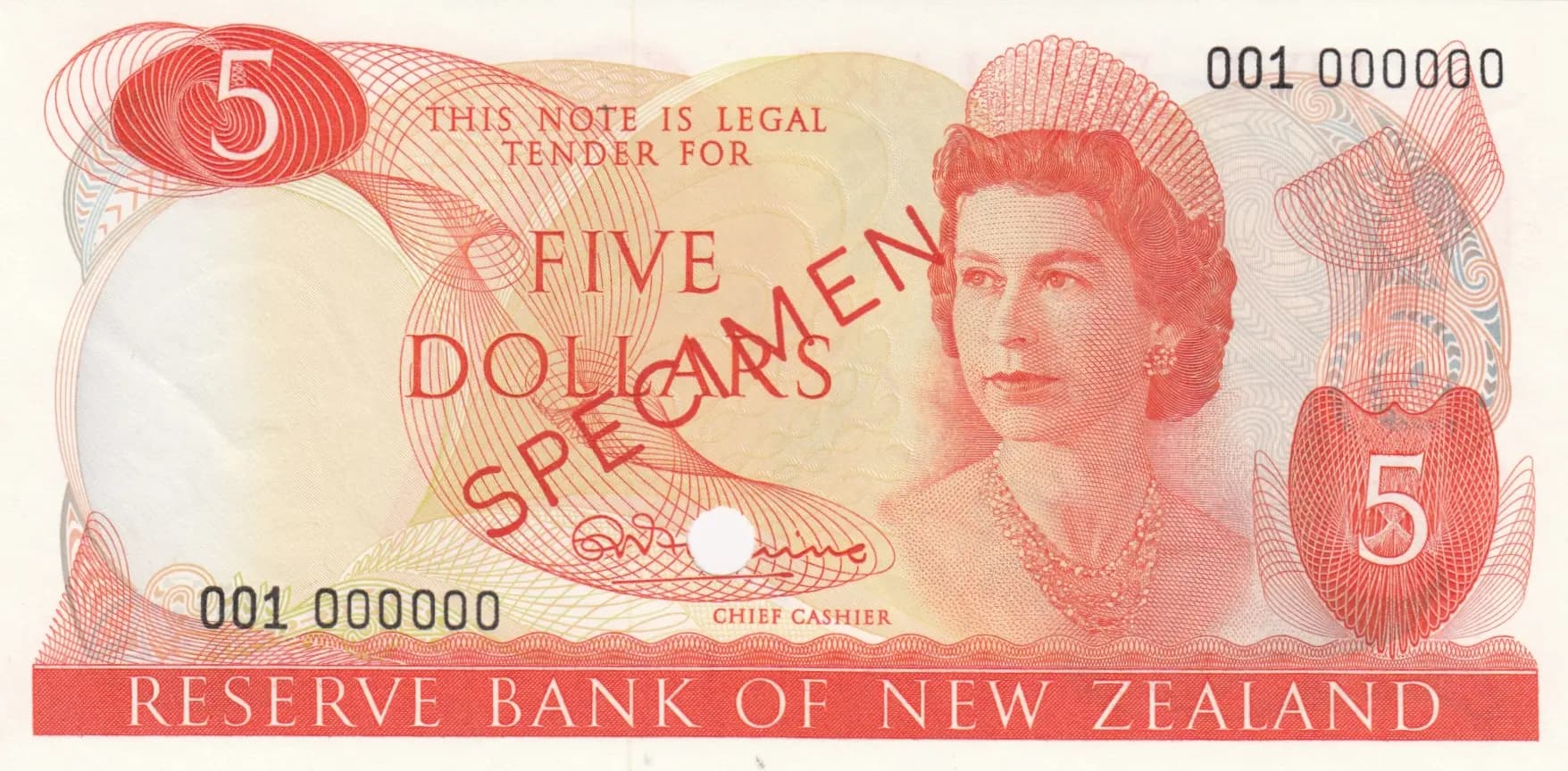
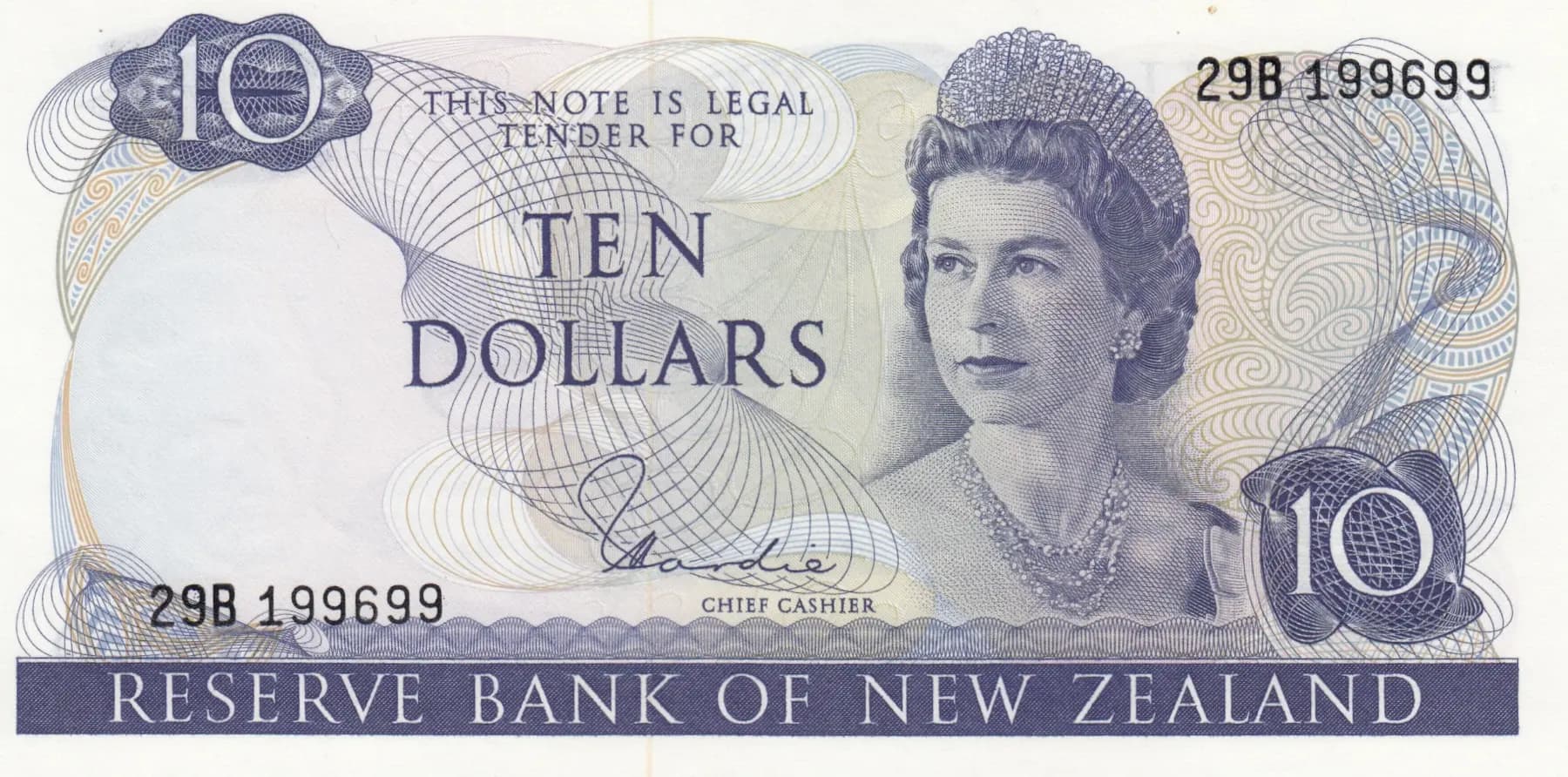
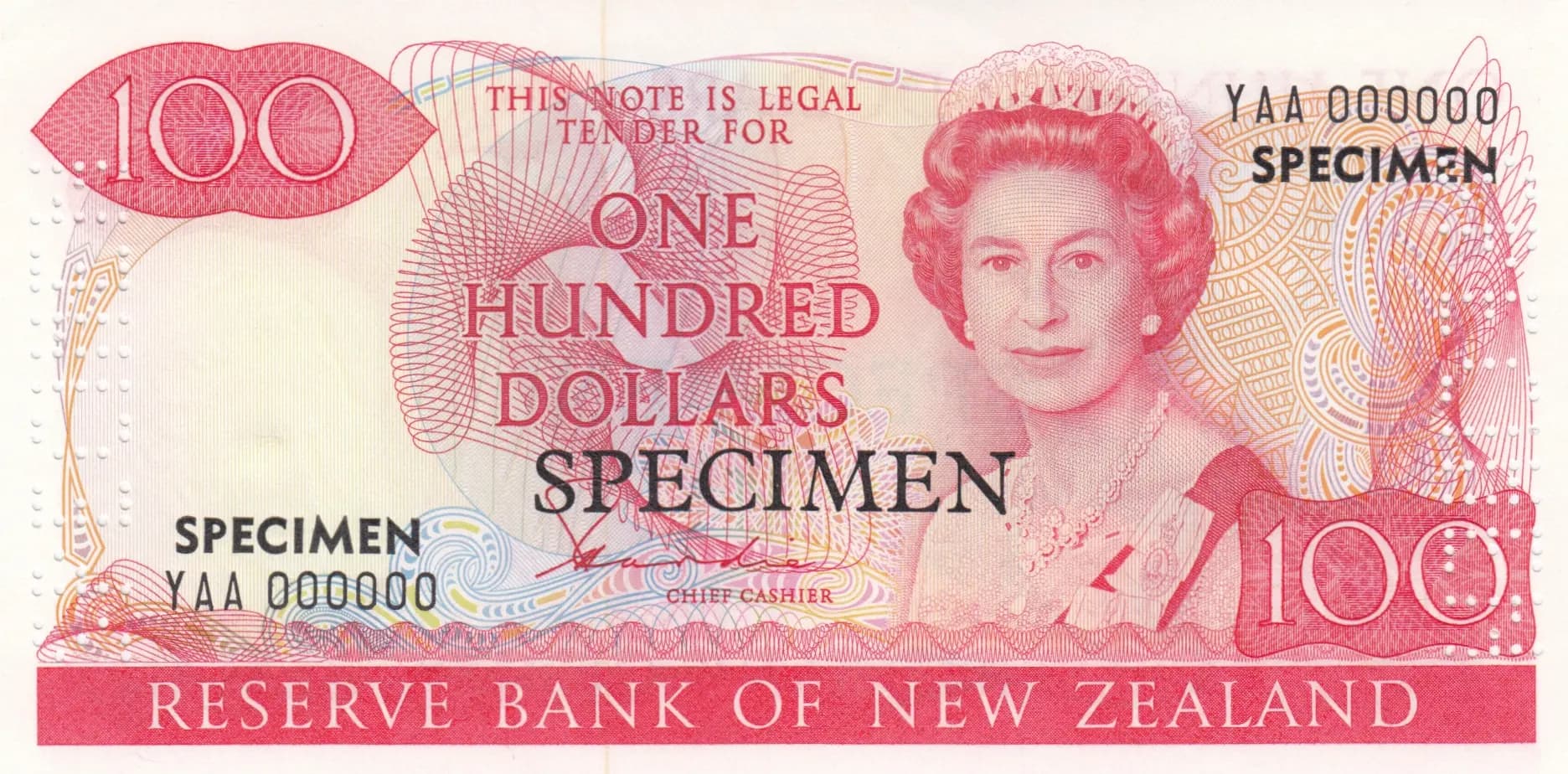
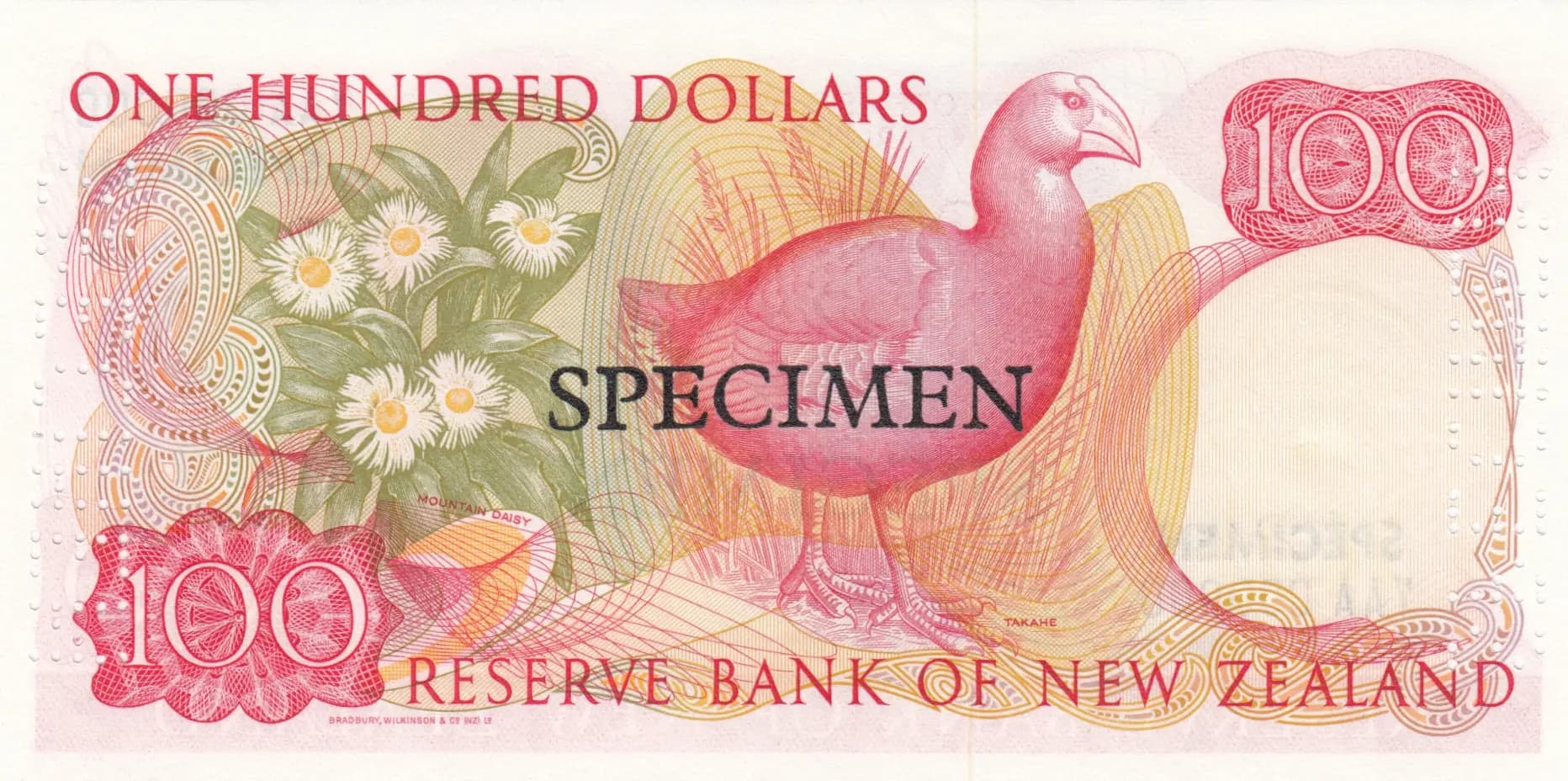
This is a pristine uncirculated specimen note of the 1981 New Zealand 100 Dollar banknote, printed by Bradbury Wilkinson. The note features a mature portrait of Queen Elizabeth II on the obverse in red and multicolor inks with ornate filigree work, while the reverse displays a detailed engraving of a kiwi bird and Woodall daisy flowers—quintessentially New Zealand imagery. As a specimen note with "SPECIMEN" overprints, this was never intended for circulation and represents an important reference example from the Reserve Bank's 1981 issuance.
Uncommon. While the base design (P-175) was issued from 1981-1989 in circulation quantities, specimen notes represent a small subset of production reserved for archival, promotional, and reference purposes by central banks. The eBay price tracking data shows specimen examples trading in the $100-$1200 USD range depending on condition and variant, with UNC specimens commanding premium prices ($1000+), suggesting limited availability. Specimen notes are collectible but not as scarce as recalled issues or short-run commemoratives.
The 1981 New Zealand 100 Dollar banknote marked a significant period in New Zealand currency design, featuring the mature portrait of Queen Elizabeth II as the reigning Commonwealth monarch. The reverse imagery—the kiwi bird and native daisies—reflects New Zealand's emphasis on national identity and natural heritage during the 1980s, a time when many Commonwealth nations were updating their currency designs to better represent their unique cultural symbols rather than generic monarchical imagery alone.
The obverse features a facing portrait of Queen Elizabeth II positioned on the right side of the note, rendered in the mature style typical of her later reign portraits. The portrait is surrounded by ornate geometric and floral filigree patterns in red and multicolor inks, with radiating line work forming decorative shields around the denomination numerals '100' positioned in the upper left and lower right. The legal tender statement and denomination text appear prominently in the center. The reverse showcases a large, detailed engraving of a kiwi bird (Apteryx, the iconic flightless bird of New Zealand) positioned at center-right, accompanied by botanical illustrations of Woodall daisies with green foliage on the left side. Both sides employ ornate corner elements and geometric background patterns typical of intaglio-printed currency of the era.
Front: 'THIS NOTE IS LEGAL TENDER FOR' / 'ONE HUNDRED DOLLARS' / '100' (denomination) / 'SPECIMEN' (overprint indicating non-circulating status) / 'YAA 000000' (specimen serial number format) / 'CHIEF CASHIER' / 'RESERVE BANK OF NEW ZEALAND'. Back: 'ONE HUNDRED DOLLARS' / 'SPECIMEN' (overprint) / '100' (denomination) / 'RESERVE BANK OF NEW ZEALAND' / 'TAIAHA' (appears to be an artist or engraver signature) / 'WOODALL DAISY' (identification of the floral species depicted) / 'BRADBURY, WILKINSON & CO INC' (printer attribution).
Intaglio printing (engraved steel plates), executed by Bradbury Wilkinson & Co Inc of New Malden, England. The visual analysis reveals complex geometric line work, fine-line printing with multiple color separation layers, detailed portrait engraving, and intricate botanical rendering—all characteristic of traditional intaglio security printing. The specimen overprints were applied as a secondary process to distinguish this note from circulation currency.
This note is identified as Pick P-175s (the 's' designating 'specimen'). The PMG Population Report indicates at least two catalogued variants exist (P-175a and P-175b), both printed by BWC. The specimen overprint and serial number format ('YAA 000000') are standard identifiers for specimen notes. The watermark depicts Captain James Cook, consistent with New Zealand currency of this period. Without access to the actual serial number prefix or other distinguishing features beyond the specimen status, the exact sub-variety (175a vs. 175b) cannot be definitively determined from the visual analysis alone, though both variants are from the same 1981 issuance.