10 dollars 1981 specimen
Market Prices
4 salesAbout This Note
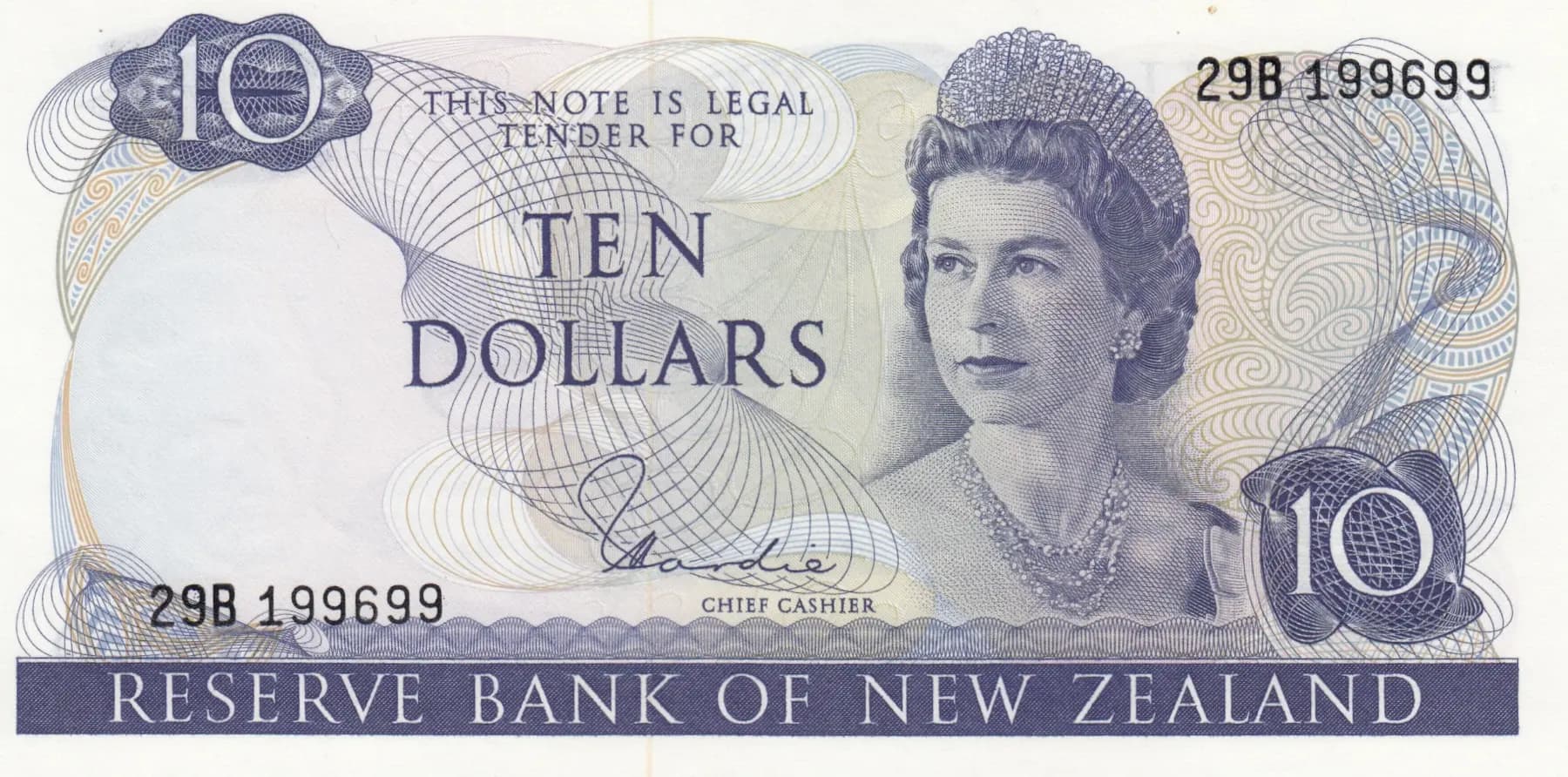
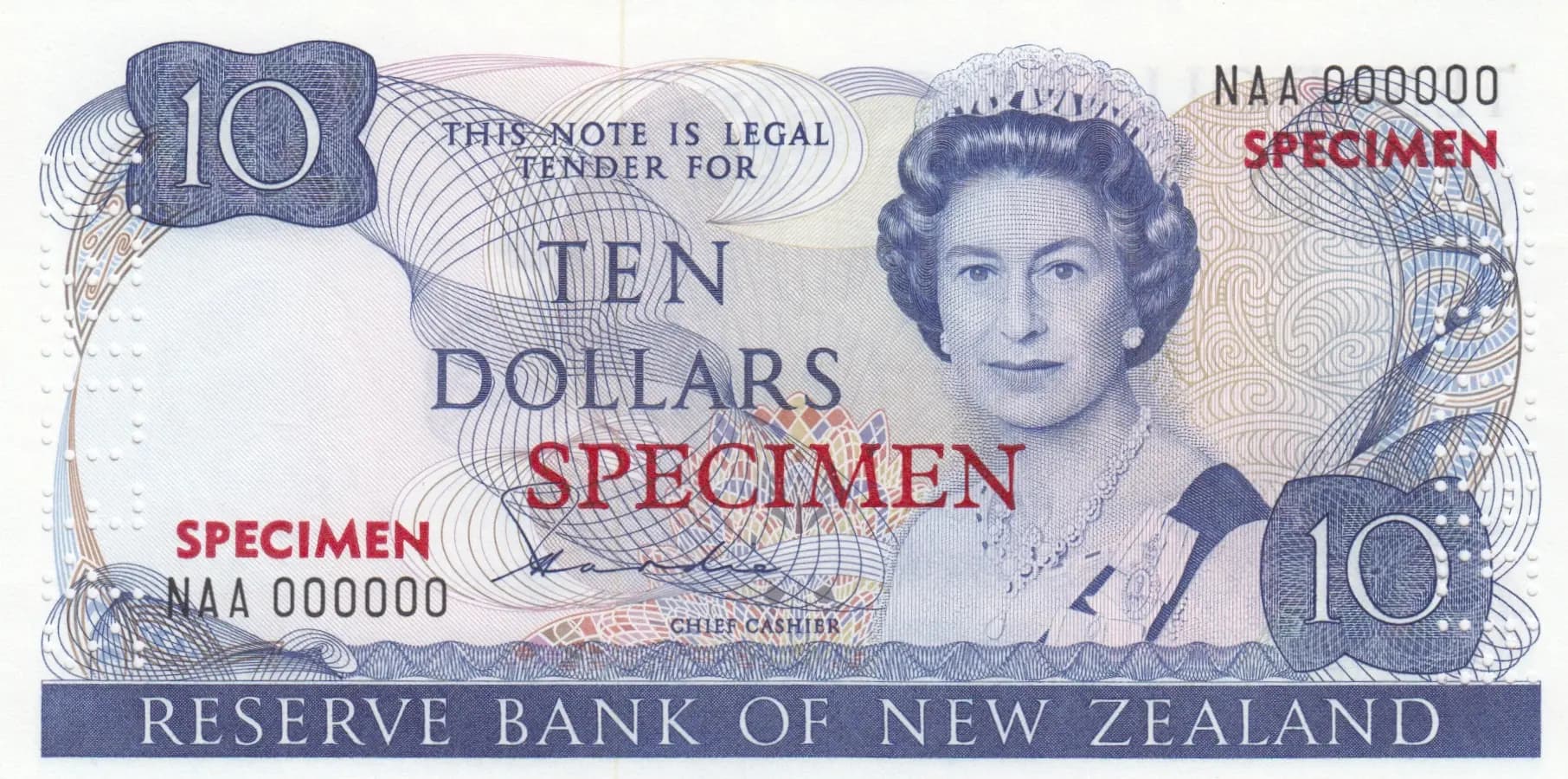
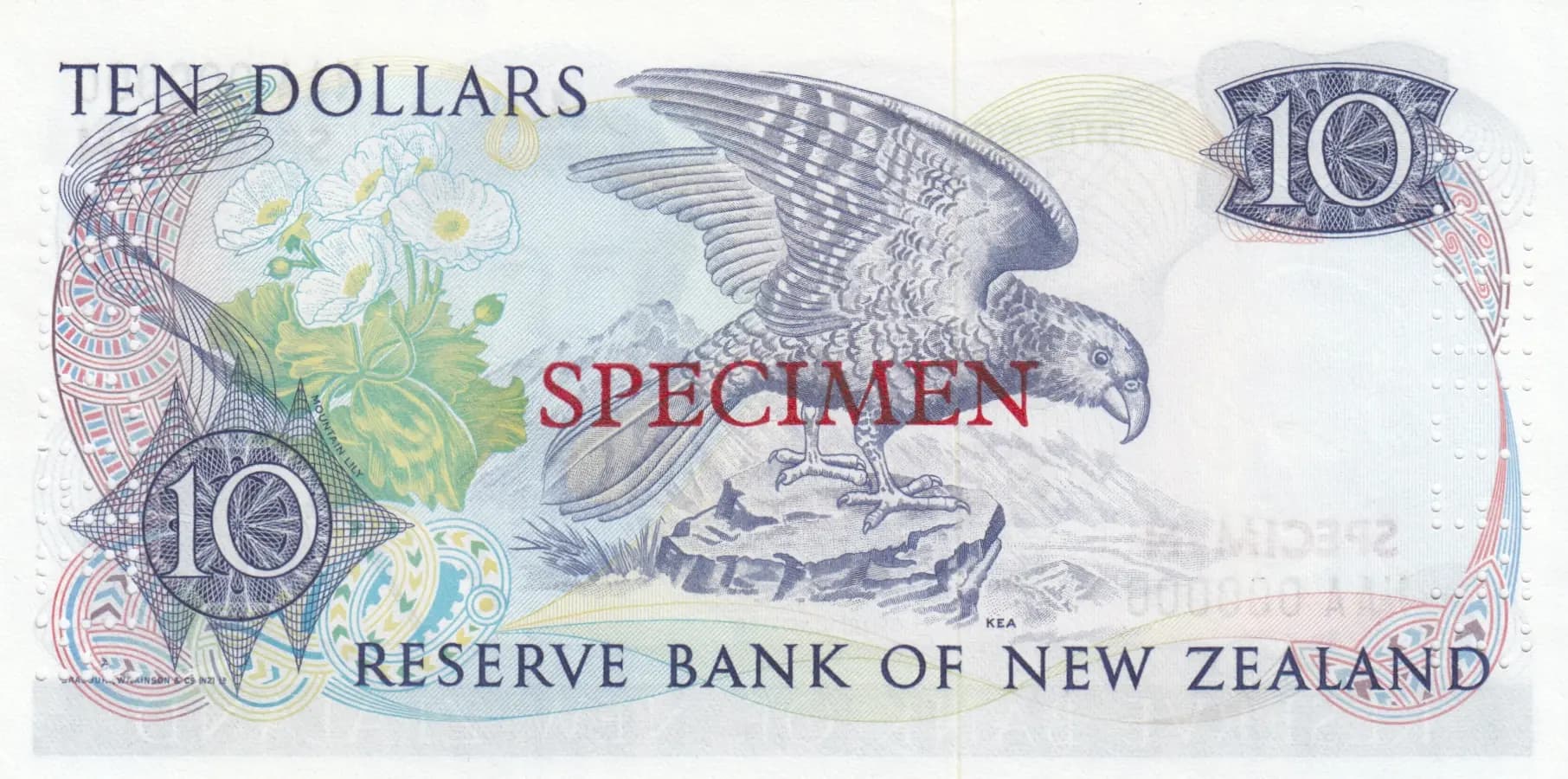
This is an uncirculated 1981 specimen note from the Reserve Bank of New Zealand, featuring a mature portrait of Queen Elizabeth II on the obverse and a detailed depiction of a Kea (New Zealand alpine parrot) on the reverse. The note exhibits exceptional clarity and crisp printing with intricate security features including fine line work, ornate decorative patterns, and multi-layered color printing in blue, purple, beige, and accent colors. As a specimen note with red 'SPECIMEN' overprint and zero serial number (NAA 000000), this represents an important institutional example from the early series of this design.
Uncommon. While specimen notes from this series exist in modest quantities compared to regular circulation issues, the catalog value of $750 for UNC condition and recent eBay auction results ranging from $221–$405 for graded examples indicate this is not a common collector item. Specimen notes by definition have limited original distribution (institutional preservation copies), which inherently restricts supply. However, the existence of multiple PMG-graded examples and documented sales activity confirms these notes do appear in the collector market with some regularity, preventing classification as truly rare.
Issued during the early 1980s, this Reserve Bank of New Zealand 10 Dollar note reflects New Zealand's cultural identity through its choice of national symbols—the portrait of Queen Elizabeth II as Commonwealth head of state, and the endemic Kea, an iconic alpine parrot found only in New Zealand's mountain regions. The specimen designation indicates this was produced for presentation, archival, or distribution to banking institutions during the currency's introduction, capturing a moment when New Zealand was consolidating its modern banknote design standards under the Reserve Bank's authority.
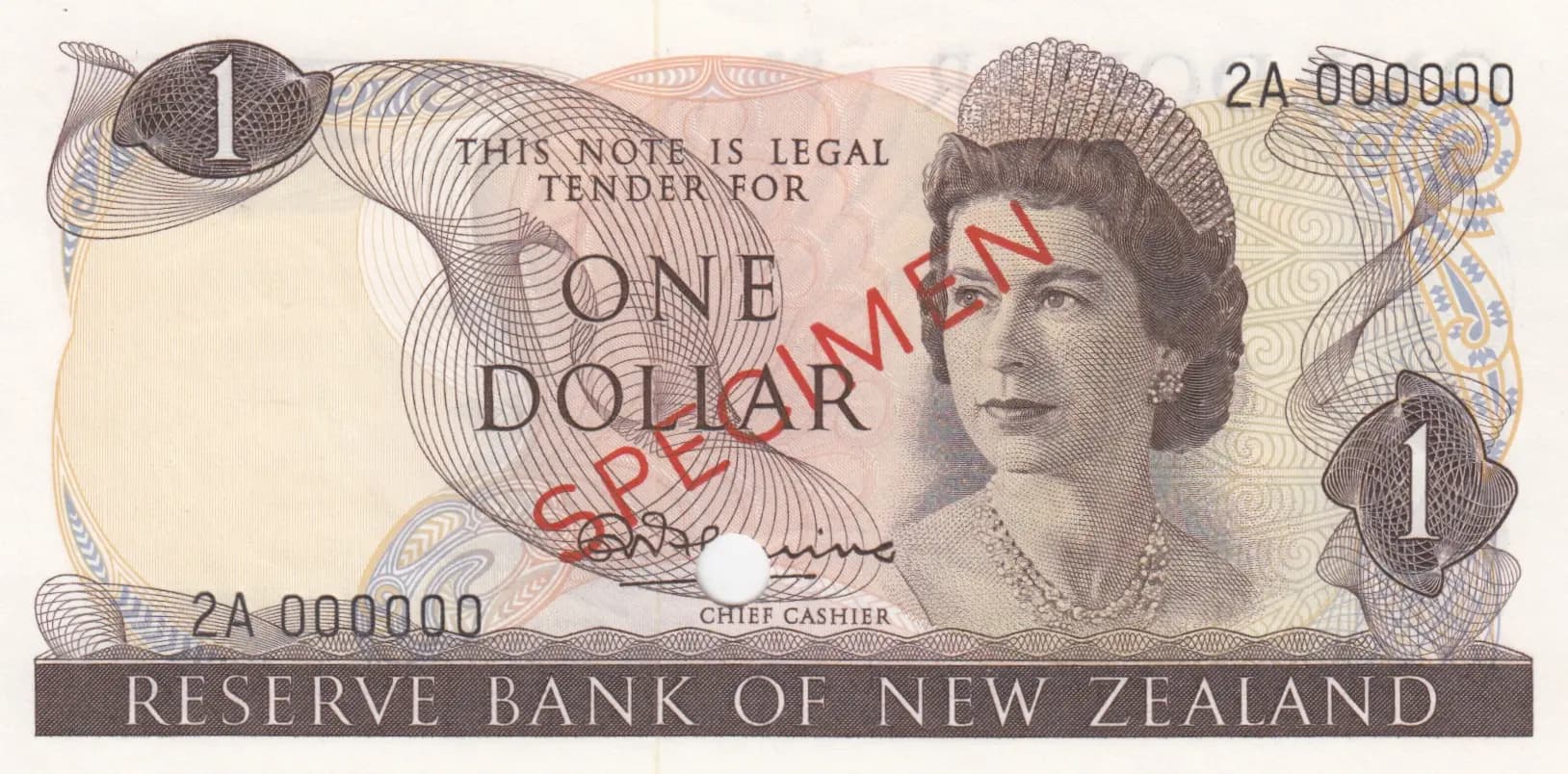
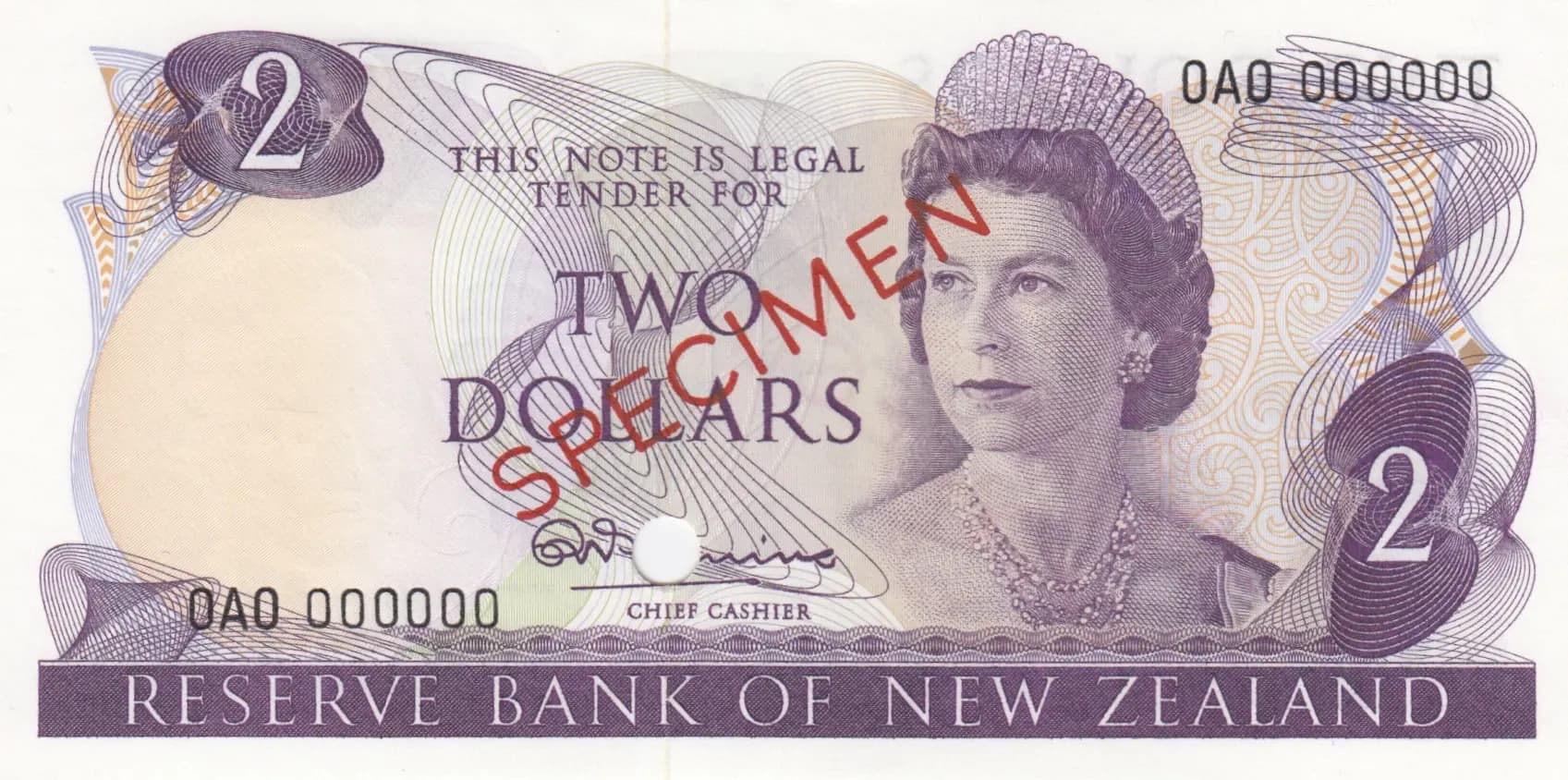
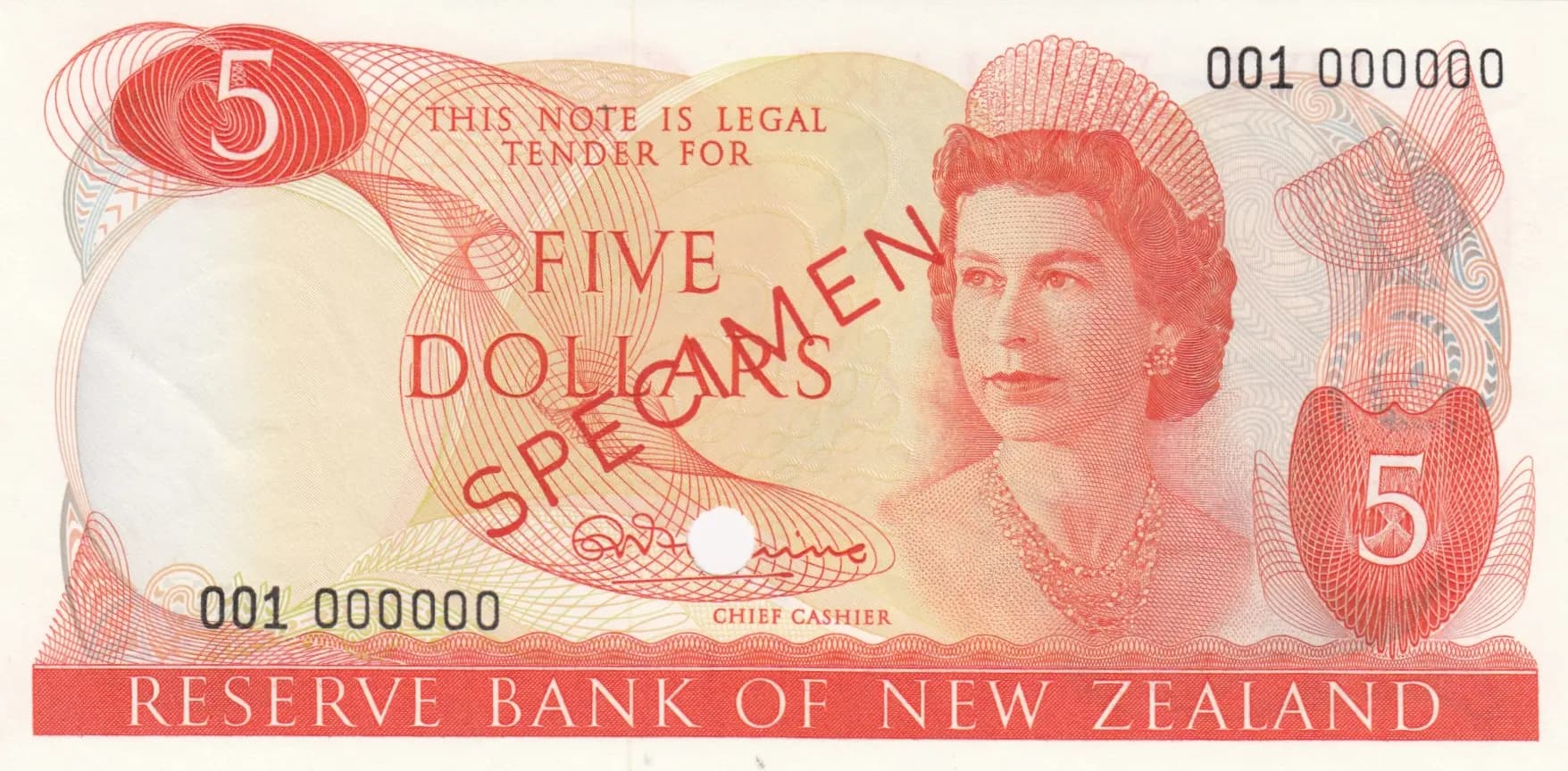
The obverse features a formal, mature portrait of Queen Elizabeth II positioned in the center-right, wearing formal attire with pearl earrings, rendered in classical engraving style. The reverse showcases a prominently displayed Kea with spread wings and meticulously detailed feather work, depicted in a naturalistic pose emerging from rocky alpine terrain, accompanied by floral elements (daisies or similar flowers) rendered in color on the left side. Both sides are framed by ornate decorative borders featuring intricate geometric patterns, fine line work, and cross-hatching in blue, purple, red, and earth tones. The denomination '10' appears in decorative frames on both sides, and the legal tender text is distributed across the front in flowing script within ornamental cartouches.
Front side: 'RESERVE BANK OF NEW ZEALAND' (issuing authority); 'THIS NOTE IS LEGAL TENDER FOR TEN DOLLARS' (legal tender declaration); '10' (denomination numeral); 'SPECIMEN' (specimen overprint); 'NAA 000000' (specimen serial number); 'CHIEF CASHIER' (authorized signatory title). Back side: 'RESERVE BANK OF NEW ZEALAND' (issuing authority); 'TEN DOLLARS' (denomination text); '10' (denomination numeral); 'KEA' (identification of depicted bird species); 'SPECIMEN' (specimen overprint).
Intaglio engraving combined with offset color lithography, executed by Bradbury Wilkinson (BWC), a renowned British security printer. The note exhibits the hallmark characteristics of high-security currency production: intricate fine line work and cross-hatching for anti-counterfeiting purposes, multiple color separations for the background and security features, and carefully registered color printing for the flora and landscape elements. The specimen overprint in red is applied separately, typical of institutional specimen production.
This note is identified as P-172s (the 's' suffix denotes specimen status). The PMG population report documents at least four base varieties for Pick 172 (P-172a, P-172b, P-172b*, P-172c), all printed by BWC. The specimen variant (P-172s) would represent a separate cataloging distinction from these circulation varieties. The serial number observed (NAA 000000) is consistent with specimen note production standards, where zero serial numbers are used for non-circulating institutional examples. The red 'SPECIMEN' overprint and TDLR oval marking further confirm this as the official specimen issue variant.