1 dollar 1981 specimen
Market Prices
About This Note
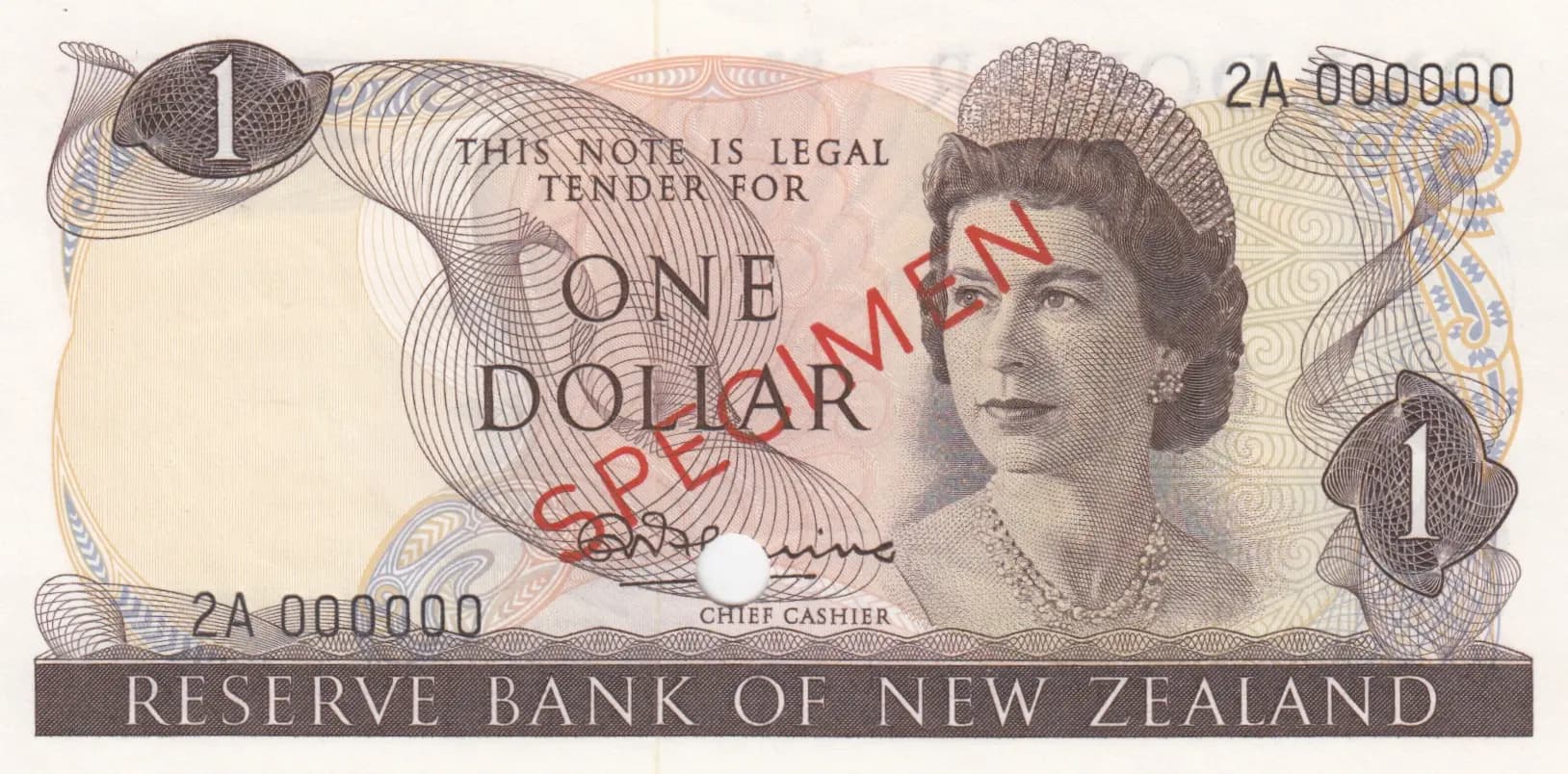
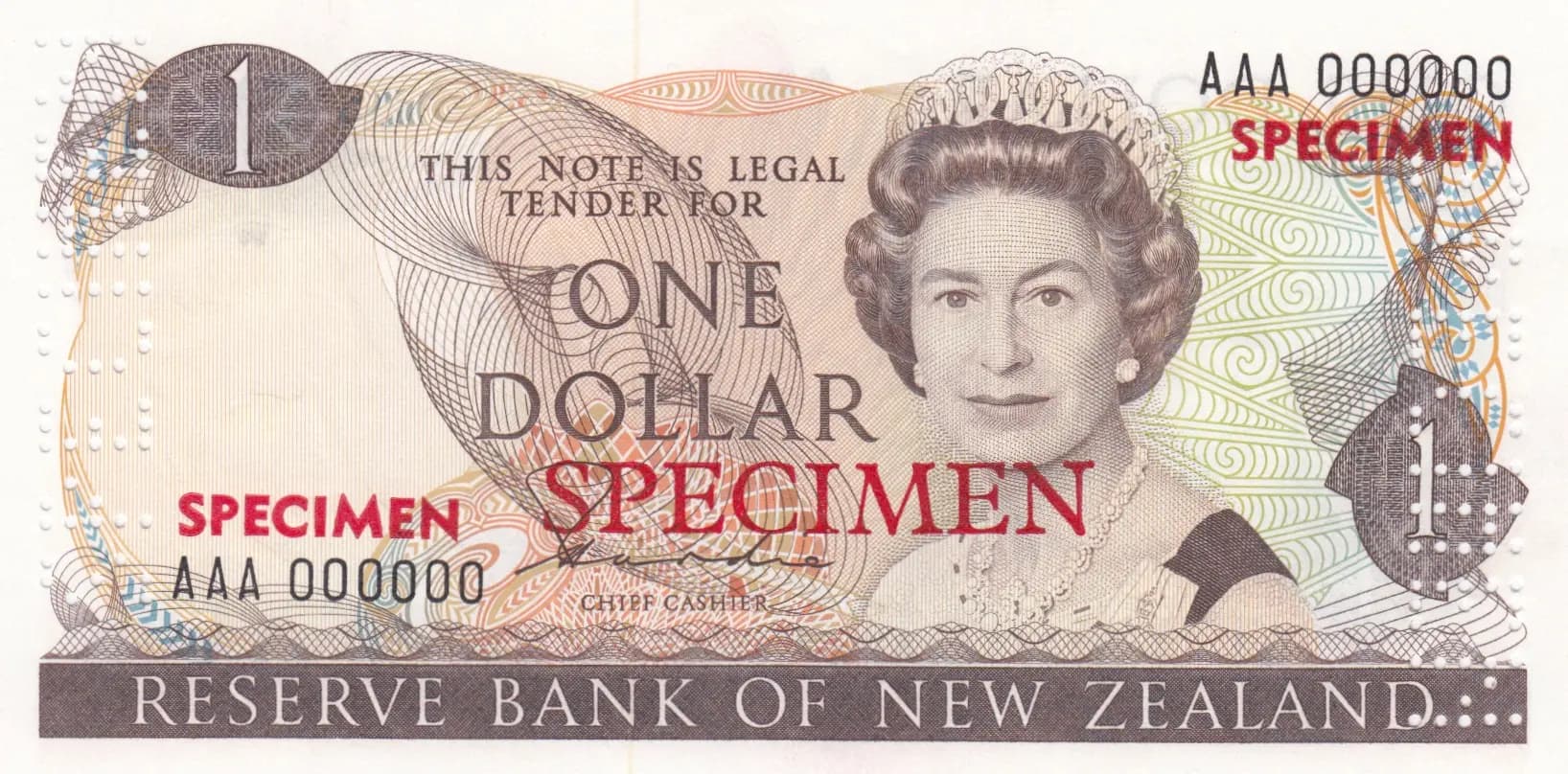
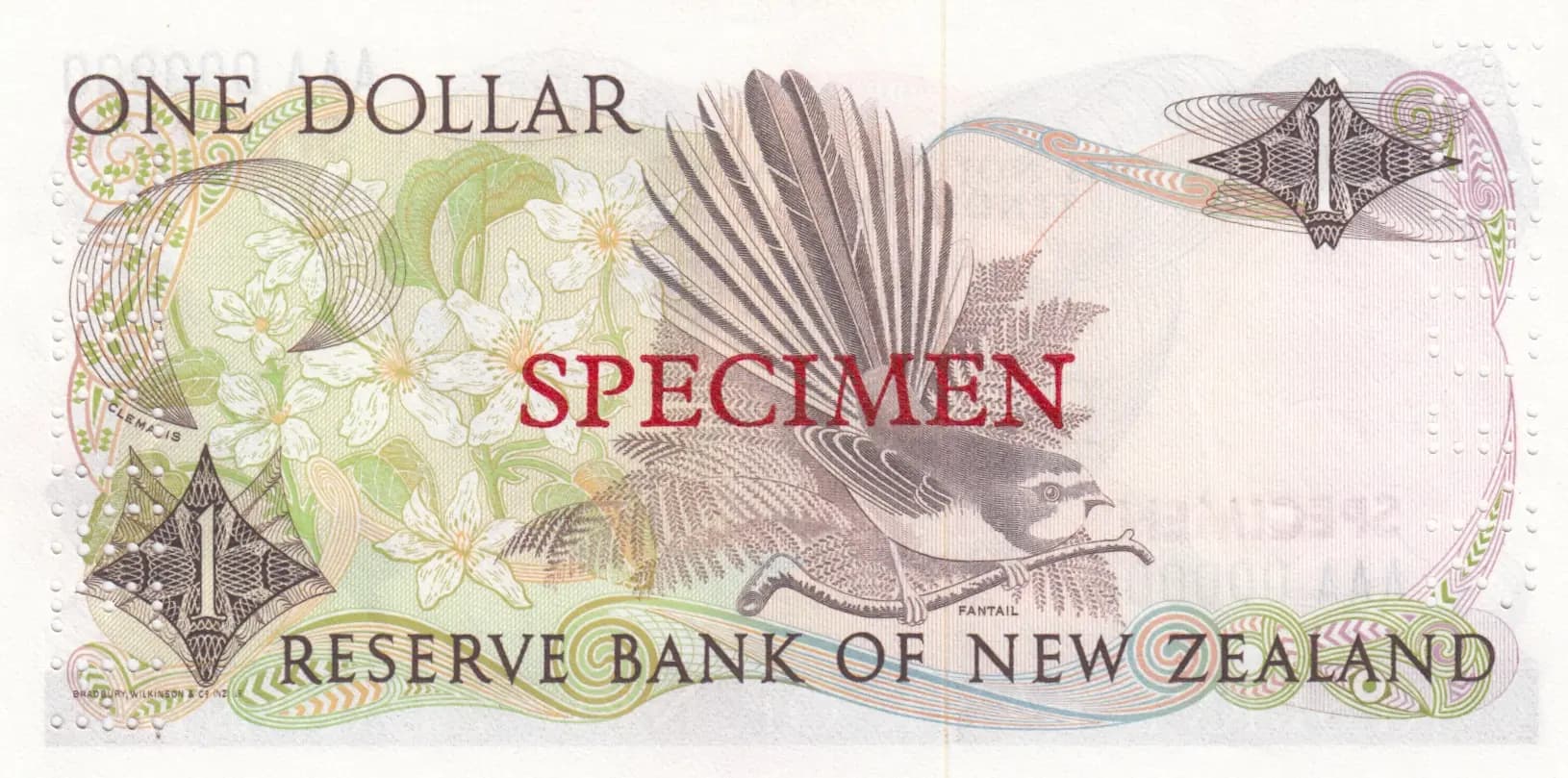
This is an uncirculated 1981 New Zealand one dollar specimen banknote, Pick P-169s, printed by Bradbury Wilkinson. The note displays sharp, clear printing throughout with no signs of wear, creases, or damage, featuring Queen Elizabeth II in mature profile on the obverse and a detailed engraving of a native pied fantail bird on the reverse. As a specimen note with prominent red SPECIMEN overprints and dummy serial numbers (AAA 000000), this represents a distribution sample from the Reserve Bank of New Zealand's 1981-1992 issue series.
Common. This specimen note represents a standard distribution example from the 1981-1992 issue series. eBay market data shows multiple UNC-graded examples trading in the $13.00–$22.88 USD range, with several sales under $20, indicating robust supply in the collector market. Specimen notes, while technically not circulated, were produced in sufficient quantities for distribution purposes and remain readily available. No evidence of limited print runs, recall, or shortage exists for this Pick number.
This note was issued during the early 1980s by the Reserve Bank of New Zealand, a period that saw the introduction of polymer-resistant security features in Commonwealth currency design. The mature portrait of Queen Elizabeth II and the indigenous fantail bird reflect New Zealand's dual identity as a Commonwealth nation and a distinct cultural entity with native fauna. Specimen notes like this were traditionally distributed to banks, currency dealers, and international monetary authorities to showcase new security features and design elements.
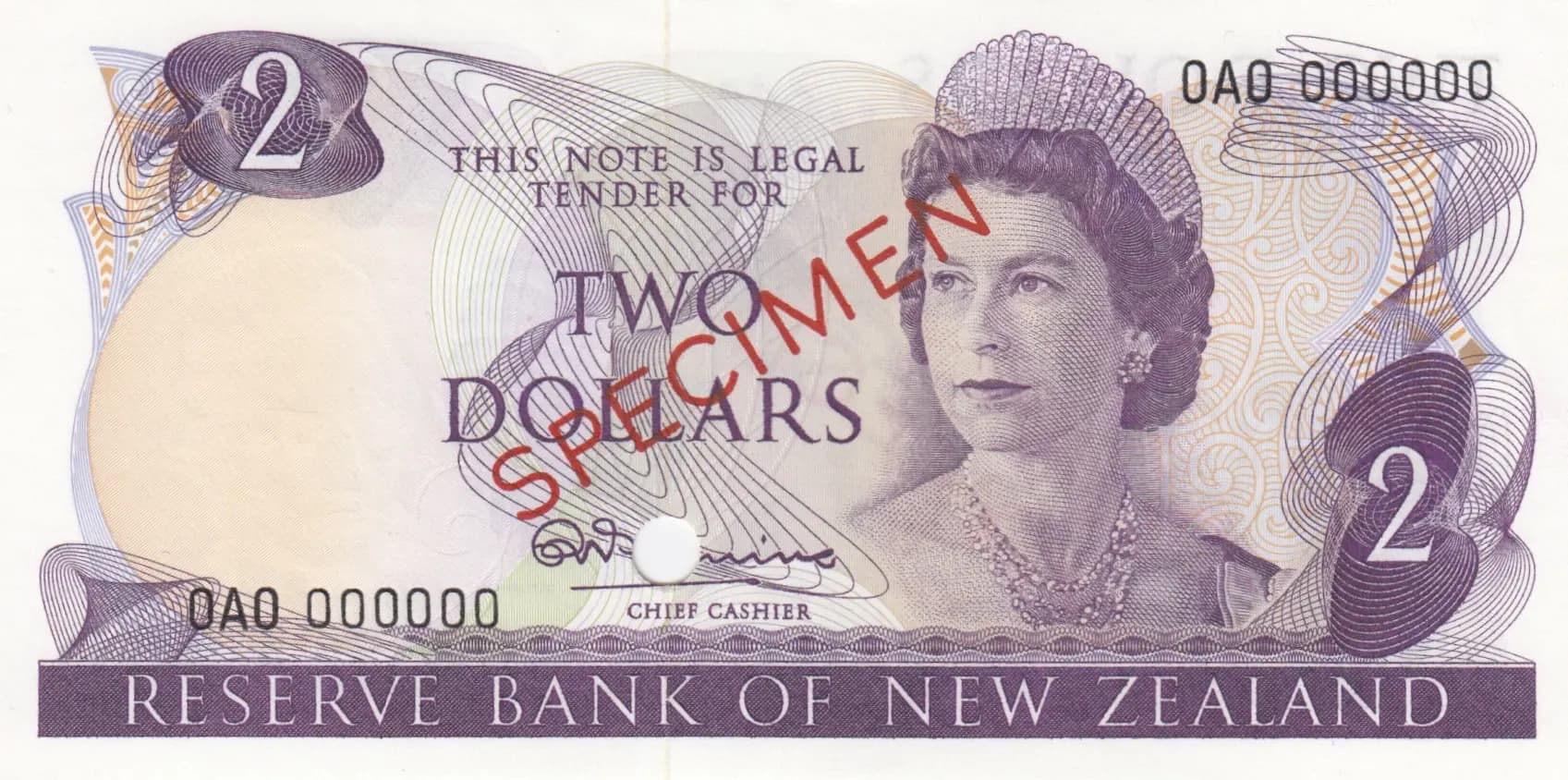
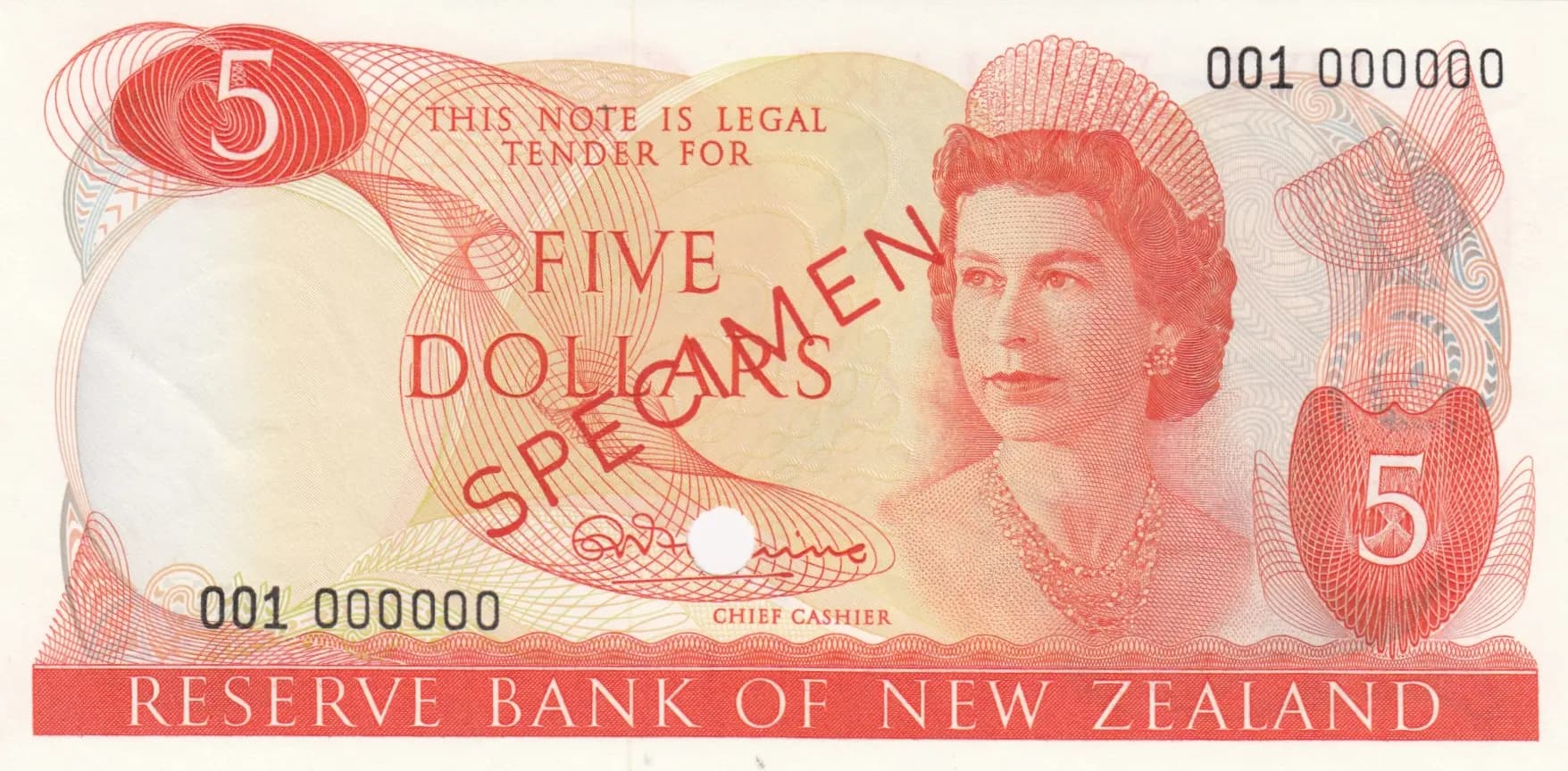
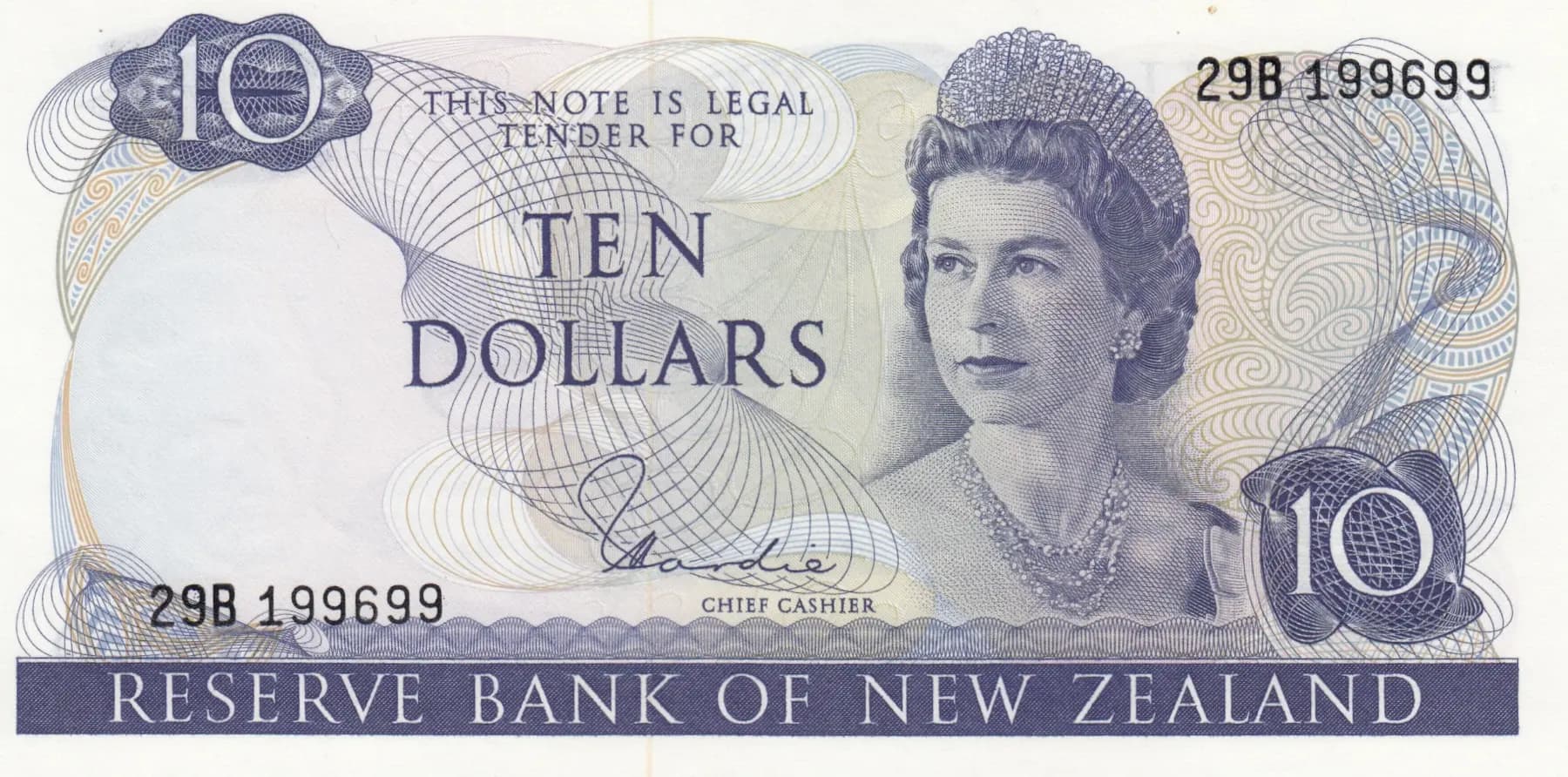
The obverse features a mature portrait of Queen Elizabeth II positioned on the right side, depicted in left-facing profile wearing her characteristic hairstyle and pearl earring, rendered in the classical engraved style typical of Commonwealth currency. The reverse showcases a detailed naturalistic engraving of a New Zealand pied fantail (Rhipidura fuliginosa), a small native songbird, positioned centrally and surrounded by floral motifs including white flowers and green leaves. Both sides employ elaborate security printing with extensive guilloche patterns—complex curved-line formations creating decorative rosettes and corner elements—executed in multiple colors (brown, orange, green, purple) on a cream/pale background. Circular medallions containing the denomination '1' and heraldic shield elements enhance the design's security and aesthetic appeal.
Front side: 'THIS NOTE IS LEGAL TENDER FOR' / 'ONE DOLLAR' / 'SPECIMEN' (displayed twice in red) / 'AAA 000000' (specimen serial number format, displayed twice) / 'CHIEF CASHIER' / 'RESERVE BANK OF NEW ZEALAND'. Back side: 'ONE DOLLAR' / 'SPECIMEN' (in red) / 'RESERVE BANK OF NEW ZEALAND' / 'FANTAIL' (identifying the depicted bird species).
Intaglio (engraving) combined with multicolor offset security printing. The detailed portrait of Queen Elizabeth II and the fantail bird illustration were executed using traditional steel engraving techniques, while the security background elements—including the extensive guilloche patterns, floral designs, and decorative line work—were produced using multicolor offset printing. This hybrid approach is characteristic of Bradbury Wilkinson & Company (BWC), the London-based security printer credited with this issue. The fine-line patterns and color layering visible throughout the note demonstrate the high-security standards expected of Commonwealth banknote production in this period.
This note is catalogued as P-169s (specimen variant). The PMG population report indicates three known varieties exist for the base Pick number P-169 (P-169a, P-169b, P-169c), all printed by BWC. The specimen format is indicated by the red SPECIMEN overprints on both sides and the dummy serial number format (AAA 000000) visible at top and bottom. As a specimen note rather than a circulating issue, this lacks the authentic signatures and sequential serial numbers of regular-issue notes P-169a through P-169c, making it distinguishable as a non-circulating distribution example.