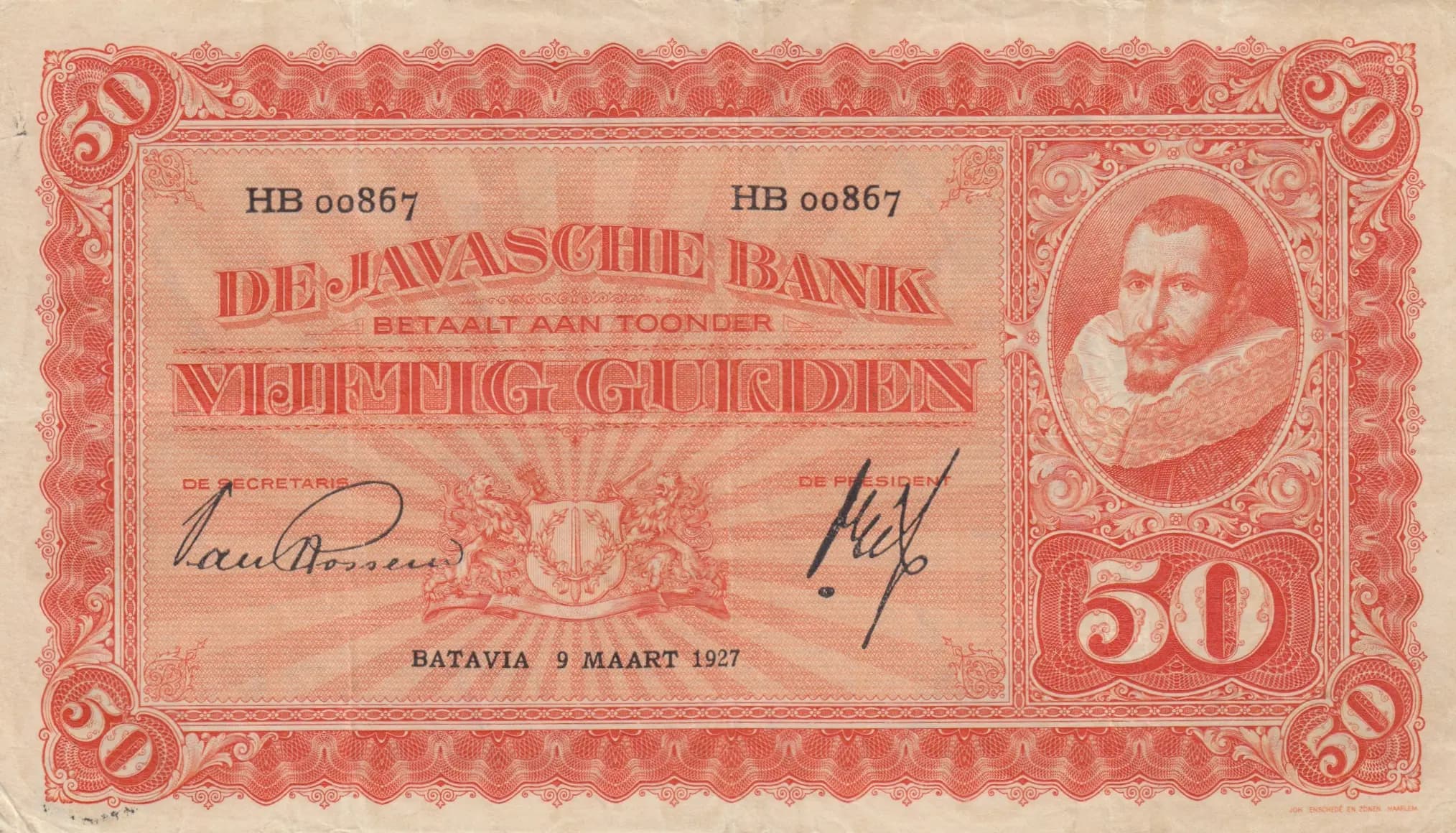
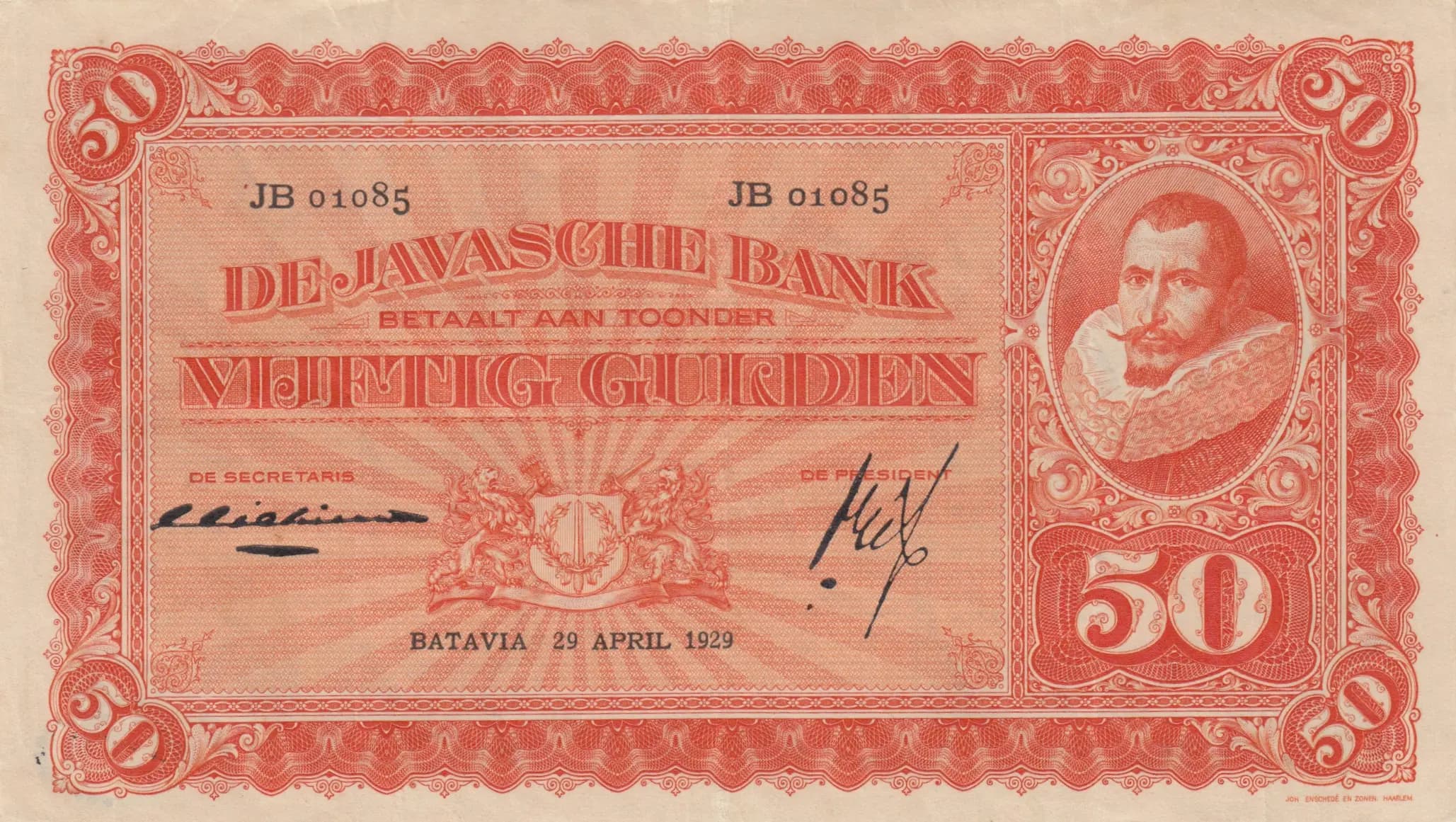
50 gulden 1929
About This Note
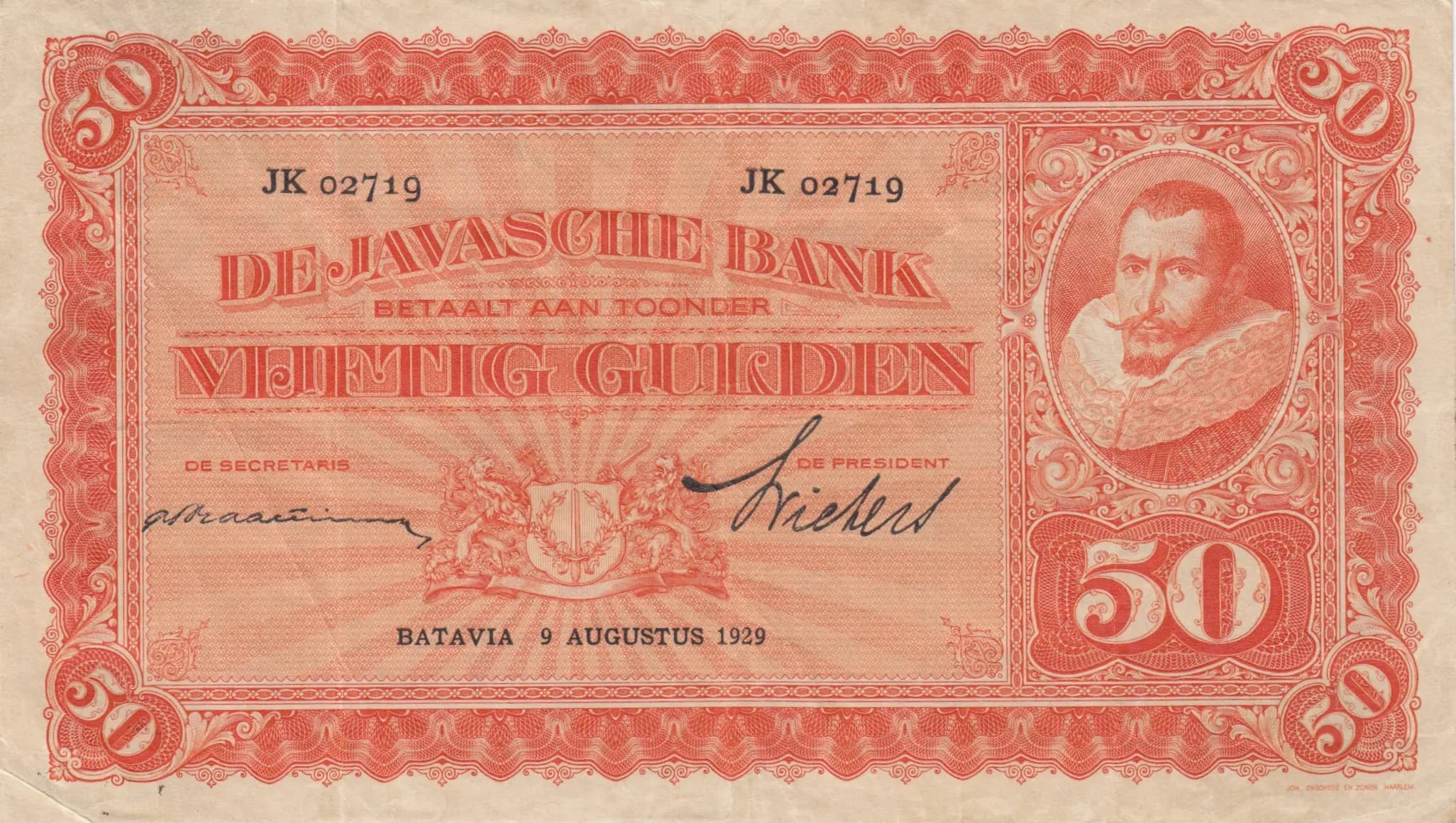
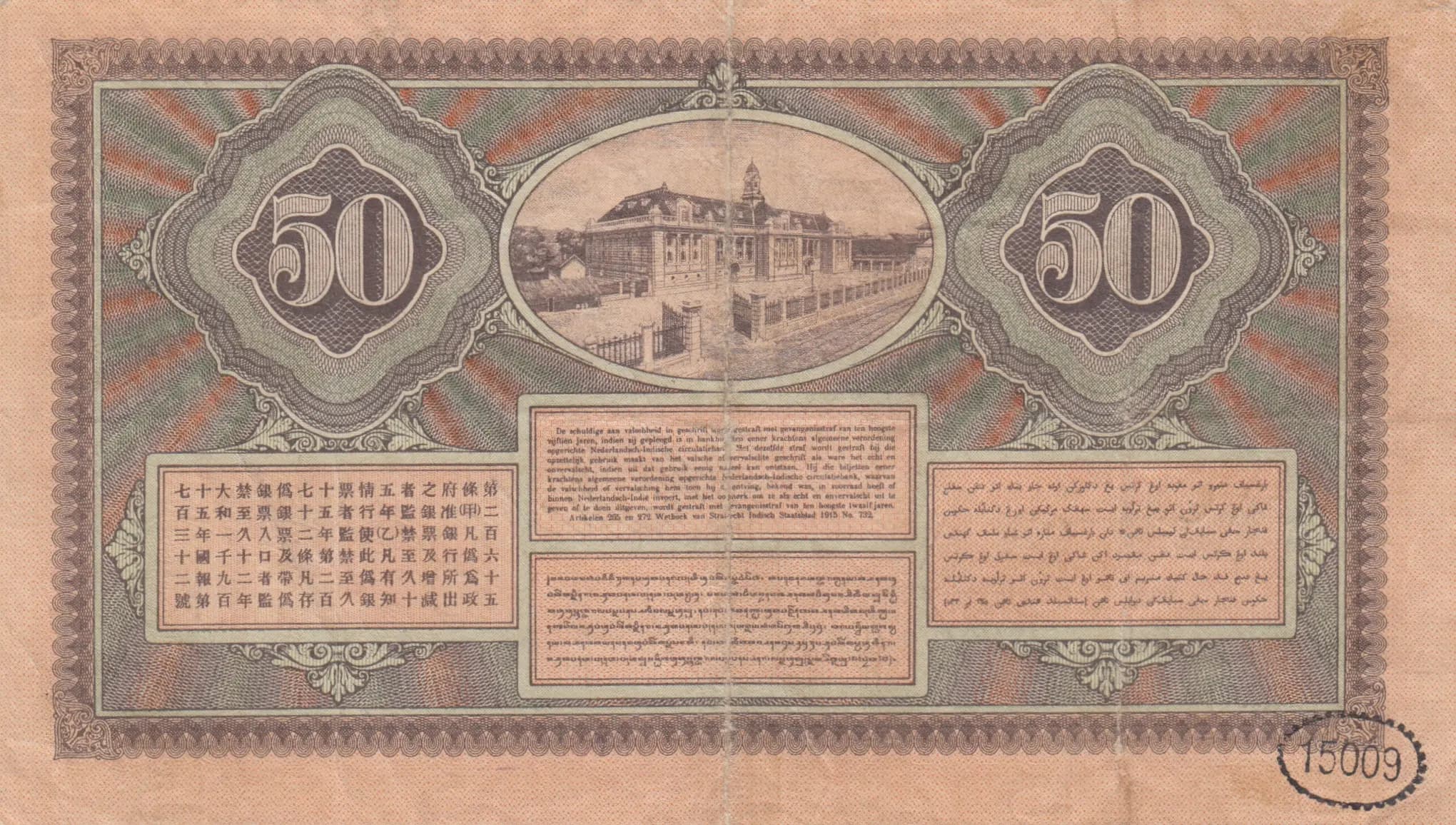
An attractive VF example of the 1929 50 Gulden from Javasche Bank, featuring the classic red/coral coloration and ornate classical design characteristic of this issue. The note displays fine intaglio engraving with intricate decorative borders, a bearded male portrait in Renaissance dress on the obverse, and an important colonial-era institutional building on the reverse. Despite showing expected age-related wear including creasing and foxing consistent with its 1929 origin, this note retains strong visual appeal and clarity of design elements.
Common. The 50 Gulden 1929 (P-72c) from Javasche Bank was part of a standard circulation issue for the Dutch East Indies during this period. While colonial-era banknotes have historical interest, this denomination and issue are readily encountered in the numismatic market. No evidence suggests a restricted print run, early recall, or short-lived issuing period. The VF condition grade is fairly standard for surviving examples of this age.
Issued by Javasche Bank in Batavia (modern Jakarta) during the Dutch East Indies colonial period, this 1929 denomination reflects the financial infrastructure of the Dutch East Indies at the height of colonial administration. The trilingual reverse (Dutch, Chinese, and Arabic) and architectural imagery of what appears to be a colonial institutional building underscore the multicultural commercial environment of the Indies and the bank's role in facilitating international trade across the diverse populations of the archipelago.
The obverse features an oval portrait of a bearded gentleman in period Renaissance or 17th-century dress positioned on the right side, likely representing a historical figure of significance to the Dutch East Indies or the Java Bank itself. The portrait is surrounded by ornate rococo-style scrollwork and floral decorative elements. The center displays the bank name 'DE JAVASCHE BANK' with the denomination 'VIJFTIG GULDEN' prominently stated, with a heraldic coat of arms (featuring lion-like elements) positioned below the text. Two signature lines represent the bank's President and Secretary. The reverse displays a significant colonial-era architectural landmark—a substantial institutional building with a distinctive tower or cupola surmounted by a cross—set within an ornate oval frame, suggesting this may represent the bank's headquarters or a prominent civic structure in Batavia. The architectural vignette is flanked by decorative frames containing the denomination numeral '50' on both sides, with geometric and floral background patterns in red and green.
FRONT: 'DE JAVASCHE BANK' (The Java Bank); 'BETAALT AAN TOONDER' (Payable to Bearer); 'VIJFTIG GULDEN' (Fifty Guilders); 'DE SECRETARIS' (The Secretary); 'DE PRESIDENT' (The President); 'BATAVIA 9 AUGUSTUS 1929' (Batavia 9 August 1929); Serial number 'JK 02719'. BACK: Denomination '50' (in decorative frames); Chinese legal text regarding terms and conditions of the banknote; Dutch legal text stating the note's status as an investment document issued by Java Bank with conditions of validity and redemption; Arabic text confirming the note is payable to bearer and issued by the central bank of Java.
Intaglio (steel plate) engraving, characteristic of the security printing standards for banknotes of this era. The fine line work visible throughout the design, the depth and clarity of the ornamental borders, the portrait work, and the architectural vignette all demonstrate the sophisticated engraving techniques employed. The security printing was executed to the highest standards typical of early 20th-century Dutch East Indies currency production.
This example displays the serial number prefix 'JK' with number 02719. Varieties of this Pick number may be distinguished by serial number prefixes and signature combinations representing different officials who served as President and Secretary of Javasche Bank during this period. The date 'BATAVIA 9 AUGUSTI 1929' confirms this is from the August 1929 issue. No significant overprints or unusual varieties are apparent in this example.