50 gulden 1927
About This Note
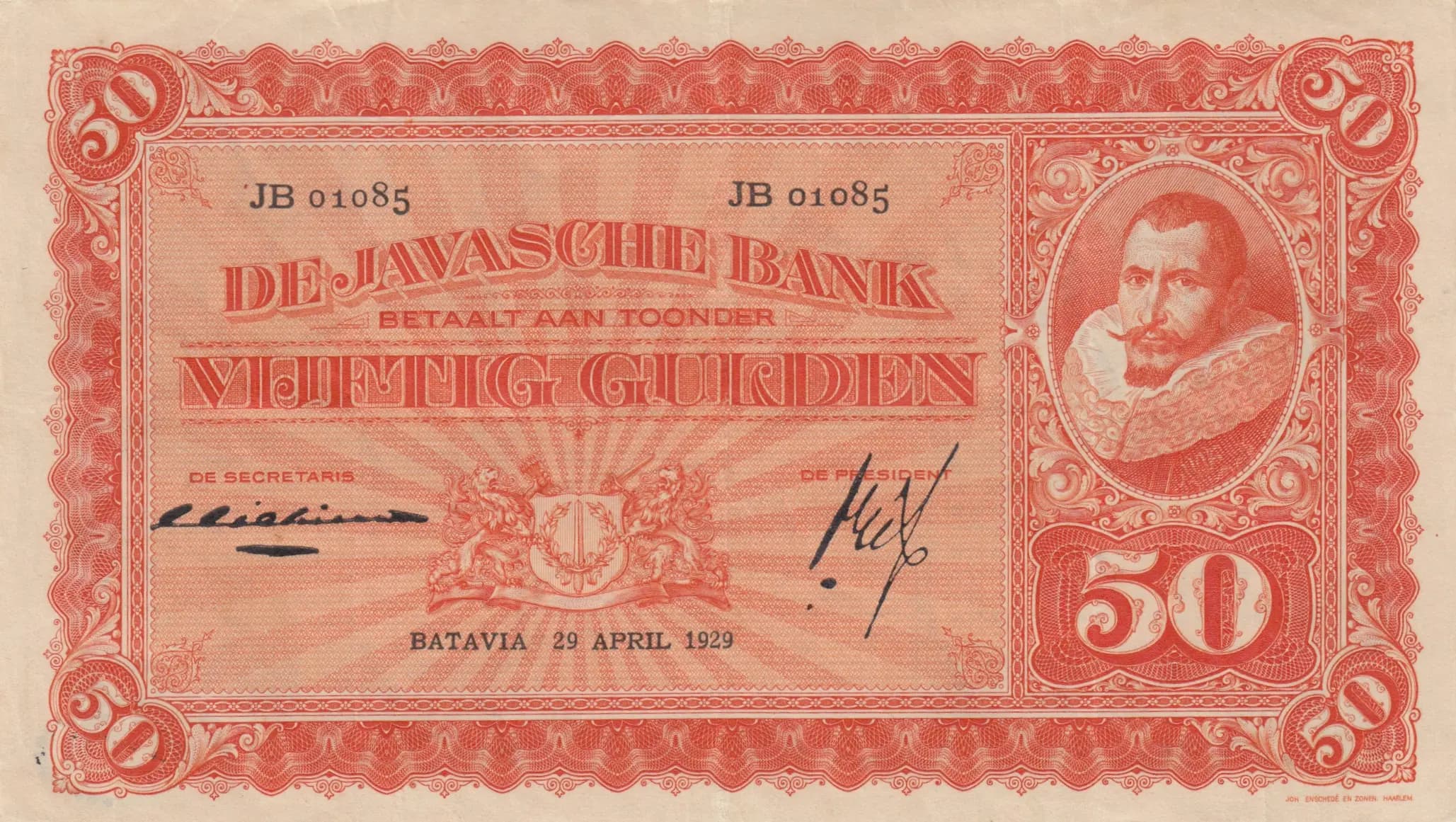
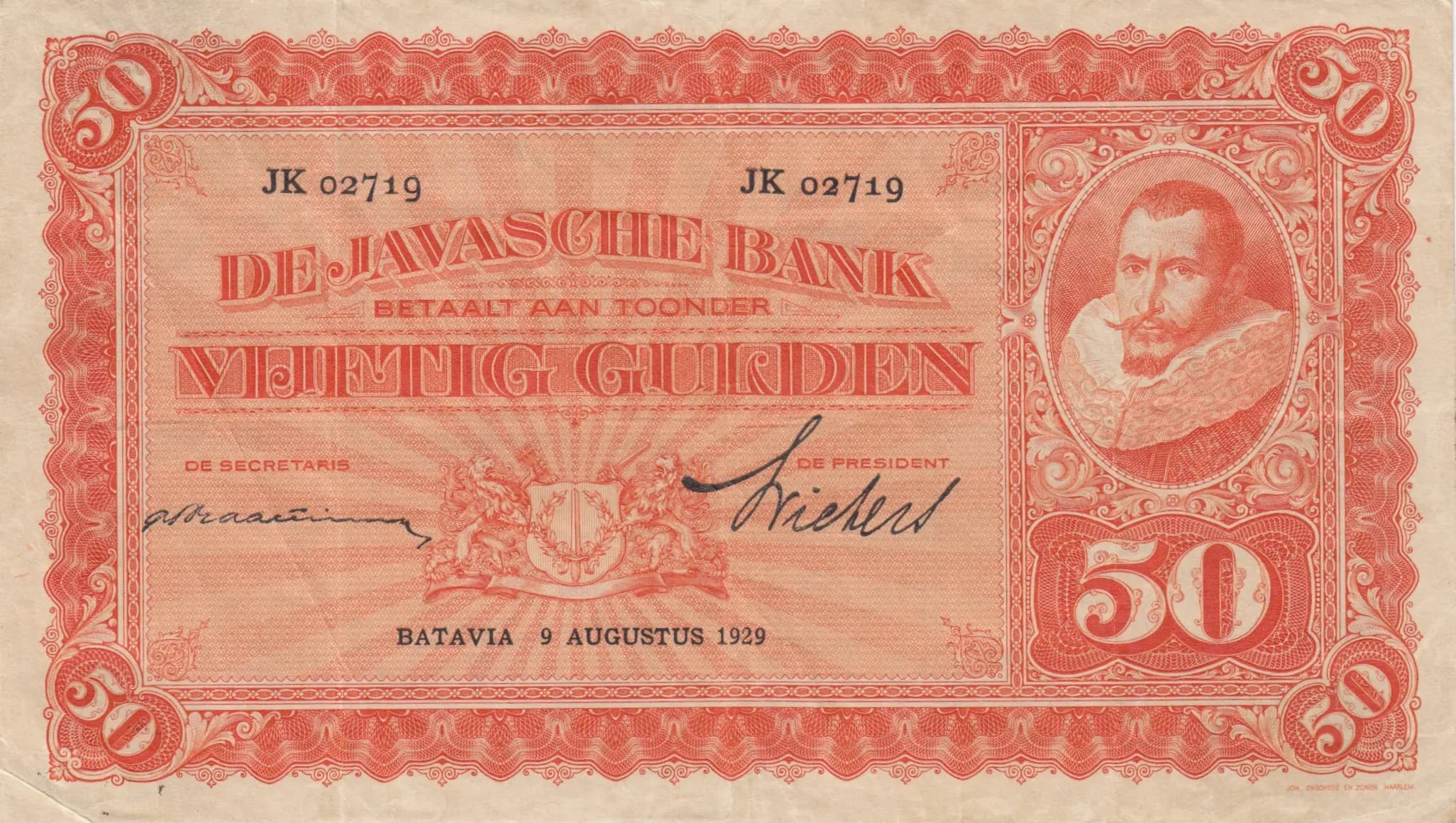
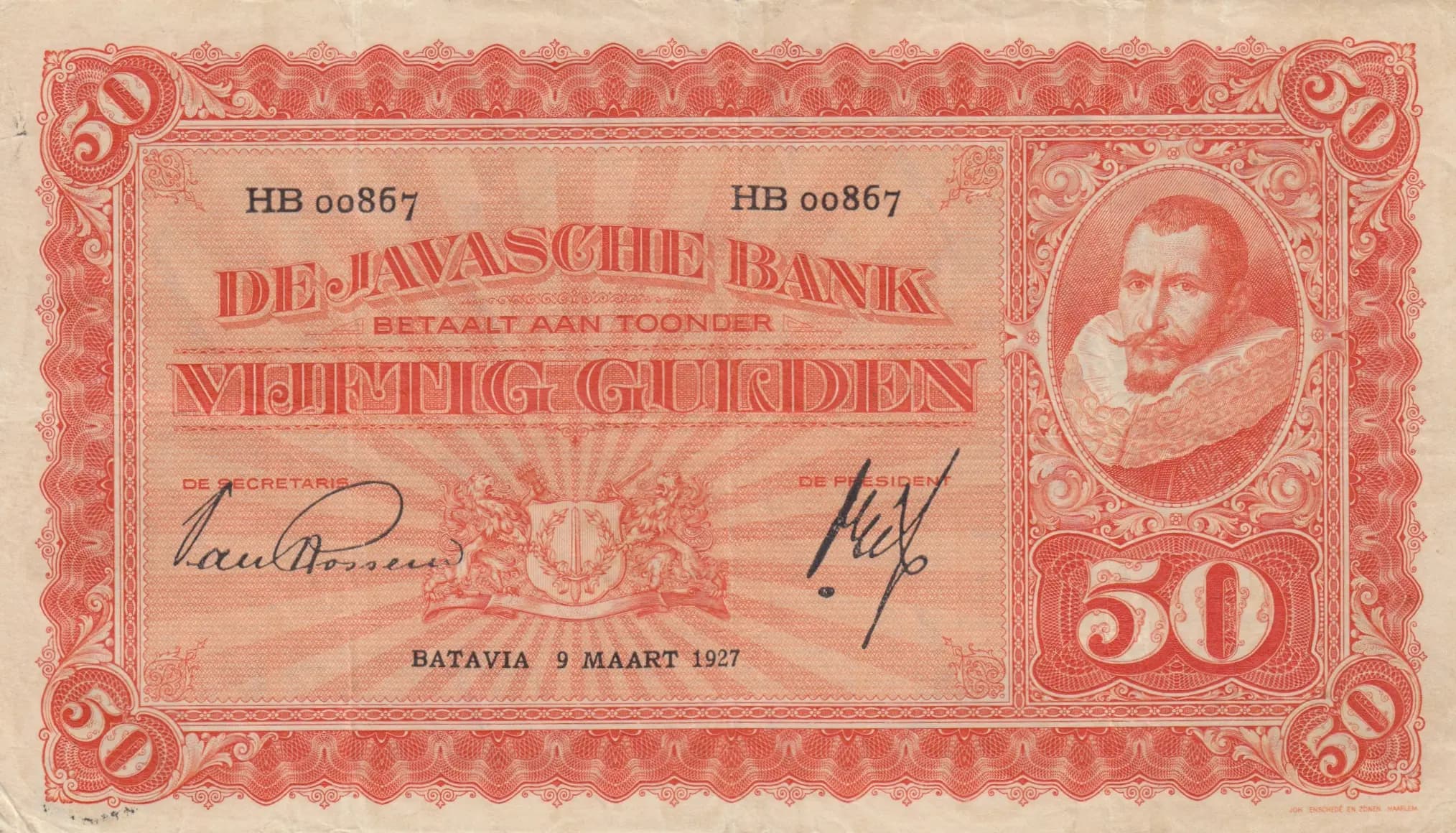
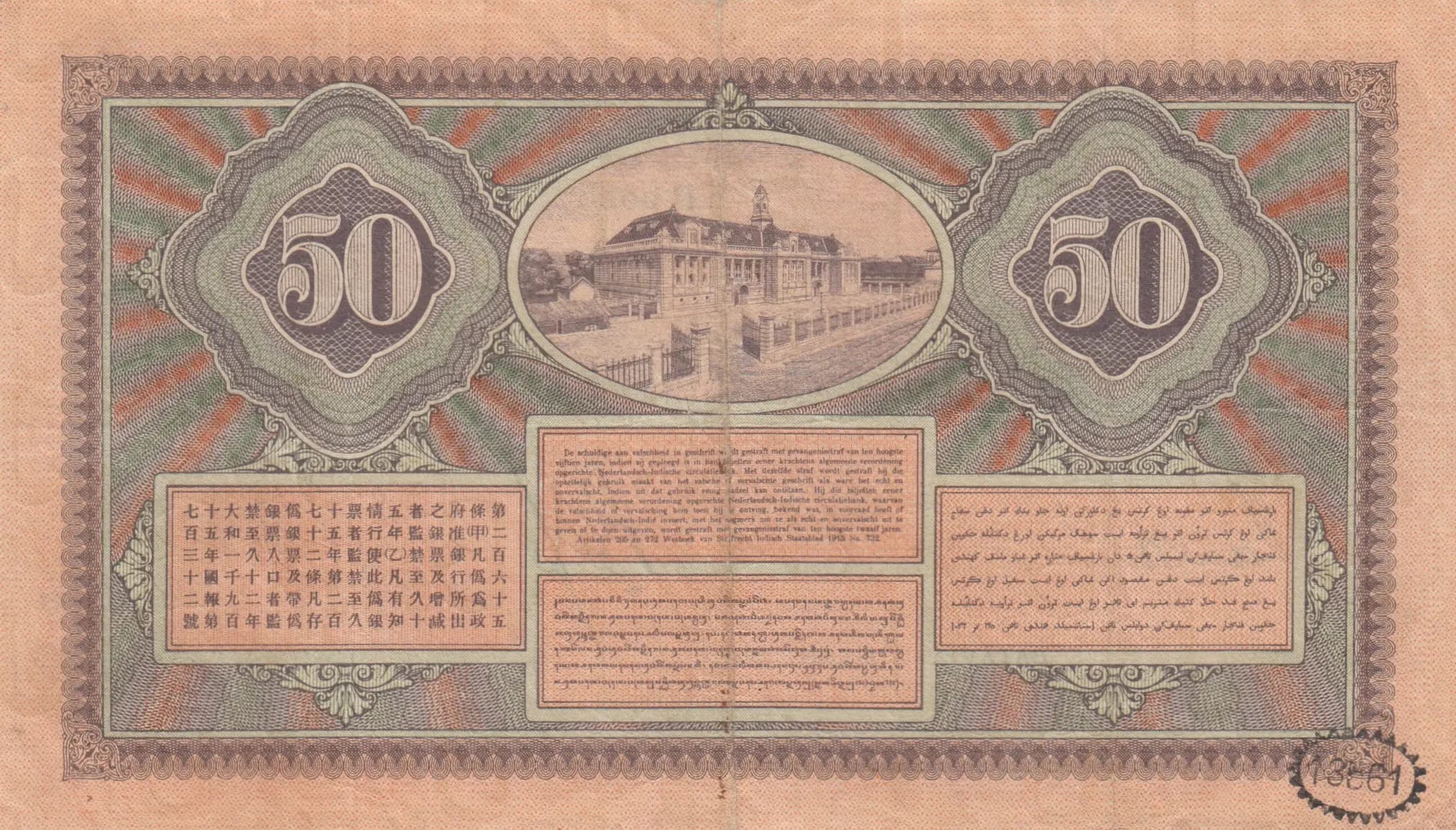
This is a Netherlands Indies 50 gulden note from 1927, issued by the Javasche Bank in Batavia, representing a significant example of colonial Dutch East Indies currency. The note exhibits VF condition with crisp engraving and minimal wear, featuring an ornate Victorian-style design in red/coral tones on the obverse with a classical institutional building on the reverse. The multilingual text (Dutch, Chinese, and Arabic) reflects the cosmopolitan trade networks of the Dutch East Indies during this period.
Common. The 50 gulden 1927 Javasche Bank note (P-72a) was issued in substantial quantities to serve the colonial economy and remains relatively available in the collector market. While notes from the Dutch East Indies have historical significance, this denomination and date combination did not experience the severe recall or destruction that would render it scarce. VF condition examples appear regularly in international numismatic channels.
The Javasche Bank, established to serve the financial needs of Java and the broader Dutch East Indies, issued this note on March 9, 1927, during the height of colonial economic activity in the region. The classical building depicted on the reverse likely represents a government or banking institution central to colonial administration in Batavia (present-day Jakarta). The inclusion of Chinese and Arabic script alongside Dutch reflects the significant merchant communities and multilingual commercial environment of the Dutch East Indies in the 1920s.
The obverse features an ornately framed portrait of a bearded gentleman in historical 16th-17th century dress positioned within an oval frame on the right side, likely representing a notable historical figure from Dutch colonial or financial history. The reverse displays a classical government building with a prominent cupola in sepia-toned engraving, centered within an ornamental oval frame. Both sides employ elaborate scrollwork borders, guilloche patterns, and decorative geometric elements characteristic of high-security banknote design. The heraldic emblem visible on the front likely represents the coat of arms or seal of the Javasche Bank or Dutch colonial administration.
FRONT SIDE: 'DE JAVASCHE BANK' (The Java Bank) | 'BETAALT AAN TOONDER' (Pays to Bearer) | 'VIJFTIG GULDEN' (Fifty Guilders) | 'DE SECRETARIS' (The Secretary) | 'DE PRESIDENT' (The President) | 'BATAVIA 9 MAART 1927' (Batavia 9 March 1927) | Serial Number: 'HB 00867' (appears twice). BACK SIDE: Denomination '50' in ornamental frames | Chinese characters and legal text in Dutch/Latin regarding the banknote's status and legal tender designation | Arabic script text of regulatory or legal nature.
Steel engraving and intaglio printing, executed with fine line work and complex guilloche patterns throughout. The multicolor design on the reverse (green, red, cream, and brown) indicates sequential or combined color printing typical of high-value banknotes of this era. Johan Enschede, the renowned Dutch printer mentioned in external references, was known for producing banknotes using advanced intaglio techniques, though for this specific Pick number the primary printer was the Javasche Bank's own production facilities in Batavia.
This note represents the standard 1927 issue dated 'BATAVIA 9 MAART 1927' with the serial number prefix 'HB' visible on the example. The Javasche Bank issued various series with different letter prefixes for serial number tracking. The specific variety designation would be confirmed by the complete serial number and any signature variations between different printings of this date.