5 gulden 1927
About This Note
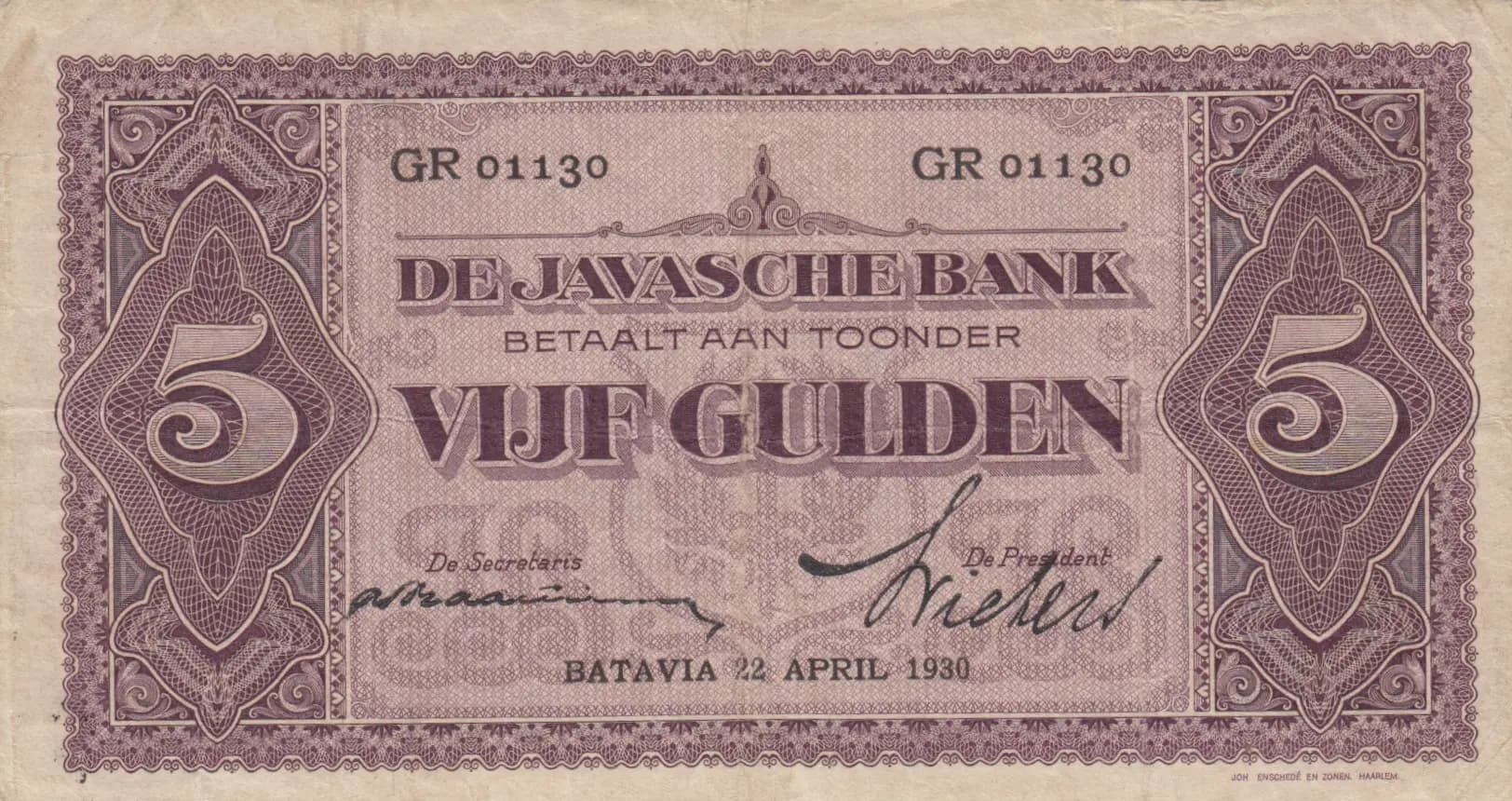
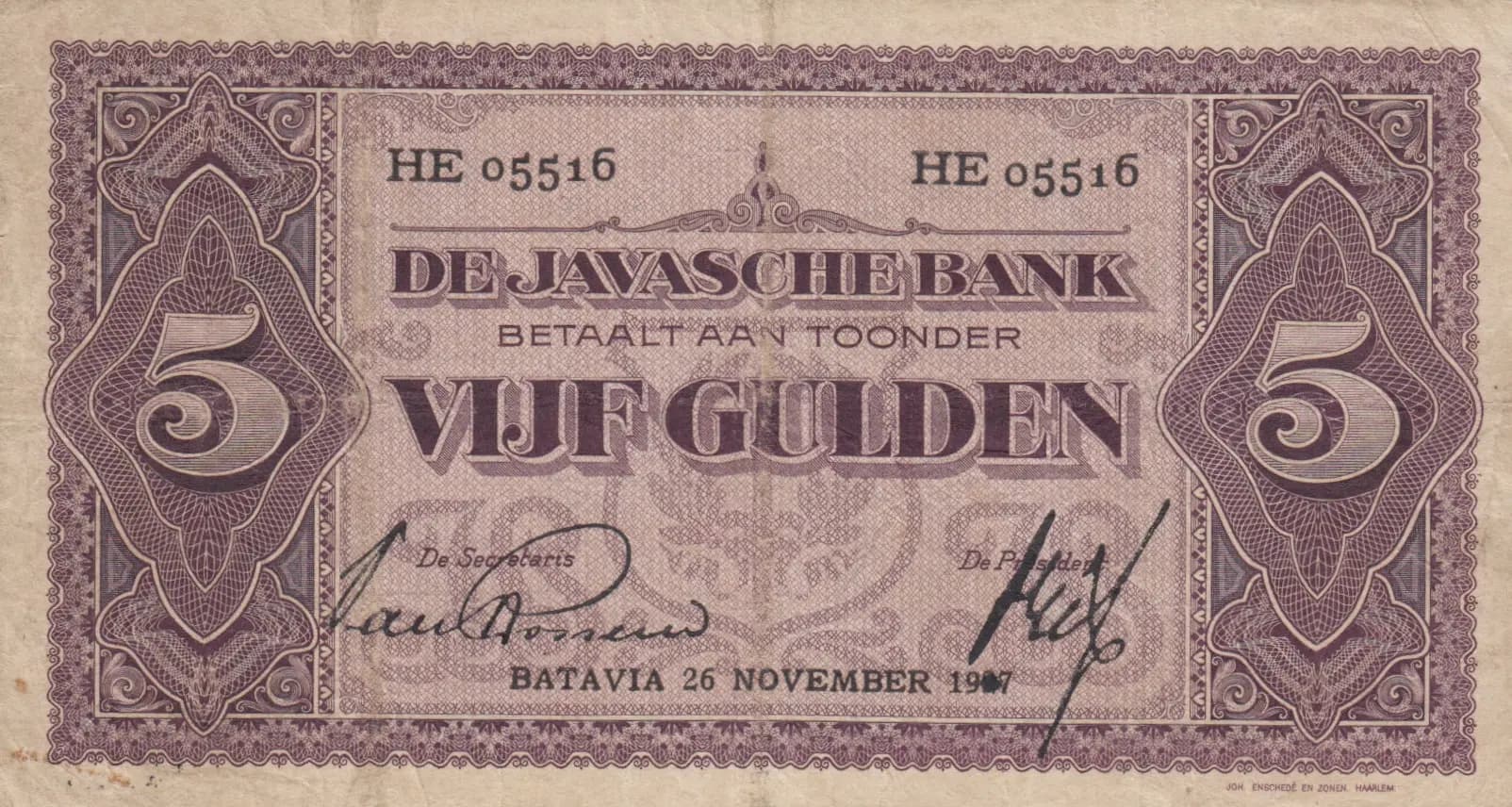
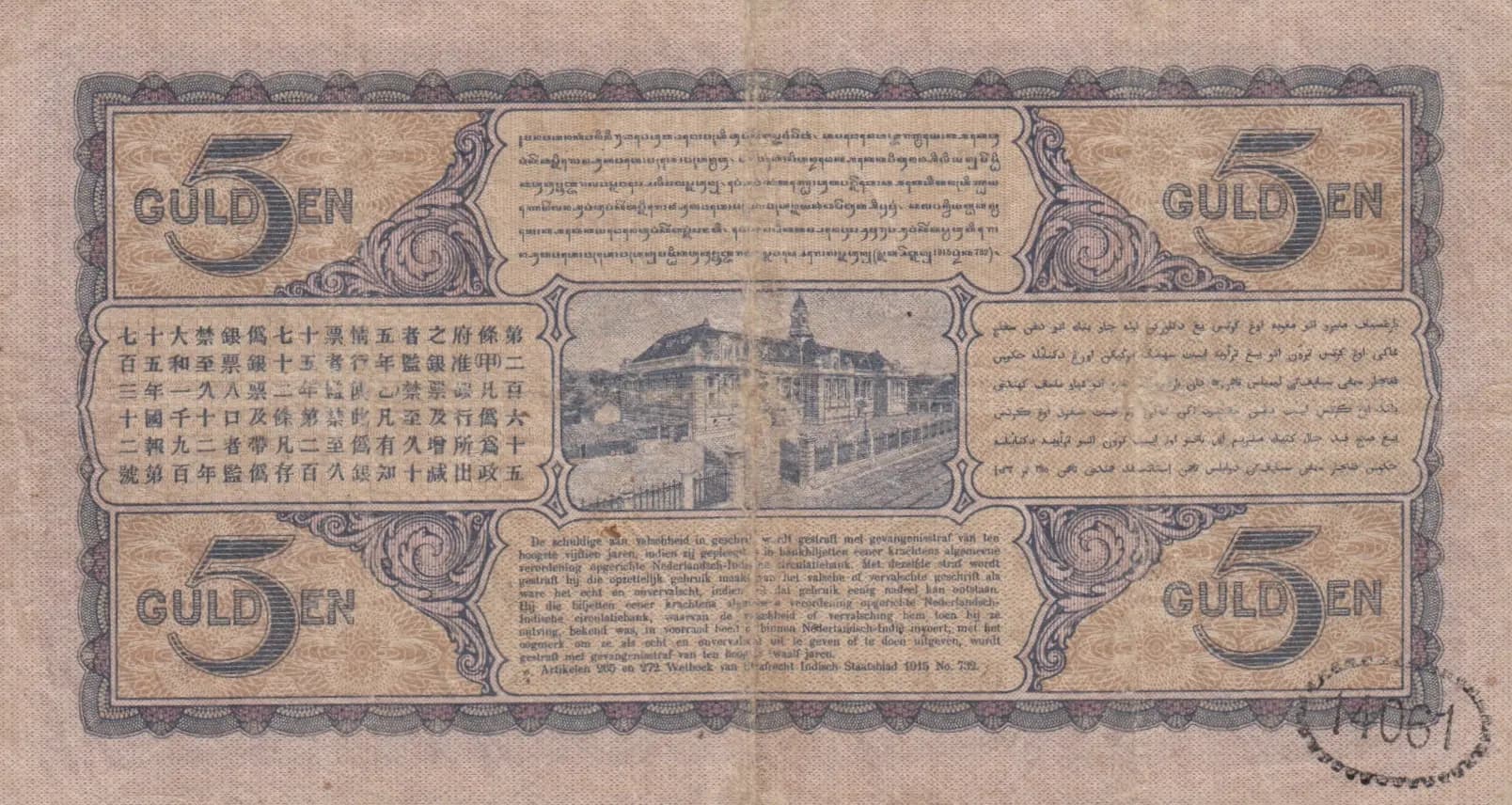
This is a beautiful example of a 5 gulden banknote issued by De Javasche Bank on 26 November 1927, graded VF. The note features an elegant purple and mauve Art Nouveau design with ornate floral corner medallions and intricate engraved borders on the obverse, while the reverse displays a classical colonial-style building vignette in cream and purple tones. The note shows appropriate age-related patina with visible foxing and light creasing consistent with circulation, making it an attractive piece of Netherlands Indies monetary history.
Common. The 5 gulden 1927 of De Javasche Bank (Pick 69a) was issued in substantial quantities for colonial circulation and remains readily available in the numismatic market. While Netherlands Indies banknotes have become increasingly collectible, this particular note and denomination are not scarce. The VF condition grade is typical for surviving examples, and the note does not command premium prices. Standard market values for this Pick number in VF condition remain modest, consistent with common-grade colonial banknote pricing.
Issued by De Javasche Bank during the Dutch East Indies colonial period, this 1927 banknote reflects the sophisticated banking infrastructure established in Java during the early 20th century. The multilingual inscriptions on the reverse—featuring Dutch, Chinese, and Arabic text—underscore the cosmopolitan commercial environment of the Dutch East Indies, where multiple ethnic and linguistic communities participated in commerce. The colonial architecture depicted on the reverse exemplifies the institutional prestige the Dutch colonial administration sought to project through its currency.
The obverse features a symmetrical Art Nouveau design with purple/mauve as the dominant color, accented in beige/cream. Two ornate floral corner medallions with scrollwork frame the upper corners, while a continuous geometric border pattern runs around the entire perimeter. The center contains the issuer name and denomination text, with signature lines labeled 'De Presidente' and 'De Secretaris' positioned below the main text. The reverse displays a central vignette depicting a colonial-style institutional building with a prominent domed roof and arched windows, likely representing a government or administrative building in Batavia (modern Jakarta). The reverse is framed by decorative oval cartouches containing text in multiple scripts, reflecting the pluralistic commercial character of the Dutch East Indies. Ornamental corner designs with scrollwork echo the obverse design language.
FRONT SIDE: Serial number HE 05516 (appears twice, top of note); 'DE JAVASCHE BANK' (The Java Bank); 'BETAALT AAN TOONDER' (Payable to Bearer); 'VIJF GULDEN' (Five Guilders); 'De Secretaris' (The Secretary); 'De Presidente' (The President); 'BATAVIA 26 NOVEMBER 1927' (Place and date of issue). BACK SIDE: '5 GULDEN' / 'GULDEN' (denomination, appears multiple times); Chinese text (Traditional Chinese characters containing legal text regarding the banknote and payment terms); Arabic script (legal text regarding payment terms and conditions); Dutch legal text specifying payment obligations, terms, and conditions of the banknote. The multilingual text reflects the note's use in a diverse colonial economy.
Intaglio engraving (copperplate engraving), executed with fine line work throughout. The intricate decorative patterns, detailed building vignette, and elaborate borders are characteristic of high-security engraved banknote production. The fine line work visible in the detailed corner medallions and border patterns served as anti-counterfeiting measures. The note was produced using traditional intaglio methods standard for premium quality banknotes of this era.
Serial number HE 05516 is observed on this example. The Pick 69a designation indicates this is the first identified variety of the 5 gulden 1927 issue. Varieties of this note may be distinguished by signature combinations (De Presidente and De Secretaris signatures), serial number prefixes, and printing dates. No overprints or additional marks beyond the standard circular stamp/seal mark visible in the lower right corner of the reverse are apparent on this specimen.