10 gulden 1927
About This Note
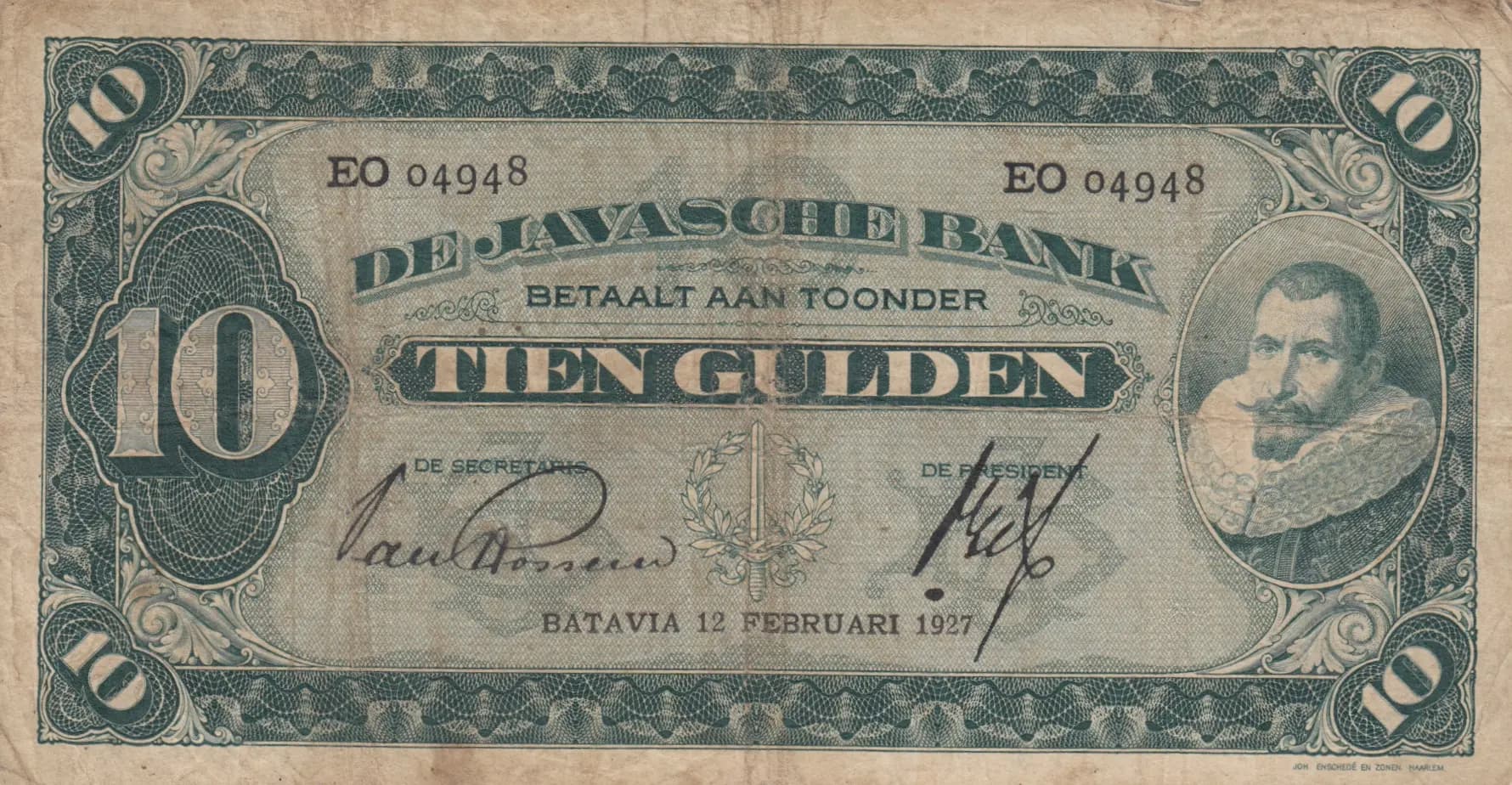
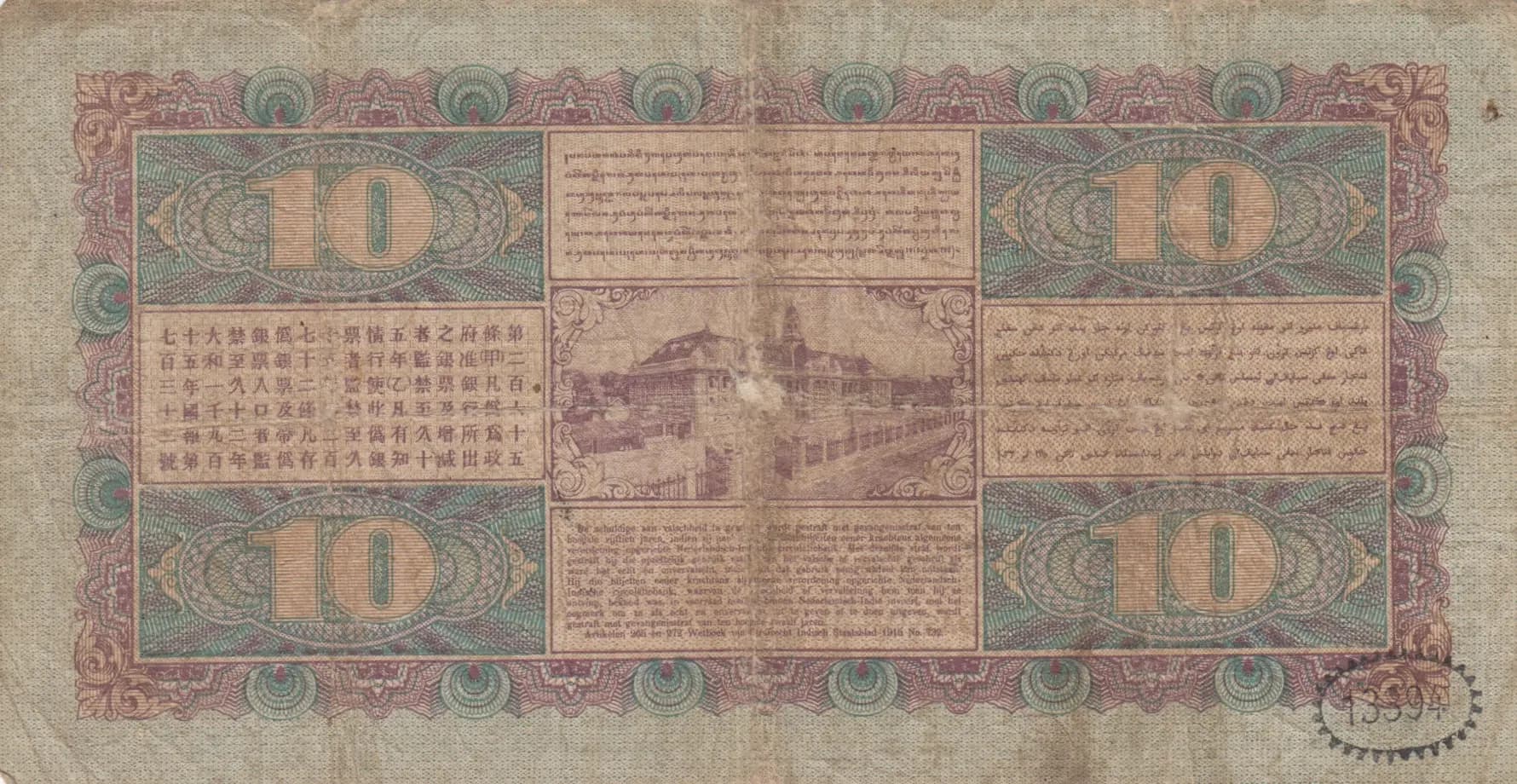
This is a 10 Gulden banknote issued by De Javasche Bank on 12 February 1927, representing the colonial currency of the Dutch East Indies. The note exhibits characteristic ornate engraving with teal and green coloring on the obverse featuring a bearded male portrait, and multi-colored reverse (purple, mauve, green) with architectural imagery and multilingual text. In Fair condition, the note shows expected aging with foxing, discoloration, and darkened paper from nearly a century of circulation—typical characteristics that give it historical authenticity and period appeal.
Common. The 10 Gulden 1927 (Pick 70a) was issued in substantial quantities by the Javasche Bank for regular circulation throughout the Dutch East Indies during the 1920s-1940s. This denomination and issue year are frequently encountered in both institutional and private collections, indicating no significant scarcity. Fair condition examples such as this specimen represent typical survivors of the colonial period and do not command premium values; Fair condition banknotes of this type typically trade well below $50.
This note was issued during the late colonial period of the Dutch East Indies, when the Javasche Bank (Java Bank) served as the primary financial institution for the Indonesian archipelago under Dutch rule. The multilingual reverse—featuring Chinese, Arabic, and Javanese scripts alongside Dutch—reflects the cultural and commercial diversity of the colonial East Indies, with text addressing the region's substantial Chinese merchant community and Muslim-majority indigenous population. The architectural imagery on the reverse, likely depicting a colonial fort or administrative building, symbolizes the European administrative presence in Batavia (modern Jakarta), the colonial capital.
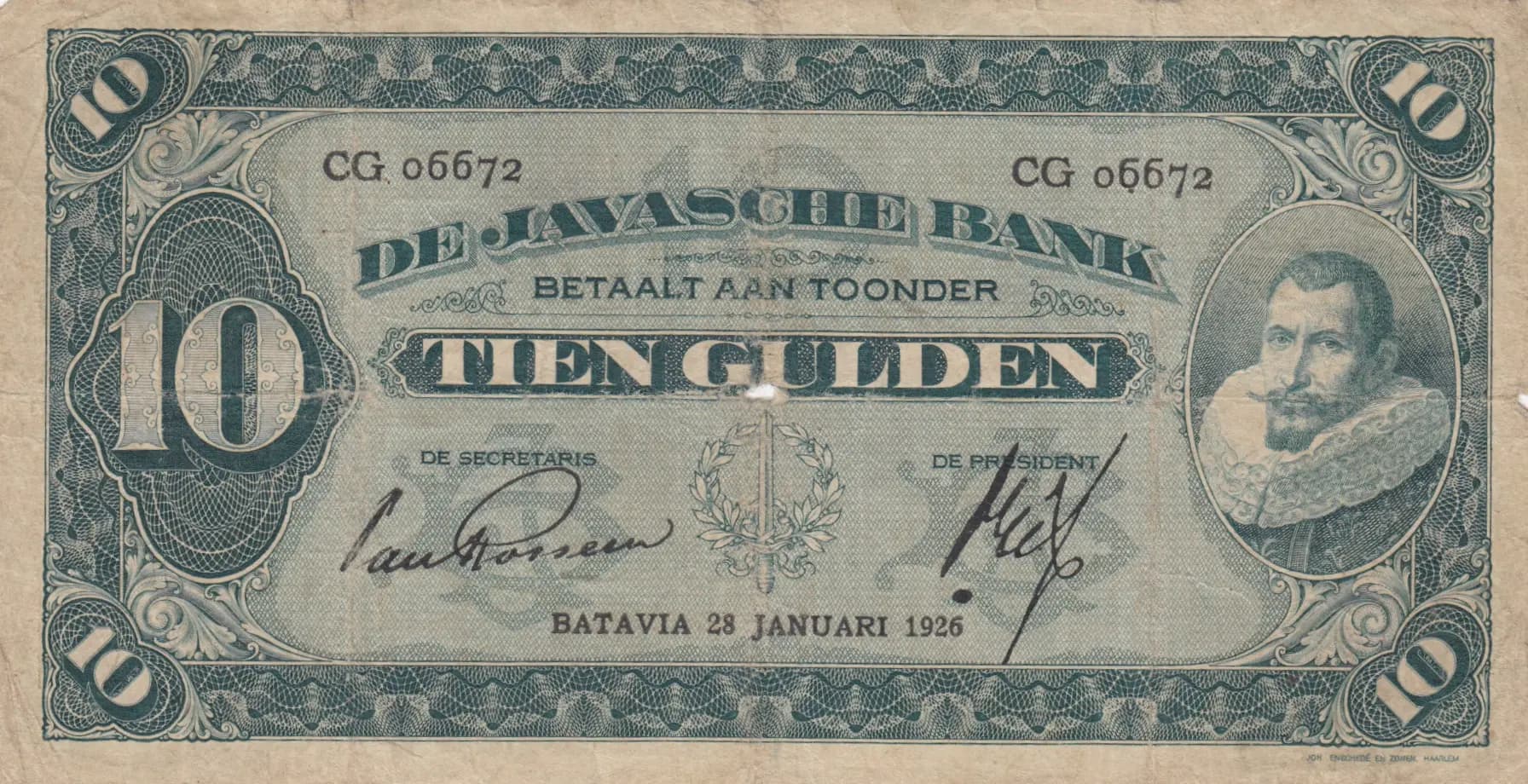
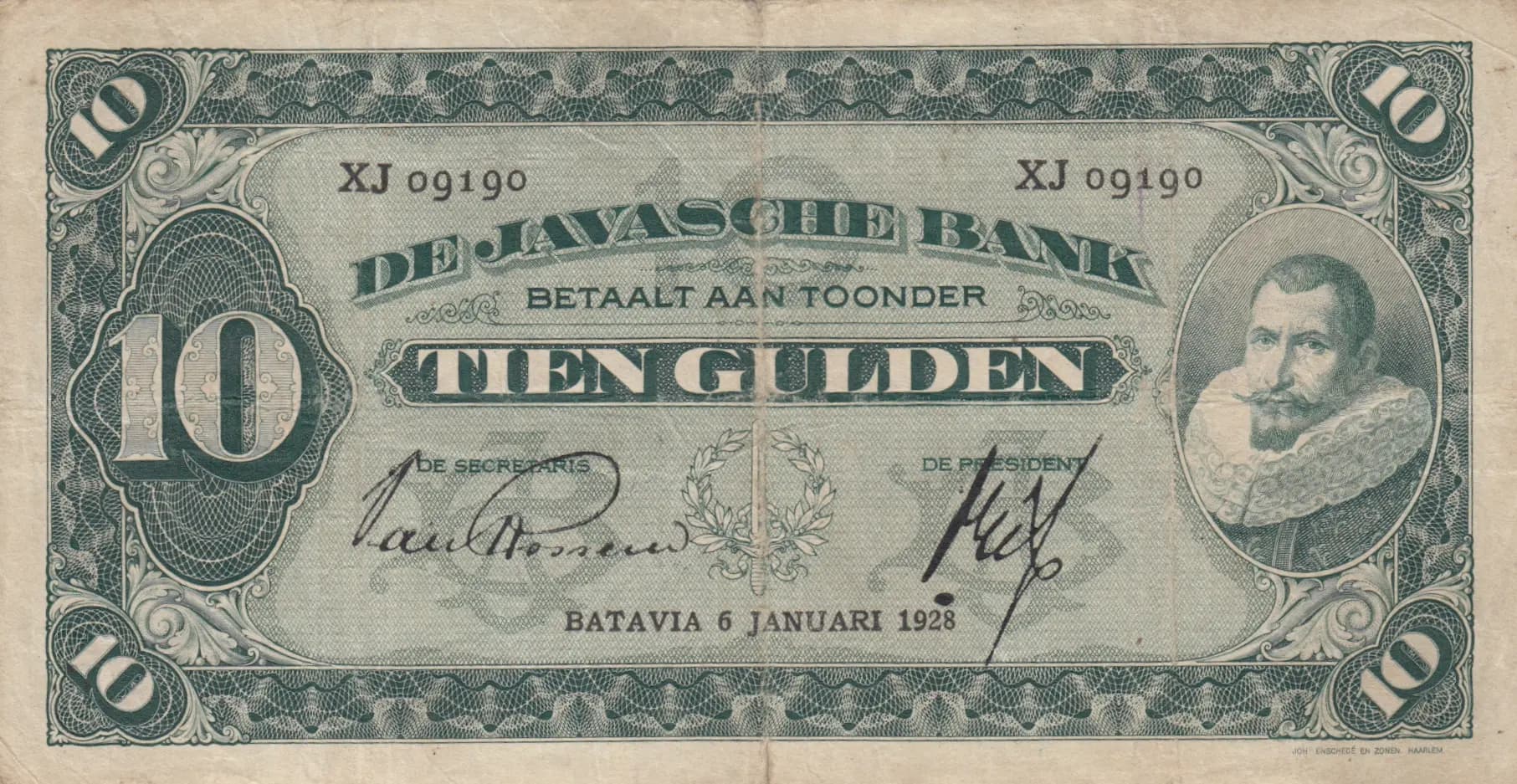
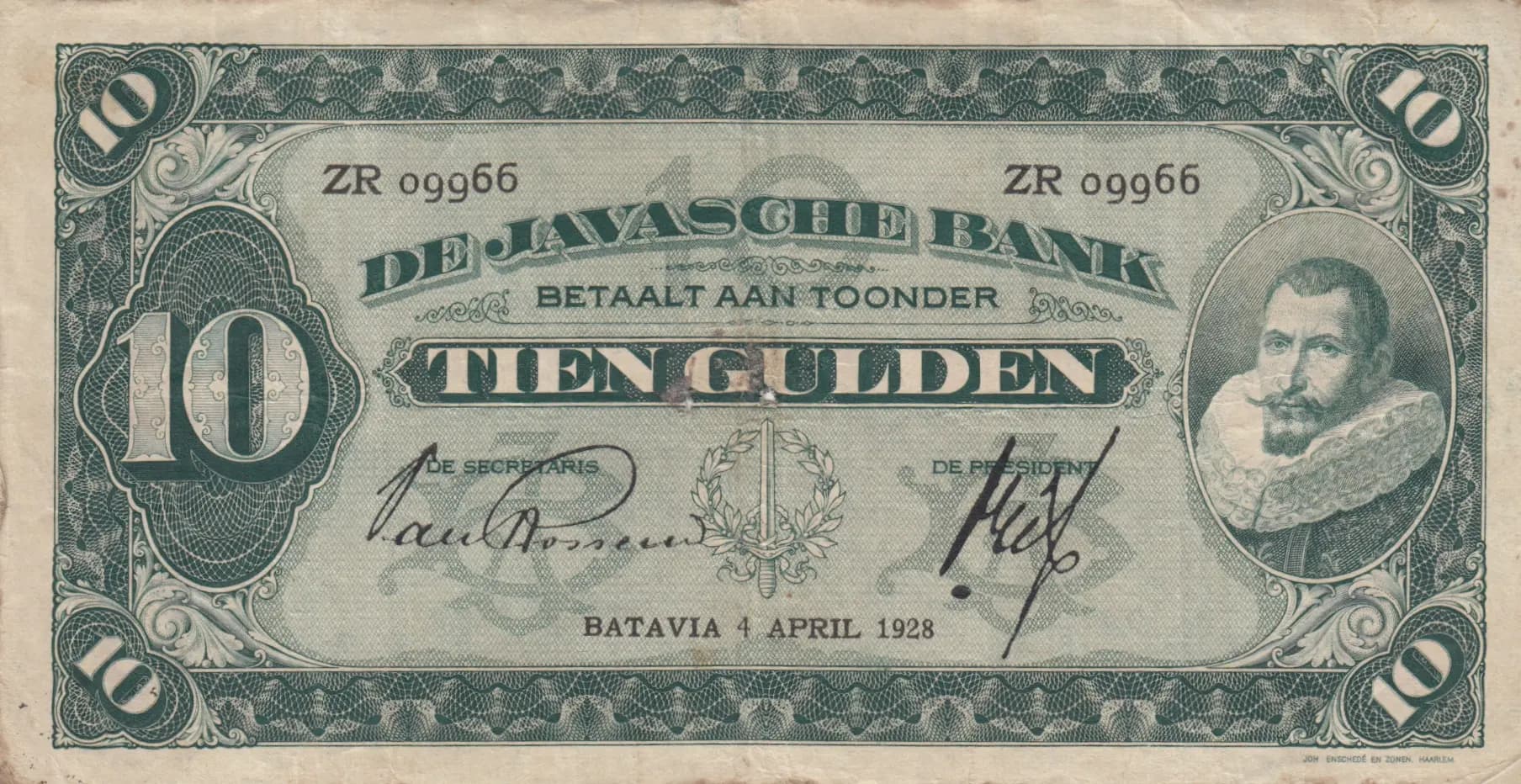
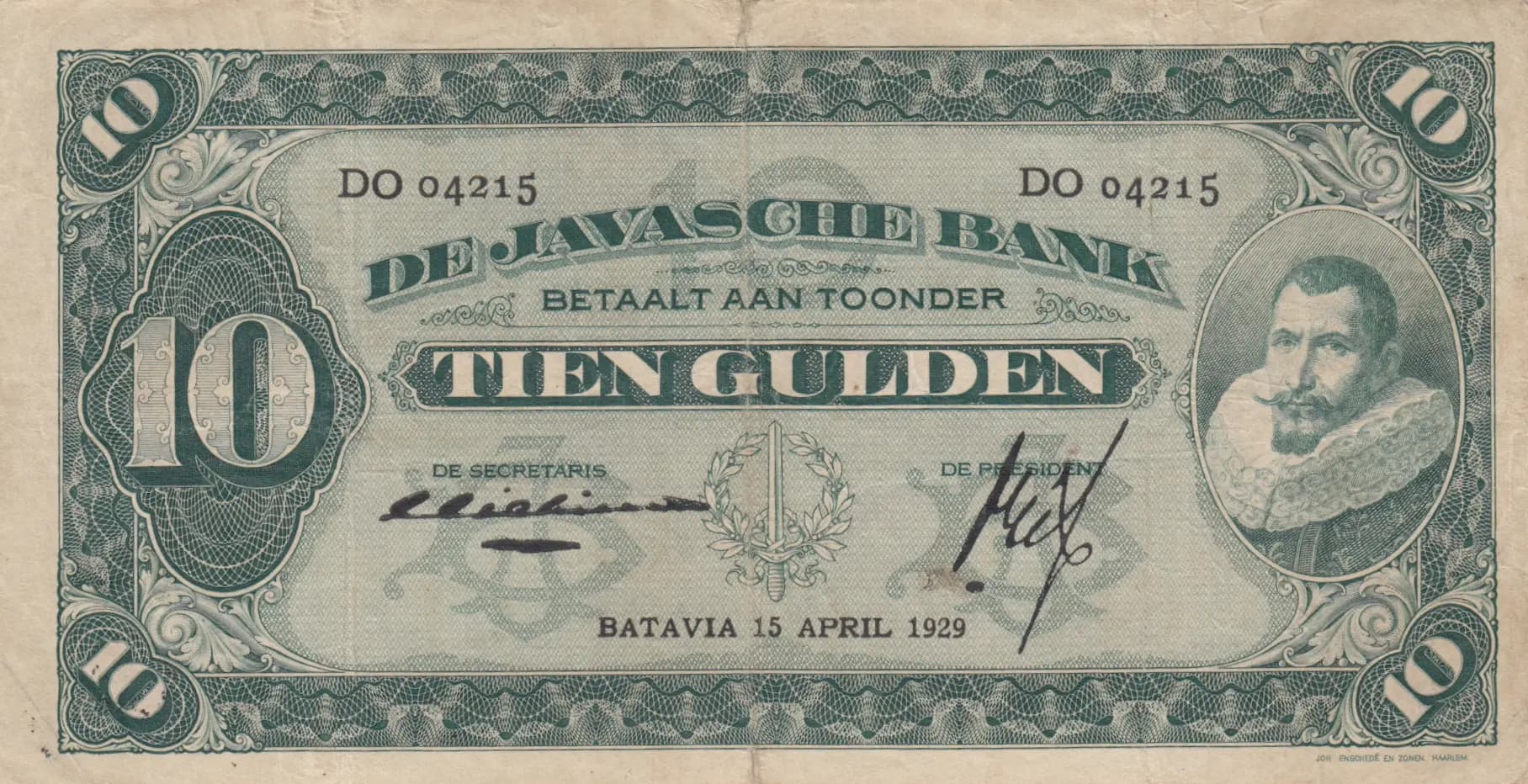
The obverse features a formal bearded gentleman in 19th-century formal attire, positioned in an oval frame on the right side of the note, likely a historical figure of significance to the Dutch East Indies administration. The note is framed by ornate scrollwork borders with floral motifs and decorative corner elements typical of high-security engraved currency. Large ornamental denomination frames displaying '10' anchor both left and right sides. The reverse displays an architectural structure—possibly Fort Nassau or another significant colonial fortification in Batavia—in a central rectangular frame, surrounded by text blocks in four distinct scripts (Dutch, Chinese, Arabic, and Javanese) arranged in a structured security-print layout. The color scheme transitions from teal/dark green on the obverse to purple/mauve and green on the reverse, with cream and orange/tan accent colors throughout.
FRONT: 'DE JAVASCHE BANK' (The Java Bank) | 'BETAALT AAN TOONDER' (Payable to Bearer) | 'TIEN GULDEN' (Ten Guilders) | 'DE SECRETARIS' (The Secretary) | 'DE PRESIDENT' (The President) | 'BATAVIA 12 FEBRUARI 1927' (Batavia 12 February 1927) | 'EO 04948' (Serial Number). BACK: '10' (Denomination in all four corners) | [Chinese text panel, left side - relating to currency declaration] | [Arabic script panel, right side - relating to currency declaration] | [Javanese script panels, center - relating to currency declaration].
Intaglio engraving (steel plate engraving), evidenced by the fine line work, ornate scrollwork patterns, and deep impression characteristics visible in the visual analysis. The multilingual security text panels suggest production by a specialized security printer experienced in colonial currency production. While the catalog reference mentions Thomas de la Rue for a 1 Gulden 1945 issue, the 1927 10 Gulden Pick 70a was likely produced by a European security printer with expertise in complex multilingual designs—possibly De La Rue or Waterlow & Sons, though this requires verification against production records.
Serial number EO 04948 indicates an early-series specimen (EO prefix suggests early Dutch East Indies production block). Pick 70a represents the standard 1927 issue; variants may exist in signature combinations (De President and De Secretaris signatures shown here) or minor design details, but no major varieties have been definitively cataloged for this specific Pick number. The date '12 FEBRUARI 1927' is consistent with the authorized issue date for this series.