10 gulden 1928
About This Note
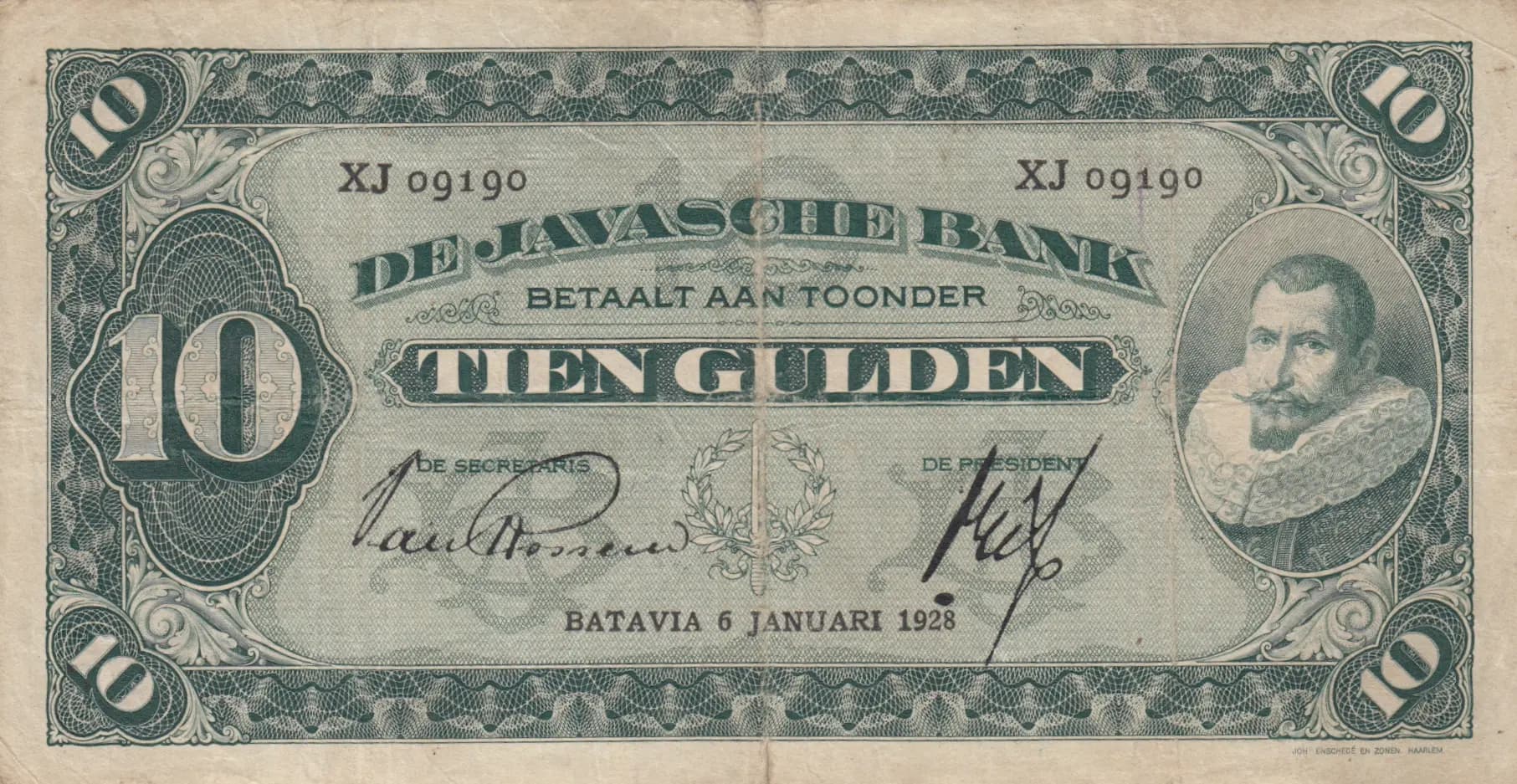
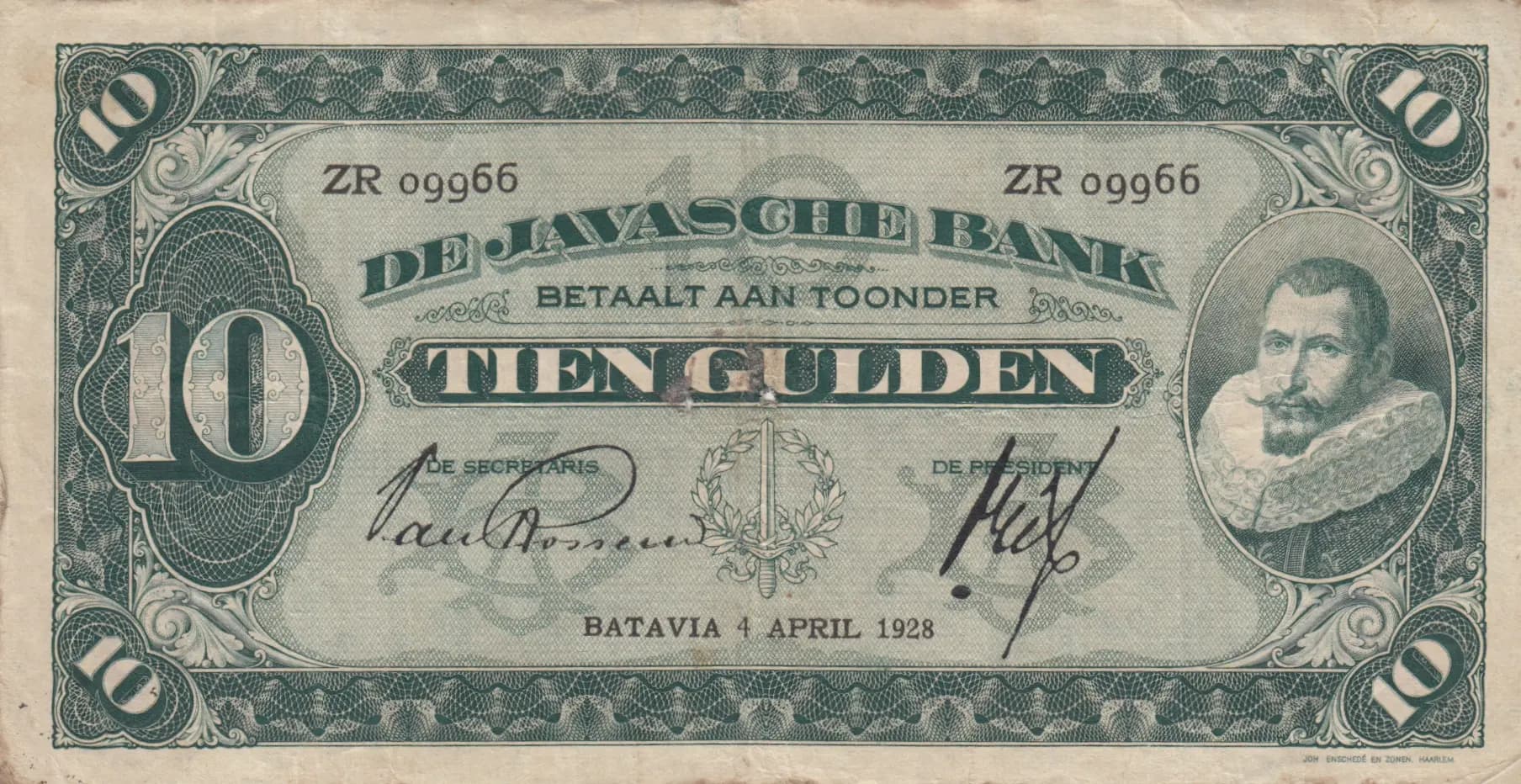
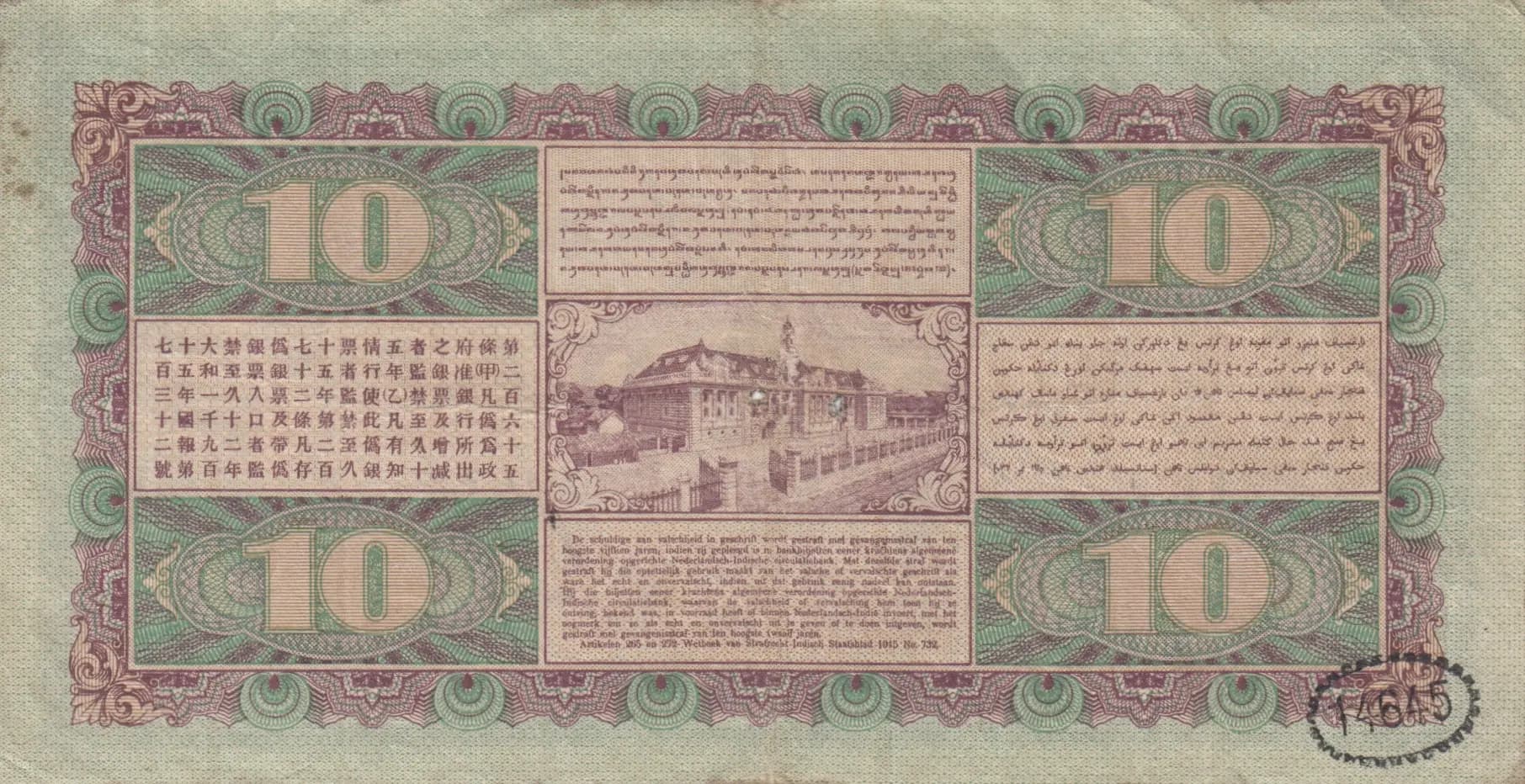
This is a 10 gulden banknote issued by De Javasche Bank on April 4, 1928, representing currency from the Dutch East Indies colonial period. The note features ornate Art Nouveau-style decorative borders, a portrait of a bearded historical figure on the front, and a classical architectural vignette on the reverse, with multilingual text (Dutch, Chinese, and Arabic) reflecting the cosmopolitan nature of colonial Java. In Fair (F) condition, the note exhibits expected aging characteristics including foxing, discoloration, and creasing consistent with circulation during the late colonial era.
Common. De Javasche Bank notes from 1928 were issued in substantial quantities to support commercial activity across the Dutch East Indies. While Pick 70a is a legitimate cataloged variety, the 10 gulden denomination in 1928 was a standard circulation note issued in considerable numbers. The Fair condition and typical serial number (ZR 099666) suggests this is an ordinary example from the original print run. No indicators of rarity, limited print run, or early recall are present. Surviving examples remain readily available in international numismatic markets.
The Javasche Bank (Java Bank) was the central bank of the Dutch East Indies, established to manage colonial finances and currency in the Dutch-controlled Indonesian archipelago. The multilingual inscriptions on the reverse—rendered in Dutch, Chinese characters, and Arabic script—reflect the diverse trading communities and administrative structure of colonial Java during the height of Dutch colonial rule. The April 1928 date places this note during the late colonial period, approximately two decades before the Japanese occupation and Indonesian independence.
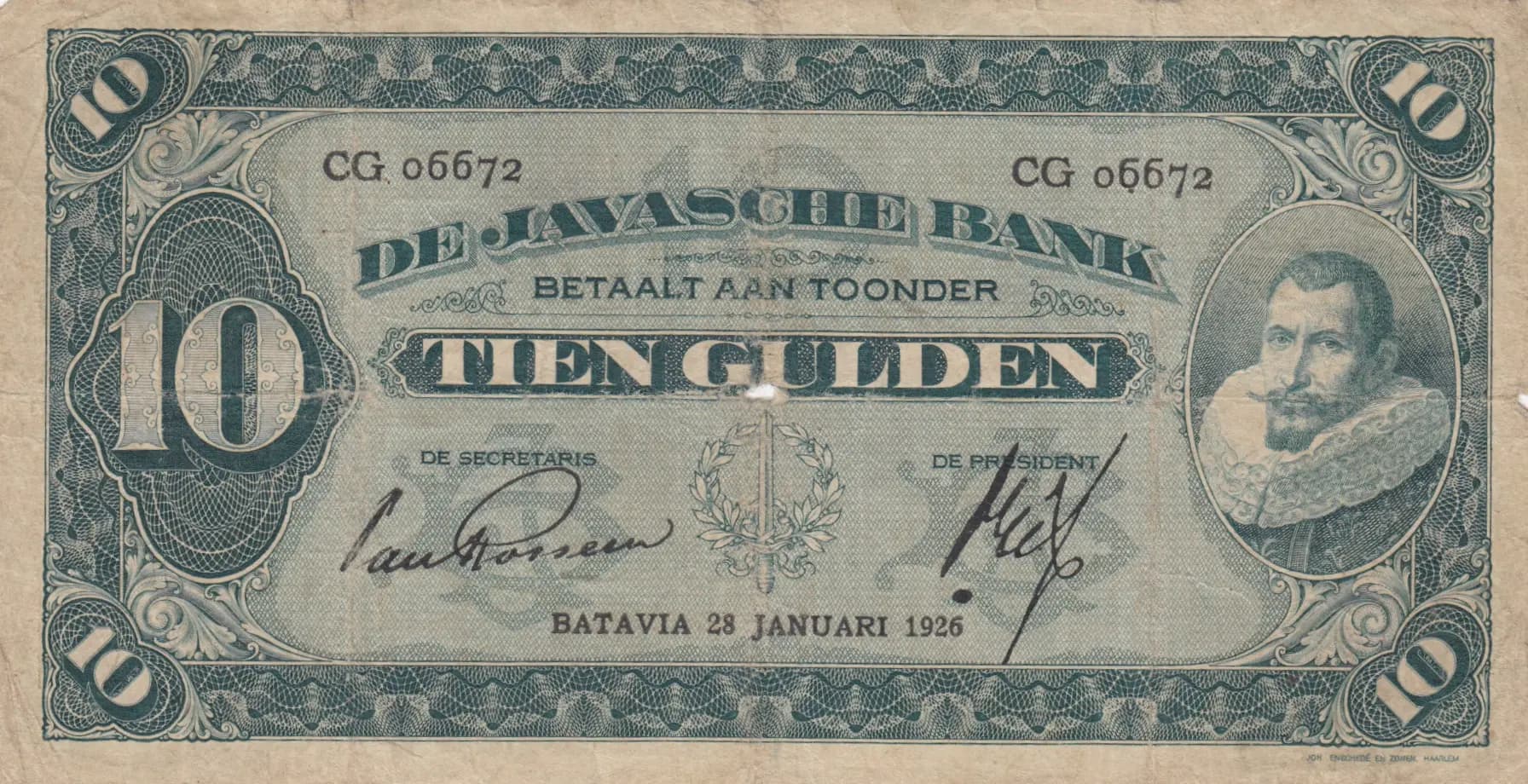
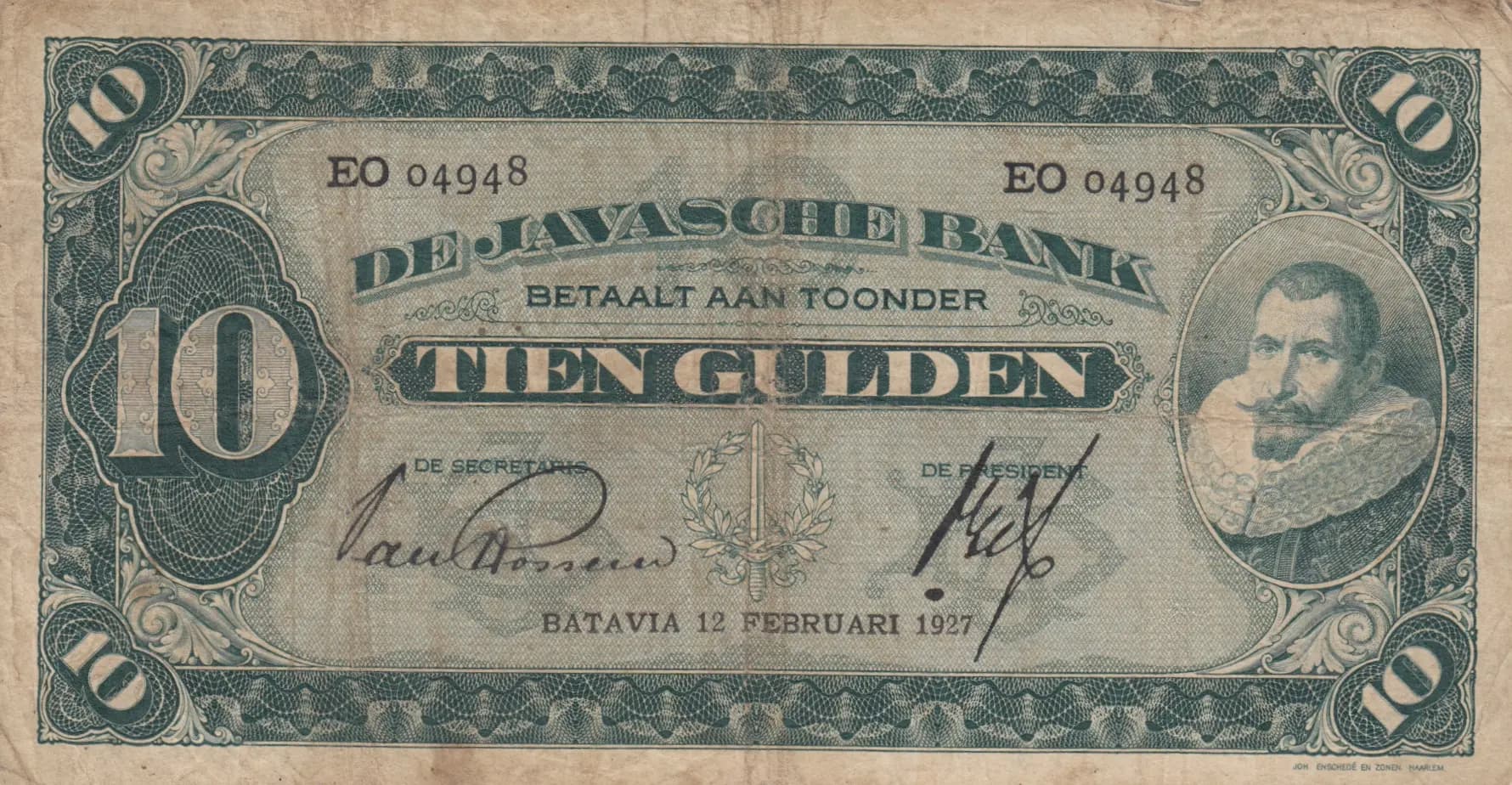
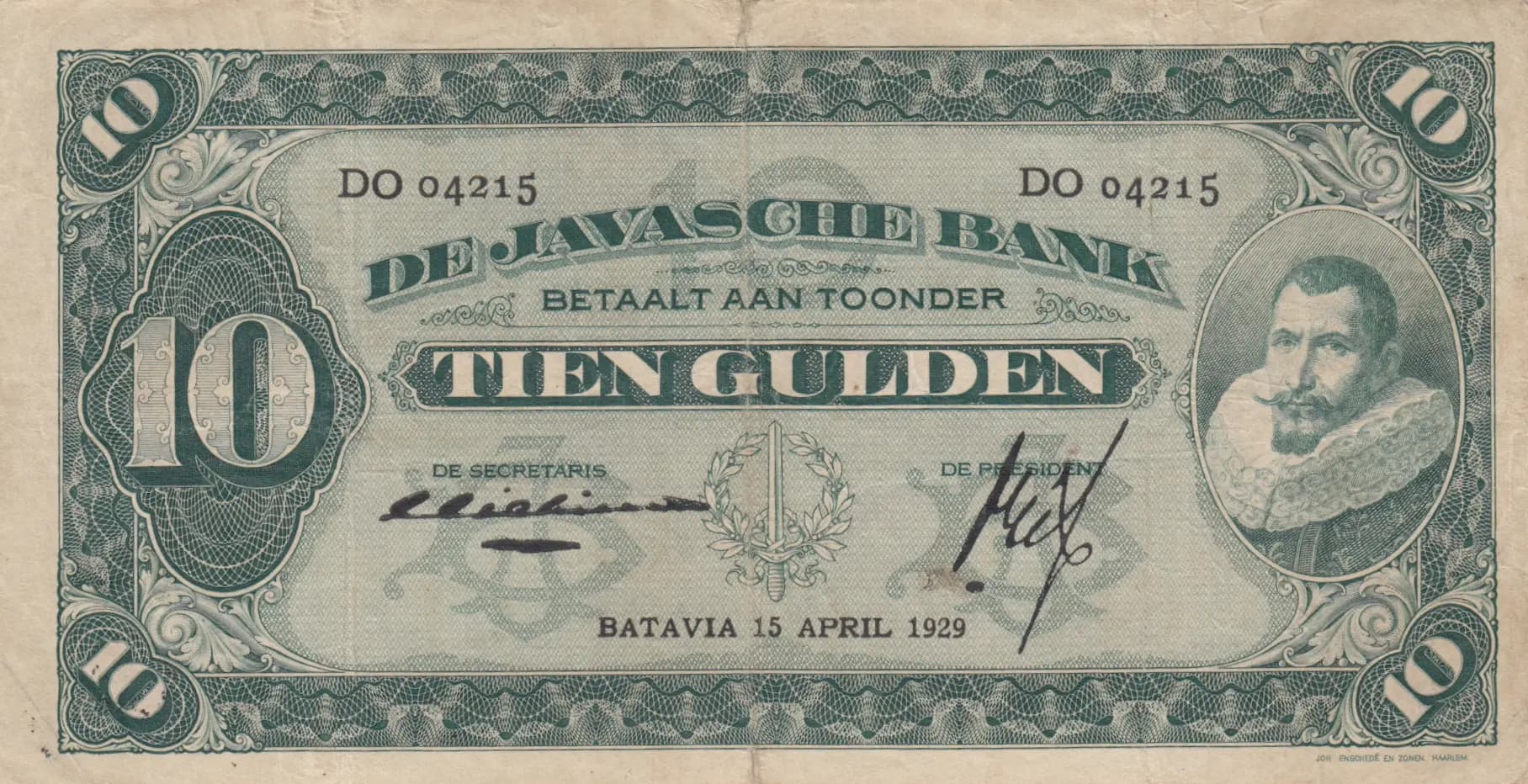
The front of the note features De Javasche Bank's formal issuing design with the bank's name in a curved banner at center, flanked by denomination numerals '10' in circular medallions. A portrait occupies the right side, depicting what appears to be a historical figure from the 16th-17th century, rendered with detailed engraving to show a bearded man in period dress. The entire front is enclosed within an ornate decorative border of scrollwork and geometric patterns rendered in green and cream tones. The reverse displays a prominent central vignette of a classical building—likely representing an important colonial administrative or financial institution—surrounded by a complex multilingual text layout. The inclusion of Chinese and Arabic scripts on the reverse reflects the significant presence of Chinese merchant communities and Islamic populations within the Dutch East Indies trading network. Corner embellishments and circular medallions frame the entire design, with the denomination '10' repeated in large green numerals on both left and right edges.
FRONT SIDE: 'DE JAVASCHE BANK' (The Java Bank); 'BETAALT AAN TOONDER' (Payable to Bearer); 'TIEN GULDEN' (Ten Guilders); 'DE SECRETARIS' (The Secretary); 'DE PRESIDENT' (The President); 'BATAVIA 4 APRIL 1928' (Batavia, April 4, 1928); Serial number 'ZR 099666'. BACK SIDE: Denomination '10' (Ten) in green numerals on left and right; Large block of Chinese characters (traditional Chinese script, approximately 10-12 lines, appears to be regulatory or explanatory text); Arabic or Persian script (multiple lines, regulatory or explanatory text); Dutch legal/regulatory text in lower center and right portions (not fully legible in visual analysis but consistent with colonial currency terms and conditions).
Intaglio engraving (copperplate) with multicolor printing. The note exhibits the fine detail, sharp lines, and complex overlapping design elements characteristic of security printing employed by colonial-era central banks. The detailed portraiture, ornate borders, and fine geometric patterns throughout indicate professional security engraving. The multicolor printing on the reverse (green, purple/mauve, and cream tones) was achieved through multiple print passes using the intaglio method, a standard security technique for currency of this era.
This note is identified as Pick 70a based on the April 4, 1928 date, issuer (De Javasche Bank), and 10 gulden denomination. The serial number format 'ZR 099666' appears consistent with standard numbering for this issue. No overprints, watermark variations, or signature varieties are noted from the visual analysis. This represents a standard printing of the 1928 issue; collectors should note that Pick 70a, 70b, and 70c varieties exist for 1928 ten guilder notes, differentiated by minor printing details and date variations.